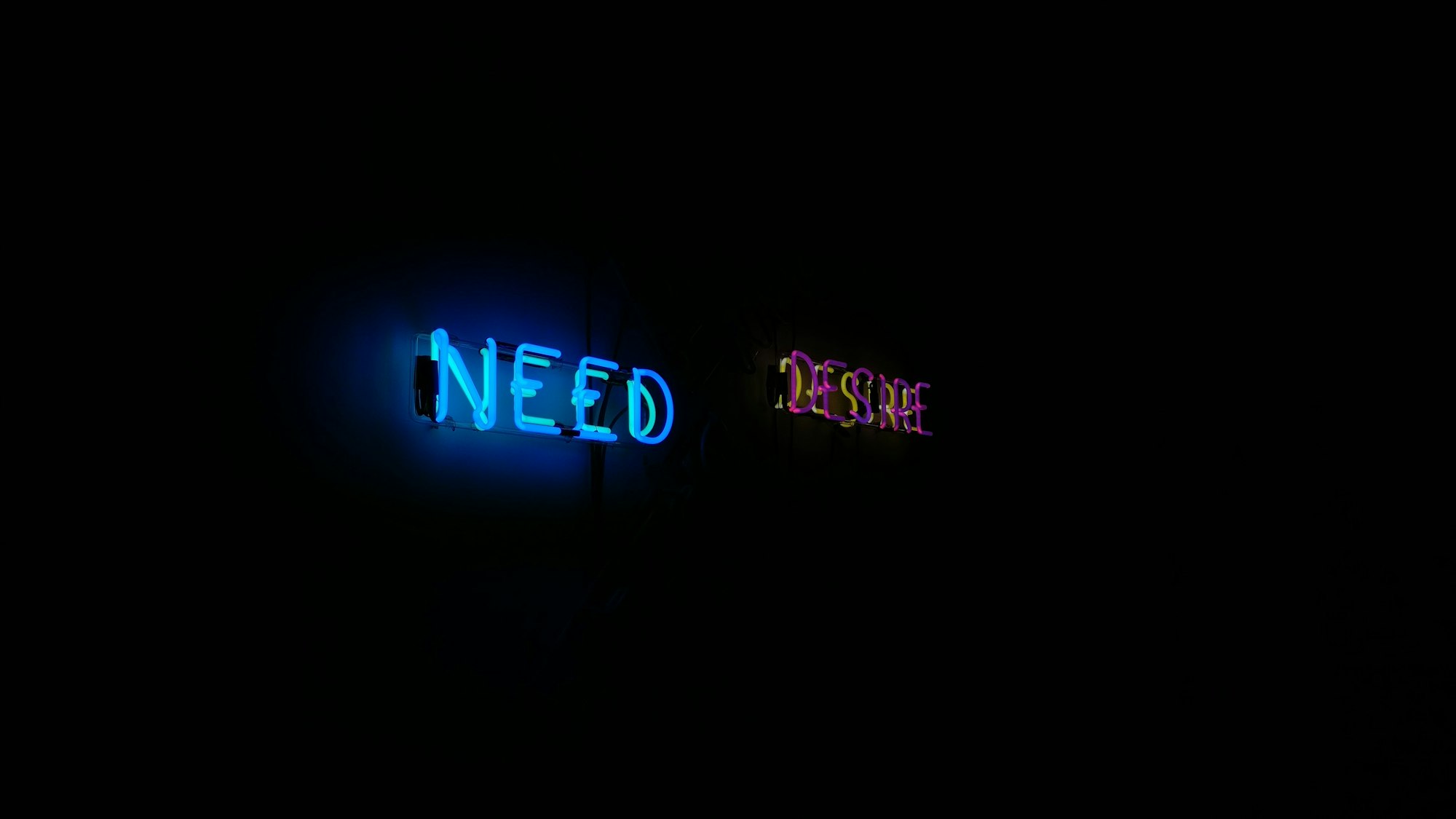
Thin desires are eating life

2025-12-160:50814259www.joanwestenberg.com

The defining experience of our age seems to be hunger. We're hungry for more, but we have more than we need. We're hungry for less, while more accumulates and multiplies. We're hungry and we don't…

The defining experience of our age seems to be hunger. 

We're hungry for more, but we have more than we need. 

We're hungry for less, while more accumulates and multiplies.

We're hungry and we don't have words to articulate why.

We're hungry, and we're lacking and we're wanting.

We are living with a near-universal thin desire: wanting something that cannot actually be gotten, that we can't define, from a source that has no interest in providing it.

The distinction between thick and thin desires isn't original to me.

Philosophers have been circling this territory for decades, from Charles Taylor's work on frameworks of meaning to Agnes Callard's more recent writing on aspiration.

But the version I find most useful is simple:

A thick desire is one that changes you in the process of pursuing it.

A thin desire is one that doesn't.

The desire to understand calculus versus the desire to check your notifications are both real desires, and both produce (to a degree) real feelings of satisfaction when fulfilled.

But the person who spends a year learning calculus becomes someone different, someone who can see patterns in the world that were previously invisible, who has expanded the range of things they're capable of caring about, who has Been Through It.

The person who checks their notifications is, afterward, exactly the same person who wanted to check their notifications five minutes ago.

The thin desire reproduces itself without remainder.

The thick desire transforms its host.

I want to be careful here because this is a claim that can easily slide into unfalsifiable grumpiness about Kids These Days.

But there's a version of it that I think is both true and important.

The business model of most consumer technology is to identify some thick desire, find the part of it that produces a neurological reward, and then deliver that reward without the rest of the package.

Social media gives you the feeling of social connection without the obligations of actual friendship.

Pornography gives you sexual satisfaction without the vulnerability of partnership.

Productivity apps give you the feeling of accomplishment without anything being accomplished.

In each case, the thin version is easier to deliver at scale, easier to monetize, and easier to make addictive.

The result is a diet of pure sensation.

And none of it seems to be making anyone happier.

The surveys all point the same direction: rising anxiety, rising depression, rising rates of loneliness even as we've never been more connected.

How could this be, when we've gotten so good at giving people what they want?

Maybe because we've gotten good at giving people what they want in a way that prevents them from wanting anything worth having.

Thick desires are inconvenient.

They take years to cultivate and can't be satisfied on demand.

The desire to master a craft, to read slowly, to be embedded in a genuine community, to understand your place in some tradition larger than yourself: these desires are effortful to acquire and impossible to fully gratify.

They embed you in webs of obligation and reciprocity.

They make you dependent on specific people and places.

From the perspective of a frictionless global marketplace, all of this is pure inefficiency.

And so the infrastructure for thick desires has been gradually dismantled.

The workshops closed, the congregations thinned, the apprenticeships disappeared, the front porches gave way to backyard decks and studio apartments and the coveted Micro Homes where you could be alone with your devices.

Meanwhile the infrastructure for thin desires became essentially inescapable.

It's in your pocket right now.

Grand programs to Rebuild Community or Restore Meaning seem to founder on the same logic they're trying to escape.

The thick life doesn't scale.

That's the whole point.

So: bake bread.

The yeast doesn't care about your schedule.

The dough will rise when it rises, indifferent to your optimization.

You'll spend an afternoon doing something that cannot be made faster, producing something that you could have bought for four dollars, and in the process you'll recover some capacity for patience that the attention economy has been methodically stripping away.

Write a letter, by hand, on paper.

Send it through the mail.

The letter will take days to arrive and you won't be able to unsend it or edit it or track whether it was opened.

You're creating a communication that exists outside the logic of engagement metrics, a small artifact that refuses to be optimized.

Code a tool for exactly one person.

Solve your friend's specific problem with their specific workflow.

Build something that will never scale, never be monetized, never attract users.

The entire economy of software assumes that code should serve millions to justify its existence.

Making something for an audience of one is a beautiful heresy.

None of this will reverse the great thinning.

But I've started to suspect that the thick life might be worth pursuing anyway, on its own terms, without needing to become a movement.

The person who bakes bread isn't trying to fix the world. They're not making any attempt to either dent or undent the universe.

They're trying to spend a Sunday afternoon in a way that doesn't leave them feeling emptied out.

They're remembering, one loaf at a time, what it feels like to want something that's actually worth wanting.


Read the original article

Comments

  • By WhatsTheBigIdea 2025-12-177:076 reply

    I really like this article.

    I bake bread. I have spent a good deal of time optimizing the recipe for deliciousness but also for time efficiency. Proving in a warm oven is a great tip. Also baking two loaves at a time!

    All this nit picking about writing style is disappointing. I like that this person got their ideas out there. They are good ideas. Legible and easy to parse == good enough. I don't care about the writing style any more than that and you shouldn't either. It is a waste of everyone's time... yours especially.

    It's very nice to hear about someone else who is interested in doing hard things/real things. Seems like there ought to be a meet up or a get together opportunity for people working on stuff like that. Perhaps a get-together where everyone gives a 2-5 minute talk about something they are working on then we all hang out for another hour or two. Seems like alcohol might help get the wheels spinning?

    I fully appreciate the need for a catchy headline with a hook (it got me!) but I wonder if these ideas would be more powerful/useful if expressed in positive language rather than doom speak? I guess doom speak is the fashion these days and we all have to conform to the dominant paradigm... at least a little around the edges.

    Generally... Bravo. Nice piece. Nice ideas.

    • By arximboldi 2025-12-1713:34

      I really enjoyed the piece also, in spite of the off-putting writing style.

      It reminds me of the Epicurean hierarchy of desires, the genius Epicurus had it figured out more then a couple of millenia ago: https://en.wikipedia.org/wiki/Epicureanism

      The thing about "apps for one" actually resonated with me quite a bit.

      The last year I've struggled finding freelance work and I've found myself with more time (and less money) that I would like. I feel guilty, because one side of me feels like I should have spent this time to learn ML or to make an app that makes passive income. The thing is: I have no interest in making "apps" to make money. I wouldn't even know what app to make, because there is no quotidian problem for which I think an app would make my life easier. On the contrary, I don't have a smartphone and apps are making my life harder, as we move towards a world where apps are expected for everything. But instead, I have made a couple of games for my girlfriend's birthdays, and I also made her web portfolio, all forms, I guess, of "apps for one" made for love. Other than that, perhaps, I enjoy tuning my Linux system (recently migrated from Xmonad to Hyprland), a form of making, perhaps, an app for one, in the only tech device that still feels like I can control instead of it trying to control myself. Other than that, I use my time to go to the gym and sometimes to paint or DJ or just party, even though I often spend on Hacker News, Youtube, Wikipedia and other media way more time that I would like to.

      So all in all, I find it difficult to write code these days with the joy of when I was younger, and it is hard to motivate myself if there's no money involved, with the exception of those gestures of love. It saddens me, because I believe it is such a powerful and beautiful skill. But I just find the current state of world and how "technology" is used to extract capital out of all human relationships rather depressing. The current wave of "AI" only makes the problem worse, and adds an dark sense of impending doom...

    • By skeltoac 2025-12-1723:40

      The writing style is perfect.

      It’s not just like that to be spaced out visually. It suggests slowing down, taking your time, digesting each sentence. Not just racing to the end so you can drop a thin take and keep scrolling.

      It is a THICK PIECE.

      Consume it that way. :)

    • By lucyjojo 2025-12-1812:16

      there are waves of people like us. it's the zeitgeist of the era for a sub-category of coders/hackers.

      i, too, started baking sourdough bread. and DIY, electronics, music for myself.

      i suspect a double digit percentage of that subcategory also dabbles in lisp/clojure/emacs and another double digit subsection abandoned AAA for indie gaming. and a single digit percentage might have enjoyed ruby in the old times.

    • By cheschire 2025-12-1719:39

      It reminds of reading Tao Te Ching.

    • By CGMthrowaway 2025-12-1719:063 reply

      I asked my agent to rewrite this in a more traditional style, if it's helpful to anyone:

      A defining experience of our age is a paradoxical hunger: we crave more even when we have an excess, and we crave less while more accumulates around us. It is a vague hunger we often can’t articulate, a deep sense of wanting something fundamental. This is the essence of "thin desire": a craving for something undefinable and ultimately unattainable, from a source with no interest in providing it.

      The distinction between "thick" and "thin" desires is simple: a thick desire is one that changes you in the process of pursuing it, while a thin desire does not. Consider the desire to understand calculus versus the desire to check your notifications. The desire to learn calculus is thick; it transforms the learner, revealing new patterns in the world and expanding their capacity to care about new things. The desire to check notifications is thin; afterward, you are the same person you were five minutes before. A thick desire transforms its host; a thin desire merely reproduces itself.

      The business model of most modern consumer technology is to exploit this distinction. It identifies a thick human desire, isolates the part that produces a neurological reward, and then delivers that sensation without the enriching substance. Social media offers the feeling of connection without the obligations of friendship. Pornography provides sexual satisfaction without the vulnerability of partnership. Productivity apps can give a sense of accomplishment without anything of substance being accomplished.

      This thin version of desire is easier to deliver at scale, easier to monetize, and far easier to make addictive, resulting in a cultural diet of pure sensation. Yet, despite getting what we want with such efficiency, we are not happier. Surveys consistently show rising anxiety, depression, and loneliness. Perhaps we have become so proficient at giving people what they want that we have prevented them from wanting anything truly worthwhile.

      Thick desires are inherently inconvenient. They cannot be satisfied on demand and often take years to cultivate. Mastering a craft, reading a book slowly, or becoming part of a genuine community requires sustained effort. These pursuits embed us in webs of obligation and make us dependent on specific people and places—all of which is pure inefficiency from the perspective of a frictionless global marketplace.

      As a result, the infrastructure for thick desires—workshops, apprenticeships, local congregations, front porches—has been gradually dismantled. In its place, the infrastructure for thin desires has become inescapable, residing in the pocket of nearly every person. Grand programs to "rebuild community" often fail because they try to apply the same logic of scale they hope to escape. The thick life, however, doesn't scale. That is the entire point.

      The antidote, therefore, may not lie in large-scale movements but in small, deliberate, and beautifully inefficient acts. Bake bread; the yeast is indifferent to your schedule, and the process teaches a patience that the attention economy has stripped away. Write a physical letter and send it through the mail; it creates a connection that exists outside the logic of engagement metrics. Code a software tool for just one person; building something that will never be monetized is a beautiful heresy against the assumption that all creations must serve millions.

      These individual acts will not reverse the great thinning of our culture. But the thick life is worth pursuing anyway, on its own terms. The person who bakes bread isn't trying to fix the world; they are simply trying to spend an afternoon in a way that doesn’t leave them feeling emptied out. They are remembering, one small act at a time, what it feels like to want something that is actually worth wanting.

      • By canyp 2025-12-182:04

        To put it politely, nobody gives two shits about what "your agent" said, in case you were wondering why this was downvoted to hell. This reply adds nothing to the conversation, and it also doesn't take a mastermind to figure they, too, can paste the post in ChatGPT and get a summary out of it. Also, reading a summary instead of the sources butchers the post entirely.

        Hopefully you'll spare us the spam next time. Have a good day!

      • By ludvigk 2025-12-1719:591 reply

        Did you even read this yourself? You've turned something succinct and readable into a tedious, impenetrable blob.

        • By CGMthrowaway 2025-12-1720:09

          I read both of them. Different strokes I guess

  • By clowncubs 2025-12-1621:268 reply

    This resonates. I work in web dev, and a little over 2 years ago I hit a wall. Everything was a screen. All day at work, at home, on the go. Everything felt hallow and unrewarding. I'm an introvert, so outside of my family, I didn't have many relationships. Of course, I was depressed. I began working on it by going to therapy and then one day I decided to try sculpting.

    This changed everything. I found I was pretty good at it. It felt good because it was tangible, and it required me to learn and probe and practice. I kept at it. This grew in ways I couldn't imagine.

    Now, I make collectible resin maquettes and busts and I even started making latex halloween masks. It's been a crazy journey to where I am now, with so much more ahead. I've met people and interact with people in ways I didn't just a short time ago. It's changed my life. It's thick. All of it.

    • By agumonkey 2025-12-1621:453 reply

      Kudos on your evolution. But this gets me thinking, remember when computing didn't felt "thin" ? even screen had a different feel. I don't know if it's our brain getting used and losing a kind of magic filter.

      Anyway, I should probably imitate you, every time I see some people crafting real things I have a little blip of envy.

      • By black_knight 2025-12-177:34

        I still get that feeling sometimes, even after 25 years with computers at home. But it is so dependent on what I do. I get this feeling when I create stuff on my own terms, like making a game or a website. I also get this feeling when discovering other people’s personal creations online.

      • By clowncubs 2025-12-1621:53

        It definitely felt different to me in the beginning years. I've been at the web thing for about 12 years now. In the beginning, while it was often very difficult, there was an excitement and freshness. It could have simply been because we were moving to web 2.0, CSS and all of its "magic".

        While making stuff is only a side thing, it makes the grind during the week tolerable. I feel like I have something meaningful in my life (outside of my family) and it has given me purpose. I'm grateful for it. And it is so damn fun!

      • By 4gotunameagain 2025-12-178:161 reply

        It was before the invasion of late stage capitalism in computing, creating the attention economy.

        Computing was a thing by geeks, for geeks. It was revolutionary. It was fun. Now it's the lowest common denominator. Instagram.

        • By agumonkey 2025-12-178:41

          the small culture aspect is something i think about too, it was the outcome of a certain group of people liking a similar idea and way of doing things. now it's diluted in all of the social issues (privacy, fame, short term attention)

    • By NegativeK 2025-12-172:362 reply

      I've taken somewhat of a parallel path.

      I set foot in a shop for the first time at a hackerspace 11 or 12 years ago and eventually feel deep into machining. I spent huge swaths of my days there, and when I wasn't, I was reading about machining. Books, because there were few Youtubers doing it and the forums are thin. It's not a popular hobby and a lot of the professionals and hobbyists aren't computer savvy.

      I focused on it to the detriment of other things. Friends commented last year on how absorbed I became and how much I was absorbing. Puttering around on a computer fell away, since it wasn't that relevant to the hobby. It wasn't necessary to use the aging laptop in my free time; I could read PDFs on my phone or old, used books.

      But you're not looking at your phone often, because your hands are dirty. Or busy. Or there's a significant safety concern from lapsed attention. Or when doing related types of metal working, weld spatter might land on a face up phone and take chunks out of the glass. Or maybe a steel chip scratches the screen.

      Eventually I drifted away from machining for another hobby, but I've come back to it now that I have space in my garage -- this time with more balance. I'm not out until after midnight on work nights. Instead, I'm up before dawn, working with my hands for an hour or two before work. After work, I spend time on learning things somewhat relevant to my career. On the weekends, I'll spend a few hours each day.

      The machining isn't ever useful. I made a nylon washer on my lathe once for a dog harness -- I think that's the only item I've made that's not for the hobby itself. But it's tangible. The projects are incredibly slow, and no undo button means a small mistake can result in hours work thrown in the recycling. I spent maybe eight hours over the past four days making a tiny brass rod (as well as other, failed versions) to repair an older clockwork mechanism. A used replacement would've been relatively cheap on Ebay, but that's never the point.

      • By 2b3a51 2025-12-1719:151 reply

        If (and I mean only if it would be interesting to you, no other reason and no implied 'ought') you wanted, I'm pretty sure that there are people out there who would like to return things like telescope mountings, old focusers, mechanical devices of all kinds to a working state. Over here in the UK, people volunteer at steam engine workshops and even in jewellery workshops to restore things. And they get a supply of interesting items to make...

        • By NegativeK 2025-12-181:40

          I don't know if that's a thing here in the states, but I'll keep it in mind! It probably wouldn't be hard to advertise via the local (different) hackerspace.

          But I'll probably have to get through my backlog of current tasks and projects before I wanted to take on other peoples'. And I may have literally set up a wiki to track those projects...

      • By atentaten 2025-12-181:261 reply

        What is the other hobby?

        • By NegativeK 2025-12-181:33

          It was climbing, but that one I've fully walked away from.

    • By brailsafe 2025-12-1719:022 reply

      > I even started making latex halloween masks.

      Bit of a tangent: I don't really subscribe to the introvert/extrovert divide personally, but do eventually hit a wall with socializing, and am happy to explicitly isolate myself in my own world or with a smaller group for extended periods of recharge. Unfortunately, I've committed to attending my good friend's costume NYE party, and have betrayed myself somewhat because... I'm just tired of costumes, he's a very theatrical film person and I'm... a web dev, who's just never really had an affinity for dressing up in that way—even less so since it's been a socially packed autumn. I'm considering bailing, but I feel like that would be a bit of a fail.

      I think as a nerd, I'd need to make it a challenge and a small hobby like you have, but I also am trying to quit YouTube. Can you picture yourself in my situation? Any tips on finding a seed of interest?

      • By clowncubs 2025-12-1719:391 reply

        This is a bit longwinded, so apologies: I tried sculpting because I saw a video on YouTube where this guy, I think he goes by Craftyart, or Craftyarts - he had a speed video where he sculpted, cast, and painted a version of the Joker, but it was Willem DaFoe. It was incredible, and it just gave me an itch. I watched it and wanted to do that, to make that.

        For me, I'd often have these ideas of things I wanted to try, or do, or challenge myself with, and then for some inexplicable reason I'd never do them. In this instance, I told myself to get off my ass and just give it a try. It may have helped that I was in therapy at the time and making efforts to address a lifetime of issues. It has lent a certain proactiveness to my being. For me, addressing my mental health is a driving factor in having made any of this possible.

        Finding a seed of interest: if you mean directly with making a costume, I don't know. If you're not interested in costumes, I don't think it is something you can force. Overall though I think anything that causes that itch, that pull, maybe even a sense of yearning "to do" is enough to get you going on a path. I had a feeling when watching the video that reminded me of what I felt when I was a kid and I would see something and I'd get excited to do the same.

        I don't know that any of this would have come together for me had I not been on a journey to improve my mental health, and making efforts to find something that connected with me. Something outside of a screen. But in the end, what I connected with was surprising. It looks like it makes sense in hindsight, but at that time, it felt like it came out of left field.

        Hopefully there are some tips somewhere in this mess of words. If not, my apologies for wasting your time.

        • By brailsafe 2025-12-1723:051 reply

          > For me, I'd often have these ideas of things I wanted to try, or do, or challenge myself with, and then for some inexplicable reason I'd never do them.

          I think without a mentor or point of reference for why or how you'd go about doing something like that, it's just a completely abstract domain, much like software is to anyone who hasn't spent a lifetime coding or figuring out how computers work. The mental health work and the video by Craftyarts seem like the perfect timely combination to allow for peeling back those layers, literally and figuratively, further allowing curiosity to be actionable.

          I've been doing that a bit with electronics, and a recent example that seems similarly daunting for me would be watching the end to end process of building a custom keyboard pcb. At first it seems like an immense rabbit hole, but dedicating a bit of money and time incrementally is insanely rewarding in aggregate, moreso the further away from your mainline discipline it is. I tend to avoid these until I have a specific challenge in mind.

          The seed of interest question was framed poorly, but it was related specifically to the latex mask subject, and I guess I was just curious if there were any adjacent ideas that might be worth exploring, since you do seem to have an interest in vaguely related areas

          • By clowncubs 2025-12-1723:35

            Adjacent ideas: 3d printing - I think it is cool but I'm not into it myself because it would require more time for me in front of a screen and working with digital tools. But, there are a lot of things to be explored here. One idea is digitally scanning a analog sculpture and then 3D printing the mold for it. This would be huge as you could make very complex molds and they'd be essentially perfect. And then when your mold broke down you could just print another one. No need to work from a master sculpt.

            I have a friend who made me 3D printed keychains for swag at events. He embedded NFC chips in the keychain and this links to a linktree on my website. Coming up with cool swag like this could be something to explore. People found them really cool and it was a relatively simple thing to do. I'm sure there are some wild things 3D printing could be applied to for things like this.

      • By lanyard-textile 2025-12-1722:251 reply

        1. If you have that urge to go, it is probably for a good reason, agreed :) Wouldn't call it a fail though if you didn't end up going. We all require balance.

        2. Parties are for getting together, costumes are just a dress code. They'd love your company even if you didn't dress up -- that's why they invited you after all. So don't stress over it. You can come in something silly or minimal fuss.

        • By brailsafe 2025-12-1722:53

          > They'd love your company even if you didn't dress up

          This is generally true and reassuring, and but in this case I have to put at least something reasonable together since I half-assed it last time lol. I'll probably just try and attend every third costume party in the future

    • By movedx 2025-12-1623:20

      Very cool.

      I started using my IT and data management skills on film sets to provide data security around the footage. It’s been a breath of fresh air to use advanced concepts in a field that’s very hands on and a big team effort. A lot of communication and working together. It’s been great.

    • By yuni_aigc 2025-12-183:17

      I can totally relate—I’m also a web dev and spend all day in front of screens. Lately I’ve been feeling really stuck and weighed down, and honestly I’m not sure how to start changing things. Reading your story gives me a little hope, though.

    • By pjerem 2025-12-179:14

      Oh that's cool ! Bravo !

      I lived exactly the same thing also two years ago.

      What changed everything to me was, impulsively, enrolling myself to a rollerblading course in a skate park. I was 34, overweight (still am) and never did anything like this (I never did barely any sport at all tbh). Oh boy was this transformative.

      I'm still in the course every week and like you, it feels good because it's tangible : not in the material way like sculpting but rather by doing things with my body (and my brain) I would'nt believe I could do at all even when I was younger. That's an amazing feeling after decades of watching things on screens (yes, I know how that sounds pathetic, but that's my story).

    • By WesleyJohnson 2025-12-1718:481 reply

      Any tips or resources on how to get started? I drew a lot of comics as a kid/teen, and I've done 3d modeling as a hobbyist. But using physical media for sculpting has always seemed daunting.

      • By clowncubs 2025-12-1719:16

        I started by buying some Sculpey clay, some armature wire, and a 6-inch wooden base. This and an assortment of tools. Then I found an online 3d model I could turn in all directions. And then, I just tried to sculpt it. It wasn't great, but it wasn't bad. From there I looked for video instruction on YouTube. There are a ton of sculpting videos out there. Books: there is a great book by the Shiflett Brothers that was very helpful to me (Clay Sculpting with the Shiflett Brothers). They also have a great sculpting forum on Facebook. Eventually I signed up for the Stan Winston School of Character Arts. This has been incredibly helpful for the direction I am going.

        So, I started small, and then built from there. I only bought materials and tools when my journey necessitated them so I could refrain from getting ahead of myself. I think this is valuable, as it is easy for me to get carried away in the beginning of anything new, and go whole-hog only to find later that my interest lay elsewhere. I wanted to prove to myself that my purchases were for a reason and meaningful to where I was at, at that moment.

        I have kept a blog of my learning experiences, trying to give back as I can. I don't want to break the forum rules, but if you want I can send you links to my site. It has my work and the blog has outlines of what I have done, steps, resources, etc. I hope it is helpful to someone out there going along this path.

    • By kafkaesque 2025-12-1720:401 reply

      I can relate! Someone who is very dear to me suggested we go to a one-day pottery class and the idea had never entered my mind. I actually ended up loving it. We're both introverts, as well, and she enjoys doing things that don't require other people (she likes to surf, as well). There's something about doing something physical by yourself (that isn't exercising) that's creative that I really like, but before the class, I hadn't realized it.

      I actually play instruments, as well, but this feels totally different and almost stimulates a different part of my brain. I was much more relaxed doing pottery and I saw instant results that I could track whether I was doing something right or wrong (even though the "right" and "wrong" was driven by my own personal idea of them).

      Do you think you'll end up sharing any of your pieces to the public?

      • By clowncubs 2025-12-1721:52

        That's awesome, and I can understand what you are saying. The immediacy of the medium is very satisfying in a way that digital immediacy for me is not. Mind/body connection or something like that.

        Yes, I have shared my pieces! On social media of course (instagram/facebook/youtube), personal website, and at events. One part of this journey was a kind of audacious idea - I decided one day, after about a year and half into this, to make an LLC. I figured I could try and get this hobby to pay for itself as it isn't exactly cheap when you start getting into molding and casting the pieces. That and I was getting great responses from people. A part of me just went with a feeling ("I bet I could do that") and this whole thing has taken on a life of its own. I've just started going to local events recently (a punk flea market, a comic-con, and a Krampus Con) and I've sold some of my work, have connected with new people, and made some good connections. It's a wonderful feeling and the response from people has been nothing but soul fuel.

  • By DarmokJalad1701 2025-12-1621:116 reply

    > The yeast doesn't care about your schedule.

    > The dough will rise when it rises, indifferent to your optimization.

    Joke's on them! I run my oven until the temperature inside is ~100F - about a minute or so. Then I turn it off and set the dough in there along with some water (for humidity). It rises super fast compared to my kitchen which is ~65F in the winter and the bread is just as flavorful. Definitely not indifferent to my optimization.

    • By fn-mote 2025-12-171:002 reply

      > the bread is just as flavorful

      “Thin bread.”

      No sourdough enthusiast or artisanal bread baker would agree. You even get a different metabolic pathway active at higher temps.

      Try the “low and slow” method, rise then let it sit a day in the fridge, see if it’s really the same taste.

      • By esperent 2025-12-171:541 reply

        I run a sourdough bakery with my partner, as it happens. Although I'm not a baker, coming from a mathematics background I'm the one most focused on process and quality control. We don't use any commercial yeast so I've picked a few things related to targeting different flavors using the same starter.

        We use different temperature profiles during proofing for different products (we have fancy proofing fridges where we set temperature profiles over a 12 to 36 hour period depending on the product). Low and slow is good for certain types of bread, or pizza base. But not so much for a brioche or croissant dough.

        I personally love slow fermented, heavy rye based sourdough, but lots of our customers don't and the bread we sell most is a classic white sourdough fermented comparatively quickly at higher temperature for a lighter and less sour taste. It's still very slow fermentation compared to commercial yeast, of course.

        The proofing temperature profile for this bread isn't as simple as "start warm and gradually cool down" (i.e. the warm oven method), but that is a reasonable approximation for a home baker.

        • By lucyjojo 2025-12-1812:271 reply

          sorry to ask but this is a rare occasion...

          i started trying to make sourdough bread 2 weeks ago (and baking/cooking at all).

          is there 1 definitive book/youtube channel/other kind of resource you would recommend to put mut on a solid path for a few months/years?

          i just want to make sourdough bread daily in order to have healthy stable carbs at home. (stone milled complete grain flour and wild yeast). with the price of rice currently in japan it doesnt even look to be significantly more expensive.

          • By esperent 2025-12-1815:02

            I'm sorry to say I don't have any answers for you, at least nothing better than you'd get from searching on to r/sourdough or r/baking.

            Like I said, I'm not a baker. My partner is. My focus is on other parts of the business, I was just sharing what I have picked up (via osmosis mostly) about different temperature profiles for different products.

      • By DarmokJalad1701 2025-12-1718:20

        Maybe it depends on the yeast? I use commercial yeast and not a sourdough culture. The one I have ("Red Star Yeast") rises just fine with the method and the result tastes great!

    • By tekne 2025-12-1719:59

      People tend to assume optimization means thin. Probably because you are usually optimised, by others, into thin-ness. To be optimized is passive.

      But I think optimising yourself, or the world, hopefully in a positive way, is one of the thickest things you can do.

    • By ssl-3 2025-12-175:59

      I don't bake, but I once installed an off-the-shelf PID controller into my kitchen oven[1] and this gave me some insights on things that are normally kind of inconvenient to observe (what, with the bright always-on LED display glaring at me at all times while I was in the kitchen with a constant report of what temperature in there was).

      Like: The oven light. It's an incandescent bulb, which is also to say that it's waaaay better at being a heater than it is at being a source of light.

      I found that leaving the light switched on in the oven, and the oven door closed, kept the temperature right around 100F. It varied a bit depending on ambient, but never by more than a few degrees.

      ---

      [1]: It was an old Frigidaire-built electric range that someone gave me for free. It worked, until one day when I switched it on at a sensible temperature setting and put a frozen pizza in there. The temperature control then failed, and it failed stuck in the on position. The pizza was very badly burned and looked pretty crispy when I came back to it a short time later.

      And when I tried to retrieve the pizza, the hotpad in my hand was converted directly from fabric into smoke as soon as it touched the pan.

      While I lamented about the lost pizza and the expense of buying new replacement parts for an old freebie oven, a friend suggested using a PID controller and an SSR instead.

      So I did exactly that: I bought the parts (including ceramic wire nuts and fiberglass-insulated wire), cut a square hole in the panel with a grinder and a deathwheel for the new controls, mounted an SSR in a recess on the back with an enormous heatsink, and it all went together splendidly. I put the new bits in series with the old bits, so it was never any less-safe than it had become on its own accord.

      I miss that oven sometimes. It was actually kind of fun learning how to tune the PID, and to be able to reliably get a consistent temperature from it.

      The oven-light discovery was just an accident; if I actually wanted 100F for some reason, I'd have just set the PID box to that temperature.

    • By jmathai 2025-12-1621:22

      I found this trick for store bought pizza dough as well. Instead of leaving out for 20 minutes, a warm oven helps it start rising a bit and results in a much better final product!

    • By globular-toast 2025-12-177:08

      My mother used to put the dough in a warm place. When I tried making bread I did the same. The bread was always disappointing, having a taste and texture more like "baked dough" than something I'd consider worth eating.

      I discovered later that the length of time it spends rising matters. Room temperature (15-19 degrees Celsius) is optimal and will take a couple of hours for the first rise and less than an hour for the second. It is of course necessary to keep the dough away from any drafts. I keep it wrapped in a blanket or towel.

      35 degrees Celsius is far too warm and won't give it enough time to develop the flavour and texture of good bread.

    • By IceCoffe 2025-12-1621:314 reply

      Im just learning this is a thing, tell me more, how long do you leave it in there? Any ratio's you use?

      • By godelski 2025-12-1622:241 reply

        Baking is weird. You first should start by following instructions to the letter. Then once you get it you'll be able to break all the rules.

        The bread rises because of the yeast bacteria eats sugar and expels carbon dioxide. So ask yourself, what does yeast like? Probably not hard to guess that it's a warm, moist environment with plenty of sugar. Too cold and they're slow moving. Too hot and they burn up. But the goldilocks zone is that of most bacteria, a hot summer day in the tropics.

        How long to rise? That's more a question of how fluffy you want the bread and how fast the bacteria eats the sugar.

        Follow instructions while you're learning but think about things like this while practicing and you'll get your answers pretty quickly. The problem is no one can actually give you a direct answer because there's variance. Besides, the more important skill is to learn to generalize and get the intuition for it. So pay attention to how sticky the dough is, how fluffy, how it stretches, and all the other little things. Think about it during and after. If you do this I promise you'll get your answer very quickly

        • By kjkjadksj 2025-12-172:10

          Yeast is fungus not bacteria. In lab setting it tends to be incubated at 30c, a little cooler compared to most bacteria at 37c.

      • By DarmokJalad1701 2025-12-1622:56

        Depends on the method/recipe. Most of the recipes I follow have at least two rising steps, following by another one after the dough is shaped into its final loaf (or whatever shape you want). Each one would be about an hour and half or so. It could be done with a single rise as well, but two rises tends to give more flavor. If you don't want it right away, a slow overnight rise in the fridge is also pretty good.

        "No-knead" recipes usually involve 20-30 minute cadence of "fold-and-stretch" followed by a rise to allow the gluten to develop naturally without kneading. Usually about four times.

      • By dmoy 2025-12-1621:44

        How long to leave in depends on the dough, but you can get a quick rise in like less than an hour in the right temperature. Definitely don't leave it too long. I routinely forget and then it rises too much and eventually collapses when you go to bake it.

        I use like 65% or maybe 70% hydration for bread, little more for whole wheat. Like 25:1 sugar (or less?), 100:1 salt, 100:1 yeast. High protein flour if you can.

        For just basic bread, no sourdough, not a sandwich loaf, etc.

      • By lukevp 2025-12-1621:51

        Yep, some ovens (like mine) even have a Proof setting that keeps it at 100 degrees F automatically, for as long as you want. We make a lot of bread is how I know this

HackerNews