
Children with cancer scammed out of millions fundraised for their treatment

2025-12-166:17533455www.bbc.com

Huge amounts appear to have been raised for seriously ill children who never received the money.

Simi Jolaoso,

Jack Goodmanand

Sarah Buckley,BBC Eye Investigations

Chance Letikva Khalil, a little Filipino boy, is wearing a green and blue striped t-shirt, has a shaved head, and has a small microphone clipped to his top. There is a white hospital background. He faces the camera, mid-speech.Chance Letikva

Warning: Disturbing content

A little boy faces the camera. He is pale and has no hair.

"I am seven years old and I have cancer," he says. "Please save my life and help me."

Khalil - who is pictured above in a still from the film - didn't want to record this, says his mother Aljin. She had been asked to shave his head, and then a film crew hooked him up to a fake drip, and asked his family to pretend it was his birthday. They had given him a script to learn and recite in English.

And he didn't like it, says Aljin, when chopped onions were placed next to him, and menthol put under his eyes, to make him cry.

Aljin agreed to it because, although the set-up was fake, Khalil really did have cancer. She was told this video would help crowdfund money for better treatment. And it did raise funds - $27,000 (£20,204), according to a campaign we found in Khalil's name.

But Aljin was told the campaign had failed, and says she received none of this money - just a $700 (£524) filming fee on the day. One year later, Khalil died.

Across the world, desperate parents of sick or dying children are being exploited by online scam campaigns, the BBC World Service has discovered. The public have given money to the campaigns, which claim to be fundraising for life-saving treatment. We have identified 15 families who say they got little to nothing of the funds raised and often had no idea the campaigns had even been published, despite undergoing harrowing filming.

Nine families we spoke to - whose campaigns appear to be products of the same scam network - say they never received anything at all of the $4m (£2.9m) apparently raised in their names.

A whistleblower from this network told us they had looked for "beautiful children" who "had to be three to nine years old… without hair".

We have identified a key player in the scam as an Israeli man living in Canada called Erez Hadari.

Watch how three children, including Ana from Colombia, appeared in campaign videos

Our investigation began in October 2023, when a distressing YouTube advert caught our attention. "I don't want to die," a girl called Alexandra from Ghana sobbed. "My treatments cost a lot."

A crowdfunding campaign for her appeared to have raised nearly $700,000 (£523,797).

We saw more videos of sick children from around the world on YouTube, all strikingly similar - slickly produced, and seemingly having raised huge amounts of money. They all conveyed a sense of urgency, using emotive language.

We decided to investigate further.

The campaigns with the biggest apparent international reach were under the name of an organisation called Chance Letikva (Chance for Hope, in English) - registered in Israel and the US.

Identifying the children featured was difficult. We used geolocation, social media and facial recognition software to find their families, based as far apart as Colombia and the Philippines.
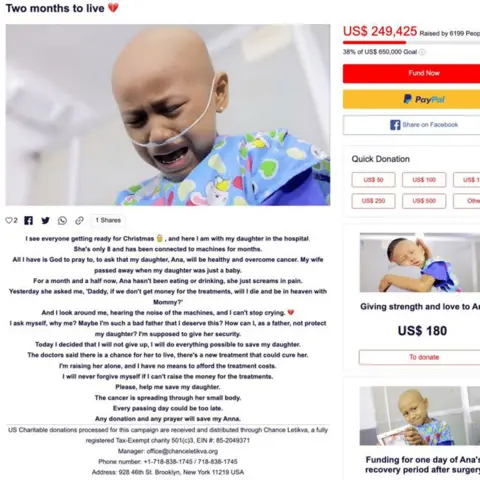
Chance Letikva A fundraising campaign page for Ana - it shows her crying, wearing a nasal tube, and the caption at the top of the page reads "Two months to live" with a heart emoji Chance Letikva

A Chance Letikva campaign for Ana in Colombia - falsely claiming she had two months to live

While it was difficult to know for sure if the campaign websites' cash totals were genuine, we donated small amounts to two of them and saw the totals increase by those amounts.

We also spoke to someone who says she gave $180 (£135) to Alexandra's campaign and was then inundated with requests for more, all written as if sent by Alexandra and her father.

In the Philippines, Aljin Tabasa told us her son Khalil had fallen ill just after his seventh birthday.

"When we found out it was cancer it felt like my whole world shattered," she says.

Aljin says treatment at their local hospital in the city of Cebu was slow, and she had messaged everyone she could think of for help. One person put her in touch with a local businessman called Rhoie Yncierto - who asked for a video of Khalil which, looking back, Aljin realises was essentially an audition.

Another man then arrived from Canada in December 2022, introducing himself as "Erez". He paid her the filming fee up front, she says, promising a further $1,500 (£1,122) a month if the film generated lots of donations.

Erez directed Khalil's film at a local hospital, asking for retake after retake - the shoot taking 12 hours, Aljin says.
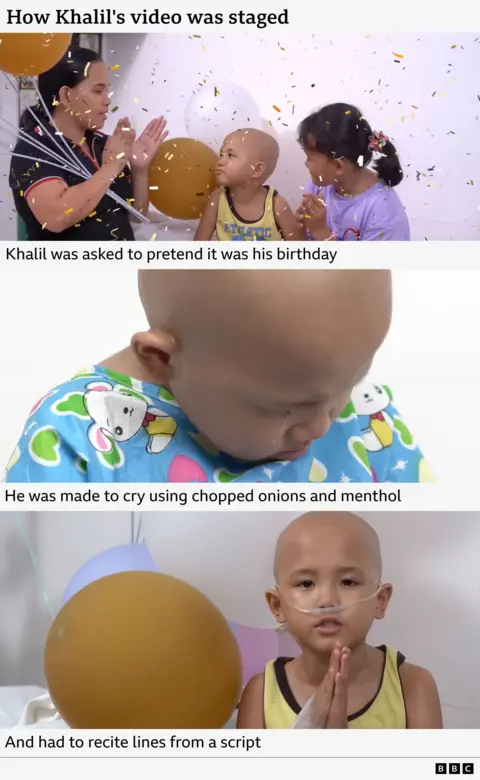
A graphic explaining how the campaign video for Khalil was staged shows: 1) His mother and sister clapping as ticker tape rains down with balloons in the background, 2) Khalil crying, 3) Khalil reciting lines from a script, wearing a nasal tube.

Months later, the family say they had still not heard how the video had performed. Aljin messaged Erez, who told her the video "wasn't successful".

"So as I understood it, the video just didn't make any money," she says.

But we told her the campaign had apparently collected $27,000 (£20,204) as of November 2024, and was still online.

"If I had known the money we had raised, I can't help but think that maybe Khalil would still be here," Aljin says. "I don't understand how they could do this to us."

When asked about his role in the filming, Rhoie Yncierto denied telling families to shave their children's heads for filming and said he had received no payment for recruiting families.

He said he had "no control" over what happened with the funds and had no contact with the families after the day of filming. When we told him they had not received any of the campaigns' donations he said he was "puzzled" and was "very sorry for the families".

Nobody named Erez appears on registration documents for Chance Letikva. But two of its campaigns we investigated had also been promoted by another organisation called Walls of Hope, registered in Israel and Canada. Documents list the director in Canada as Erez Hadari.

Photos of him online show him at Jewish religious events in the Philippines, New York and Miami. We showed Aljin, and she said it was the same person she had met.

We asked Mr Hadari about his involvement in a campaign in the Philippines. He did not respond.

We visited further families whose campaigns were either organised by, or linked to, Mr Hadari - one in a remote indigenous community in Colombia, and another in Ukraine.

As with Khalil's case, local fixers had got in touch to offer help. The children were filmed and made to cry or fake tears for a nominal fee, but never received any further money.

In Sucre, north-west Colombia, Sergio Care says he initially refused this help. He had been approached by someone called Isabel, he says, who offered financial assistance after his eight-year-old daughter, Ana, was diagnosed with a malignant brain tumour.

But Isabel came looking for him at the hospital treating Ana, he says, accompanied by a man who said he worked for an international NGO.

The description Sergio gave of the man matched that of Erez Hadari - he then recognised him in a photo we showed him.

"He gave me hope... I didn't have any money for the future."
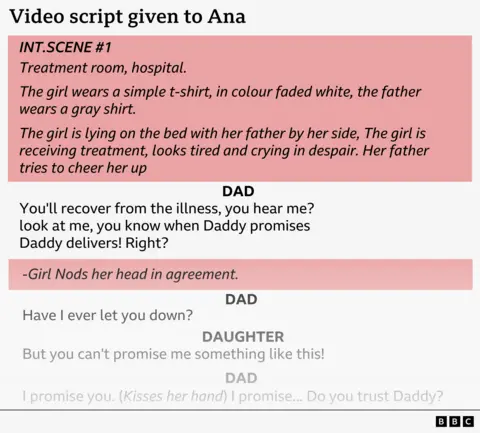
An excerpt from a script given to Ana to learn - it shows stage directions, directing her and her dad on what to wear and how to behave, including tears from Ana. Her dad is given lines telling her that she will get better.

Demands on the family did not end with the filming.

Isabel kept ringing, Sergio says, demanding more photos of Ana in hospital. When Sergio didn't reply, Isabel started messaging Ana herself - voice notes we have heard.

Ana told Isabel she had no more photos to send. Isabel replied: "This is very bad Ana, very bad indeed."

In January this year, Ana - now fully recovered - tried to find out what happened to the money promised.

"That foundation disappeared," Isabel told her in a voice note. "Your video was never uploaded. Never. Nothing was done with it, you hear?"

But we could see the video had been uploaded and, by April 2024, appeared to have raised nearly $250,000 (£187,070).
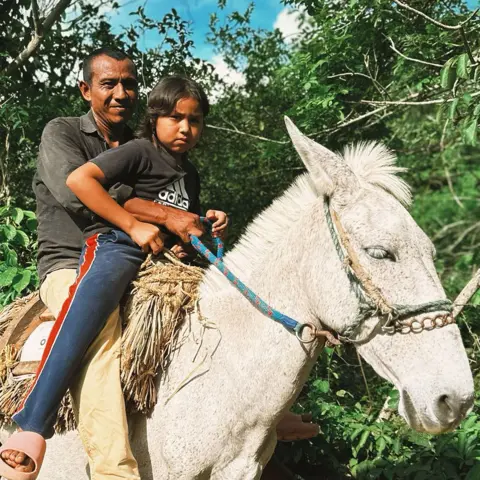
Ana's dad is smiling as he and Ana ride a donkey/horse - white with a straw saddle. Ana is wearing navy joggers and a black Adidas t-shirt, and her dad is wearing a dark shirt and yellow trousers

Ana and her dad live in a remote indigenous community in Colombia

In October, we persuaded Isabel Hernandez to speak to us over video link.

A friend from Israel, she explained, had introduced her to someone offering work for "a foundation" looking to help children with cancer. She refused to name who she worked for.

She was told only one of the campaigns she helped organise was published, she says, and that it had not been successful.

We showed Isabel that two campaigns had in fact been uploaded - one of them apparently raising more than $700,000 (£523,797).

"I need to apologise to [the families]," she said. "If I'd known what was going on, I would not have been able to do something like this."

In Ukraine, we discovered that the person who approached the mother of a sick child was actually employed in the place where the campaign video was filmed.

Tetiana Khaliavka organised a shoot with five-year-old Viktoriia, who has brain cancer, at Angelholm Clinic in Chernivtsi.

One Facebook post linked to Chance Letikva's campaign shows Viktoriia and her mother Olena Firsova, sitting on a bed. "I see your efforts to save my daughter, and it deeply moves us all. It's a race against time to raise the amount needed for Viktoriia's treatments," reads the caption.

Olena says she never wrote or even said these words and had no idea the campaign had been uploaded.

It appears to have raised more than €280,000 (£244,000).

Tetiana, we were told, was in charge of advertising and communications at Angelholm.

The clinic recently told the BBC it didn't approve filming on its premises - adding: "The clinic has never participated in, nor supported, any fundraising initiatives organised by any organisation."

Angelholm says it has terminated Tetiana Khaliavka's employment.
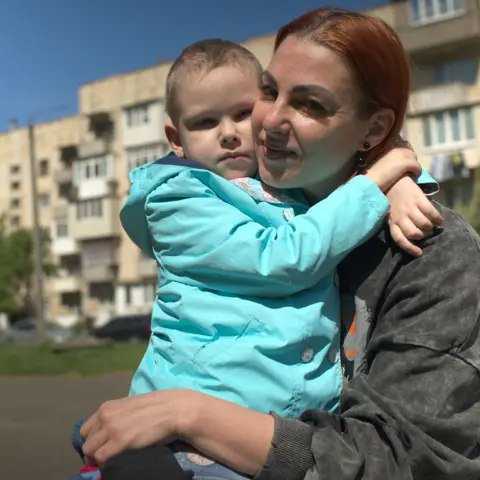
Olena has dyed red hair, tied back, and is wearing a grey top. She is cuddling Viktoriia, who is wearing a turquoise coat and has closely cropped hair. They are outside, with a housing block behind them.

Olena with her daughter Viktoriia, who has recently been diagnosed with another brain tumour

Olena showed us the contract she had been asked to sign.

In addition to the family's $1,500 (£1,122) filming fee on the day, it states they would get $8,000 (£5,986) once the fundraising goal was met. The amount for the goal, however, has been left blank.

The contract showed an address in New York for Chance Letikva. On the organisation's website, there is another - in Beit Shemesh, about an hour from Jerusalem. We travelled to both, but found no sign of it.

And we discovered Chance Letikva seems to be one of many such organisations.

The man who filmed Viktoriia's campaign told our producer - who was posing as a friend of a sick child - that he works for other similar organisations.

"Each time, it's a different one," the man - who had introduced himself as "Oleh" - told her. "I hate to put it this way, but they work kind of like a conveyor belt."

"About a dozen similar companies" requested "material", he said, naming two of them - Saint Teresa and Little Angels, both registered in the US.

When we checked their registration documents, we once again found Erez Hadari's name.

What is not clear is where the money raised for the children has gone.

More than a year after Viktoriia's filming, her mother Olena rang Oleh, who seems to go by Alex Kohen online, to find out. Shortly afterwards, someone from Chance Letikva called to say the donations had paid for advertising, she says.

This is also what Mr Hadari told Aljin, Khalil's mother, when she confronted him over the phone.

"There is cost of advertising. So the company lost money," Mr Hadari told her, without giving any evidence to support this.

Charity experts told us advertising should not amount to more than 20% of the total raised by campaigns.

Someone previously employed to recruit children for Chance Letikva campaigns told us how those featured had been chosen.

They had been asked to visit oncology clinics, they said - speaking on condition of anonymity.

"They were always looking for beautiful children with white skin. The child had to be three to nine years old. They had to know how to speak well. They had to be without hair," they told us.

"They asked me for photos, to see if the child is right, and I would send it to Erez."

The whistleblower told us Mr Hadari would then send the photo on to someone else, in Israel, whose name they were never told.

As for Mr Hadari himself, we tried to reach him at two addresses in Canada but could not find him. He replied to one voice note we had sent him - asking about the money he had been apparently crowdfunding - by saying the organisation "has never been active", without specifying which one. He did not respond to a further voice note and letter laying out all our questions and allegations.
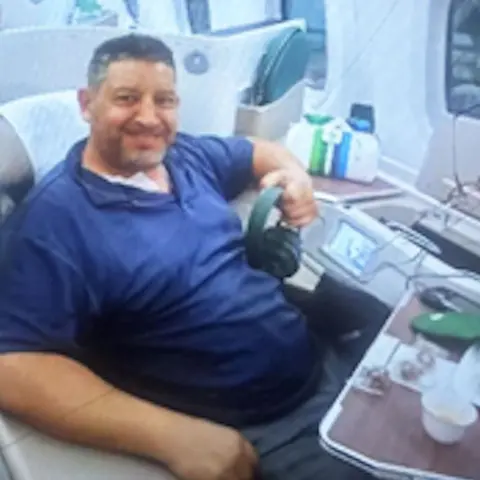
Erez Hadari Erez Hadari is shown sitting in a plane - in what looks like first or business class - with a blue top and grey trousers, and is smiling, holding headphonesErez Hadari

Erez Hadari sent this photo of himself to Khalil's mum, Aljin

Campaigns set up by Chance Letikva for two children who died - Khalil and a Mexican boy called Hector - still appear to be accepting money.

Chance Letikva's US branch appears to be linked to a new organisation called Saint Raphael, which has produced more campaigns - at least two of which seem to have been filmed in Angelholm clinic in Ukraine, as the clinic's distinctive wood panelling and staff uniforms can be seen.

Olena, Viktoriia's mother, says her daughter has been diagnosed with another brain tumour. She says she is sickened by the findings of our investigation.

"When your child is… hanging on the edge of life, and someone's out there, making money off that. Well, it's filthy. It's blood money."

The BBC contacted Tetiana Khaliavka and Alex Kohen, and the organisations Chance Letikva, Walls of Hope, Saint Raphael, Little Angels and Saint Teresa - inviting them to respond to the allegations made against them. None of them replied.

The Israeli Corporations Authority, which oversees the country's non-profit organisations, told us that if it has evidence founders are using entities as "a cover for illegal activity", then registration inside Israel may be denied and the founder could be barred from working in the sector.

UK regulator, the Charity Commission, advises those wishing to donate to charities to check that those associations are registered, and that the appropriate fundraising regulator should be contacted if in doubt.

Additional reporting by: Ned Davies, Tracks Saflor, Jose Antonio Lucio, Almudena Garcia-parrado, Vitaliya Kozmenko, Shakked Auerbach, Tom Tzur Wisfelder, Katya Malofieieva, Anastasia Kucher, Alan Pulido and Neil McCarthy

  • If you have any information to add to this investigation please contact simi@bbc.co.uk

Read the original article

Comments

  • By Animats 2025-12-167:458 reply

    "The campaigns with the biggest apparent international reach were under the name of an organisation called Chance Letikva (Chance for Hope, in English) - registered in Israel and the US."

    Chance Letikva is registered with the US IRS as a charity. They've filed a Form 990. Location is Brooklyn, NY. [1] Address is listed. It's a small house. It's also incorporated as CHANCE LETIKVA, INC. in New York State. Address matches. Names of officers not given. There's one name in the IRS filing, listed as the president.

    Web site "https://chanceletikva.org" has been "suspended". Domain is still registered, via Namecheap.

    Some on the ground digging and subpoenas should reveal who's behind this.

    [1] https://projects.propublica.org/nonprofits/organizations/852...

    • By jdranczewski 2025-12-168:103 reply

      The article says they visited both the US and Israel registration addresses and didn't find the organisation's offices. I was impressed by the amount of "on the ground digging" by the journalists here!

      • By mlrtime 2025-12-1611:253 reply

        It's really not that hard to find someone to go to check a address, redditors do this all the time. It should be expected as basic journalism, especially with high claims.

        • By afavour 2025-12-1612:501 reply

          Check an address and interview anyone resident there in a way that gets useful answers to the questions at hand.

          In this instance it was a bust because no one useful was there. But if the mastermind behind the whole operation was there you’d want a professional to ask them questions. Because once they know they’ve been rumbled they’re probably going to disappear.

          • By prmoustache 2025-12-1621:15

            I am pretty sure the BBC, like most bug enough news outlets, has antennas all over the world.

        • By tclancy 2025-12-1616:521 reply

          Why does every discussion have to wind up with a digression thread about how "real" or, even worse, "basic" journalism is something from a sepia-tinged golden age of muckrakers getting blitzed with Dorothy Parker? People are trying. There's lots of shıt masquerading as journalism, but this ain't it.

          • By deanishe 2025-12-1618:40

            > Why does every discussion have to wind up with a digression thread about how "real" or, even worse, "basic" journalism

            Hardly surprising given the contrast to the level of journalistic integrity on display at the Beeb recently.

        • By interstice 2025-12-1614:391 reply

          If only this was the actual standard for journalism and not copy pasting half understood content with additional spin.

          • By buellerbueller 2025-12-1614:541 reply

            If what you are typically reading is

            >[copypasta] half understood content with additional spin

            then what you are reading is not journalism.

            • By JumpCrisscross 2025-12-1616:03

              > then what you are reading is not journalism

              In most cases, if you aren't paying for it, it is not journalism.

      • By jjcob 2025-12-168:471 reply

        Pretty impressive work. I always wondered what all those correspondents do that news organisations employ all over the world. I guess that's one of those things.

        • By Sharlin 2025-12-1611:19

          I’m… not sure what’s there to wonder, really. They do the exact same thing as reporters back home: journalism. Meaning write articles and do investigative work required for writing articles, whether going to press conferences, finding people to interview, or something like this, called investigative journalism.

          A news piece in a foreign affairs section is likely to have been written by a correspondent because that’s what their job and specialty is. If it’s an op-ed or a commentary or analysis piece, even more so. It’s not like you can do good journalism without boots on the ground, no matter how connected the world is these days.

      • By boringg 2025-12-1614:23

        I agree - I noticed this as well. Also feels like it such an upsetting story that someone was motivated to really to the bottom of it. They also probably knew that if the story got traction people would be running down there own checks.

        I mean it does feel like that should be standard operation for journalism on bigger stories but I think our expectations from journalists have really fallen over the last 5 years with all the slop coming in.

    • By alwa 2025-12-1616:51

      The behavior that this article outlines is outrageous. But it makes me uncomfortable for this to be the kind of place where anonymous strangers self-investigate lurid allegations against random accused, no matter how disturbing the allegations.

      Most of us don’t have the tools or the time to do it properly, at least on here; and that can end badly [0]. It rarely achieves a thoughtful considered outcome, and there are other places to do that kind of thing if you want to—some of those communities, like Bellingcat, seem pretty well-practiced in their methodologies, and their findings seem to have accordingly high impact.

      [0] e.g. https://www.bbc.com/news/technology-22214511 … and https://en.wikipedia.org/wiki/Suicide_of_Sunil_Tripathi

    • By pksebben 2025-12-167:53

      is it normal for these places to have 0 liabilities? That alone seems like it ought to raise a flag - if you're not spending the money...

      Edit: Clicked through some of the other entries in there and yeah, usually liabilities are relatively close to incomes. How the system didn't catch this is beyond me.

    • By eleveriven 2025-12-1610:16

      The fact that the website is suspended while the donation machinery was clearly active is… not a great sign

    • By chaostheory 2025-12-1615:55

      The article names Erez Hadari as someone involved with the organization.

    • By JumpCrisscross 2025-12-1616:08

      > Chance Letikva is registered with the US IRS as a charity

      At what point do audit requirements kick in for charities?

    • By bryan_w 2025-12-172:12

      >Namecheap

      Namecheap and scammers -- I dare you to name a more iconic duo.

    • By naian 2025-12-169:59

      [flagged]

  • By krebsonsecurity 2025-12-1616:321 reply

    Sometimes just a little bit DNS research can yield a lot of useful results.

    Looking at the passive DNS records for the domain chanceletikva.org shows it references the email address davidm@yeahdim.co.il.That email address is tied to multiple website registrations for a person by the name of David Margaliot, and also Shoshana Margaliot.

    A search on this name in Domaintools finds the name David Margaliot tied to at least 25 domains, including ezri.org.il, which is a very odd site that features a huge image of a young child who is apparently in the hospital holding a gift wrapped box with a teddy bear. The site asks for donations but has a strange mission statement: Ezri Association promotes life-saving innovation through a surveillance drone project for emergency response teams, the establishment of an international medical knowledge database, along with other technological initiatives".

    I'll probably continue the rest of this in a follow-up story.

  • By throwaw12 2025-12-168:3513 reply

    I have reported these ads to YouTube multiple times, because I tracked down their scam websites, but YouTube didn't delete them anyway.

    Common pattern they had was:

    - similar or same domains

    - same messaging on their website

    YouTube could have taken action, but it choose not to

    • By jjcob 2025-12-168:518 reply

      I'm still waiting for the tech world to wake up and realise that the online ad machinery and user tracking software that the brightest minds of our generation have been working on are just a way to efficiently connect scammers with their unsuspecting victims.

      • By pjc50 2025-12-169:29

        Oh, they know that. It's very lucrative. At this point it's scams all the way up to the US presidential cryptocurrency.

        However it's also a tricky business to be the adjudicator of what is and isn't a scam. You're going to have to deal with a lot of complaints from "legitimate businessmen".

      • By tgsovlerkhgsel 2025-12-169:111 reply

        I'm waiting for the non-tech world to wake up and hold companies that act as willing accomplices liable for the crimes they tolerate on their platforms.

        • By 1718627440 2025-12-169:39

          > the crimes they tolerate on their platforms.

          ... the crimes they actually make a lot of money from.

      • By felixyz 2025-12-1610:54

        The tech world knows this. They are raking in money off of these scams. People with a rudimentary moral compass leave, those without stay, which makes it even less likely that industry will self-sanitize. The rest of society, out of survival instinct if nothing else, will have to force it to stop anti-social and fraudulent practices. Same as many other industries.

      • By mrguyorama 2025-12-1622:27

        I'm waiting for the tech world to realize that "the brightest minds of our generation" don't actually work at google, because if you are that enormously bright you don't want to work for ads or in an opaque megacorp.

        Why does anyone think a brilliant mind would enjoy that? So they could make a little bit more money?

        Do you honestly think brilliant people, the smartest of our generation, care about money?

        IME, Google software devs aren't even the brightest minds in the parking lot.

        Completing large engineering projects says nothing about individual capability, and nothing about how Google deploys shitty AI moderation and about how Google employees insist it's great and perfect and never does anything wrong gives me any reason to believe they are even competent.

        It's literally a meme that people started repeating in earnest without a second thought.

        Don't you think a brilliant person would work somewhere, like, interesting?

        In economies where you aren't rewarded for individual competency (because software management couldn't pick out individual competency if it screamed at them), highly competent people aren't going to play the game, they are just going to find something to pay the bills and work on hobbies.

        The smart people are often where the money isn't, because they are rarely driven by monetary pursuits.

      • By neilv 2025-12-1616:45

        It would help to stop saying "brightest minds of our generation", like we stopped saying "smartest guys in the room".

        They are not the brightest, just the ones who sold out others and grabbed the money, with ethics and morals not being sufficient personal barriers.

        Calling them the brightest just feeds their belief that they merit the money, and they don't have to ask the real reason they have so much money.

      • By xgulfie 2025-12-1616:02

        They already know. Meta estimates around 10% of its ad revenue comes from ads for scams or banned goods. https://www.reuters.com/investigations/meta-is-earning-fortu...

      • By intended 2025-12-1612:07

        I think being a “Techie” is now something that is splitting.

        - People who want to work in tech because it was a stable and/or lucrative career

        - People who just want/love to code

        - People who loved tech / think tech is cool

        There’s also a degree of counter-culture that used to be part of the mix, which got jettisoned as tech became mainstream and mapped out.

        The current state of Tech is unpleasant and alarming.

      • By 1718627440 2025-12-169:381 reply

        It is difficult to get a man to understand something when his salary depends on his not understanding it.

        • By binary132 2025-12-1614:32

          (but enough about LLM shills)

    • By Andrew_nenakhov 2025-12-168:441 reply

      There was a period when I was constantly showered with these ads whenever I visited YouTube. It quickly became clear that it was some kind of scam, but YouTube didn't do anything about it for years.

      • By zaphirplane 2025-12-168:563 reply

        Does clicking on the ad cost the spammer a lot of money

        • By LadyCailin 2025-12-169:264 reply

          Yes, which is one of two reasons why I use a blocker called adnauseum. It an adv locker that “clicks” on every single ad it sees, as well as hides it from my view. This makes my ad profile useless, and also costs them money.

          • By binary132 2025-12-1614:31

            you should probably think about the fact that ad platforms expect and design for fraudulent and bot clicks before you assume that this actually costs anyone money.

          • By phatfish 2025-12-1614:52

            The question is, is the scammer taking donations from kids with cancer or Google the more worthy entity to profit from the situation? It's a tough decision.

          • By rationalist 2025-12-1612:38

            > This makes my ad profile useless

            I have a theory that it doesn't. Which set of companies' logic is more likely?:

            Is LadyCailin a "tree-hugging liberal"? LadyCailin clicked on a lot of Sierra Club and PETA ads, so yes. Good, we will add LadyCailin to this list.

            Is LadyCailin an "extremist right-wing nazi"? LadyCailin clicked on a lot of prepper and gold ads, so yes. Good, we will *also* add LadyCailin to this other list.

            OR

            Is LadyCailin a "tree-hugging liberal"? Well, they clicked on these ads, so we think so, but then they clicked on these other ads, so we're not sure. Then she clicked on these other ads, now we don't have any idea.

            Speaking from personal experience: Because some people have used my phone number and email address as their own, I get emails for one political party and text messages for the other political party.

            It doesn't make my ad profile useless to the people sending me ads.

            Give your phone number to both U.S. political parties. Congratulations you will get spammed by both. I doubt they are cross-checking.

          • By b3ing 2025-12-1610:531 reply

            Won’t Google ban your account if they notice this

            • By gervwyk 2025-12-1612:08

              As per other comments, if it’s making them money, why bother banning it

        • By 0_gravitas 2025-12-1622:54

          Depends on bot-detection and if its a CPC or CPA campaign

    • By CGamesPlay 2025-12-168:571 reply

      Once you realize how profitable it is, it's hard to stop. https://www.cnbc.com/2025/11/06/meta-reportedly-projected-10...

    • By BoredPositron 2025-12-169:19

      Same. Even if they delete one it's usually delayed for 2-3 days. The worst part about scam ads is that they surface a day later from a different account with 0 changes to the ads themselves. You would think Google would fingerprint the assets but in the end they just don't care.

    • By benchly 2025-12-169:30

      There's no incentive for them to comply with your request. Like Facebook, scam ads are a revenue stream for Google. The profitability usually offsets any negative PR or fallout that results from these platforms turning a blind eye to the point where their budget accounts for some percentage of scam income, leaving them to pick and choose when to take action while they actively make their platform increasingly hostile to users who want to protect themselves from said ads.

    • By nrhrjrjrjtntbt 2025-12-168:411 reply

      Google, the worlds biggest and best coconspiritor.

    • By throwaw12 2025-12-168:43

      They also had a pattern of loudly crying kids in the beginning of the video, I thought they were faking, after a month they changed the style of start.

    • By oefrha 2025-12-169:50

      Scams are extremely high margin businesses and as such can spend very generously on advertising. Consequently the Googles of our world love them.

    • By yalok 2025-12-168:46

      In my experience, anything related to Google Ads - they never reacts to any claims of scam…

      Their incentives contradict healthy behavior… :(

    • By ryukoposting 2025-12-1614:04

      Yep. Lately I've been getting dozens of scam ads for pulse oximeters being sold as Glucose meters, with a big ol' FDA logo plastered over the top of the video. A flagrant violation of regulations around medical device marketing.

      Here's Google's response:

        We understand you are concerned about the content in question, but please note that Google's services host third-party content. Google is not a creator or mediator of that content. We encourage you to resolve any disputes directly with the individual who posted the content.
      
      ...which is a lie, among other things.

    • By throw310822 2025-12-1611:52

      What struck me is that when I reported an ad with an Elon Musk deepfake selling some crypto scam, I got an email back from Google saying that after reviewing the video they found nothing wrong. I don't understand how this is not actionable in court- I mean, you did act on a report, you declare you manually reviewed the content and that it's good for you? I don't get it.

    • By eleveriven 2025-12-1610:22

      What's most depressing is that people like you did the right thing (took the time to investigate and report) and still hit a wall

    • By htrp 2025-12-1613:29

      reminder that according to Facebook's own analysis 10% of their 2024 revenue comes from scams and banned products

HackerNews