Rooftop solar panels in Beeskow, Germany. Pexels
Last year, for the first time, wind and solar supplied more power than fossil fuels to the E.U., according to a new analysis.
The shift is largely due to the rapid expansion of solar energy, which is growing faster than any other source of electricity. Together, wind and solar generated 30 percent of E.U. power last year, while fossil fuels provided 29 percent, according to the analysis from Ember, a think tank based in London. Including hydro, renewables provided nearly half of all E.U. power in 2025.

E.U. power generation. EMBER / ADAPTED BY YALE ENVIRONMENT 360
The analysis finds that solar is making gains in every E.U. country, while coal is broadly in retreat. Last year, solar alone supplied more than 20 percent of power in Hungary, Cyprus, Greece, Spain, and the Netherlands. Meanwhile, in 19 European countries, coal accounted for less than 5 percent of power. In 2025, both Ireland and Finland joined the ranks of European countries that have shuttered their last remaining coal plants.
Warming, however, continues to challenge the shift to clean energy as drought saps hydropower. Last year, hydro output dropped slightly in the E.U., and natural gas power rose to compensate.
“The next priority for the E.U. should be to put a serious dent in reliance on expensive, imported gas,” said Ember analyst Beatrice Petrovich. “Gas not only makes the E.U. more vulnerable to energy blackmail, it’s also driving up prices.”
In parts of Europe, there are signs that increasingly cheap batteries are beginning to displace natural gas in the early evening, when power demand is high, but solar output is waning. Said Petrovich, “As this trend accelerates it could limit how much gas is needed in evening hours, therefore stabilizing prices.”
ALSO ON YALE E360
An E.U. Plan to Slash Micropollutants in Wastewater Is Under Attack
Read the original article

Comments
Every time, over the years, that there has been some kind of headline saying renewables have overtaken fossil fuels, when you look at it a bit more closely there is always a big 'but'. For example, it was compared to coal (not taking into account electricity from gas), or it was for one day, or it was a percentage of new installations, or it excludes winter, includes nuclear etc.
This time, however, it looks like it's actually true and that's just for wind and solar. This is incredible, and done through slowly compounding gains that didn't cause massive economic hardships along the way.
By owenversteeg 2026-01-2217:444 reply The only asterisk this time is that this is electricity, not energy. Still impressive, but electricity is only 22% of total energy use, so they are at about 12% of the total for the EU and 7.8% for Europe.
For that, you want this graph: https://ourworldindata.org/grapher/energy-consumption-by-sou...
Fun to play around with, you can also change the selection to view the world, US, China, individual EU countries etc.
You can see that this the gain in renewables in the EU has been mainly at the expense of coal (down >50% as a share of total energy use in 10 years), gas (down 4%), and nuclear (down 20%.) Oil use as a share of the total is up by 5%.
By eigenspace 2026-01-2217:555 reply It can be rather misleading to to talk about renewable energy generation versus total energy usage.
Most uses of fossil fuels are very inefficient. For instance, when you step on the accelerator in your car, only around 30% of the energy in the fuel you use actually is being used to propel you forward. The majority of the energy is wasted as heat. In a power plant that's more like 70% being captured and going towards the goal (electricity generation).
Another large quantity of energy-usage is heating, and electrical heat-pumps can be around 3-5x more energy efficient at heating an enclosed space than combustion or resistive heating.
So while things like heating an transportation use a very large amount of energy, conquering them with renewables actually won't require that Europe installs 10x or whatever more wind and solar, since electrification also brings significant new efficiencies.
______
If you want to compare renewables against the amount of fossil fuels being burnt, then it'd be a lot more representative if you calculate the amount of wind energy impacting a wind turbine blade, or the amount of energy in solar radiation incident on a solar panel. That's an easy way to inflate the renewable numbers by ~5x or whatever
By owenversteeg 2026-01-2218:164 reply I mostly agree. Certainly transportation is an obvious one. But of course there are still some losses; when you include all the losses in the system and cold weather you can easily get ~80% for EVs vs. ~30% for ICE cars. Heat pumps can be very efficient, but 5x more efficient than combustion/resistive heating (which is near 100%...) is not common in practice. 3x, sure, plenty of installations that get that or better in mild climates.
That said, those are two pretty large items. If we reached 90% electrification on both it would be a pretty big win: Road transport represents ~26% of global energy use and all heating/cooling (industry, building, agriculture) represents ~50%.
By tialaramex 2026-01-231:122 reply Resistive heating is indeed almost 100% efficient, but combustion is only about 90% efficient and that's using modern technology to scrape almost everything we can, which has a cost in terms of the product upfront cost and maintenance. The reason it's not much higher is that we must vent the exhaust gases. If you were OK with the burned gas vapours in your home you could get close to 100%, but they're poisonous and so they must be vented to the atmosphere where they only cause global warming. Venting those gases means losing heat, so that's inefficient.
For the EVs in particular, because motion <=> electrical energy is almost the same either direction (a dynamo and an electric motor are almost identical) we get regenerative braking in most applications. This isn't anywhere close to 100% effective, and of course we net losses from resistance which gets much worse as speed increases - but it's not nothing.
The big win is that global warming problem. Electrifying consumption means fungibility. In my lifetime the UK went from mostly coal electricity, to no coal at all. But few cared because to the end users it's the same electricity regardless of how it was made, and most people probably didn't even notice. So if you move consumption to electricity then the generation problem is de-coupled and can be addressed separately.
Anywhere you use resistive heating you're better off with a heatpump which is far more efficient than that.
By nandomrumber 2026-01-232:431 reply This is not true in all circumstances.
Where you need process heat for industrial applications, you’re almost always better off with resistive heat or fossil fuels, typically gas.
By jillesvangurp 2026-01-238:45 Depends, industrial heat is a rather large category. The vast majority of industrial heat in e.g. food production or textiles needs modest temperatures that can easily be handled with heat pumps.
For the rest, there are many ways to heat electrically. Including resistive, plasma, arc, induction, etc. Mostly, gas based heating is convenient because it is rather simple technology that is easy to use and we know how to do it at scale. But there is a lot of wasted heat in industry. Mostly that just blows out the chimneys or is radiated to the universe.
Cooling is as big of a problem as heating is in industry. Cooling is the process of expending more energy in order to get rid of the already wasted energy you can't use. Very little of that energy is recovered. Though some places run e.g. district heating on this type of energy.
There are examples of steel producers that are using electric heat now. Still a bit niche. But it works. A lot of this stuff is inertia. Building and designing new factories from scratch is expensive and disruptive. Gas isn't expensive/wasteful enough to consider that for a lot of existing industries. However, new companies would be well advised to see if they can undercut the competition by going electric. Especially in places where gas now has to be imported in LNG form at great cost.
Unless you live somewhere that (air, e.g. in an EV) heat pumps can't function at high efficiency. Tonight and tomorrow night will be -20F/-28C. Always good to have a backup plan, no matter what your primary heat source is.
By 8fingerlouie 2026-01-238:361 reply My Vaillant air to water heat pump is "effective" down to -28C, and has a resistive heater element as a backup in case the COP value flatlines (as in if COP is 1, it doesn't matter).
My cheap air to air heat pump in the summerhouse (Panasonic HZ25ZKE) is effective down to -25C and has a COP of 2.22 there. Even at -25C it still delivers twice as much heat energy as the electricity consumed.
https://www.aircon.panasonic.eu/DK_da/product/panasonic-hz25...
The bigger issue may be the heat rate of the heat pump at low temperature, not the efficiency.
By 8fingerlouie 2026-01-2610:101 reply While we very rarely have temperatures below -20C in Denmark, i have yet to experience a "drop" in performance from it. Granted, it becomes a lot noisier in very low temperatures, but it "does the job".
I'll add that this being an older house (1970s) we have "other issues" that causes heat loss, so we usually run the log burner for supplementary heat during those few days of -20C. The heat pump can keep the house warm, but you can feel the cold "pushing in" from walls and windows (dual pane).
Sadly the heat pump has also kinda voided all attempts to renovate for saving energy. Our yearly heat cost (heating and warm water) is around €750, and adding insulation would cost around €3500, for a potential saving of around 10-20%, so a total of 20-30 years to earn itself back again.
By pfdietz 2026-01-2612:52 > While we very rarely have temperatures below -20C in Denmark, i have yet to experience a "drop" in performance from it.
This is also my experience in upstate New York at such temperatures.
Almost no one lives in a location where heat pumps are never (or even usually) inappropriate. Yes, it might get to -20 F, but how often does that happen over a winter, never mind over a year?
By reeredfdfdf 2026-01-236:37 Yeah, over here in Finland we have pretty cold winters, but heat pumps are still very popular and deliver value most of the year.
My area doesn't get that cold, but the insulation is so good that last year we accidentally turned the heat off for a week without noticing despite it snowing outside; our "backup" was our own body heat plus the waste heat from our normal electricity consumption (which also isn't high).
By jacquesm 2026-01-2313:45 I've seen a demo house in Canada that had a bucket standing in the middle of a room with -20 outside. The bucket had been there all winter and it never froze, a single, huge candle warmed the house. It was most impressive. I never did figure out how enough oxygen made it in to keep that candle burning!
But it really made me realize that even though I'm used to brick houses and stone everywhere that that is a terrible thing efficiency wise. A properly insulated wooden house can indeed be heated almost by body heat and waste heat alone. The big loss is windows so triple insulated and properly mounted windows are a must for such a setup.
By Maakuth 2026-01-238:33 Modern air-to-air heatpumps heat at over 100% efficiency even at those temperatures, they are very widely deplyoed in the Nordics for heating. And even where it is sometimes that cold, most of the year it is warmer than that. Still yes, you should have another source of heat just in case.
By jacquesm 2026-01-233:34 That's true.
By nandomrumber 2026-01-232:441 reply > But few cared
Few cared that electricity price increases out passed general inflation.
I don’t think so.
By tialaramex 2026-01-2312:481 reply While I'm sure that it suits some people to connect "Electricity got more expensive" with "The primary generation sources changed" as a primitive post hoc ergo propter hoc argument that doesn't really work out.
By nandomrumber 2026-01-242:49 If we’ve got data, let’s go with the data.
If all we’ve got is opinions, let’s go with mine.
Name one place where renewables penetration is worth talking about and electricity became less expensive.
> Road transport represents ~26% of global energy use
Does that 26% include the energy that's involved to ship the fuel in tankers?
Something like 50% of marine fuel usage is shipping fossil fuels around the world
> Something like 50% of marine fuel usage is shipping fossil fuels around the world
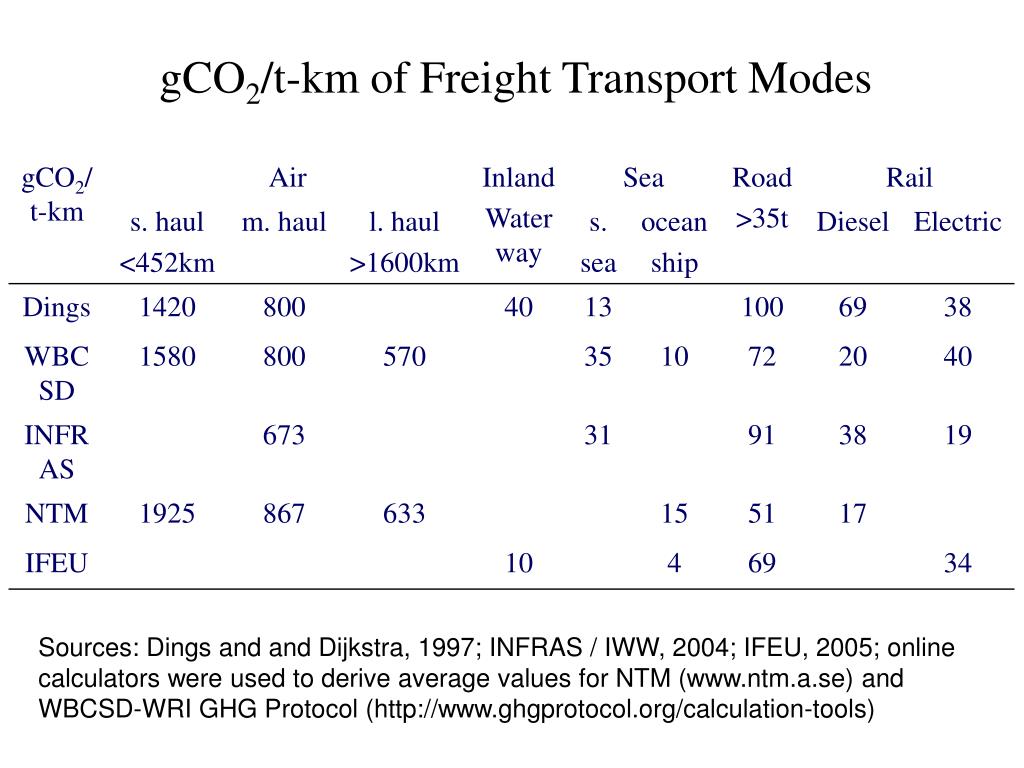
Note that marine shipping is extraordinarily fuel efficient (from a gCO2/(t*km) basis), so I doubt that it adds a lot on a per ton of fuel basis. We just ship a lot of fossil fuels.
This [1] graph looks to be in the right ballpark from what i remember in school 15 years ago, i didn't verify it in depth but +- an order of magnitude better than the next best method is roughly right
https://image2.slideserve.com/4166134/gco-2-t-km-of-freight-...
By lambdaone 2026-01-238:21 Even though petroleum product shipping accounts for almost 40% of shipping, the surprising efficiency of ocean transport still means that it's not that big an energy cost; a single-digit percentage of the energy content of the shipped oil/gasoline.
But even that is still worth saving - it's a few percent more benefit for electrification.
By jijijijij 2026-01-2311:02 Marine transport is stupidly efficient and probably won’t influence those numbers much. For the same reasons it’s absolutely okay to eat avocados from overseas. I believe the processing of oil to gas is quite energy intense tho.
By adrianN 2026-01-2314:31 You also need to extract and refine the oil before you can put it into a car.
By CraigJPerry 2026-01-237:301 reply in cold weather an ice is not close to 30%, that's an achievable warm weather figure when everything's working efficiently. Many ice journeys are so short in cold weather that efficiency never peaks above 10%
By eigenspace 2026-01-2311:141 reply Well, EVs also lose a lot of efficiency in cold weather as well. You'll also note that the 70% figure I gave for power plants is more or less a best case scenario for modern, well designed plants. A lot of currently existing power plants do much worse than 70%
By tialaramex 2026-01-2313:05 True, system thermal efficiency for the UK's CCGT generation is about 50%. Obviously that's with a varying throttle (the UK goes from say 5GW of CCGT to 25GW of CCGT in an hour if the wind drops just as everybody wakes up) and you'd do better than 50% if you were baseload running 24/7 at peak performance - but that's not a realistic place for CCGT to be when nuclear fuel is basically free and the two new big sources (solar and wind) aren't even running on actual fuel anyway.
By ncruces 2026-01-2314:19 Without disagreeing, I think it's worth acknowledging that vehicle weight will be a confounding issue for long range EVs.
By grumbelbart 2026-01-2219:191 reply Exactly. It is in general (much) more efficient to burn natural gas in a power plant and use the electricity for heatpumps compared to simply burning gas at home for heating.
Yeah, in combined cycle plants you burn the natural gas first in a gas turbine first, use the waste heat from that to boil water and run steam turbine. Then condense the steam using your district heating circuit.
You can say this is 100% efficient as you make some electricity and the rest does house heating.
By grumbelbart 2026-01-236:08 The thing is that your home's heatpump has an efficiency of 300%-500%. So even if your power plant and power delivery only has say 50% gas-to-electricity-at-home, you are still looking at 150%-250% gas-to-heat-your-house efficiency.
By nandomrumber 2026-01-232:501 reply 100% efficient assuming a perfectly spherical combined cycle gas turbine with district heating circuit operating in a vacuum.
By m4rtink 2026-01-2315:46 Let say all the loses provide heating for the power plant building itself. ;-)
By eigenspace 2026-01-2223:08 Definitely not 100% efficient, but it can still hit a much higher efficiency than without the heat recovery
By natmaka 2026-01-2311:06 There are quite good explanation published at https://ourworldindata.org/energy-definitions and https://ourworldindata.org/energy-substitution-method
By holowoodman 2026-01-238:402 reply > Most uses of fossil fuels are very inefficient. For instance, when you step on the accelerator in your car, only around 30% of the energy in the fuel you use actually is being used to propel you forward. The majority of the energy is wasted as heat. In a power plant that's more like 70% being captured and going towards the goal (electricity generation).
Yes, but there are also future inefficient uses of renewables. E.g. when making iron, you heat the ore (iron oxides) with coke (refined sulfurless coal). The coke will provide extra heat and act as a reduction agent, separating the oxygen atoms from the iron oxides. Now you can do the same thing with hydrogen as the reduction agent to avoid producing CO2 and to avoid using fossil fuels. However, creating renewable hydrogen is atm only 30% efficient, storing and transporting it has losses. Even with possible improvements, that hydrogen will be a very inefficient and costly use of electricity, and at least half of it will always be wasted.
So in terms of total energy usage, making those kinds of industrial processes use hydrogen, we will have to at least double our electricity output. And a lot of that doubling will be wasted because of the inefficiency of electrolysis, as opposed to directly using coal or natural gas.
By xorcist 2026-01-2317:21 The interesting bit about using H2 in industrial processes is that, while inefficient, it's also the school book example of variable loads. Solar and wind produces power extremely cheap but intermittent, so in a grid the push down prices when they produce the most. Variable loads can, at least in theory, be run when prices are the cheapest.
Uh, can you provide any scientific papers that H2 can be used for Iron smelting? CO2 is very stable, even at high temperatures. Its hard to strip O2 from it (except photosintesis). Now, H2 itself is very violatile gas. When burn, it creates water. Water is not stable high temperatures. It become vapor and when temperature rise it can even break bond between H2 and O.
So, papers or are you hallucinating?
By nasmorn 2026-01-239:34 They are already building such plants. So I would assume they have a plan
But here is a paper - only the title is German the main part is English https://pure.unileoben.ac.at/files/1851525/AC06514880n01vt.p...
By holowoodman 2026-01-2310:01 See https://en.wikipedia.org/wiki/Steelmaking#Hydrogen_direct_re... and linked sources.
Are you suggesting burning H2 will create water and enough energy to split the water in H2 and oxygen again, afterwards? That would be amazing news!
https://en.wikipedia.org/wiki/Steelmaking#Hydrogen_direct_re...
By holowoodman 2026-01-2310:041 reply No, not at all. Coke or hydrogen always only provide additional heat, they are never the main source of heat. The main heat source can either be coal or an electric arc furnace. The coke or hydrogen are just necessary for the chemical reaction, and providing some heat is a side-effect.
Sorry, in face of OP’s tone I allowed myself some sarcasm. Obviously there needs to be additional energy. You’d have some equilibrium with those reactions and OP didn’t make any argument why that can’t be controlled in favor of reducing Fe2O3.
It’s also borderline unbelievable OP never heard of hydrogen in future steelmaking, if they are at all invested in the topic. You’d need a special kind of ignorance to think people are hugely throwing money at this, when the basic chemistry is infeasible.
Yeah, I did not thats why I asked. Water and Steel doesnt like each other. But thanks for the info.. It seems it can be done in controlled way.
Now I wonder how cost effective it is :)
By holowoodman 2026-01-2314:411 reply Well, actually, thermolysis for water occurs at 2200°C. Thermolysis of CO₂ starts at 1400°C, of CO at 3700°C. The melting point of iron is around 1500°C, similarly its oxides.
So water as a product is actually more stable than CO₂, and doesn't undergo thermolysis at the relevant temperatures for smelting iron. Whereas when going the CO₂ route, there is the risk of producing relevant amounts of CO, which is not as desirable and less efficient because it only absorbs half the oxygen.
Cost is a big question, but it will for sure be more expensive to use hydrogen. Back of the envelop calculation (250$/t coal price, need 1/3t of H_2 for the same effect, so H₂ may cost up to 750$/t, need 40kWh/kg for H₂ electrolysis at 100% efficiency) gives a breakeven electricity price of 1.875ct/kWh. While this happens from time to time due to overproduction, those prices will even out as soon as there is a market for that excess electricity through batteries, storage and electrolysis. Which means that cost-wise, the H₂ route will never be more effective than coal. To make it viable, coal use needs to be made more expensive through taxes and tariffs.
Can you provide some citation about CO2 themolysis? I found just one paper from China....
By holowoodman 2026-01-2414:19 That stuff is ages old, I doubt you will find current papers on it. Pick a chem textbook or table book, you should find it somewhere in there.
By jijijijij 2026-01-2316:16 > Now I wonder how cost effective it is :)
I believe right now, it's expected to cost about 30% more. But we don't have an hydrogen economy yet, or 1000 years of experimentation as with carbon as reducing agent. There is probably still some room for innovation in material science for every part of the process.
By adrianN 2026-01-234:36 That is true, but I believe that most power plants are not modern combined cycle gas plants.
By eigenspace 2026-01-2218:22 Yeah, 70% is more or less a best-case scenario (unless you count systems for recovering and distributing waste heat, then it goes higher)
By black_puppydog 2026-01-238:132 reply Nice link, thanks! Still, the renewables (I'm not counting nuclear and biofuels, but counting hydro and "other renewables") make up 21.1% of the total energy consumption as well, up from 13.3% in 2015. That's still quite marked.
Also after clicking the "settings" button to show absolute values, I was surprised to see that total energy consumption peaked in 2006 (hey, that's 20 years ago!) at ~18,900TWh, and is now at ~15,700TWh.
I'd guess that demand for Oil is so inflexible mostly due to its use in transportation? If that's the case, we should see this value drop as the adoption of EVs progresses, but clearly so far they haven't made a dent.
Edit: after clicking around a bit more, it seems that the EU energy use reduction might be mostly due to off-shoring energy intensive industries... ayayay. XD
Do not underestimate the impact of transitioning from incandescent to LED lighting. An average home could be consuming 1Kw for lighting alone at busy times.
Where heating is needed, and where heating is done by electricity, changing to LED lighting indoors don't make any difference whatsoever. Unless your main heating source is a heat pump. In my home there's a heat pump upstairs, but not downstairs. All the lights downstairs are now LED, but the only effect that has is monetary - LED lights are way more expensive, and contrary to claims, don't last longer either. But these days LED is the only option available when buying.
Heat pumps though.. they really save a lot of electricity. Very visible on my electricity bill.
Is this really a lot of people that use resistive heating?
Also at least it saves electricity during summer when you don't want to dump even more heat into the room.
As a side, from my experience LEDs last significantly longer than incadescant LEDs. Maybe it's something to do with the power grid fluctuating more in certain areas?
By Tor3 2026-01-2314:49 I haven't been able to find reliable LED lighting, except when compared to particularly low-quality incadecent lights. Cost-wise it's a no-brainer, LEDs are more expensive. They are, however, getting better. They used to be totally terrible, at least that's changing. However, they're still advertising "N hours", where the "N" counts only 3 or 4 hours (typically) per day, so (and get this) the calculation is something like this: "20000 hours = 833 days, if you use them 3 hours only, of those days". Whereas the incadecent light bulbs "1200 hours" is 1200 hours of actual use.
As for your question, living in a country where 100% of domestic power is electric (save the occasional wood heater which is more for decoration but can be useful in certain very cold areas during winter), yes there's indeed a ton of resistive heating. All the heating in my home is resistive, except for the heat pump in the living room. And the living room is upstairs. The house is very well insulated though, even for a house many decades old, so it's not that expensive to heat.
In the summer? Well, this far north it doesn't get that hot, and we don't actually need to use electric lighting at all during the better part of summer, unless the room is windowless. 24 hour daylight.
By ZeroGravitas 2026-01-2311:56 Just transitioning from coal to gas for electricity production has a big impact.
The graph is adjusted to compensate for the efficiency of the power plants, but it's an average and one they need to update every so often as plants get more efficient.
But we're phasing out the oldest and least efficient coal plants and replacing them with gas plants that are twice as efficient (33% vs 64%).
The graph under discussion assumes 40% as discussed here:
By owenversteeg 2026-01-2419:28 Yes, the EU offshored almost all the important parts of their manufacturing, which definitely contributed. There is an interesting series of graphs on the subject from the same website: https://ourworldindata.org/energy-offshoring
Overall renewables (including the "bad" ones like biogas, and the finite ones like hydro) are at around 27% of TFC in EU today (25.2% in 2024 and growing at around 1% per year). Not bad. But far from replacement.
Renewables plus nuclear is now at around 70% of all energy (by final consumption) that is produced in EU though, it's just that the rest is imported.
> Renewables plus nuclear is now at around 70% of all energy (by final consumption) that is produced in EU
I'm probably misunderstanding because:
https://ourworldindata.org/grapher/per-capita-energy-source-...
https://ourworldindata.org/grapher/per-capita-energy-stacked...
By anovikov 2026-01-2314:49 That's the consumption numbers. 55% of total final consumption of energy in EU comes from imported sources.
By etiennebausson 2026-01-239:291 reply And nuclear fuel is also imported (but refined locally), so not sure it should be counted as 'local' in this case.
Nuclear fuel is around 2-3% of electricity cost, and there is too much worldwide supply for it to be of any concern, so it doesn't really matter where it comes from. For energy balance calculations it is accepted that nuclear energy is counted as produced where the reactor itself is.
Strategically, if nuclear power experiences a resurgence, procuring uranium could become difficult because the superpowers (Russia, China, and the US) will want to reserve it for themselves, and corresponding efforts have already begun.
The majority of nuclear-producing nations (Australia, Canada, Kazakhstan, Uzbekistan, etc.) will immediately comply.
Wind and sun, however, cannot be confiscated or withheld by blockade or embargo.
By victorbjorklund 2026-01-2312:521 reply There is so much uranium in the ground (in the west too) that it doesn’t make sense to ”keep it” for yourself. Why would Russia wanna keep a supply for the next one million years instead of selling it and get money today? Same with all other countries with uranium.
By natmaka 2026-01-2313:23 Regarding known and exploited or rapidly exploitable deposits, we are very, very far from millions of years: "As of 2017, identified uranium reserves recoverable at US$130/kg were 6.14 million tons (compared to 5.72 million tons in 2015). At the rate of consumption in 2017, these reserves are sufficient for slightly over 130 years of supply"
Source: https://en.wikipedia.org/wiki/Uranium_mining#Peak_uranium
By anonymousDan 2026-01-2314:361 reply You're forgetting about the supply chain. Who manufactures all the solar panels and wind turbines? Honest question - are we increasing the risks of becoming energy dependent on China? Or does Europe have the ability to manufacture its own?
By natmaka 2026-01-2316:01 AFAIK all the raw materials (maybe not all top-notch, especially from the get go, but usable) and all the know-how exist in Europe (at worst currently working abroad), where many nations want to reindustrialize and gain autonomy.
In France numerous projects appear. Some may be too ambitious, some with a Chinese partner. In any case we will re-learn, and it will be less difficult than creating usable uranium without any adequate ore here!
By anovikov 2026-01-2314:55 Nuclear power resurgence is bullshit and it will always remain a drop in the bucket, especially for large countries. US has too much natural gas, China too much renewables, Russia well, it's of virtually no economic impact worldwide and whatever they might do is irrelevant (unless they nuke us).
Any country that starts a new nuclear power plant construction today won't finish it before electricity will be comprehensively solved by renewables. It pertains even to dictatorship where public opinion does not exist and there's no red tape (Belarus: 14 years from decision to first reactor start) let alone not in free countries. It puts them into 2040+. In EU let's say there will be certainly no fossil fuel electricity at all, maybe apart from few percents of natgas for prolonged quiet periods in winter, and whatever nuclear power remains will be easy to replace. China? go figure, they have a problem of removing coal generation and that's essentially same as nuclear from standpoint of its behaviour on the grid, and there is so much more coal, nuclear will be squashed simply as a byproduct of whatever solution (which will likely be solar+batteries) they come up with.
By nandomrumber 2026-01-232:372 reply > The only asterisk this time is that this is electricity, not energy. … and 7.8% for Europe.
Yes, the _!ONLY!_ thing is, this won’t move the needle at all on climate change.
Wind and solar for electric is the lowest of low hanging fruit.
No one has even proposed that they have maybe even possibly have perhaps thought of an idea to address transport and agriculture related emissions.
Lithium ion batteries, or a solid state alternative aren’t it. Not without being some orders of magnitude more energy dense and lighter. And you still need to electrify those sectors to be able to charge the batteries.
Confident talk, but that's not at all the reality that I'm seeing.
Public transport is almost completely electric powered where I live (ferries still haven't changed to electric, but it's coming.)
Trucking is electrified, as in, the operators have realzed that they're cheaper to run, so they are changing over when possible. (Sidenote: with some of the heaviest loads worldwide)
Very many agricultural buildings in active use either have, or are installing solar. Their energy usage is so high, that any offset to it is "free" money. Many have installed batteries also, so if there is an interruption in power delivery, there isn't an immediate need to start up a generator.
Electric tractors are also something I've heard them want. Less maintenance means less time spent not being able to work.
Sure, fertilizer and animal husbandry have other emissions which aren't tackled by this, but why exclude improvement just because some other area isn't affected.
By nandomrumber 2026-01-237:331 reply > not at all the reality that I'm seeing.
You’re not looking hard enough, past the greenwash.
By Tor3 2026-01-2313:24 What was listed by the poster you replied to are genuine real facts, so the one who should look harder is you, in this case.
By benjymo 2026-01-2314:19 > No one has even proposed that they have maybe even possibly have perhaps thought of an idea to address transport and agriculture related emissions.
That's weird. In europe trains, trucks, light trucks busses and cars are bascially solved with EVs. There are even some early beginnings for heavy construction and agriculture machinery but it doesn't seem to be mass market yet. Electric ferries also start to pop up for smaller distances.
The biggest issues seem to be ships and planes. Not sure there are any good solutions there.
By dmix 2026-01-232:15 > compounding gains that didn't cause massive economic hardships along the way.
I’ve read multiple stories of European manufacturers saying they are struggling with high operating costs, with energy being a major factor making it difficult to compete with China who has invested in every sort of energy broadly. China doesn’t just compete on labour costs like people think, they figured out ways to make every part of operating there cheaper.
Just keeping the prices baseline to something else that’s already relatively expensive shouldn’t be the only goal. But it’s progress I guess.
By pranavj 2026-01-2216:40 This is an important observation. For years these headlines came with asterisks - one sunny/windy day, excludes gas, new capacity only, etc. This being actual annual generation for wind+solar combined vs all fossil fuels is genuinely significant. The compounding nature of it is key too - solar capacity is now large enough that even modest percentage growth adds enormous absolute capacity each year.
By jl6 2026-01-2217:17 The “but” this time is that we are talking about electricity demand, not total energy demand. Electrification of heating is the next big milestone.
It’s still a great trend.
By youngtaff 2026-01-2217:46 If you take a look at the All Time view on https://grid.iamkate.com you'll see wind overtook gas a few years ago in the UK
By RationPhantoms 2026-01-2217:421 reply In my opinion, the "but" is still the "hellbrise" considerations brought up in the Decouple podcast. Renewable energy is fantastic but, at grid scale, has to be coupled with sufficient storage: https://www.decouple.media/p/hellbrise
You can get pretty far with negligible storage. There is a cost tradeoff between storage, peaker plants (those could burn hydrogen, not just natgas) and grid size. 70% renewable with no storage is rather easy.
By RationPhantoms 2026-01-2219:191 reply Not sure if you read the podcast but the whole point is that over-reliance on renewables without a sufficient means to handle oversupply can cause grid instability specific to the Spain/Portugal grid outage.
By Rygian 2026-01-2222:24 The reports on the Iberian outage point out that, if solar/wind had been allowed to help, the outage could have been prevented.
The outage was never about renewables, it was caused by bad dispatch of reactive power.
The largest "but" is that they only look at electricity generation, not energy in general. There's a lot of heating with natural gas and of course most cars still have internal combustion engines which burn petrol or diesel.
By samus 2026-01-239:17 Heating with gas is difficult to phase out since it's a major investment. It would require large-scale build out of remote heating.
Replacing IC engines is a whole different story, and it's not clear whether electric cars are a complete replacement yet.
By fred_is_fred 2026-01-2216:294 reply How much did Russia's recent invasion of Ukraine and nat gas price and supply changes accelerate things?
By ZeroGravitas 2026-01-2219:031 reply Sadly we got a warning in 2014 with Crimea being seized and fossil apologists like Bjorn Lomborg argued against rolling out wind and solar faster in response.
Because he's so "reasonable" and "pragmatic", he didn't say we shouldn't phase out Russian gas, he just said solar and wind don't work and so we should invent some totally new type of energy for this purpose.
It's only with a few years hindsight that he's obviously a shill. You had to be paying close attention at the time to notice.
And sadly that kind of engineered delay is widespread.
This is just a conspiracy theory of mine, but how credible is the notion that in Germany, the Greens who campaigned (successfully) for nuclear shutdown were in fact funded by Russia?
By _fizz_buzz_ 2026-01-236:021 reply Very unlikely.
- The greens opposed the Nord Stream pipelines for years. And have been opposed to relying on natural gas for a long time.
-Nuclear power is generally a contentious subject in German society. Probably because of Chernobyl and how a lot of the radioactive cloud blew into Germany. Whoever lived through this will have some dramatic memories of those weeks (kids not allowed to playgrounds/outside etc.). It was actually the CDU and FDP that finally decided the phase out of nuclear power after the Fukushima disaster. (The Greens also voted for it)
- The Greens are very strong supporters of Ukraine.
I personally believe the nuclear phase out was a mistake, but it had broad support in the German parliament and society. The phase out would have happened even if the greens hadn’t voted for it.
By ahartmetz 2026-01-2312:45 In Germany, it's worth mentioning that being against nuclear power is (unfortunately) part of the identity and founding myth of the Greens. One of the precursors of the party is the anti-nuclear movement of the late 70s / early 80s.
By nandomrumber 2026-01-233:031 reply Whether true or not, it is almost entirely Greenpeace, and your local Greens party, who are to blame for us being in this mess.
Without them raising panic about nuclear we could all be paying something closer to $40 - $80 a month for all the electricity we could reasonably consume, much like mobile phone plans / prepaid service.
That would still leave transport and agriculture emissions to deal with, but they’d be easier to solve if we had virtually unlimited process heat to generate hydrogen > synth fuels.
By natmaka 2026-01-2311:53 > if we had virtually unlimited
That's outdated: https://en.wikipedia.org/wiki/Too_cheap_to_meter
By natmaka 2026-01-2311:27 In 2010 A. Merkel decreed a 12-year delay of the nuclear phase-out schedule ( https://en.wikipedia.org/wiki/Nuclear_power_in_Germany#Chang... ), then the Fukushima accident happened (2011), then public opinion did demand a quick nuclear phase-out and no government could resist.
Hanno Klausmeier wrote what follows: CDU / CSU : Center right parties, Christian democrats FDP: Right wing liberals, moving to libertarians (Koch line) SPD: Social democrats, oldest party in Germany, old fashioned, a certain proximity to Unions. Greens: Rather left wing liberals, ecologic positions.
Who is in the government right now?
SPD the Greens and the FDP. Do they like each other? No they hate each other but they are forced to work together.
In the current political discussion the CDU/CSU (especially the CSU from Bavaria) are complaining the current government switched off the last remaining nuclear plants in Germany. The FDP which is part of the government is also criticizing the switch off of the last nuclear plants albeit being in the same government.
Now lets take a look which parties switched most of the nuclear plants off since Fukushima?
CDU/CSU: 14 FDP: 11 SPD: 9 Greens: 3
By nani8ot 2026-01-235:00 It was the conservative CDU with the economic liberal FDP which decided in 2011 to stop using nuclear power in Germany.
At the time when the Greens were in power a decade later, it was already way to late to build out nuclear infrastructure again (not to mention the lack of fuel).
So yes, you've metioned a conspiracy theory without any substance.
The Greens continually pushed for renewables, which the (conservative) government largely ignored in favour of building gas pipelines to Russia.
By samus 2026-01-239:19 You are giving them too much credit.
By xorcist 2026-01-2317:37 The question does not make sense because it does not describe what happened. It was the conservatives who took the decision to phase out nuclear power in Germany.
It is unlikely that the greens had much control over that, even if someone would have claimed it their victory at the time. That the greens would wield secret power over their political opponents would require a special kind of conspiracy.
It was done for economic reasons, like so many other political decisions are. The connections to Russian oil and gas companies on both sides of politics probably helped, but it would have happened anyway. Of course it was spun as a great thing for the environment, which it wasn't, but spin doesn't have to make sense.
Ex-politicians riding the Russian oligarch gravy train should be chastised, and rightfully so. That does not require any anti-green sentiment or conspiracies, just common sense.
By toomuchtodo 2026-01-2216:341 reply Ember Energy: European electricity prices and costs - https://ember-energy.org/data/european-electricity-prices-an... (updated daily)
By natmaka 2026-01-2311:34 We must take into account the public money spent to build and maintain the electricity system. In France, for example, electricity is cheaper than in most similar countries, but nuclear power costs taxpayers a huge amount of money.
By 7952 2026-01-230:32 The problem is that it lead to investment on the expectation of high electricity prices in the future. Oil companies went and overspent on offshore wind concessions. When the prices dropped they were back to relying on strike prices that didn't offer enough profit and cancelled schemes. At least in the UK offshore wind has been somewhat stalled by that and by delay to grid connections.
By direwolf20 2026-01-2216:511 reply If the US did the attack wouldn't it be on the US?
By cies 2026-01-232:38 Yes. First that, now Greenland. But brrrr, Putin/Gadaffi/Sadam/Khomeni/Kim bad... (they never attacked Europe like this)
By ricardonunez 2026-01-2311:40 This of what Germany needed to do and not go nuclear… on nuclear.
The most underreported part of this story is the battery piece at the end. Batteries are beginning to displace natural gas in evening peak hours - that's the exact window where solar critics have long argued renewables fall short. If this trend accelerates (and battery prices are dropping faster than most models predicted), the "intermittency problem" starts looking more like a solvable engineering challenge than a fundamental barrier.
The next milestone to watch: when battery-backed solar becomes cheaper than gas peakers for evening demand across most of Europe. We might be closer than people think.
Intermittence really has always had the flavor of an engineering problem instead of a physics problem (it is about putting the energy when/where humans want it, rather than having enough of it). IMO load shifting seems like a cleverer and more engineer-y solution. Imagine a giant smart system where all of our appliances talk to each-other and can optimize the timings of their workloads. It’s a magnificent society-wide scheduling problem! The papers we could write!
Throwing batteries at it is a kind of blunt and uninteresting solution (I guess the market will prefer that one!).
I ain't gonna use the dishwasher when the system wants me to, but when I can or want.
I pay low energy prices during night than day, that's normal, but I'm still not gonna do laundry at 9 pm, I'd rather pay the 10/20 cents more during the day.
I do time my dishwasher and washing machine to align with peak solar where I live.
I'd like to appeal to you to evolve that frame of mind. To help avoid first world problems (I can't wash a dish by hand, I need it now) devolving into third-world ones (power cuts, crop failures, torrid tropical nights on mid latitudes, mountains disintegrated).
Sometimes its important to remind we're on a generational mission, and it's not maximising Netflix time.
> Sometimes its important to remind we're on a generational mission, and it's not maximising Netflix time.
Get that into the society's rules and then we'll talk.
I like to think I'm modest and sensible but I'm not bending over backwards while my neighbours get to do what I perceive as ridiculous things.
I used to live in a two bedroom unit, conserving things for the environment and next generation. But next door the neighbour in his huge house, 5 SUV's, heated pool streaming heat into the air all winter can just pay for it with money.
My actions are shaped to societies rules and monetary incentives. I'm not going out of my way to "roll coal" or anything stupid. But I'm not wasting my time either.
By phtrivier 2026-01-2318:46 You can't ask anyone to change society's rules by themselves. That being said, you are part of society. If you live differently than your neighbors, you might actually be the model that people will emulate, and not the gaz guzzler.
Sadly, that's pretty much the extent of your control, unfortunately (that, and maybe voting for people to change the laws, which would indirectly change the rules of society - although, usually, the relation goes the other way.)
In this case, if it's even in people best interest to change the "timing of dishwashing" to align on cheap hours - I trust people will do.
The trick is to not overpolitize it - my mum has always launched her dishwasher during "heures creuses", not caring a damn about why the electricity is cheaper at this time. If the cheapest hours end up being earlier, lots of people will just adapt to save a few bucks - it may be smarter to NOT mention solar power, or environment, or whatnot.
This whole thread (up and down) is why a lot of people like me don't do any of this mental gymnastics to 'lower my footprint'. It's exhausting, I mean if I bike to work today, that offsets that steak I ate. Just no (just an example).
When we are serious about this issue, we'll price it all in. The only way to affect change for most humans is incentive based decisions right in your face.
By bee_rider 2026-01-2316:45 You should bike to work every day so you’ll be fit for the Climate Wars.
I don't like your feedback, it's condescending and you know nothing about me.
1. In my area 96% of energy is gas-based. I live in Rome, Italy. It's written in my energy bill. I ain't got no solar. Night or day it's mostly a matter of relatively small changes of demand.
2. If you want to do something real for the environment change your diet! I'm sick of this neverending focus on energy when the biggest impact you can have is by eating way less meat, cattle in particular. On that I am very sensitive. And me deciding to have less burgers and steaks across an year has magnitude of order more impact than your silly dishwasher. Do the math. As I am on transport where instead of pretending to be green by buying 3 tonnes electric SUVs on a lease from US lunatics I use public transport and use my old beaten car sparely in the weekends.
Spare me your nonsense because I ain't gonna be thinking about running a noisy dishwasher in my living room at 9 pm, the only moment of relax and peace for my family because of negligible-to-nonexistent impact on the environment.
And just to add, I don't even own AC, and I can assure you it gets 40C/100+ Fahrenheit, with high humidity in Rome at summer. That's how sensitive I am to the topic.
You know nothing about the people you interact with.
By ordu 2026-01-235:50 > And just to add, I don't even own AC, and I can assure you it gets 40C/100+ Fahrenheit, with high humidity in Rome at summer. That's how sensitive I am to the topic.
This addition doesn't really add anything. Your tone says it much clearly. You don't like advice, do you? I'm sorry, but I can't help myself. I'd recommend you to try to lower your sensitivity.
But really I can't understand you. You've said:
> I ain't gonna use the dishwasher when the system wants me to, but when I can or want.
I need a bit of a guesswork to understand what you are implying, but still... I think you are sure that system will do no better than you from an effectiveness standpoint, while making things less comfortable to you. So you are enraged from mere proposition of such a system. It seems to me like a hyper sensitivity.
You see, if such a system would work as proposed and your allocation of resources is close to an optimum, then the system will do the same or something close to it. Nothing to be enraged of.
Also, I like how you combined:
> If you want to do something real for the environment change your diet!
with
> You know nothing about the people you interact with.
There was nothing about their diet but you kinda guessed it just by looking at their writing?
Pretty sure your diet is a relatively small part of your carbon footprint.
Like everything else, it depends. In the extreme case, if you eat beef every day but use a bicycle for transportation, live in a mild climate with little need for heating and cooling, and rarely fly in an airplane, your diet could be a significant part of your carbon footprint in percentage terms.
By ericd 2026-01-2321:35 Eh, it's just that the entire supply chain that keeps them alive means that their per-capita carbon footprint is almost certainly not dominated by their diet, let alone by beef alone (it's an outsized fraction, but it's just not that significant compared to other stuff). But yeah, hard to talk accurately in broad strokes about a very varied audience.
In this case, they said they live in Rome. Concrete, heavy machinery to make it livable, trash movement, maintaining their public transit, household goods, electricity via nat gas, etc. Sounds like they're making a good effort, though, and in terms of just the discretionary part, they might be right.
By asymmetric 2026-01-238:501 reply I think you’re wrong, especially if you consider more the just carbon (eg land use, deforestation, …) https://woods.stanford.edu/news/meats-environmental-impact
By ericd 2026-01-2321:26 That says 14-18% of global GHG emissions is due to cattle, the person I was responding to said "the biggest impact you can have is by eating way less meat, cattle in particular". That doesn't seem like the biggest impact possible. For Americans, their entire diet is attributable to about "5.14 kg CO 2 eq. per person per day" https://habitsofwaste.org/wp-content/uploads/2020/11/2020-CS... (UMich Center for Sustainable Systems). For a family of 2.5, that equates to about 4.5 tons CO2e/year. The average American family footprint is about 48 tons CO2e/year. So slightly less than 10% for their entire diet. Of that, maybe a bit more than half is attributable to cattle, or 5% total.
By comparison, driving a pair of gasoline cars their average of 10k miles/yr is something like 16% of the average American family's yearly emissions, or 3x the beef.
Switching from heating with natural gas to a heat pump would also make a bigger dent for the average American family, let alone if they're living somewhere that gets properly cold, like New England. Or just spending $2,000 on air sealing and a layer of fiberglass, for those living in a leaky house - more impactful than not eating beef.
Looking into it a bit for Italian families, it looks like cattle might a larger proportion, partly because their overall carbon footprint is lower. But it's still a relatively small proportion (<15%).
Pretty sure if landowners weren't raising cattle, the alternative isn't going to be letting it return to nature and lowering the value of their land, without big government programs that essentially pay them to do that, so that whole thing seems kind of moot.
I couldn't care less when it runs, as long as it's done when I want to unload it.
The diswasher will by full after dinner, so I close it and press "start". It has to be done at the latest by next dinner. Does it run immediately, during the night, or during the day? Irrelevant, let the damn thing pick the best (cheapest) time.
Same with laundry. On average I run less than one load a day, so I'm happy if it finishes either when I wake up, when I get home from work, or when I am about to go to bed.
By ragazzina 2026-01-2312:12 Laundry and dishwashing are completely different though?
Recent dishwashers can open by themselves and dry the dishes, washing machines need a (awaken) human to remove the wet clothes when they finish their cycle.
By bee_rider 2026-01-2219:50 If I had a combined washer/dryer and could just load the clothes up and say “do it whenever” I’d go for that. But that’s very dependent on only needing to do one load per day.
By lambdaone 2026-01-238:30 But it's not you, it's everyone. And some people will be swayed even by that 10 to 20 cents. Put them all together, and you have a substantial "virtual battery" capacity, and all you need to do it is to make sure people have price awareness.
Don't knock small gains like this. Even a couple of percentage difference is worth having; all the marginal gains add up to make large scale gains.
Yeah, but your dishwasher or washing machine isn't the big electricity eater.
Your car is. And honestly, you'd rather charge the car at night so that you don't blow a fuse when you're running the dishwasher, microwave, dryer, oven, induction stove and charging your car :)
I have never blown a fuse being getting an EV, and so far still only once.
But charging at night is preferable for that reason, and I couldn't care so long as it's ready by 7am.
Load shifting EVs is easy, and this moves a lot of load. It was never about moving all load.
By jijijijij 2026-01-2316:31 It would be preferable to charge the car in solar panel shaded parking lots at work during the day. You have to charge it at home, because charging EVs has only recently entered architectural and city planning. For the most part, EVs are the battery to buffer peak sun energy.
By ViewTrick1002 2026-01-2222:23 But you will charge your car when it’s cheaper. And add a cheap home battery to remove expensive peak usage.
By matthewdgreen 2026-01-2220:441 reply A typical dishwasher load requires 1-3kWh, so you'll just use your home battery and do it whenever you want.
By DoctorOetker 2026-01-232:431 reply a lot of that energy could have been recuperated with a heat exchanger when the water is refreshed, also in laundry machines.
By matthewdgreen 2026-01-2317:111 reply That's more or less what heat pump clothes dryers do. They draw in air, heat it, and then blow the humid air back over the cold side of the heat pump loop to condense it. They save tons of energy. I don't think there's anything similar for water (in clothes or dish washers) but the quantities might just be too small to bother with.
By DoctorOetker 2026-01-2417:58 a counter current heat exchanger might be more reliable than a refrigerant heat pump and more efficient than peltier heat pumps, but yes in theory you can quasistatically move the water out for almost no energy (only the adsorption / mixing energies). And peltiers can be much more efficient at tiny temperature gradients, so a theoretical frictionless positive displacement pump, and a heat pipe between the condensing compartment and the evaporatig compartment (so keeping the 2 compartments at ambient temperature (so no heat losses).
Compressing humid air releases heat which marginally increases the temperature of the condensing compartment, and marginally cools the evaporating compartment with the wet clothes; thus the heat pipe will quickly equilibrate the 2 compartments.
By salynchnew 2026-01-234:16 It's a great idea, but I feel like that way ends up with the nightmare scenario of each of us managing an AWS-style admin console for washing the dishes, etc.
That way lies madness, although I suppose there might be one or two family members I would want to lock out of the dishwasher.
By terj74 2026-01-2222:24 This is already happening with market pricing of electricity energy demands that can be shifted. Our car charges, and our dishwasher/clothes washer run when pricing is low. The price differential is not big enough yet between high and low demand times for us to invest in a battery to soak up cheap power. If battery prices continue to go down, or if the price differential goes up that equation will change. The other main expensive energy user is HVAC and we don't have a way of moving that demand to a different time of day other than a batterv. :(
In engineering the simple solution is often the best solution. Creating a demand-side network of devices is not that.
Plus, such a system would provide even more ways for nefarious actors to sabotage the grid, by influencing the demand side. For example, setting every appliance to run its load at the same time. The grid would be fucked.
By pcchristie 2026-01-233:121 reply I don't disagree with your broad comment but it's not hard to fix by slightly dispersing the control/responsibility.
1. Electricity moves for 5/10 min clearing intervals with defined caps at either end (currently in Western Australia it's simply 2 intervals, peak & off-peak). 2. Expose the pricing/market data via API 3. Develop existing home automation frameworks/tools/device IOTs/routers to access that. 4. End user grants permission/configures it on their smart phone when they set their dishwasher and washing machine on set up ("would you like to enable this smart-go button by connecting to Wi-Fi? It could save you $150 per year").
No control ceded to third parties to turn on equipment whenever they want, just allows the end user to cue jobs for when the PowerCo anticipates lowest prices.
PowerCo not any more of a honeypot for attack, at least not more than they are now with control over critical generation/tx/dx infra.
By tsimionescu 2026-01-236:18 If the devices are accessing a 3rd party API over the Internet to get this info, that control is still ceded, and attackers can still exploit vulnerabilities in all of these devices to attack large swaths of the network at once.
The problem with solar isn't the night. Getting enough batteries to cover that is totally doable. The issue is the winter. And not even because of fewer daylight hours - on sunny winter days there is usually still a good amount of solar.
The problem is its often very cloudy in the winter. In the UK in winter we regularly have periods of 5 cloudy days in a row where solar output is virtually zero.
I don't know what the answer to that is. In a calm cloudy winter week all renewables and battery storage are totally screwed. Space based solar is a scam. Maybe we just have to live with it until fusion works (if it ever does).
(But it's still academic at the moment because we're still far from the point where building more renewables is a bad idea.)
It's unfair you're being down voted, you're right. I used to think that we could get by with just solar wind and batteries, but then after collaborating with people on an ideal energy mix the numbers were obvious: there is a (small) fraction that cannot be covered. Not with storage (the discharge cycles are so few that the cost is prohibitive. How can a battery pay for itself with 10-20 discharges a year? And this applies to any kind of battery that needs to be built, including hydro). Likely there will need to be some baseload nuclear (which then increases average prices, since to make it economical you need to buy all the electricity it produces, and so it partially displaces renewables). The alternative is overbuilding solar+wind+battery something like 5/8 times the average need. Maybe if the prices drop enough that could be feasible.. The big win would be if there is some way to get predictable power at a lower cost than nuclear (e.g. tidal), which could be used to smooth the troughts, or alternatively a low capex but potentially high opex solution which is turned on only when needed (gas is an option, but not co2 free. And sizing the power needed is not super cheap, although now it's not a problem since we have enough gas capacity which is going to be displaced, so it won't be needed to be built)
By blackjack_ 2026-01-232:02 Yeah but we are nowhere near the end of the scaling curve. For now, we can use the natgas plants during the unexpected outages while solving for green hydrogen / whatever backup plants. Like when a household has one EV and one gas car, they can always just take the gas car when they have range anxiety and don't know about chargers. NBD.
Falling back on gas 10-20 times per year sounds very reasonable.
It's not net zero, but nearly zero will probably do fine?
Politicians like to say net zero, but when we are 90% there will we maybe not stop caring and find other more pressing problems?
By tsimionescu 2026-01-236:291 reply Net zero is barely enough to help with climate goals, given how late we are. It's not a huge goal, it is the absolute bare minimum to avoid >2 degrees of warming.
Achievable near-future net-nearly-zero in the near future is a lot better than waiting longer until we can achieve full net zero. Don't let the perfect be the enemy of the good.
The real issue is the cost of keeping gas peaker stations around that are mostly idle and fire up only a few days a year, but that's an economic issue, not an engineering one.
In the longer term, you could even run them off net-zero renewable syngas that you make the rest of the year using low-cost electrical power at peak solar generation times; you only need to store a relatively small amount of it, and old fossil fuel reservoirs are ideal for this.
By jopsen 2026-01-273:46 Also once we're nearly-net zero, we should focus on airlines, shipping, industry, etc. not the last 5% of electricity.
By pfdietz 2026-01-234:14 > Likely there will need to be some baseload nuclear
Baseload nuclear is entirely feckless as a backup for a renewable grid. You either go with a long term storage technology (and then don't need nuclear), or you go to an entirely nuclear grid. Wind/solar and nuclear don't mix well.
By TheSpiceIsLife 2026-01-233:31 Forget tidal, it’s dead in the water.
Everyone who’s tried it suddenly realises that anything you put in the ocean is almost immediately covered in marine growth, or destroyed by the ocean itself.
And that wave / tidal energy is very diffuse, or that where it isn’t diffuse it’s also extremely destructive.
By kieranmaine 2026-01-2220:201 reply Regarding long term storage keep an eye on the UK's Cap and Floor scheme which offers guaranteed revenues to long term storage technologies [1].
Page 7 of https://www.ofgem.gov.uk/sites/default/files/2025-09/LDES%20... lists the technology types of the project applications. The majority are Li-Ion BESS, but there are also other battery chemistries and Liquid/Compress Air Storage
1. https://www.ofgem.gov.uk/press-release/super-battery-project...
By TheSpiceIsLife 2026-01-233:352 reply > offers guaranteed revenues
Government picking winners?
When did that ever work out well?
By kieranmaine 2026-01-2316:04 I think in this case it's because LDES can't compete in the UK energy market, but it's a capability that needs to be developed, so this scheme address that by providing a guaranteed revenue.
The floor is a minimum revenue guarantee, to protect investors at times when the wholesale price is low and the cap is a maximum revenue limit to protect consumers when the wholesasle price is high.
It seems like these limits haven't been set yet, so I don't know what the potential impacts on energy prices will be.
By lambdaone 2026-01-238:43 Airbus.
> In a calm cloudy winter week all renewables and battery storage are totally screwed. Hydro doesn’t really care about a calm cloudy winter week and is the reason my state was 100% renewable last year. So it’s definitely not a problem for ALL renewables.
By TheSpiceIsLife 2026-01-233:401 reply Effectively all renewables.
When was the last time a new dam and hydro electric power plant was built in your country?
Either all of the favourable geography has already been dammed, or good luck getting environmental approval.
By lambdaone 2026-01-238:50 Alas, this is absolutely right. It's trivial to find places to put hydropower using global elevation data and GIS tools, but almost all of the good ones are already either being exploited, or in the process of being readied for use, or facing barriers such as the side-effect of destroying cities or heritage sites.
Just over build the solar. Build out solar so demand in winter is met.
Use the excess power in summer for some kind of industrial use.
This can lead to a solution, but at high latitude it becomes infeasibly expensive. Insolation varies too much from summer to winter. Low round trip efficiency long term storage becomes much cheaper than doing (just) this.
By kilroy123 2026-01-2314:51 This assumes prices for the solar panels and batteries continue to fall as this build-out happens. I don't think it should or could happen in a single year, but slowly over the next 5-10 years.
Syngas (infinitely better than hydrogen, which was always a stupid idea), or huge-scale Carnot batteries (the square-cube law is your friend) would do the trick nicely in both cases.
By pfdietz 2026-01-2311:56 Syngas has the problem of where do you get the carbon. With hydrogen, the exhaust (water) just gets released to the atmosphere. Syngas would require capturing and storing the CO2 of combustion for reuse in making more syngas, which adds to the cost.
But yes, resistively heated ultra low capex thermal storage ("hot dirt") is very attractive.
You would have to overbuild by a factor of 20 at least. Not at all practical or economical.
By IshKebab 2026-01-2316:55 I'm in the UK. I covered my whole roof with 6.5kW of panels (it's pretty ideal south facing etc.)
I just checked our stats. Average consumption 16kWh/day. Sunny summer day we get 30-40kWh. Sunny winter day 10-20kWh. Cloudy winter day it's 0.5-2kWh.
Also that's without a heat pump... Which you mainly use in the winter.
And without an electric car but I doubt they're as big of an issue because you can charge them from cheap overnight power anyway.
By ViewTrick1002 2026-01-2222:251 reply Keep some of the existing natural gas plants around as an emergency reserve. Run them on hydrogen or hydrogen derivatives for zero carbon fuel, if the emissions are large enough to matter.
By PunchyHamster 2026-01-239:041 reply that costs a lot of money
By ViewTrick1002 2026-01-239:171 reply Not really. That is how the grid works today. Especially open cycle turbines, which are essentially stationary aircraft engines.
Lowest possible fixed costs, high operating costs.
This just shows batteries shouldn't be the only storage technology, at least at high latitude. There needs to be a complementary long term storage technology with low capacity capex, even if its round trip efficiency is bad. Examples: green hydrogen, ultra low capex thermal storage.
To see the effect of including such, go to https://model.energy
Using a long term storage technology (in addition to wind/solar/batteries) can cut the cost in half at high latitudes.
By neilwilson 2026-01-235:322 reply The most sensible solution is synthesised natural gas. Then we can use the existing LNG storage and plant.
It’s a lot easier to store and transport than hydrogen and the capital items already exist.
Curtailment fees should be replaced with purchases of green LNG.
By ViewTrick1002 2026-01-237:271 reply The problem with that is how dispersed carbon atoms are in the atmosphere.
Another option is ammonia, which is quite nasty to deal with.
By PunchyHamster 2026-01-239:021 reply We can start with non-dispersed carbon atoms coming off industrial processes. Green hydrogen and CO2 into methane
This is just one-time repackaging of the CO2 from fossil fuel combustion. It's not an answer.
By PunchyHamster 2026-01-2318:321 reply there is no "answer". We will have industrial processes producing CO2. We have to deal with it, and that is one way.
By pfdietz 2026-01-2320:18 Those processes have to be eliminated, yes. Now let's get back to talking about long term grid storage. Piggybacking storage on emissions that have to be eliminated obviously isn't a solution.
By pfdietz 2026-01-2311:59 It's more expensive than hydrogen because you need to capture and store the CO2 of combustion. Extracting CO2 from the atmosphere as part of the cycle would be even more prohibitively expensive.
> In the UK in winter we regularly have periods of 5 cloudy days
True, but then for the UK solar power isn't the right thing for winter, hence why we need a massive mix of other stuff.
Also we have the advantage that france isn't that far away.
In the UK battery is about grid stabilisation, as in making sure that it hums at 50hz rather than 49.
By kieranmaine 2026-01-2220:111 reply Battery revenues are shifting away from stabilisation now from https://cn-cob.com/info-detail/2026-uk-energy-storage-market...:
> the focus of energy storage has shifted from frequency services to energy arbitrage. Due to market saturation, the share of frequency services in the revenue stack has significantly declined, from 80% in 2022 to just 20% in 2024. Looking ahead to 2030, we expect energy arbitrage to dominate the revenue stack, with most revenue coming from participation in the balancing mechanism.
Indeed, in the same way that solar has now peaked in spain/portugal in its current config. They are moving to solar+battery to absorb solar mid day and replay that in the morning/evening. (that doesn't really apply in the UK because of the rain)
As more renewables come on stream and the grid gets more complex, batteries are going to plug holes.
Energy Arbitrage is usually a good thing, so long as its regulated to for the customer, not the battery people. the point is that battery capacity is being deployed to even out the 5-9pm peak, which means that we are much much less dependent on gas turbine generators (which means less price pressure linked to LNG prices, if you're not into the co2 aspect)
By TheSpiceIsLife 2026-01-233:521 reply > (which means less price pressure linked to LNG prices, if you're not into the co2 aspect)
No it doesn’t.
The arbitration is only possible because the battery storage providers can ever so slightly undercut the gas peakers.
The price pressure is still linked to the LNG price.
By KaiserPro 2026-01-2320:06 > The arbitration is only possible because the battery storage providers can ever so slightly undercut the gas peakers.
I think you underestimate the cost of running a grid battery, you need to be able to undercut significantly to make profit.
Its not like you can practically keep the battery at 98% for 7 days waiting for the right time to discharge, its not that simple.
The aim is to make as much money, but the markets you can join are regulated (in the UK)
You can be a grid stabilisation service (paid to be at % percent battery and turn on/off in milliseconds to keep the frequency from going too high or low)
You can be intra day, or day ahead. but you're not likley to be dayahead because you're rated at x Mw for n hours. The stuff that I know about in iberia is ~100-300Mw for 3 hours. Again spain is a special case because the market is peer to peer through PPA.
I digress.
The point is sure last year there wasn't really enough battery to affect peak price(in the UK), but now there is 19 gwhr. assuming its all rated for 3 hours, that around 18 % of total generating capacity for 5-8pm.
Now as there is a mix of cfd and other financial things that actually affect price, it doesn't quite work like that in the UK.
By TheSpiceIsLife 2026-01-233:421 reply Your answer to renewables being intermittent is: France!.
Good, we agree the solution is: Nuclear!.
By KaiserPro 2026-01-2320:07 well yeah, I wanted tony blair to have allowed EDF to build those 10 nukes at 2004 prices.
By tremon 2026-01-2314:59 Space based solar is a scam
It's not a scam, it's a weapon. The same proliferation arguments that have been used against nuclear also apply to space-based solar.
Try 2 weeks of seemingly endless cloud up this way lol. This winter has been seriously depressing so far
Remarkably, even most cloudy weather still lets a suprising amount of sun in. And it doesn't stop the wind from blowing. The threat is when the wind stops blowing at the same time it's very, very cloudy and in the middle of winter (short days). This happens, but it's very intermittent.
However, as seen above, there are lots and lots of ways to store (or equivalent) power over long periods, it's just the economic incentive to build them that is needed - and is now on the way. Renewable-gas low-duty-cycle gas peakers, Carnot batteries, and sodium-ion batteries are top candidates, with the first being the low-hanging fruit because they already exist.
By hexbin010 2026-01-2317:50 > Remarkably, even most cloudy weather still lets a suprising amount of sun in
Lol give over. Who told you that - solar panel companies? Companies selling holidays to the UK?
You ever been to England?
By IshKebab 2026-01-2317:29 > even most cloudy weather still lets a suprising amount of sun in
It really doesn't. Clouds absolutely kill solar. In the winter we get 10-20kWh/day on sunny days and 0.5-2kWh/day on cloudy days.
I dunno where you got that info but it's dead wrong.
By mekdoonggi 2026-01-2217:291 reply I looked into sodium-ion batteries for which factories are coming online in China. The theoretical manufacturing cost of those is very very low, which will make solar + batteries very cheap. I suspect China will reach those costs ahead of schedule.
By danny_codes 2026-01-2217:574 reply IMO this is a classic case of underestimating how far manufacturing improvements can get you on the cost scale. You see a promising technology in the lab and it’s hard to imagine a 1 million x reduction in price, yet we see that time and time again as tech gets scaled out.
What’s wild to me is how the US is leaving itself in the dust. How the GOP imagines we’ll be competitive when the rest of the world can produce electricity 10x cheaper than we can is a wonder in itself
Easy: the GOP doesn't care about future competitiveness.
They are currently getting lobbied by oil executives, who are trying to maximize short-term profit while they still can. The wider industry doesn't have the long-term vision to preemptively outlobby them, so the GOP is doing what oil wants.
Dealing with competition in a post-oil world is a problem left for the next generation: the current GOP will be long-dead by then and will have enjoyed the fruits of accepting decades of oil bribes.
Not true, energy is cheap in the US. Politicians rise and fall with energy prices, fossils fuels are still cheaper. America (outside of California which is not governed by the GOP) has some of the cheapest energy costs of competitive countries.
By tremon 2026-01-2314:54 And the Grand Old Pedophile party will ensure that fossil fuels remain the cheapest by killing all alternatives before they reach scale.
> ow the GOP imagines we’ll be competitive when the rest of the world can produce electricity 10x cheaper
By forcing oil prices to get 10x cheaper, at the barrel of a gun. See: Venezuela and Iran. Will it work? I would not bet on it.
By matthewdgreen 2026-01-2220:421 reply Seems unlikely that we'll be selling oil for $5, unless fossil fuels are completely replaced and it becomes a side-of-the-road novelty.
Then it loses economies of scale and capital wasted so price won’t go down
By matthewdgreen 2026-01-2317:12 At that point, who really cares? As scale goes down and economies of scale go away, it just becomes an irrelevant novelty. But the actual question is: how much will industrial applications matter.
By mlrtime 2026-01-2311:53 >What’s wild to me is how the US is leaving itself in the dust. How the GOP imagines we’ll be competitive when the rest of the world can produce electricity 10x cheaper than we can is a wonder in itself
I almost paid < $1USD/gal gas a couple months ago ($1.20 89 octane). My electric is ~ $.12USD/kwh. Gas is just as inexpensive.
Where in the EU can I get energy for 10x cheaper?
By monero-xmr 2026-01-2219:032 reply I mean where are all the factories making batteries in Europe? It’s not like the US is purposefully preventing battery tech. It’s why all of the government-funded solar companies imploded as well. The manufacturers do not compete
They're in Europe and they produce a lot of batteries. The caveat is that 80% of the investment money came from LG, a South Korean company.
https://www.bruegel.org/analysis/europe-has-solid-basis-batt...
By monero-xmr 2026-01-2223:572 reply There’s the former darling Northvolt. Took a lot of state money and then imploded https://www.theguardian.com/business/2025/mar/12/ev-battery-...
By slavik81 2026-01-232:44 The comments on Reddit from folks who claim to have worked for Northvolt are pretty wild. I would take them with a grain of salt, but they're interesting to read. https://www.reddit.com/r/electricvehicles/comments/1fl8d4y/c...
By xorcist 2026-01-2317:46 Some people like to say they did, but when you look at the money it was almost all private capital, from big banks and large infrastructure and private pension funds.
That does not make the investment any better. Private capital can be misallocated too.
By mlrtime 2026-01-2311:57 US has Gigafactory Texas and Lithium Refinery now too.
By bryanlarsen 2026-01-2216:41 Those are two thresholds: cheaper than peakers using piped gas from Russia, and cheaper than peakers using LNG shipped via tanker ship. I imagine the latter threshold has already been met, only depending on the amortization period you choose for the battery purchase.
By epolanski 2026-01-2219:45 A huge part of this calculus though is that the gas we buy since Russia disappeared as a provider is insanely high.
Our economics may not match Canadian or US ones.
By Gibbon1 2026-01-237:34 For an example one can look at California. Batteries deleted the duck curve.
By clarionbell 2026-01-238:318 reply Meanwhile European chemical manufacturing is collapsing under weight of record energy costs.[1][2] Most of other manufacturing is somehow tied to chemicals, you can't build things without material after all. So this will feed ongoing industrial collapse, which now affects even Germany.[3]
Meanwhile, low income households are running into financial issues if they want to turn up the heat.[4]
The whole process has been mismanaged at best.
[1] https://cen.acs.org/business/economy/Europes-specialty-chemi...
[2] https://www.reuters.com/business/energy/europes-chemical-ind...
[3] https://en.wikipedia.org/wiki/German_economic_crisis_(2022%E...
[4]https://www.independent.co.uk/voices/heating-eating-energy-b...
And the reason for that? Fossil fuels. Cited from one of your articles:
> “Our industry continues to face difficult market dynamics and challenging energy costs, with European gas prices around three times higher than the US,” Arnaud Valenduc, business director for Ineos Inovyn, the Ineos business that makes chloromethane, says in the press release.
Gas prices are high at least in part because of reduced exploitation of resources. For example here in Ireland we have stopped extracting our own gas and now import.
I'm I'm favour of increased renewables, but we need to be truthful about the costs. A fully renewable energy system is probably always going to be more expensive per unit than a fossil fuel based one.
> A fully renewable energy system is probably always going to be more expensive per unit than a fossil fuel based one.
No probably not at all unless you mean in the short term. The fossil industry gets way way way more financial support. The externalities of fossils are costing us incredible amounts of money, health and lives and will do for many many decades if not centuries to come. Renewables are now cheaper than nearly anything despite decades of suppression by the fossil industry.
https://www.imf.org/en/blogs/articles/2023/08/24/fossil-fuel...
https://ourworldindata.org/how-much-subsidies-fossil-fuels
https://www.eesi.org/files/FactSheet_Fossil_Fuel_Externaliti...
https://www.irena.org/News/pressreleases/2025/Jul/91-Percent...
https://sps.columbia.edu/news/fossil-fuel-industrys-ceaseles...
By padjo 2026-01-2315:58 If you ignore the increased grid complexity and need to over provision then sure.
Netherlands is sitting on a massive, massive natural gas reserve. Off limits due to earthquakes.
By hvb2 2026-01-239:33 Sat, past tense. Yes there's still quite a bit in there but the Netherlands is VERY densely populated. And public opinion has swayed towards letting it sit there.
The real reason it's off limits is simply because of externalities. The NAM just doesn't want to pony up the the money to pay for repairs of houses. It's rare for that to backfire like this in the fossil fuel industry.
Might not be a bad call to leave it. I'm sure we'll find a novel use for natural gas decades down the line which might be way more valuable than just burning it.
That quote mentions gas only. What about coal, oil, and biofuel?
Record energy costs are a thing. If solar and wind are 'free', why have European energy prices risen so much?
The real-world contra-indicators are the USA, China and pretty much any country outside the groupthink of the G20.
Whilst state interference is a factor, more tellingly they haven't slavishly followed the suicidal empathy of being 'green' and shutting down nuclear and fossil fuel power plants before a sufficient replacement was available.
By breakyerself 2026-01-2316:131 reply China installed more renewables in 2025 than the rest of the world combined.
By DrBazza 2026-01-2320:22 We're talking about historically, up until now. They've continued to bring online more fossil fuel and nuclear plants in last decade, whilst Europe has done the complete opposite. It's only this year that fossil fuel plants are predicted to peak in China. The point being plentiful 'anything' forces prices down, including energy, and China are doing exactly what I said in the previous point: not shutting down nuclear or fossil fuels yet.
For example - https://www.reuters.com/business/energy/charting-chinas-evol...
Europe on the other hand, has shut down nuclear and fossil fuels over the last decade and removed a source of cheap energy from the grid. And by cheap I mean, the build costs, are a sunk cost.
By Synaesthesia 2026-01-239:421 reply Well you need fossil fuels for feedstock in the chemical industry. It's one place they can't be replaced.
The real reason is because Europe cut itself off from cheaper Russian gas.
It was Putin that cut off gas supply to Europe almost completely in autumn 2021 in preparation of the invasion and then completely shut it off during 2022. That was before the pipelines were blown up.
By Synaesthesia 2026-01-2311:511 reply That's not true. Russia continued to supply gas after 2021.
By benjymo 2026-01-2314:30 They unilaterally cut supply through NS1 though and before the invasion deliberately kept gas storage in Germany empty.
It's not all of europe but maybe this is what the the other person is referring to.
Not sure about that. If you plot energy cost and % of wind power by country, it is highly correlated.
By ZeroGravitas 2026-01-2311:09 Not if you compare states with similar levels of economic development, like US states or EU countries.
Iowa, South Dakota, Kansas, Oklahoma have around 50% wind and 10 cent electricity.
When comparing EU states, the correlation is more about who taxes electricity and who builds wind. Comparing pre-tax prices has a very slight downward trend as the country has more wind.
You see a lot of propaganda graphs online that have the EU states clustered in the top right and a cluster of unlabelled Petro states and dictatorships who subsidize electricity in the other quadrant.
The intended implication is that you should emulate the countries they are afraid to name because it would make their graph ridiculous.
By matsemann 2026-01-2310:43 The causation is the other way. High energy prices have made wind and solar more viable.
By kolektiv 2026-01-238:43 There's absolutely mismanagement, and politicians could do an awful lot to change this. Ironically, in the UK at least, most of the reasons why they don't are due to historic regulations designed to protect either the fossil fuel industry or an initially weak green energy industry, which no longer serves any purpose except to push both households and businesses into decline.
By locallost 2026-01-2313:10 The problems of the chemical companies are related to natural gas prices, not electricity. This is because gas is used in the production. It even says so in one of the links you posted:
“Our industry continues to face difficult market dynamics and challenging energy costs, with European gas prices around three times higher than the US,” Arnaud Valenduc, business director for Ineos Inovyn, the Ineos business that makes chloromethane, says in the press release
By corford 2026-01-2312:07 Ed Conway (of Sky) did a nice piece on this recently covering the UK's chemical industry decline: https://www.youtube.com/watch?v=PQ3hT8tqZgo
My takeaway was that it's not really high energy costs (though for sure that doesn't help) but, in the UK's case at least, much more caused by political and policy ignorance over decades. Industrial, polluting industries were simply not vote winners and none of the politicians understood or cared about the strategic implications of letting these industries collapse.
I suspect this is now changing.
By benjymo 2026-01-2313:37 There's a recent case of Wacker. They tried to build their own windpark in Germany but this got shot down by residents. Now they are moving to a chinese industrial area that is connected to windparks and battery storage providing cheap energy.
By throwaway_20357 2026-01-2311:271 reply Why "abundant cheap energy is a key requirement to survive in today's globalized markets" has not made it into the EU leaderships' mindset is beyond comprehension.
By myrmidon 2026-01-2313:20 Because it's reductive bullshit.
Energy price is just one of many inputs for the viability of industry.
Availability of (educated) labor, wage level, infrastructure, political stability and a ton of other factors are at least as if not more important.
Why should we keep tolerating irreversible damage to planet/climate just to keep costs/prices low? If you can't produce some shit sustainably because that makes it too expensive, then maybe it should not get produced in the first place?
By ZeroGravitas 2026-01-239:002 reply If you don't propose what you think is a better alternative we don't know what we are agreeing with by upvoting. Is it:
1. Let Russia take most of eastern Europe in exchange for gas
2. Make Europe Great Again i.e. complain loudly about current politicians then do everything even worse with no plan or logic
3. Fully automated Luxury Communism
4. Ask Harry Potter to make chemical inputs with his magic wand.
5. Nuclear, just because we think it's neat.
>Let Russia take most of eastern Europe in exchange for gas
Do people seriously think this is a possibility? Or is that hyperbole?
Russia can barely manage to hold the eastern half of Ukraine, I genuinely don’t see how they could take the eastern half of all of Europe..
By sahilagarwal 2026-01-239:371 reply Better management?? Easier processing for residential solar panels? How about government subsidies on solar panels for lower income homes?
Hell, maybe create a unified portal when companies buy energy - show the cost difference side by side.
By phtrivier 2026-01-2311:25 The poster is implying that solar+wind are somehow making it worse for the industry, so they're probably not thinking of "more solar" as a solution.
As an other commenter said, we don't know what they think has been mismanaged.
By jijijijij 2026-01-239:36 [flagged]