Interior Minister Davor Božinović announced Friday that Croatia is officially free of landmines. Thirty-one years after the end of the Homeland War, all known minefields have been cleared — a major milestone for the country.
2026-02-282:48523134glashrvatske.hrt.hr
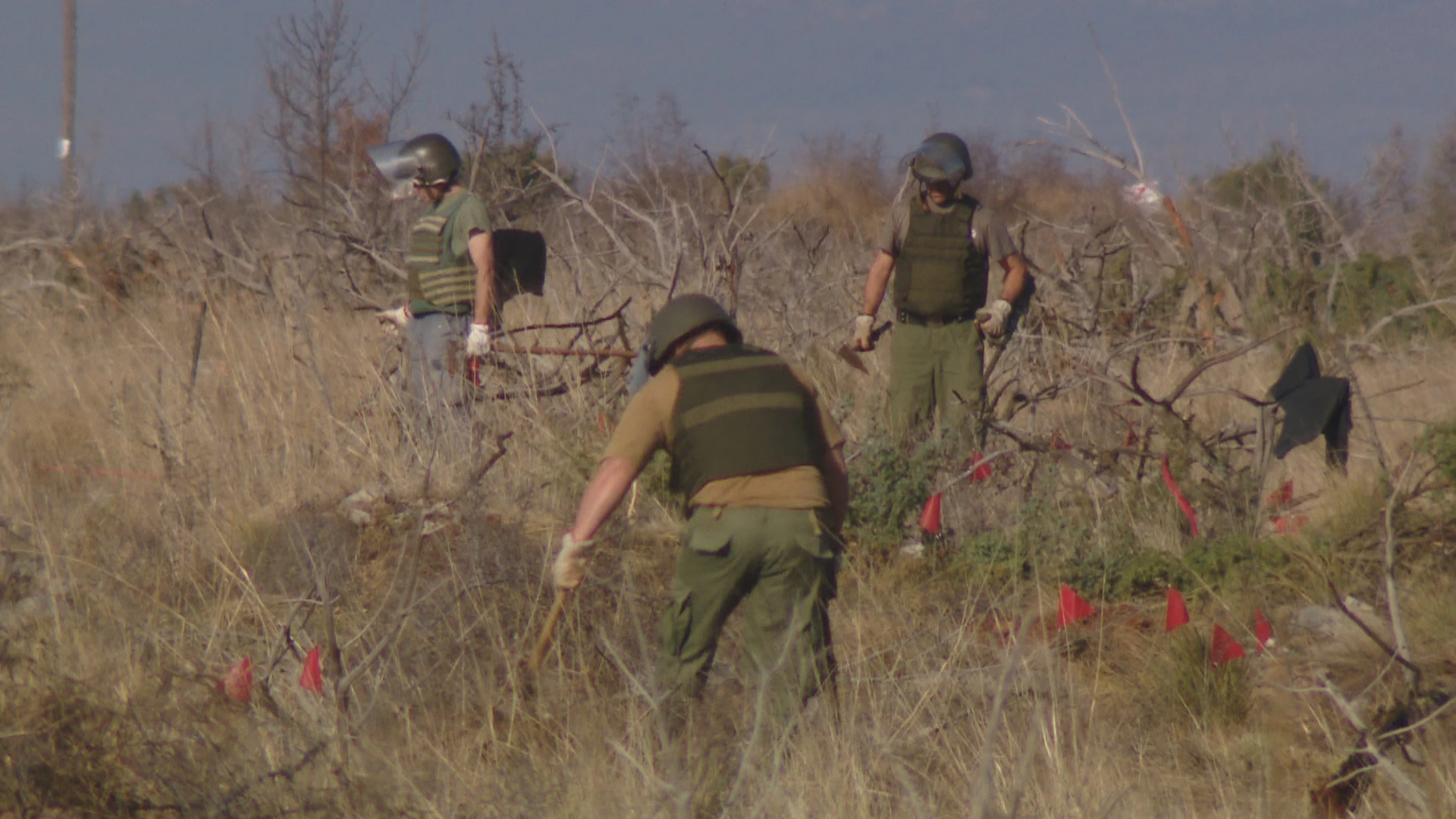
Interior Minister Davor Božinović announced Friday that Croatia is officially free of landmines. Thirty-one years after the end of the Homeland War, all known minefields have been cleared — a major…

The decades-long effort came at a heavy cost. Over three decades of painstaking and dangerous work, 208 people lost their lives, including 41 deminers. The total cost of clearing the country is estimated at around 1.2 billion euros.
“Croatia is free of land mines. After nearly 30 years, we have completed demining in accordance with the Ottawa Convention,” Božinović said during an event marking International Civil Protection Day in Zagreb.
He added, “Almost 107,000 mines and 407,000 pieces of unexploded ordnance have been removed. This is not just a technical success — it is the fulfillment of a moral obligation to the victims of mines and their families. A mine-free Croatia means safer families, better development of rural areas, more farmland, and stronger tourism.”
Vijesti HRT-a pratite na svojim pametnim telefonima i tabletima putem aplikacija za iOS i Android. Pratite nas i na društvenim mrežama Facebook, Twitter, Instagram, TikTok i YouTube!
Read the original article

Comments
As a Croatian, I'm really glad to hear these type of news. However, also as a Croatian, I don't quite buy the news. I'm sure great progress was made but it's never going to reach 100%; It's just the nature of these damn things in combination with our geography and where the frontlines were.
It means there are no known areas that are still littered with landmines, but yes, that's not a guarantee there aren't any.
Not Croatian but Bosnian, 2030 is our target for this milestone and we have to keep de-mining ~70 square kilometres every year to be able to hit that milestone.
By stephenhuey 2026-02-2815:085 reply I visited a friend in Sarajevo in 2014. Lovely small walkable city in a little valley, enjoyed the food and did some of the tours of old war sites inside the city and on the edge of the city. It boggled my mind then that the locals warned me not to go hiking through the pretty forest out of town because of land mines; it was hard to believe a country in Europe would have that problem in the 21st century!
By Vosporos 2026-02-2817:07 The war barely ended in 1995 after all, it's not surprising.
By pseudohadamard 2026-03-018:44 Germany still has areas you can't go to because of WWII landmines. Parts of the Huertgen Forest spring immediately to mind.
By jfengel 2026-02-2817:08 European wars now all feel like a throwback to the 19th century. Even the maximally horrific wars of the 20th century feel outdated in light of trade being so much more efficient.
Economic aggression is a whole new kind of warfare and plenty destructive, but just saying "you stand on some dirt and we will kill you over it" is a pure waste.
People keep comparing the war in Ukraine to World War II, but they seem to imagine themselves to be Napoleon. Maybe France could have gotten richer by winning, but today that kind of attack is just lose-lose.
From America, the Yugoslavian war felt like re-fighting some Medieval grudge. I'm sure it made some kind of sense to them at the time.
> it was hard to believe a country in Europe would have that problem in the 21st century!
Bless your naiveness buddy. There are still areas in France where people can't go due to mines from WWI.
Spend some time on Google reading about the Zone Rouge.
By stephenhuey 2026-02-2820:07 I had never heard of the Zone Rouge, so thanks for sharing! I grew up in the USA in the 80s, and as a child, the first time I remember hearing of the problem of lingering landmines was in reference to countries such as Cambodia. Later I lived in Africa and eventually visited other continents. Of course I remember hearing of the war in Yugoslavia when growing up, but a dozen years ago when I visited Sarajevo, I certainly felt sad when the Bosnians told me about the ongoing problem because it felt like something I would have expected to be cleaned up by now in a developed country. Definitely a strong lesson on the long-term costs of war.
By twocommits 2026-02-2817:19 [dead]
As German, I can say, as long as not someone used mines out of glass, they will rot away in some decades. We still have some woods where you could step on glass mines....
But happy to hear the news. Some years ago as I was urban exploring the airfield in Zeljava it has hit someone nearby the field. Happily I just saw the ambulance and the police.
TIL glass mines are a thing.
https://en.wikipedia.org/wiki/Glasmine_43
How clever we are when we try to kill each other.
By twocommits 2026-02-2817:21 [flagged]
Hell you still find explosives from WW2 all over. It really is difficult.
By zabzonk 2026-02-2810:42 True that. I used to work in the Netherlands, and sometimes it seemed like every other week the rail network was disrupted by a newly-discovered unexploded bomb, left over from the plastering the Allied air forces gave the Dutch railways.
By CorrectHorseBat 2026-02-2810:351 reply WW2? We're still finding explosives from WW1 in Belgium
No kink shaming but meanwhile in France : https://www.midilibre.fr/2026/02/01/il-debarque-aux-urgences...
By black_puppydog 2026-02-2816:13 It's also worth pointing out that the front lines in WWI didn't come anywhere close to Toulouse. XD
By lchiang 2026-02-2817:16 Just few months ago, a 1,000-pound WWII bomb was found in Hong Kong. The city had been a battlefield between Japanese and Allied forces.
https://hongkongfp.com/2025/09/19/hong-kong-to-evacuate-6000...
By Keyframe 2026-02-2810:32 Indeed. With landmines from 90's at least general areas are known, there's signage and if you're not being stupid by venturing way past signage it's all really safe to be around.
By nephihaha 2026-02-2811:32 I agree. It is good news for Croatia but there may be some that have escaped the net.
By m_adrian 2026-03-0116:03 They just found a water mine in Rovinj.
I stayed near Dubrovnik in the summer of 2005. There was a wildfire burning on on the hills behind us.
The fire traversed the hillside, and every hour or two a landmine would explode.
This was ten years after the war.
10 years is a long time, but 10 years after a war is not a long time. Damages to building still remains, mines and plenty of unexploded ordinances will remain, and psychological scars are still very strong.
Yep, the city center in Belgrade still has dilapidated, bombed buildings, 26 years after the bombs fell.
By pmontra 2026-02-2812:34 We had some buildings like that in the center of Milan. I think that the last one has been restored in the late 90s.
By 1718627440 2026-02-2814:561 reply In German cities bomb evacuation still happens several times per year. That's >80 years after. War sucks.
By jandrewrogers 2026-02-2814:14 It is not reliable though, so you still have to de-mine it the traditional way.
By ulrikrasmussen 2026-02-288:3210 reply Something I have really wondered is, why aren't there stronger incentives to build mines with a mechanism that disables them after a certain time has passed? There must be tactical and strategical reasons which are regarded more important, but surely the party using them for defending their own land ought to have an interest in not having to deal with this threat for decades after the war has ended, and an aggressor who wishes to take over an area should have the same incentives.
Or are the reasons technical, that it is simply too difficult to develop a reliable mechanism for disabling them?
Modern landmines do have safety features like what you describe.
For example consider this Department of Defence policy from 2020: https://media.defense.gov/2020/Jan/31/2002242359/-1/-1/1/DOD...
“The Department will continue its commitment not to employ persistent landmines. For the purposes of this policy, ‘persistent landmines’ means landmines that do not incorporate self-destruction mechanisms and self-deactivation features. The Department will only employ, develop, produce, or otherwise acquire landmines that are non-persistent, meaning they must possess self destruction mechanisms and self- deactivation features.”
“ For example, all activated landmines, regardless of whether they are remotely delivered or not, will be designed and constructed to self-destruct in 30 days or less after emplacement and will possess a back-up self-deactivation feature. Some landmines, regardless of whether they are remotely delivered or not, will be designed and constructed to self-destruct in shorter periods of time, such as two hours or forty-eight hours.”
This distinguishes “self-destruct” where the mine blows itself up and “self-deactivation” where the mine disarms itself. The first is safer because it doesn’t leave explosive material behind, which could chemicaly detoriate and become unstable decades later. The second is used as a failsafe in case the self-destruct fails.
> Or are the reasons technical
They certainly were when the really old mines were made. Some of them are nothing more than just spring loaded pressure plates. But today modern landmines are much more sophisticated. Some of them can distinguish the seismic signature or a truck from a tank. There are also radio controlled mine fields where soldiers can remotely activate / deactivate the whole mine field as the threat evolves.
By e1ghtSpace 2026-02-2813:141 reply I thought it would be longer than 30 days.
By lstodd 2026-02-2814:22 They aren't 100% reliable either, nothing is.
As someone else pointed out, the short story is cost. Mines are cheap, make them more advanced and they are not cheap.
That said, even if the trigger is disabled, it's still an explosive device and should still be cleared (or never placed in the first place, as the Ottawa treaty says which the US, China, Russia, India and Pakistan are not a part of https://en.wikipedia.org/wiki/Ottawa_Treaty)
By matkoniecz 2026-02-2812:14 Due to Russian invasion of Ukraine some neighbors exited the treaty.
Poland, Lithuania, Latvia, Estonia and Finland exited.
Ukraine has not officially withdrawn from the treaty, but ignored it. Last year they officially announced withdrawal.
Unfortunately anti-personnel mines are highly useful in case of war, especially for defender.
By some_random 2026-02-2815:29 The treaty also only covers anti-personnel mines, anti-vehicle mines are still perfectly fine (as well as other nasty shit like, anti-handling devices). The US has the right idea by mandating that all mines detonate after 30 days, even if it adds cost and complexity
Cost/manufacturing complexity. If you are country struggling to defend your self you don't think problems in 30 years if today problem is does the country exists or not. Might be difficult to put your self to a small defending countries shoes which is absolute running our of resources.
I get it, I don’t think a timer really adds that much cost and complexity. "If he wanted to, he would" scenario.
By jandrewrogers 2026-02-2814:22 The costs of the self-destructs and failsafes exceed the cost of the rest of the landmine. One of the reason mines are used is that they are exceedingly cheap and simple to build at scale. No batteries or electronics. Even a relatively primitive industrial base can produce them.
In practice, only wealthy countries are willing to pay for mines with reliable self-destruct and target discrimination technology.
By dsego 2026-02-2820:57 First, there should be maps and plans for all mine fields to know the exact position. But this war was insidious, and mines were planted without any method.
There is always the option to use battery (some modern mines use this),for example RAAMS.
The problem is of the enemy know you use only mines that work for max n hours or m days they just wait for n + 1 hours or m + 1 days.
There is a lot more to say about this, but there are probably people way more qualified than be here to explain it.
By antonkochubey 2026-02-2810:20 There are tons of possible options in between n hours and 3 decades
By TiredOfLife 2026-02-288:34 That is exactly how modern mines work
I'm guessing it's the latter, because you have to keep the mine-disabling mechanisms working and powered up through possible adverse weather and environmental conditions for long enough that the conflict has a fair chance of having ended.
By themaninthedark 2026-03-0321:52 If you wanted to design something fail safe, the best way would be to make the powered up state the danger state. So when the power fails, the device is inactive.
> a reliable mechanism for disabling
Note that the bar is pretty high for reliable here. Say 1 in a thousand isn't disarmed or destroyed.
Would you encourage your child to play in an area where ten thousand mines were dropped? A thousand? Five hundred?
By altairprime 2026-02-2821:55 Someone who was raised in such an area talks about their experiences elsethread: https://news.ycombinator.com/item?id=47194668
