
bobosola
30
Karma2021-03-30
CreatedAbout Me
Ex sea captain & harbour pilot. Ex software developer. https://www.osola.org.uk/
Recent Activity
Commented: "U+237C ⍼ Is Azimuth"

Fascinating links, but I could not find an example of the glyph in question? My point was that a sextant is not (and cannot be) used to measure azimuth. It primarily measures the angle between a celestial body and the horizon (i.e. altitude). It can also (theoretically, very rarely) be used to measure the horizontal angle between two or more landmarks, but that is not azimuth in the accepted sense of the word. I am happy to be corrected though; my experience of sextants may be too narrow or modern for this context.
Commented: "U+237C ⍼ Is Azimuth"
Great detective work re the azimuth finding for the glyph, but I believe the link to a sextant is tenuous at best. The author says it can, of course, be turned sideways to measure an azimuth with respect to an arbitrary meridian. That’s not correct. The tool for doing that is an azimuth ring sitting on a compass which allows the user to obtain the angle relative to north (the azimuth) between the user’s local meridian and a landmark.
A sextant can be used to obtain the relative horizontal angle between two landmarks, but it is much easier to use an azimuth ring. A sextant is designed to be used vertically. Holding and using one horizontally is difficult and time-consuming in comparison and is probably a less than a 1% use case, used only during the training of apprentices as a theoretical exercise (source: professional mariner for many years and daily user of a sextant back in the day). A comparison would be using a screwdriver to drive in a nail; you could do it given enough time, but a hammer is much easier.
I believe the explanation is much simpler: the glyph simply represents a variety of angles measured from north (the common meaning of azimuth) avoiding the use of any lettering (like “N”) or the use of a compass-like symbol which would be difficult to represent at such small scale.
Also (pedant warning for another poster) Polaris is not the brightest star, it’s around the 40th and has no practical use for navigation other than “north is roughly that way”.
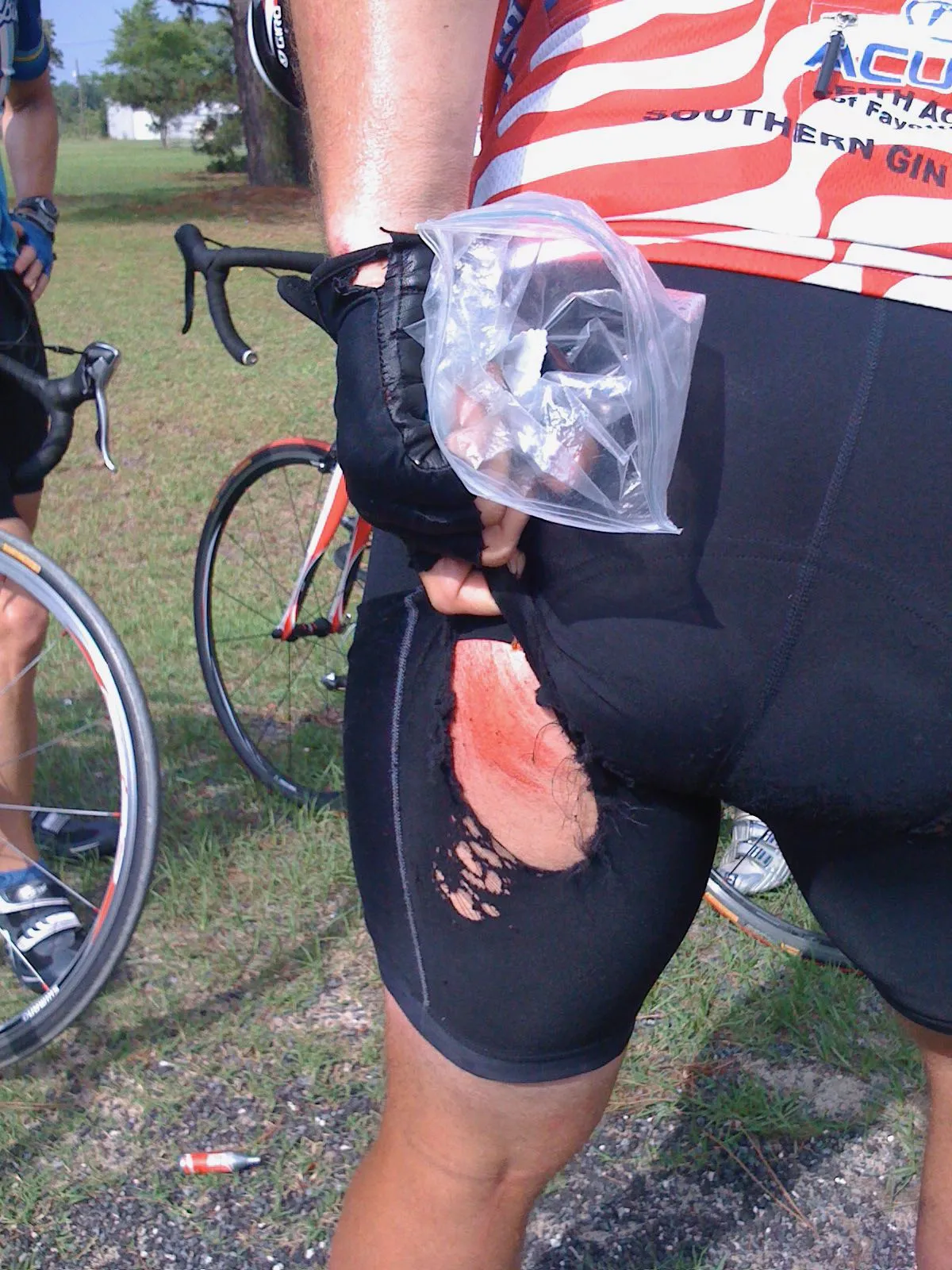
My wife and I plus our (then) two small children were driving though France from the UK. I was towing a caravan and suddenly realised that the van had got a flat tyre. No worries, I thought, I have a spare, a jack and a wheel wrench. So, I pulled over and got to work changing the tyre. To my horror, I immediately discovered that my car’s wheel nuts were bigger than the van’s, so my car wheel wrench was useless for the flat van tyre! And all I had otherwise were small hand tools.
I should add that this was back in the days of dumb phones, long before GPS devices were common in cars, so all I had was a small-scale paper route map of France. I had no clue which way to go to find help, and no way to find a phone number. It was late afternoon, and we were still a long way from the campsite. I was starting to sweat.
But then a French woman with her daughter pulled over in a small car and asked if we needed any help. Using a mixture of my poor French and sign language, I indicated I needed a wheel wrench, which she pulled out of her boot. My joy and relief were obvious. I change the van wheel in no time, thanked her profusely, and off she went.
But there was twist in the tale: my hazard lights had been flashing so long that when I tried to start up the car, all I got was that sickening tick-tick-tick sound of a dead battery. Could my day get any worse? But then I remembered that my van had its own battery! A quick battery swap-over later, and we were back on the road, and had a great holiday, all thanks to the kindness of a big-hearted French woman who was kind enough to stop and offer help to foreign strangers stuck in the middle of nowhere.
Fabulous software. I used it to create LIDAR map tiles from free UK government LIDAR data of my local area (Hampshire, UK) at https://solentmaps.uk. When used as a layer placed under standard map tiles, you can see all sorts of long-hidden historical artefacts under modern deep foliage. The ruins of a long-forgotten WW1 hospital near me can be clearly seen under the modern day trees. Fun stuff to play with.

I went to sea with BP Tankers as a deck cadet in 1976 trading worldwide, largely to escape my small village life. When I qualified as 2nd mate, I moved to mediterranean trade small bulk carriers, then oil rig supply ships on the North Sea. Got my first command at 32 on the rig boats, so around 14 years at sea by then. Ended up on local ferries when I became a father in order to do shorter trips away from home (I had to drop two ranks, but it was worth it). The biggest crew I captained was around 40 when working on a short-lived cross channel ferry service from Weymouth to Cherbourg. Rig boats typically only had about 12 crew though. My last seagoing job was a harbour pilot for a couple of years which gave me the spare time to learn software dev.
And yes, I was probably one of the last generations of seafarers who used celestial nav and paper charts on deep sea trips before GPS became universal. We used Decca Navigator for coastal nav, now also long gone and forgotten. So electronic charts were way after my time! I lost count after 40+ countries visited, but it's really not the flex you might think because there was very rarely time to go ashore.
However the experience and confidence gained at sea helped enormously when (say) presenting a software proposal to CEOs and the like, most of whom were the same age as me. They tended to assume I was much more senior than I really was! I never regretted the jump though. If you can make the money work, then I’d recommend career changing to anyone for the new lease of life it gives you. Especially if feel you have gone as far as you can in the old career.
HackerNews
About this project
This project is an enhanced reader for Ycombinator Hacker News: https://news.ycombinator.com/.
The interface also allow to comment, post and interact with the original HN platform. Credentials are stored locally and are never sent to any server, you can check the source code here: https://github.com/GabrielePicco/hacker-news-rich.
For suggestions and features requests you can write me here: gabrielepicco.github.io
