AIOC: Ham Radio All-in-One-Cable

2023-01-0215:0627593github.com

Ham Radio All-in-one-Cable. Contribute to skuep/AIOC development by creating an account on GitHub.

This is the Ham Radio All-in-one-Cable.

AIOC with Wouxun and Direwolf

What does it do?

The AIOC is a small adapter with a USB-C connector that enumerates itself as a sound-card (e.g. for APRS purposes) and a virtual tty ("COM Port") for programming and asserting the PTT (Push-To-Talk).

Features

  • Digital mode interface (similar to digirig)
  • Programming Cable Function via virtual Serial Port
  • Compact form-factor (DIY molded enclosure TBD)
  • Based on easy-to-hack STM32F302 with internal ADC/DAC (Programmable via USB bootloader using DFU)
  • Tested with Wouxun UV-9D Mate and Baofeng UV-5R
  • Works with Direwolf (Notes on APRSdroid below)

Future Work

  • Enclosure (DIY using 3D-Printed mold and Resin)
  • Maybe integrate a TNC Modem with KISS interface? (I am not sure if that is worth the effort)
  • Maybe change the USB-C connector type due to sporadic connection issues with JLCPCB's SMT reflow process

Top side of PCB

How To Fab

  • Go to JLCPCB.com and upload the GERBER-k1-aioc.zip package (under kicad/k1-aioc/jlcpcb)
    • Select PCB Thickness 1.2mm (that is what I recommend with the TRS connectors I used)
    • You may want to select LeadFree HASL
    • Select Silkscreen/Soldermask color to your liking
  • Check "PCB Assembly"
    • PCBA Type "Economic"
    • Assembly Side "Top Side"
    • Tooling Holes "Added by Customer"
    • Press Confirm
    • Click "Add BOM File" and upload BOM-k1-aioc.csv
    • Click "Add CPL File" and upload POS-k1-aioc.csv
    • Press Next
    • Look Through components, see if something is missing or problematic and press Next
    • Check everything looks good and Save to Cart

How To Build

  • You need to use Monacor PG-204P and PG-203P or compatible TRS connectors (2 solder lugs and a big tab for the sleeve connection)
  • Cut the 2.5mm and 3.5mm TRS sleeve tab where the hole is located
  • Put both TRS connectors into the solder guide (or a cheap HT that you don't mind potentially damaging). Make sure, that they are seated all the way in
  • Solder sleeve tab on the back side for both TRS connectors first
  • Turn around PCB and solder remaining solder lugs

How To Program

  • Short outermost pins on the programming header. This will set the device into bootloader mode in the next step.
  • Connect USB-C cable to the AIOC PCB
  • Use a tool like dfu-util to program the Release Binary like this:
    dfu-util -a 0 -s 0x08000000 -D aioc-fw.bin
    
    Note that a libusb driver is required for this. On Windows there are additional steps required as shown here (DFuSe Utility and dfu-util). On other operating systems (e.g. Linux, MacOS), this just works ™ (provided libusb is installed on your system).
  • Remove short from first step, unplug and replug the device, it should now enumerate as the AIOC device

How To use with Direwolf for APRS

  • Follow the regular setup guide with direwolf to determine the correct audio device to use
  • Configure the device as follows
    [...]
    ADEVICE  plughw:<x>,0
    ARATE 48000
    [...]
    PTT /dev/ttyACM0 RTS -DTR
    [...]
    

How To use with CHIRP for programming

  • Start CHIRP
  • Select Radio->Download from Radio
  • Select the new COM/ttyACM port and start

Notes on APRSdroid

Although theoretically not an issue, currently APRSdroid is not supported due to the following two issues:

  • According to ge0rg/aprsdroid#156 the sample-rate is fixed to 22050 Hz. Currently, only 48000 Hz is supported by the AIOC (and 24000 Hz or 12000 Hz would be possible to implement). However it should be possible to also support 22050 Hz although with an approximate frequency error of 90ppm (which however should be fine for APRS)
  • Currently APRSdroid does not support any PTT control via a serial interface. See ge0rg/aprsdroid#324 However my previous experience is, that the Android kernel brings support for ttyACM devices (which is perfect) so implementing this feature should be no problem.

Page 2

You can’t perform that action at this time.

You signed in with another tab or window. Reload to refresh your session. You signed out in another tab or window. Reload to refresh your session.


Read the original article

Comments

  • By dylan604 2023-01-0216:351 reply

    I find the history of all-in-one-cables interesting. I come from ancient video production (late 80s time frame), which means I was still using equipment from even earlier. Back then some of these AIOCs were 1" round with 15-20 pins. It was all analog signals which meant each signal needed its own pin. Some AIOCs were D-style connectors with up to 15-20 pins that were not compatible with things like VGA/DB25/SCSI types of computer cables. Going digital drastically reduced the number of pins for old parallel connections and down to one as the signal became serial. My favorite was SDI which carried the video and audio down a single pin coax cable with a twist lock BNC connector. Consumer grade released DV cables and then HDMI. Both of which are inferior in my opinion specifically for their lack of locking when connected, but their extra pins do allow for interesting things consumer friendly like ARC and ethernet/data stuff.

    • By anikom15 2023-01-0217:271 reply

      SDI is definitely still used, and still found on professional monitors. I think locking is not worth it for consumer-grade equipment, where cable reconnexions are rare, but some push-in connectors are better than others. For example, VGA without screws is a bad idea.

      • By dylan604 2023-01-0217:422 reply

        Of course SDI is still used: there's nothing better! The only update was to minify it so we now have SDI on smaller gear. Smaller, but still with twist lock. When it comes to professional cameras, I don't want an HDMI cable any where near my setup.

        Reminds me of the Technic 1200s. Built in the 70s, nearly perfect on first release, no major updates required. Only small tweaks with no bearing to core functionality. I feel the same way about SDI. Feature complete!

        • By bradknowles 2023-01-035:351 reply

          SDI can give you excellent quality video over long cable runs, and it's dead simple to cut and terminate your own cable from a spool.

          Did that more than once at DevOpsDays conferences here in Austin.

          Very sturdy cable, too -- very resistant to damage.

          And if you need to convert to/from something else (like HDMI), then BlackMagic has some awesome converter boxes.

          • By dylan604 2023-01-0317:00

            >Very sturdy cable, too -- very resistant to damage.

            depends on the cable, but yeah, it can be. for permanent installs into post facilities, there is a much smaller cable that still qualifies for the higher bandwidth signals, but much thinner cable. it is lighter, easier to pull, and requires so much less space in the racks. this is convenient when cabling patch panels, routers, etc. it does tend to not hold up as well if you have to bend past 90 degrees though.

            >And if you need to convert to/from something else (like HDMI), then BlackMagic has some awesome converter boxes.

            you can also go to cat6 which is even cheaper and more readily available for HDMI over long distance.

        • By anikom15 2023-01-0219:581 reply

          I agree there’s nothing better. What theoretical bandwidth can SDI support? A typical BNC (50 Ω) goes up to around 6 GHz while precision coax connectors (screw-on) can be up 67 GHz+. The ‘low’ performance of BNC is primarily blamed on the twist-lock.

  • By amatecha 2023-01-0218:501 reply

    Oh, this is cool. It's like a DIY Digirig! I really like that it is MIT-licensed (open source design).

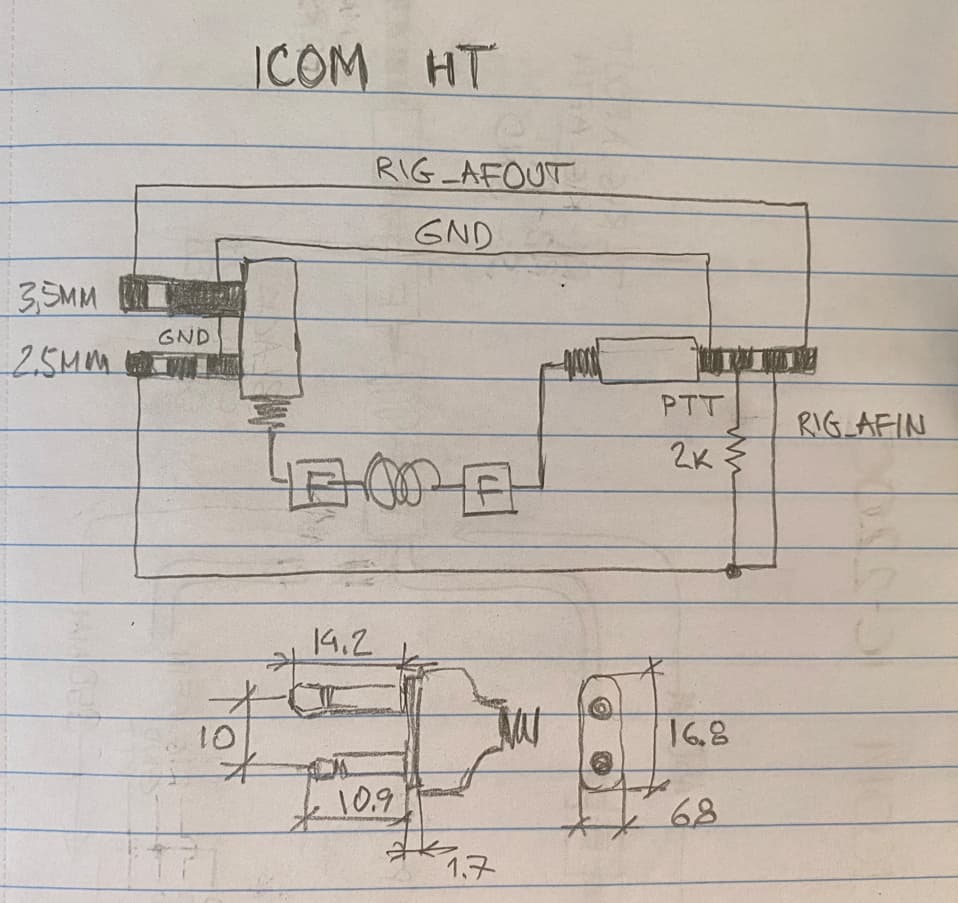
    You could change the audio plugs to sockets so you can use the device with radios that have the speaker/mic plugs at a different gap (Icom HTs seem to have the plugs at 10mm apart[0] instead of the Kenwood/Baofeng/etc. spacing of 12mm[1].

    [0] https://forum.digirig.net/uploads/default/original/1X/7e23c4...

    [1] https://i.stack.imgur.com/BMmRJ.jpg

  • By Yhippa 2023-01-0216:1915 reply

    I remember this being a decent hobby when I was growing up. I'm curious about getting into it now.

    1. Is it still worth getting into? What kind of cool things can you do with it?

    2. Are there any good or trustworthy guides recommended?

    • By gamache 2023-01-0217:321 reply

      It's definitely still worth getting into, and in many ways it's more accessible than ever. Equipment prices are lower than ever, and there is so much information available on nearly any subject within the hobby.

      A few hot things right now: * FT8 and other weak-signal digital modes are so good at long-distance communication that it almost feels like magic. * Software-defined radio (SDR) opens up a new world of cheap signal processing. This is why a $300 radio today can outperform a $3000 radio from a decade ago, or why you can buy a NanoVNA vector network analyzer for $65 and it fits in your hand, rather than paying $5000 for a used HP VNA that barely fits on your desk. * Near-field communications, like RFID and keyfob hacking. The Flipper Zero is a fun little widget for this.

      Personally, I enjoy FT8, CW/Morse code with a straight key or bug, antenna design (wire antennas are cheap and endlessly tweakable), and portable operation. I'm interested in amp design as well, but that's mostly confined to reading circuits and daydreaming. :)

      Hope you find something you enjoy in here.

      -Pete K1QG

      • By picture 2023-01-0222:402 reply

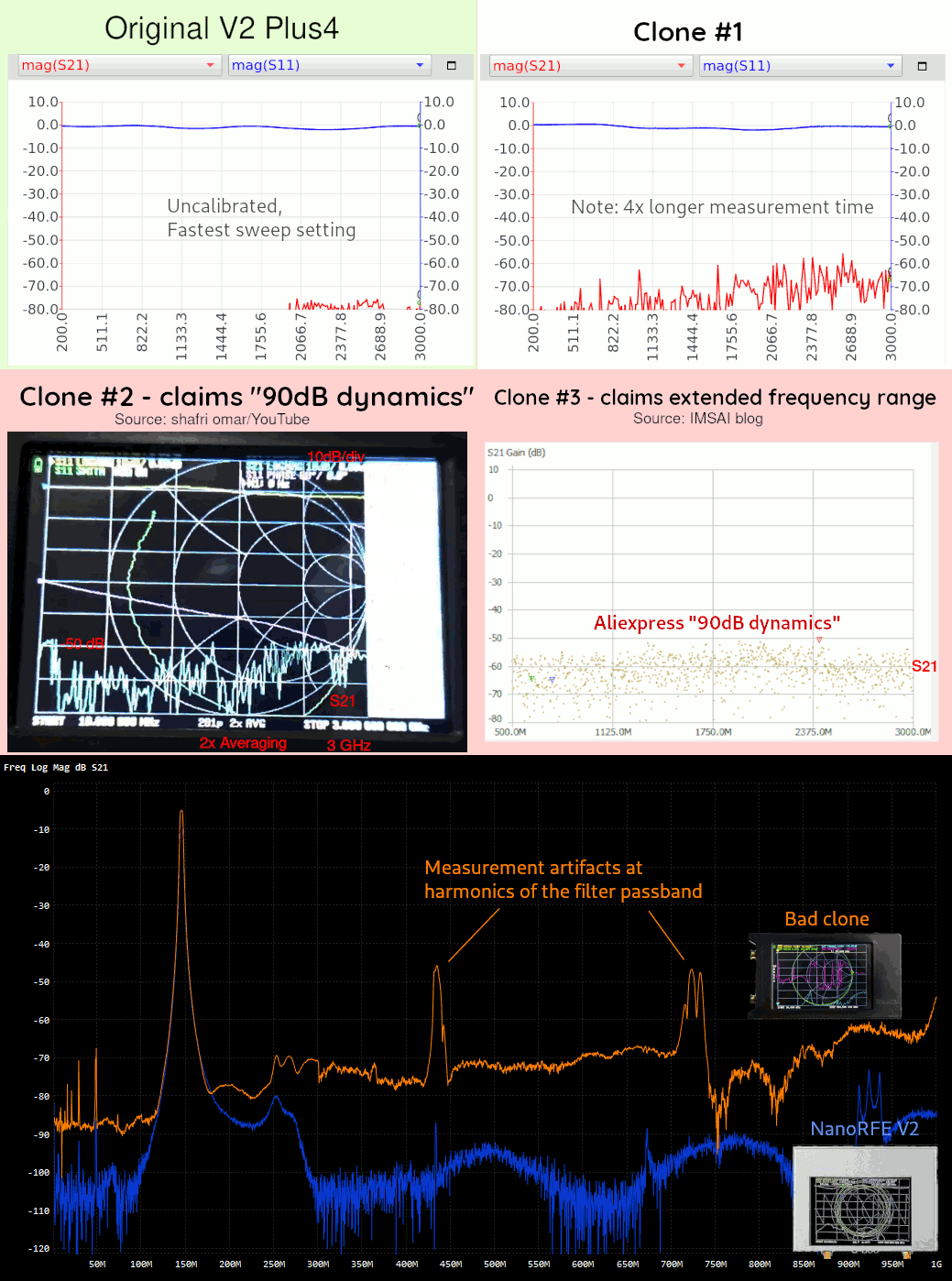
        Just a comment, genuine NanoVNA V2 costs a good bit more than $65, but still extremely accessible for what it offers. Cheap clones have measurably dubious performance.

        https://nanorfe.com/images/clone_comparison_new2.png https://nanorfe.com/nanovna-v2.html#buying

        • By ngcc_hk 2023-01-030:40

          It is 2xx https://www.tindie.com/products/hcxqsgroup/4-nanovna-v2-plus...

          Frankly it is not the price but for starter what is involved is not sure. So far seems at least 3 things:

          1. exam especially local radio, 2. some equipment for radio and control 3. some interface with software

          But is that all and which is the starting point. That equipment seemed to be only part of the game.

        • By gamache 2023-01-0223:52

          Oh boy... I have no idea what I own, then. Only that it cost around $65 and is very, very much like a NanoVNA v1. High-frequency performance is not important to me (I use this to analyze HF antennas, generally 1.5-30 MHz) so what I have is likely fine, but I hate buying a clone without knowing it.

    • By donniefitz2 2023-01-0217:40

      I'm pretty deep into radio and never in a million years would have thought I would be. I even remember giving a co-worker a hard time for getting his ham radio license. Now, I'm a full-fledged GMRS and ham nerd.

      1) It's worth getting into for 3 reasons: emergency communications, learning about some very interesting technical things like how antennas work, networked repeater systems, and there's a social aspect to talking with others on simplex and repeaters. Radio is far more technical than I ever realized and it's a very deep topic.

      2) There are some good YouTube channels that can give you a quick overview of what's possible (Ham Radio Crash Course, Ham Radio 2.0) I also have a podcast where I talk about GMRS (similar to ham but very limited) at gmrs.fm

      You might be surprised at how interesting radio can be. I was.

    • By jneumann004 2023-01-0216:29

      I'll answer you second question first, ham radio crash course is probably the most popular amateur radio you tuber.

      I got licensed about a year ago and I'm still having a blast with it. There is the standard ways of communication via radio, voice and continuous wave (morse code). Most modern radios are able to be connected to a computer to communicate with other radios digitally. Digital modes are generally better for low power.

      I have a lower end 20 watt radio and I can regularly talk to all of the continental united states, but depending on conditions I have reached South America and eastern Europe.

    • By MandieD 2023-01-0223:431 reply

      The US exams involve a lot of memorization; for the Technician and General exams, I highly recommend running through the questions in the $3.99 HamStudy app/completely free hamstudy.org website. For the Amateur Extra, I crammed using "Pass Your Amateur Radio Extra Class Test - The Easy Way!" by Craig Buck, and the title is completely correct: it isn't "Deeply Understand the Material on the Extra Class Test," and is useless for anything other than passing the current US Amateur Extra Class exam. "Amateur Radio Extra Class Licensing" by Stephen Horan did a bit more education and has been worth looking at since passing the exam.

      I passed my exams, and while I paid close attention to all of the safety/legal things (and looked them up for Germany, where I live and later converted my license), I left fully understanding the technical parts for after I got licensed and was able to start doing. For example, I memorized a bunch of stuff about antennas to get the questions right on the exams; over the past few months, I've been modifying and scavenging the ones I bought early on and making my own.

      • By fr0sty 2023-01-030:58

        +1 for HamStudy.org which is an excellent resource. They include "explainer" cards for each question which often contain links to other material which are a great jumping off point for going as deep as you care to go on any individual topic.

        I used the hamstudy website almost exclusively for getting my license and was able to pass all three tests (General, Tech, Amateur Extra) in one sitting. I had to set for a physical test at a local club's monthly meeting, but now organizations like GLAARG are proctoring remote tests via zoomso you can gest more or less 'on demand' from home.

    • By gh02t 2023-01-0217:245 reply

      Will note that having a license can be useful outside of ham, too. E.g. if you're a hiker it can be handy to be able to carry a "real" radio with you. The license test doesn't cost much and is super easy (the entire pool of questions/answers is posted online and there are study guides).

      • By teeray 2023-01-0220:57

        Yeah, it’s kinda wild that with a packable QRP rig for SOTA, you can pretty reliably get in touch with someone (that being the entire point of SOTA). Of course I’d try more conventional means first in an emergency situation while hiking, but I certainly like having backup comms.

      • By ShakataGaNai 2023-01-0221:401 reply

        The emergency preparedness aspect of Ham is highly under valued/underappreciated... or at least it goes unnoticed.

        First, most modern handy talkies (what Ham's call their hand held radios) are also very solid "scanners". In so far as you can tune in to a lot of different frequencies and listen. Weather alerts, AM/FM Radio (like the kind you used to listen to in your car before spotify)... you name it. Super handy if you say, lose power and cell service.

        Speaking of which, remember that cell service is heavily dependent on a number of external factors. Like the antenna's still being upright (earthquakes, tornado, hurricanes are bad). There still being power. There still being connectivity (typically fiber optic)... and most importantly - NOT being overloaded. With a Ham radio you can listen or transmit, with no other dependencies.

        For more local issues, like hiking or camping. Even if you're out of cell range, your radio may very well work. A 5W handy talky can reach up to 30 miles, depending on your location (basically line of sight). If you can get to the top of a hill or mountain and get a clear view - you can get a signal out to someone. All you need to do is get on the 2-Meter Band Calling Frequency (146.520 Mhz) or the 70-Centimeter Band Calling Frequency (446.000 Mhz) and it's a safe bet someone out there is probably listening. Even better if you've looked up local repeaters in the area.

        Also, the radio's are stupid cheap now. BaoFeng makes "cheap and cheerful" (nicest way to describe them) handheld units: Like a 8watt unit for $70 USD. https://www.amazon.com/BaoFeng-BF-F8HP-Two-Way-136-174Mhz-40... -- They even sell 2 packs of slightly weaker radios for $50 total. Are they the best? No. Should you splurge and get something better? Totally. Like a 10W radio that support DMR (Digital Mode) for $180 https://www.amazon.com/Radioddity-GD-AT10G-Handheld-Digital-... . But if you just want to get your ham and use it once-every year... get a $50 radio and toss it in your car or something similar. Just make sure to get alkaline batteries for them. Lithium rechargeable are nice but lose charge over time.

        • By phickey 2023-01-031:083 reply

          I am a hiker and a ham and I disagree with this advice. I carried a ham radio while hiking for years and they were never a useful safety device. Here in the PNW, anywhere I was prominent enough to reach a repeater or another ham on the calling frequency, I also had plenty of cell signal. Whenever I was off the ridgelines and down in valleys, I wouldn’t be able to reach anyone with either method. Both cell phones and handheld ham radios are roughly line of sight, and when you are down in an uninhabited valley without cell coverage, it also quite doubtful there is another ham listening.

          I swapped carrying a ham radio for a Garmin inReach a few years ago and it has been far more useful. I pay an annual service charge, but in return I can let my partner know I’m safe a few times a day, and I can use it to arrange for rides, neither of which I could do via ham. I have never had a problem getting reception, and it’s a much smaller, lighter device, and it recharges via USB so I never worry about spare batteries.

          There are some ham specific activities for carrying a radio on the trail, like summits on the air, but if you are just trying to go hiking, get an inreach.

          • By gh02t 2023-01-0414:19

            Yeah I agree with you on this one, a radio as a safety device on a hike is secondary at best unless mayyyyybe if you're carrying a QRP HF rig like an IC705 that can actually reach quite a ways or you leave a portable repeater at camp. In my original comment I actually meant just for talking to people, especially if you are hiking with other hams and can do stuff like GPS beaconing to each other. IMO an HT is still a better experience than a phone for communicating back and forth short-ish range on the move. Getting weather beacons from APRS and NOAA is also nice though of course there are other ways to do that.

          • By int_19h 2023-01-035:11

            I concur with your assessment of handheld transceivers as a way to report emergencies. But if you end up somewhere off the trail, wouldn't it still be useful after you use your Garmin (or, in my case, a SARSAT PLB) to request assistance, to be able to communicate with SAR once they're in the area? I vaguely recall a situation like that in Oregon.

            This sort of thing doesn't require a fancy set, though. Something tiny and crappy like UV-3R would do just fine and is much more compact to carry than your typical handheld.

          • By ShakataGaNai 2023-01-034:52

            Fair. And your iPhone can now contact satellites as well.

      • By jmbwell 2023-01-0217:581 reply

        The questions are set to change later in 2023, so now would be a good time for anyone who wants to do so to study up and take the test…

        • By swalberg 2023-01-0221:55

          Just for General. Technician changed last year.

      • By tlavoie 2023-01-0222:15

        Indeed, I have found mine handy for things like contacting the logging company whose sign indicated a closed hiking trail. I think I startled the gent by popping up on the radio, but was able to confirm that they were done for the day, and we could continue safely.

      • By Yhippa 2023-01-0218:206 reply

        Question: why is a license needed? Is it so that users don't pollute the airwaves?

        • By wkat4242 2023-01-0218:30

          Yes but it's also to make sure you know what you're doing, both in a technical and procedural way. The point of a ham license is not to buy a $50 baofeng from AliExpress and chat. We all do that but it's more a way to talk about the actual hobby. But the point of the license is to build radios yourself, experiment with new modes, be on the bleeding edge. Obviously you need to know what you're doing in order to not cause interference.

          If you just want to chat and/or have emergency comms for hiking, just buy a GMRS or InReach, PLB etc. Ham radio is really about having radio as a hobby and technical interest.

          PS: I'm not one of the ham elitists and I like the availability of easily accessible licences for starters like the novice one. But it's important to realize what it's all about. If you're not into that you will find the chat on the bands very boring.

          I'm a hiker and a ham and I carry both my ham radio and an InReach. Only the latter I really consider my emergency comms. The radio is more for fun. Nobody monitors the ham frequencies professionally unlike InReach which is backed by the GEOS emergency center. A PLB is arguably even better but I don't go into situations where I'd really need it and I like the way the InReach lets me message my family too. I don't consider a ham radio a tool for personal emergencies.

          For major emergencies it's a different thing, when there's a disaster all the ARES guys will break out their kit and will provide what I'm sure will be an amazing network. But don't rely on someone listening when you're alone in the hills.

        • By Manuel_D 2023-01-0219:22

          Back before widespread adoption of the internet espionage was a real concern for radio. In fact, amateur radio across the board was suspended during WWII. But this is not really the case now. These days it's more about preventing interference with aviation, maritime, and other bands.

          Realistically, people buy Baofengs [1] and transmit on GMRS frequencies while paintballing or airsoft all the time and nobody gives a crap. When they do it on amateur frequencies, hams will demand their callsign complain. I swear, there's at least a half dozen people staring at their spectrum analyzers all day.

          1. A popular, cheap VHF/UHF radio: https://www.amazon.com/BaoFeng-UV-5R-Dual-Radio-Black/dp/B00...

        • By amatecha 2023-01-0218:42

          Partly yeah, radio spectrum is a limited resource. All users of radio spectrum have to work within agreed-upon limitations. Further, radios can be dangerous. Someone operating radio transmission equipment could harm others or themselves if the equipment is not being used properly. There are many regulations around the usage of radios and "proving" one is sufficiently aware of these regulations is also part of the reason behind requiring a license. In Canada we don't call it a license, it's merely a certificate of proficiency, to indicate your capabilities/knowledge in respect to the amateur radio regulations.

        • By throwawayx134ax 2023-01-0219:04

          Primarily, yes. There are international treaties regarding power, frequency, and transmissions that make sure you're not stomping on people. Each of the countries involved wants to make sure the operators know and understand what is expected.

        • By drewnick 2023-01-0218:281 reply

          Basically, yes. The test filters out at least a subset of users who are not interested in the tech side.

          You can get a gmrs license without a test and those frequencies tend to have less decorum as a result.

          • By justin66 2023-01-0222:48

            The same is true of CB (Citizens Band) radio, except “less decorum” would be putting it mildly.

        • By golem14 2023-01-0223:16

          Same reason you need a driver's license to drive a car.

    • By dbcurtis 2023-01-0223:07

      There are endless things to do, depending on your interests. Whether you enjoy ham radio or not probably depends more on what sub-community that you get involved with, rather than "ham radio" generically. I have been licensed for 50 years now -- what keeps me interested is a mix of: 1. I belong to an active contest-oriented club, and participate in several HF radiosport competitions each year. 2. Building HF antennas from stacks of raw aluminum tube, 3. I am in the process of building an FM repeater for the 1200 MHz band. 4. I am studying-up on software-defined radios, and hope to scratch-build some kind (any kind, really) of SDR transceiver that works acceptably. 5. In the past I have done weak-signal VHF/UHF DX'ing, and might cycle back to that activity again.

      Anyway.... there are an infinite number of other things that you can get into, depending on what mood strikes you. Satellites? Check. Digital television? Check. Remote control stations? Check. I tend to switch around. My guiding philosophy: "It's a hobby -- if you aren't having fun, you are doing it wrong."

      As I mentioned above, the communities that you participate in, be they meat-space or on-the-air, will shape your enjoyment. Visit some clubs. You might get lucky on the first probe, but if that crowd doesn't resonate with you, try another. As I mentioned above, I belong to a contest club because the dominant personality type is a little competitive and a lot inquisitive, always looking for ways to improve station and operator performance. In contrast, there are public-service/emergency-communication oriented clubs, so if providing comms for a bicycle rally or participating in a severe-weather observation network is more your style, look for a group that does that. There are home-brew clubs where everyone is into scratch-building radios, if you are more the experimenter type.

      The ARRL web site has license study material and other training material. Most places in the USA have local volunteer clubs that run license exam sessions.

    • By DrAwdeOccarim 2023-01-0217:36

      Totally! I got my tech back in the '10s and just got my general a few months ago. The coolest tinkering part is the antenna. So much cool physics and mental imaging of emission patterns based on the length and frequency you want to broadcast on. The digital modes are so neat too by allowing contacts without needing to speak/helps people with some anxiety about sounding silly on the radio : )

      You can talk to satellites on 20 and 70cm, which I haven't gotten into yet but seems really cool. I have just started playing with 10/20/40m with a little time spent listening on 80/160m. Just scanning through the EM spectrum with a waterfall showing a section of bandwidth is so interesting.

    • By vineyardmike 2023-01-0222:101 reply

      I want to share a different experience.

      1. I got my license in college, since my advisor was a big radio guy. I never really could get into it because it’s inherently social (you have to talk to people over the radio). That’s not to say people were unfriendly- everyone really was welcoming. I just never built a “sticky” social connection to it. I was young and didn’t really need more socializing while in school, and didn’t try to make it work...

      2. The best trustworthy guide is a person IRL. But others have listed great online resources too.

      The technical stuff is super fun and you could spend a lifetime playing with the cool equipment and fiddling with your setup. BUT if you don’t make a social connection and interact with others, it gets old. I keep my radio for emergency purposes (probably good enough reason alone to get into it), and because I see the appeal of it as a hobby, but I almost never use it.

      There is a ton of events and things people do “in the community”. There are competitions of all sorts, and meetups, and radio-related things. I haven’t done any, but I also didn’t see much in other comments so I’m hoping people with more knowledge can share.

      There’s also related tech like packet radio which is kinda like “dial up over radio”. That’s what the original article linked would most likely be used for. There are emergency prep groups, including completely digital tech that doesn’t use traditional radios like SFWEM and AREDN (basically an emergency mesh WiFi network using special frequencies and commercial equipment).

      The test was easy to anyone with a technical background (electrical, not software). To everyone else it’s still pretty doable with studying and prep. I was in school studying electronics, but I think I studied for like 3 total hours for the test. It’s a mixture of topics ranging from regulation to antenna information. IMO the test gives you a good insight into part of the hobby. If you enjoy studying for it you’ll enjoy the technical stuff.

      I haven’t picked up my radio in years. Every time I move, I think “surely the Bay Area has a lot of hams, this is a good time to try it out again” and then never get around it it.

      YMMV and I don’t want to disparage or discourage anyone from trying it out. There’s a ton of cool things to do. It’s just a reminder that it’s social.

      • By swalberg 2023-01-033:48

        RE "it's social", at least over on HF there are a lot of activities where the expectation is just a signal report and a thank you. In particular POTA/SOTA, DX'ing, contesting, and special event stations. And then there's FT8/FT4 where there's no way to have a conversation. But they're fun because it takes some skill, there's an element of chance, and there's usually some kind of goal (work 100 countries, all states, 500 parks, contact the battleship Iowa, etc)

        My logbook has about 4500 QSOs and I'd be surprised if 25 of them got past the weather. But by the same token I've had some really interesting random encounters.

        For me, getting my General (and then Extra) really made the hobby for me. I probably wouldn't be that into it if I was limited to talking with local people on the repeater.

    • By birdyrooster 2023-01-0217:091 reply

      The coolest thing I have seen is that people meet up on a pre shared frequency at a given time and take roll call. If that doesn’t sound exhilarating, it might not be a hobby for you.

      • By zack6849 2023-01-0218:03

        maybe that's the most interesting on repeaters, but if you get a general license and hop on HF it gets much more interesting IMO, cross county radio is fun, contesting, even on VHF/UHF it's really cool to play with DMR and linked repeaters systems, for example in Florida we have SARNET, a statewide repeater system which is super useful for talking around the state but also for emergencies / during hurricanes.

    • By hongseleco 2023-01-0216:48

      1.) Absolutely, DIY aspect is still very strong (which is why I'm in in personally, I think it's pretty cool and interesting) Low Power modes (QRP) are magical. Recently increased solar activity has further enhanced these modes :)

      2.) Plenty on YouTube nowadays (Ham Radio Crash Course, W2AEW, etc.), there are a few blogs here and there that you'll run into when you have specific questions. For exam prep, I loved the Gordon West books.

      On a personal note:

      Today actually marks my tenth year of being licensed :) 10 Years ago I took the tech and general class exams and passed, after studying some of the Gordon West books and using an Android app question generator at the time. 9 Years ago (at time of posting this in two days), I upgraded to Extra Class.

      Like most new hams nowadays, I started out with a $35 Baofeng and $20 RTL-SDR dongle. It wasn't till after college and getting a full-time job that I finally invested into HF (Yaesu FT-991A, FT-818ND). For the past year, I've been building QRP rig kits, and learning CW.

      Having a license definitely gave me some bonus points on job/internship interviews for electrical engineering jobs (Specifically RF/Mixed signal specialized positions).

      Hamfests, especially the bigger ones like Orlando Hamcation and Dayton Hamvention, if you're very lucky like me can get some pretty good deals on test equipment and second hand rigs. I got very lucky last year in finding a Signal Hound BB60C Spectrum Analyzer for $400! (Current MSRP is pushing $3600+).

      I've heard and seen a lot of negative stories about the hobby. Yes a lot of older folks (the "RF-Boomers" as I like to call them) tend to be pretty stubborn and hostile, try to avoid them. There are a lot of good folks that want to help (the True elmers of the hobby), spend a lot of time with them. I've been very fortunate to be a part of two clubs (Dayton Amateur Radio Association, and Platinum Coast Radio Society (Melbourne, FL)) that are very welcoming, friendly, and very active.

      I can keep writing about all of the positive aspects of the hobby, but TL;DR I highly recommend it!

      73

      KD8TUO

    • By Manuel_D 2023-01-0218:02

      I got my license a few months ago. There are active repeater nets in my area, and several clubs. There's a whole variety of activities to do: DXing (trying to achieve long distance contacts), building and testing radio kits, contesting, and just generally talking to people.

      As far as guides, we'd need to know what you're interested in. The ARRL handbook is a huge technical reference, but it's actually quite sparse in terms of setting up a station and making contacts. Although that's understandable, the process is different for many radios and you're better off reading the transceiver's manual

    • By acidburnNSA 2023-01-0216:34

      I enjoyed learning and tinkering with it for a few years but haven't been on much recently. Partly I just didn't try hard enough to learn more, but I was also a little disappointed omat how much the conversations are inevitably about antennas and contesting. Still, I met lots of fun interesting people through the local clubs.

    • By vorpalhex 2023-01-0217:29

      You can rag chew, or control drones from afar. You can beacon your position and see your friends via aprs. You can check your winlink email or send some (yeah not the most exciting) and of course lots of digital modes for keyboard-to-keyboard over radio.

    • By ryandotsmith 2023-01-0221:57

      1. Yes. YouTube has made it much more accessible in recent decades. I talk with my friend who lives a few miles away. We love it.

      - KN6LLA

HackerNews