A book Stanley Kubrick didn’t want anyone to read is being published

2024-05-0511:40162135www.theguardian.com

Half a century since the perfectionist director vowed to block it, a critique that dared to discuss flaws in his films is to be published

Stanley Kubrick, the relentless perfectionist who directed some of cinema’s greatest classics, was so sensitive to criticism that, in 1970, he threatened legal action to block publication of a book which dared to discuss flaws in his films.

The director of Spartacus and 2001: A Space Odyssey, warned the book’s author and publisher that he would fight “tooth and nail” and “use every legal means at his disposal” to prevent its publication – and he did.

Now, 25 years after his death, the book Kubrick did not want anyone to read is being published, more than half a century late.

The Magic Eye: The Cinema of Stanley Kubrick by Neil Hornick now has three prefaces reflecting its subject’s ruthlessness in trying to block publication and control his image.

Hornick, now 84, from London, said Kubrick’s legal threats had come as a shock: “I regard it as a painful episode.”

He had been commissioned to write the very first book on Kubrick by cinema specialist The Tantivy Press more than 50 years ago. Kubrick was initially helpful, sharing viewing prints of his films that were otherwise inaccessible.

But, after seeing a draft of the book, the film-maker changed his mind and blocked its publication. He complained that the book had “a summary of the good things about [each] movie followed by a summary of the bad points, which, in [Kubrick’s] view, always outweigh the good on account of the overly emphatic way in which such criticisms are presented.”

Tantivy had signed an agreement with Kubrick stating that it would not publish anything “until such time as its entire contents have been approved in writing by me [Kubrick]”.
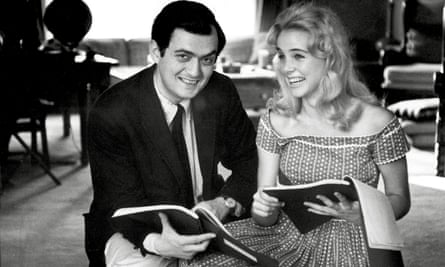
Smiling Kubrick and Lyon sit next to each other holding scripts
Kubrick and the Lolita star Sue Lyon during shooting in 1962. Photograph: PictureLux/The Hollywood Archive/Alamy

Hornick said: “I understood his legal agreement with the publisher entitled him to ensure the book was factually correct. I didn’t expect the whole book to be rejected.”

Kubrick’s lawyers were clear: “If … any attempt were to be made by yourself or any other publisher to publish the existing manuscript without his approval our Client will have no alternative but to accept our advice to take all steps as are open to him to prevent such publication and to seek redress for damages suffered.”

Kubrick estimated that the “unacceptable” criticisms amounted to a third of the 70,000-word manuscript. But he never specified what had caused such offence and Hornick was bewildered as he believed the criticisms were not that extensive.

They appeared primarily in a chapter on Lolita, a 1962 adaptation of Vladimir Nabokov’s controversial novel about a man who becomes obsessed by a 12-year-old girl.

In the book, Hornick wrote: “There are good things in Lolita. But in too many respects it squanders, impoverishes and conventionalises its source material, draining it of its complexity, nymphetry and eroticism.”

He said: “I found the film version largely a pointless betrayal of the original novel from which it was adapted. However, I expressed great admiration for most of his other films.” His book describes 2001 as “a magisterial achievement” and Kubrick’s 1957 first world war movie Paths of Glory as “a film of intoxicating visual sophistication”.

Kubrick never responded to his offer to revise substantial sections, “so long as the critical integrity of the book was not jeopardised”, Hornick had written to him. Instead, the film-maker collaborated closely with his friend, the film critic Alexander Walker, on a book titled Stanley Kubrick Directs, published in 1972. “Who could blame me for not wanting to prolong the agony, giving up on the whole sorry imbroglio, and getting on with my own creative life?” he said.

Asked if he was bitter that Kubrick’s lawyers blocked publication of his book, Hornick said: “Perhaps at the time, yes, and highly frustrated too, but not for long, as I was very busy with other projects.”

Hornick holds a cup of tea with bookshelves in the background
Neil Hornick said despite publication of his book being blocked he remained ‘bitten by the Kubrick bug’. Photograph: Jonathan Cronin

Filippo Ulivieri, a leading Kubrick scholar, said: “It’s quite shocking to read the correspondence between Kubrick’s lawyers and Neil’s publisher … Kubrick wanted a book that praised his films and Neil’s book was not like that. His films up to that point were reviewed positively – although some critics, especially in New York, had been critical. So he needed a book that was completely positive.

“With its down to earth, craft-­oriented analysis of the films, would [Hornick’s] book have chipped away at the myth of the all-powerful, never-failing director?”

Ulivieri added that Hornick’s book “offers a very precise, unbiased view of Kubrick’s films”, unlike so many others. “It’s very difficult to find even a single flaw pointed out in the Kubrick literature.”

The Magic Eye could have remained unread. However Hornick was approached by New York-based Sticking Place Books.

Paul Cronin, its British publisher, said: “His reaction to The Magic Eye showed Kubrick’s image-control obsessions taken to extremes. He didn’t just make edits – he erased the entire project. Now, almost 55 years after Neil Hornick completed it, readers can finally make their own judgments about the book Kubrick was so implacably determined to keep from public view.”

Hornick writes in his preface: “Given the sad fate of my book, I thought I’d finished with Kubrick. But, as I’m sure others before and after me have also discovered, one is never really finished with him. If you’ve once been bitten – or is the word “smitten”? – by the Kubrick bug, it kind of gets into your bloodstream and stays with you for life … I remain interested in him to this day.”

The Magic Eye: The Cinema of Stanley Kubrick by Neil Hornick is published on 30 April by Sticking Place Books


Read the original article

Comments

  • By lqet 2024-05-077:3911 reply

    I highly recommend the documentary Filmworker to anyone interested in Stanley Kubrick's character.

    It's about Leon Vitali, the actor who played Lord Bullingdon (the neurotic brother of Lady Lyndon) in Barry Lyndon. After filming Barry Lyndon, he quit acting and became Kubricks personal assistant / factotum for over 20 years. Although some would say he was Kubrick's personal slave. It is utterly shocking to see how badly Kubrick treated him at times. Vitali did the work of 4-5 assistants, completely neglected his family, destroyed his health, spend the best years of his life re-cutting scenes until 5 in the morning while listening to Kubrick's violent tantrums, and ended his successful acting career for him. But apparently he was paid so little by Kubrick that he ran into financial trouble after the director's death. Yet for some mysterious reason, he remained completely loyal to his master until his own death in 2022.

    • By blaerk 2024-05-0710:451 reply

      Leons daughter Vera talked a bit about her father, his relationship to Kubrick, art and family in “Sommar i P1”, a Swedish national radio show where people in “public interest” talk about whatever for an hour or so. It’s pretty interesting and provide some insights, but unfortunately it’s only in Swedish

      https://sverigesradio.se/avsnitt/1319508#

      • By raymond_goo 2024-05-0713:52

        can someone post some cliffnotes please?

    • By voltaireodactyl 2024-05-078:014 reply

      There are many people who believe that something outside themselves is more important than their own personal happiness or even basic sustenance/stability. Whether that’s something to be admired, damned, or merely observed — it would seem Vitali made choices for reasons worth it to him, personally.

      • By crazydoggers 2024-05-0715:18

        Lots of people make bad choices for themselves and others due to psychological control, manipulation, and/or abuse, such as people who willingly join cults.

        I’m not saying that is what happened to Vitali, but I think it’s the open question being alluded to.

        It is important to be aware and concerned about cultures or industries that foster cult like personality leaders.

      • By slibhb 2024-05-0716:001 reply

        Exactly right. But people today are extremely resistant to this fact.

        It's very clear that many, many people would give up nearly anything -- including years of their lives -- to work with someone as talented as Kubrick. Is that crazy? I wouldn't do it, but others would.

        • By pjerem 2024-05-088:322 reply

          This is not the issue. The issue is that some people (like, probably Kubrick) will abuse this.

          There is nothing wrong in loyalty. What is wrong is unilateral loyalty.

          • By voltaireodactyl 2024-05-097:26

            I hope this doesn’t come off as snide, but is there a positive trait that abusive people won’t abuse for their own benefit?

            In my view, if there is one I’ve yet to encounter it.

            Which would suggest it’s largely the responsibility of each individual to decide what is important to themselves, and how much of themselves they’re prepared to sacrifice in pursuit of said thing.

            For some, perhaps works of art that hold meaning for millions of people over many, many years would qualify. For others, it’s a highly paid dev job. I suspect the difference between the two (and all others) “exists” more in the eye of the beholder than folks on any side of the equation would care to accept.

            You see it as unilateral loyalty. Perhaps he saw it as something different, or at least lived his life with both eyes open to his own experience. The only thing we can both say for sure is that we will never know for certain.

      • By kjs3 2024-05-0721:48

        He had a family. While clearly he thought it was worth it personally, he wasn't making choices just for himself.

      • By crossroadsguy 2024-05-096:33

        That is true. This is the belief on which this entire, perpetual, scam of "die working for this startup for peanuts" for the great purpose of "changing the world" has been running. Every time a founder finds such sheep, mostly fresh ones but some old ones too once in a while.

        Sadly all that almost looks like "grateful to be abused".

    • By throw310822 2024-05-0710:231 reply

      > Lord Bullingdon (the neurotic brother of Lady Lyndon)

      It's her son from the first marriage.

      • By lqet 2024-05-0710:29

        You are right of course!

    • By ycombinete 2024-05-078:101 reply

      Sounds like a two person cult.

    • By itsthejb 2024-05-0711:08

      Also very enjoyable, Emilio D'Alessandro’s book Stanley Kubrick and Me

    • By 486sx33 2024-05-082:47

      Go and photograph commercial street - right away! After completing the task, he found it was just for Kubrick to show off to his colleague

    • By mizunooto 2024-05-0822:06

      You can see his name in a newspaper article in Eyes Wide Shut at 2:21:03 (timing from Apple "TV" app version)

    • By freejazz 2024-05-0716:36

      He also played the red cloak.

    • By jfkrirj 2024-05-079:351 reply

      [flagged]

      • By Hikikomori 2024-05-079:592 reply

        Maybe he was happy doing it but it doesn't mean that he was treated well. That era of director dictators caused a lot of suffering.

        • By jan3024 2024-05-0710:373 reply

          [flagged]

          • By FrustratedMonky 2024-05-0712:27

            "doesn’t make him bad"

            Doesn't it though?

          • By timdiggerm 2024-05-0712:26

            What a weird comparison.

          • By Hikikomori 2024-05-0712:30

            Did Jesus himself do that directly?

            I mean directors like Kubrick, Hitchcock and John Landis that acted like dictators. See twilight zone accident.

        • By jfkrirj 2024-05-0710:021 reply

          [flagged]

          • By Hikikomori 2024-05-0710:243 reply

            So you believe that what OP wrote is normal boss behaviour? I wouldn't want to work for you.

            • By gspencley 2024-05-0713:441 reply

              I don't think there's a lot of people that wanted to work for Kubrick. But I also have an easy time accepting that there are many people out there that will make great sacrifices for something that they love and believe in.

              MMA fighters, for example, put themselves at tremendous risk because they're chasing their own personal ideas of "greatness." And there are many examples of "struggling artists" throughout history that gave up on relationships and money because they were chasing something that they believed in.

              I'm not defending Kubrick's managerial style, and I don't know anything about the individual that they are talking about and what drove him. I just don't have any difficulty imagining that this person believed in something very personal that he was chasing. Something that the rest of us can't relate to but that meant a great deal to him. We don't have to imagine that Kubrick had him brainwashed or "enslaved" to accept that he could have made a personal choice that the rest of us are incapable of understanding, in pursuit of a value that he held above all others, because it was a deeply personal choice.

              • By sevagh 2024-05-0714:161 reply

                >MMA fighters, for example, put themselves at tremendous risk because they're chasing their own personal ideas of "greatness." And there are many examples of "struggling artists" throughout history that gave up on relationships and money because they were chasing something that they believed in.

                MMA fighters generally chase their own glory, to get their own hand raised in the ring. Not become a personal servant to another person's ego.

                • By gspencley 2024-05-0715:171 reply

                  Agreed but you're missing the point, which is that the individual might have so believed in Kubrik's art that he wanted to make personal sacrifices in pursuit of that. For all we know (and others undoubtedly know more about the story than I do), this man might have actually been in love Kubrik and wanted nothing more than to be close to what he perceived as "greatness."

                  I'm not even saying whether I think it's morally right or wrong. Only that it's not hard to imagine the scenario.

                  • By Hikikomori 2024-05-0716:121 reply

                    You're missing the point, abuse is bad even if the abused accepts it for whatever reason. You can achieve great things without abusing people, it's not a requirement.

                    Your MMA example is also missing the imbalanced power dynamic that you usually have in an abusive relationship.

                    • By voltaireodactyl 2024-05-0719:07

                      The MMA market is a near monopoly. Ask the employees of the WWE (née WWF) whether that constitutes an abusive relationship.

            • By fidotron 2024-05-0710:502 reply

              Normal bosses don’t get Kubrick like results.

              • By Hikikomori 2024-05-0712:351 reply

                Weinstein also got a lot of good movies made, probably more than Kubrick. Sexual abuse and rape is fine and forgiven I guess.

                • By CamperBob2 2024-05-0715:07

                  That's impressive. The ratio of offensiveness to word count is off the charts. Hats off, I guess.

              • By zoky 2024-05-0712:152 reply

                Kubrick’s results were all over the map. He made maybe three great films:

                Dr. Strangelove

                Full Metal Jacket

                A Clockwork Orange

                A bunch of not bad films:

                2001

                Lolita

                Barry Lyndon

                The Shining

                Spartacus

                One real turd of a film:

                Eyes Wide Shut

                And a bunch of forgettable filler:

                All the other films he made.

                Compare this to the Anti-Kubrick, Clint Eastwood, who made:

                Unforgiven

                Mystic River

                Million Dollar Baby

                Letters From Iwo Jima

                Gran Torino

                And a bunch of okay films:

                Pretty much everything else

                And it’s pretty obvious that you don’t need to be an abusive taskmaster like Kubrick to make great art.

                • By iknownthing 2024-05-0713:002 reply

                  2001 was "not bad"????

                  • By gspencley 2024-05-0713:382 reply

                    Jumping into this with a "spicy" personal opinion.

                    How I would rate 2001 depends entirely on my criteria.

                    For cinematography and vfx I would give it an 11 out of 10. Ground breaking.

                    For story and entertainment, I'd give it a -1. It is an anti-film in that sense. The most mind-numbingly boring and drawn out piece of "film" that I have ever had the displeasure of trying to sit through.

                    And I say that as a self-professed film nerd. I admire Kubrick a lot. But I can't stand 2001, at least when I judge it by the same criteria that I judge other films.

                    Film is visual story telling. Emphasis on "story."

                    Putting aside Dave & Hal (which make their appearance so late into the "film" that I've already been asleep for 3 hours - yes I'm exaggerating), when you take away identifiable protaganoists and antagonists, with backstories, goals, motivations and obstacles what you are left with is more of an exhibition.

                    2001 was more of a 1960s speculative endeavour into humanity's future at the dawn of the space age than it was a story told through imagery. It lacked plot, character development, relatibility and it's pacing was so slow and drawn out that it's hard to maintain your attention throughout.

                    When you judge it for what it was, there is a lot of greatness there. Many of its visual effects were truly groundbreaking and influenced filmmaking for decades to come.

                    But when you compare it to films that you actually want to re-watch for entertainment value ... I would put it in the "awful" category. But that's just my personal opinion.

                    • By iknownthing 2024-05-0716:21

                      > It lacked plot, character development, relatibility

                      Kubrick definitely did not play by those rules.

                    • By Hikikomori 2024-05-0713:57

                      2001 is art but its also like watching paint dry.

                  • By hrhfisk 2024-05-0713:04

                    2001 Lolita Barry Lyndon The Shining Spartacus

                    these "mid" films would be among the top 10 ever easily

                    but according to him "tough" guy Eastwood can surpass it

                • By hrhfisk 2024-05-0712:491 reply

                  sorry but Eastwood is not in the same league as Kubrick, by a long mile.

                  just ask reddit and reverse the results to know who is better

                  • By fidotron 2024-05-0713:41

                    Note to self: In future it's definitely best to respond to all bait with "just ask reddit".

            • By hrhfisk 2024-05-0711:13

              [flagged]

    • By moosemess 2024-05-0713:381 reply

      How is this any different than say working at Tesla today?

      • By sangnoir 2024-05-0715:471 reply

        Shades of that Twitter executive who shared a picture of herself in a sleeping bag at the office, presumably doing "hardcore engineering". She later got fired regardless.

        • By scottyah 2024-05-0716:35

          Anecdotally, some managers like to show how they're present physically yet they don't actually contribute anything.

  • By fastball 2024-05-075:363 reply

    Doesn't seem that controversial. A publisher commissioned a book about the films of Stanley Kubrick, agreeing that Kubrick would be able to veto publishing of the text if he didn't like it.

    He didn't like it, didn't sign off on it, and the book was never published.

    • By textfiles 2024-05-076:474 reply

      From the article, it appears the big sadness for the author was he wrote back and said he was happy to work with Kubrick to discuss getting it to where he was more comfortable with it, Kubrick never responded, and then sent lawyers. That's all that's rough for the writer, here.

      • By lelanthran 2024-05-0711:041 reply

        > From the article, it appears the big sadness for the author was he wrote back and said he was happy to work with Kubrick to discuss getting it to where he was more comfortable with it, Kubrick never responded, and then sent lawyers. That's all that's rough for the writer, here.

        Very. Who knows how many hours of sweat he poured into it, only to get it shelved when it was done.

        This, IMHO, is a good reason to recommend everyone read The Mom Test at some point in their adult life.

        What probably happened was that the author got the initial agreement from Kubric by being so persistent that Kubric agreed just to make them go away. A lukewarm reception from someone is just their polite way of saying "no".

        • By latexr 2024-05-0712:391 reply

          > This, IMHO, is a good reason to recommend everyone read The Mom Test at some point in their adult life.

          It is not. These things aren’t comparable. Most people will get nothing out of that book.

          > What probably happened was that the author got the initial agreement from Kubric by being so persistent that Kubric agreed just to make them go away.

          Why speculate to excuse Kubrick and victim blame Hornick, when the answer is in the article? He was commissioned to write the book:

          > He had been commissioned to write the very first book on Kubrick by cinema specialist The Tantivy Press more than 50 years ago.

          • By lelanthran 2024-05-098:52

            > Most people will get nothing out of that book.

            I disagree with this. Even if you're not trying to build a business, almost everyone would benefit from the ability to distinguish a "Yes (but not really - we just want you to leave)" and a "Yes (we're in agreement)".

            Most people can't tell the difference between the two.

            > Why speculate to excuse Kubrick and victim blame Hornick, when the answer is in the article? He was commissioned to write the book:

            I'm not trying to excuse anyone, I'm just saying that there is probably more to this than we heard, and one possibility is that the author interpreted a lukewarm signal as a yes, when in reality almost all lukewarm "yes"'s are "no"'s.

            > He had been commissioned to write the very first book on Kubrick by cinema specialist The Tantivy Press more than 50 years ago.

            That just moves the problem by a single degree - maybe it was the Tantivy Press that pestered Kubrick until he said yes to make them go away.

            PS I do not understand why parent, latexr, was downvoted so heavily. He's making an argument, and it's clear his making it in good faith, not merely being a jackass. I don't think that type of argument should be downvoted.

      • By fastball 2024-05-077:34

        That's not very surprising either though.

        I don't know many artists who would enjoy the prospect of justifying their art to someone who was skeptical of its merit from the start.

        Not saying Kubrick did the right thing, just that it seems very on-brand for most people in his position.

      • By ZiiS 2024-05-078:201 reply

        The problem is, if you have a veto and don't use it; you are basically endorsing the book.

        • By chefkd 2024-05-0713:451 reply

          I'm confused isn't sending lawyers basically the same thing as a veto? Or am I misunderstanding

          • By ZiiS 2024-05-0721:45

            I this case the author agreed that Kubrick would read the final book and agree if it should be published. This removes the option he chose with all other books of simply ignoring them. Very different then Streisand effecting an independent author.

      • By yareal 2024-05-0713:26

        Saying I'd like to work with you to get this shippable is saying "I'm willing to let you put in an enormous amount of free labor as an editor."

    • By smitty1e 2024-05-077:491 reply

      The question raised is whether one can be as great an artist as Kubrick without succumbing to taking oneself too seriously.

      • By tacocataco 2024-05-0716:26

        We enjoy art from artists deep in addictions or mental health crisis.

        Art can be morbid. Like an ongoing disaster that unfolds before us, we can't look away sometimes.

    • By FrustratedMonky 2024-05-0712:32

      From article it sounded like the clause to 'veto' was really meant as a fact check. Kubrick would be able to get chance to leave sections out, or clarify. That he just rejected the whole thing was the surprise.

      Like if someone hired you to do a Web Site, and there was of course some stipulation that you get to review it. Then you complain the buttons are the wrong color and just reject the whole thing.

  • By amanzi 2024-05-0710:189 reply

    I love Kubrick movies, but my one bit of criticism I'd give (from me - a random guy on the internet, who's never made a movie), is that both 2001 and The Shining both require the viewer to have read the respective books to fully appreciate them.

    I know it's a cliché to harp on about the ending of 2001, but it really does make a lot more sense after having read the book, which in turn makes the movie a lot more enjoyable.

    With The Shining, you really need to read the book to fully understand the back-story to Jack's issues, and Danny's premonitions. I was amazed at how much the movie left out, and after reading the book, the movie is so much better.

    • By mateus1 2024-05-0710:371 reply

      I do not think you have to fully rationally grasp the ending for 2001 to be an impactful film.

      I’d argue it is a masterpiece _because_ of that uneasiness and befuddlement and that is one of the ways it leaves a mark on you.

      • By onemoresoop 2024-05-0714:26

        I agree with the befuddlement aspect that makes the mind rummage on it from time to time long after watching the movie. It's an incomplete resolution that causes us to think about the movie. It could be frustrating at times but I guess that's the whole point.

    • By southernplaces7 2024-05-084:111 reply

      The Shining movie is different enough from the book in key elements as to go in a completely different direction. Also, though it's an enormously famous, atmospheric horror movie, Stephen King disliked it, especially because it changed certain key elements.

      The odd thing about it is how it conserved the atmosphere of the book superbly, while also deviating so drastically in a very selective way.

      Now, specifically:

      In the book, the hotel itself is much more of a living thing of its own, with its own sentience, not just a haunted building. In the movie, it's more just a sinister building with a terrible past, now filled with malevolent ghosts.

      The Wendy of the book is a tough, scrappy fighter who shows enormous resourcefulness in protecting her son both from his increasingly deranged father and also the deeply evil hotel that wants to eat the boy's soul. In the movie, Kubrick, for fuck knows what reasons, turned her into a partly hysterical, mousy shrew that saves herself and her son more by luck than by tough effort. This was one of the two things Stephen King most hated about the movie version, he felt that one of his good, tough characters was destroyed by Kubrick for no good reason at all..

      The other thing King most hated in the film was the characterization of Jack Torrance. He tried to convince Kubrick not to use Nicholson because he felt the guy had far too sinister a presence in general. The novel Jack on the other hand was a mostly normal, likable guy slowly made insane by the hotel. The movie version was more of an already unpleasant man with repressed insanity trying to preserve some goodness, and failing horribly with the help of the hotel's evil spirits.

      • By scarecrowbob 2024-05-085:13

        I think King is a stranger to his own writing.

        Having read a lot of his writing about writing, and having spent a lot of time (especially in my formative years) reading his writing, I think my understanding of his writing would sound totally foreign to him.

        Like, I think he's got a lot of issues with father's and sex, to be blunt. I think Kubrick found a similar reading and built an excellent film around it. I think that King wrote an excellent novel about those themes precisely because he could do that with no self-consciousness, completely unburdened by that reading.

        He focuses on craft, which is great and has made some terrific literature. At the same time, I think he too-easily dismisses reading text at any deeper level. That's great for writing but less helpful for digging up what makes the writing good. Similarly, it's helpful for living our day to day lives but less helpful for getting us out of dysfunctional patterns.

    • By munchler 2024-05-0715:541 reply

      I have to disagree with you about 2001. Both endings were epic, but Clarke's vision in the book was more rational and scientific, while Kubrick's is more impressionistic and mystical. As a result, the two effectively diverge at the end and the book doesn't really "explain" the movie. (Although I certainly do encourage everyone to read the book as well.)

      • By bubble12345 2024-05-095:28

        Reminds me of Solaris, the same thing holds there (Lem's "rational" book vs. Tarkovsky's "impressionistic" movie)

    • By slibhb 2024-05-0716:14

      Those movies don't require you to read the books. They leave something to the imagination, which some people don't like. But other people do like it!

    • By ghusto 2024-05-0710:385 reply

      Agreed, and I’d be comfortable calling this incompetence.

      Triggers cinemaphiles to hear a director that’s supposed to be ome of the finest being called incompetent, but I can’t see how it’s defendable. He failed at the _one thing_ a film is supposed to do.

      • By latexr 2024-05-0712:511 reply

        > Agreed, and I’d be comfortable calling this incompetence.

        You do know that in the case of 2001, the movie and book were done simultaneously, right? There’s no failure of adaptation because it wasn’t one. It makes no sense to fault the movie by comparing with the book in this case.

        > He failed at the _one thing_ a film is supposed to do.

        Which is what? Entertain? Make a profit? Be culturally relevant to an extent that is still felt decades later?

        There is no rule which says a movie has to be a coherent linear story that spoon feeds you to be significant, good, or artistically relevant.

        • By ghusto 2024-05-0719:48

          > You do know that in the case of 2001, the movie and book were done simultaneously, right? There’s no failure of adaptation because it wasn’t one. It makes no sense to fault the movie by comparing with the book in this case.

          Yes, I know that. I don't see how it makes it a nonsensical comparison though. One form was done well, the other incompetently. It's not like they marketed it as "hey, you really need both for the full experience".

          >> He failed at the _one thing_ a film is supposed to do.

          > Which is what? Entertain? Make a profit? Be culturally relevant to an extent that is still felt decades later?

          To convey something in the audio/visual format. It doesn't get more basic. Whether that's for pure entertainment, artistic intent, whatever.

          > There is no rule which says a movie has to be a coherent linear story that spoon feeds you to be significant, good, or artistically relevant.

          Neither is there anything saying that you're safe from criticism if your work isn't coherent either. There was a very clear, coherent story to 2001, and Kubrick failed to convey it.

      • By garyrob 2024-05-0714:431 reply

        > but I can’t see how it’s defendable

        Perhaps the key here is what YOU don't see, not the merit of the film.

        2001 was ranked the 6th greatest movie of all time in the Sight and Sound poll, which is probably the world's most respected poll of industry professionals.

        And it was ranked #1 by their poll of directors: https://www.bfi.org.uk/sight-and-sound/directors-100-greates...

        Could it possibly be that these directors know something you don't?

        For my own part, it's been my favorite movie since I first saw it in 1968 and I've probably seen it 20 times since then.

        • By ghusto 2024-05-0719:513 reply

          Appealing to authority doesn't negate what I said. There was a clear narrative to the story, Kubrick failed to convey it. That is poor film making.

          • By garyrob 2024-05-0720:54

            Ooookay. You are the world's greatest expert in film-making. Thank you.

          • By singleshot_ 2024-05-0820:051 reply

            I’ve seen the movie a few times and no part of it is confusing. The movie and the story it tells is coherent and, I dare say, pretty obvious. It’s unfortunate that you were not able to follow it, both because of your obvious dissatisfaction and because now you’re making a lot of bad posts.

            • By ghusto 2024-05-1520:37

              This film is definitely a trigger for me, so I'll concede that I'm over-reacting. However, I do not believe the ending was easy to follow, not just because I didn't understand it, but because I've never heard anybody who's only seen the film say they understood it either.

          • By runsfromfire 2024-05-0818:02

            He wasn’t trying to convey the story you wanted him to convey so it’s poor filmmaking?

            I’m not sure I understand your position. He’s a bad filmmaker because you preferred the book’s ending?

      • By WalterBright 2024-05-0716:57

        I've heard that 2001 was very much enjoyed by people who would come to the theater high. The visuals were a great trip for them, and helped make the movie a big success!

        P.S. I've seen the movie countless times (never high), and sometimes I'll put it on as simply moving wallpaper.

      • By tacocataco 2024-05-0717:56

        Art is subjective. There is nothing wrong with having your own interpretation

      • By bondarchuk 2024-05-0710:46

        Cinemaphiles TRIGGERED by this simple critique! (come on man...)

    • By tambourine_man 2024-05-0710:58

      “Leaving things out” is sometimes one of cinema's greatest strengths.

      I’ll never forget a documentary I saw on martial arts film editors. They will deliberately cut the very frame where a fist would touch an actor's face. And not at all because it was badly choreographed. Instead, they realized that the strongest punch is the one you never see. It’s the one you complete with your imagination. And there’s no competing with that.

      Likewise, leaving some of the plot to be inferred by the audience is a powerful narrative mechanism.

    • By freejazz 2024-05-0717:06

      >is that both 2001 and The Shining both require the viewer to have read the respective books to fully appreciate them.

      They do not in any way require that, at all.

    • By pinewurst 2024-05-0715:533 reply

      I’m pretty sure Clarke’s 2001 book was post-screenplay and possibly post-movie.

      • By WalterBright 2024-05-0716:00

        The book was written concurrently with the movie. See the book "The Lost Worlds of 2001" for various versions of it.

        https://www.amazon.com/Lost-World-2001-Arthur-Clarke/dp/0451...

      • By amanzi 2024-05-0810:33

        I listened to a podcast about it ages ago, and if my memory serves me correctly - the book was started first but wasn't finished until after the movie had been completed. Kubrick couldn't wait for Clarke to finish the book, so he carried on with the production of the movie. I think Clarke wanted to release the book first, but Kubrick wasn't going to wait for him!

      • By munchler 2024-05-0715:57

        No. It was developed concurrently with the film version and parts of it were even based on Clarke's earlier short stories (e.g. The Sentinel).

    • By eggoa 2024-05-0712:23

      It would have been tough since the book and movie for 2001 were created concurrently.

HackerNews