
Surrealism, cafes and lots of cats: why Japanese fiction is booming

2024-11-239:2077117www.theguardian.com

From tales of alienation to comforting novels set in bookshops, Japanese authors have written nearly half of this year’s bestselling translated novels in the UK. What’s their secret?

Anyone who has been in a bookshop in the last few years will have noticed that Japanese fiction is experiencing an extraordinary boom. In 2022, figures from Nielsen BookScan showed that Japanese fiction represented 25% of all translated fiction sales in the UK. The dominance is even more striking this year: figures obtained by the Guardian show that, of the top 40 translated fiction titles for 2024 so far, 43% are Japanese, with Asako Yuzuki’s satirical, socially conscious crime novel Butter topping the list. Butter also won the breakthrough author award at this year’s Books Are My Bag readers awards, which are curated by booksellers and voted for by the public.

The popularity of modern Japanese fiction is not a new phenomenon in the UK, of course. In the 1990s, two writers broke through and became cult hits in this country. Haruki Murakami, a worldwide literary phenomenon, took off in Britain when Harvill Press published The Wind-Up Bird Chronicle in 1998. Scott Pack, who ran Waterstones’ buying team in the early 2000s, is a big Murakami fan and remembers giving him “lots of attention. Whatever books of his came out, we got massively behind.” This week, Murakami publishes his 15th novel The City and Its Uncertain Walls, about a man who travels to a mysterious walled town in pursuit of the woman he loves, finding himself in a strange world of libraries, maps and dreams. So what’s behind the lasting success of Murakami’s books, which tend to combine lonely protagonists, jazz, cats, and fantasy elements? “It’s fairly accessible, weird shit,” Pack says.
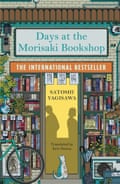
Days at the Morisaki Booksho by Satoshi Yagisawa

But, he adds, Banana Yoshimoto got there first. “It’s really important to point out that she predates Murakami.” Yoshimoto came into English translation in the late 1980s and early 90s with books including Kitchen and Lizard, her work often featuring alienated young women trying to overcome personal tragedy.

Murakami and Yoshimoto have something else in common: both were criticised in a 1990 essay by Kenzaburō Ōe, the Japanese Nobel prize-winning author. Their works, he said, “convey the experience of a youth politically uninvolved or disaffected, content to exist with an adolescent or post-adolescent subculture”. Many elements that unite Murakami and Yoshimoto’s fiction – alienation, surrealism, resisting social expectations – are present in today’s bestselling Japanese titles. But it is only in the past decade that a wider range of Japanese authors has taken off here. There has been a huge growth in Japanese crime fiction, both classic and contemporary: joining Yuzuki’s Butter in this year’s top 20 translated fiction titles is Seichō Matsumoto’s golden age crime novel, Tokyo Express. There has also been a surge in literary fiction, often from female perspectives, by writers including Sayaka Murata, Hiromi Kawakami and Mieko Kawakami.
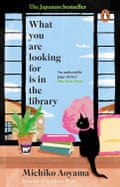
What You Are Looking for is in the Library by Michiko Aoyama (Author), Alison Watts (Translator)

Publishing Murata’s Convenience Store Woman in 2018 was a “a watershed moment”, says Jason Arthur, associate publishing director at Granta. The novel, which follows Keiko, a 36-year-old woman who struggles to fit in but finds contentment in routine work at a small shop, was the first of three Murata titles published by Granta – the others are Earthlings and Life Ceremony – that have now sold more than half a million copies. “She is a phenomenon,” says Arthur. “The role of Convenience Store Woman in the Japanese literature boom really can’t be overstated,” agrees Alison Fincher, who runs the Read Japanese Literature website and podcast.

The success of Murata’s books is “really astonishing”, says Ginny Tapley Takemori, Murata’s English translator, who has lived in Tokyo for 20 years. People tend to see Convenience Store Woman as a book about autism, she says, “which was not what Sayaka necessarily intended, but she doesn’t mind people seeing it that way. She shows us that what we take for granted as normal is not actually normal at all.”

Takemori has been instrumental in the drive to have more work by female writers translated, setting up the group Strong Women, Soft Power with fellow translators Lucy North and Allison Markin Powell. However, as Fincher points out, the idea that “women are being overrepresented in translation” is “absolutely not true. I think in 2023 there was parity. There isn’t this year.”

The popularity of female authors has had a knock-on effect, Fincher observes. “Publishers went from asking, ‘Can you give us another Murakami?’ to ‘Can you give us another Murata?’” The downside of this desire to build on success, however, can be the pursuit of superficial similarity – and this is evident not just in the search for the next big novel about alienation, but in the comfort books that are the true juggernauts of fiction translated from Japanese.

Known in the industry as “healing” or “heartwarming” fiction, comfort books often go unreviewed in the press but represent more than half of the bestselling Japanese fiction titles this year. There are recurring motifs: coffee shops (Toshikazu Kawaguchi’s Before the Coffee Gets Cold); bookstores and libraries (Michiko Aoyama’s What You Are Looking for Is in the Library); and, most of all, cats (Makato Shinkai’s She and Her Cat).

One of the most successful UK publishers of Japanese comfort books is Doubleday, where Jane Lawson is deputy publisher. Lawson grew up in Japan, and when she was a junior editor, “I was the only person looking for Japanese fiction,” she says. “I saw a copy of The Guest Cat,” Lawson recalls, referring to Takashi Hiraide’s 2001 novel, which went on to become a bestseller, and she thought, “I want to publish a book like that.” In 2017, she published the English translation of The Travelling Cat Chronicles by Hiro Arikawa, which has “gone on and on”, selling more than a million copies.

What is interesting about the comfort genre, says Lawson, is that it crosses divides, appealing to young and old alike. These books “have qualities that have always been around – like [Paulo Coelho’s] The Alchemist – but it’s been elevated and given a more cool element because of Instagram and BookTok.”
Strange Weather in Tokyo: Hiromi Kawakami by Hiromi Kawakami (Author), Allison Markin Powell (Translator

There is, Lawson acknowledges, a sniffiness about comfort books, and the cat subgenre in particular: “I don’t mind, because they’re selling so many copies. We don’t mind if people are a little bit envious or supercilious.” In fact this attitude is probably less to do with individual titles than with the sense of a bandwagon being pursued at high speed by so many publishing houses.

Publishers have been known to adapt books to appeal to established trends in Japanese fiction. Literary agent Li Kanqing, who specialises in east Asian literature, gives the example of one of her own agency’s titles, a nonfiction narrative about a female bookseller. “It has an entirely different name in Japanese, but the UK publisher changed the name to The Bookshop Woman in order to make it sound slightly similar to Convenience Store Woman.” (The book is, Kanqing acknowledges, “selling really well”.)

The cat motif on a cover is now so powerful that, as book blogger and Japanese fiction enthusiast Tony Malone points out, the presence of cats within the novel itself is superfluous. He recently read Satoshi Yagisawa’s Days at the Morasaki Bookshop, the fifth bestselling translated fiction title of 2024. “There’s a cat on the cover. There is no cat in the book. Not a mention.” (The sequel, he observes, has two cats on the cover.)

“It’s not like cat books are huge in Japan,” says Takemori. “They exist, but it’s not as big a thing as is being made out in the UK.” She adds that Japanese fiction generally can be “unashamedly sentimental”, and she has translated a number of cat books, including Shinkai’s She and Her Cat. “I’m not a big fan of sentimentality,” Takemori continues, “but I do really like that little book. I had to work quite hard to avoid making it overly sentimental in English.”

Meanwhile, as Fincher points out, there are readers for whom “comfort novels are a kind of gateway into the broader world of Japanese fiction”. Their success means other, more complex, Japanese fiction is being translated that may not otherwise have seen the light of day.

The fact remains, however, that the genres of Japanese fiction that are popular in the UK – crime, young women’s literary fiction, comfort books – are “heavily curated”, as Fincher puts it, to the detriment of other genres that are popular in Japan. “We’re not seeing very much hard sci-fi, supernatural or horror. We don’t see very much romance outside of light novels and manga. Japan has a very strong tradition of historical fiction, especially the samurai novels. We don’t see those.” Li Kanqing agrees. “There are books selling hugely in Japan that don’t travel well. Short story collections don’t sell.”

Aside from the dominance of a few genres, is there something else about the themes or style of Japanese literature that appeals to readers here? Fincher points out that a novel she read in 2018, Hybrid Child by Mariko Ōhara, about a cross-gendered robot and AI, was published in Japan in 1990. “And I realised that Japanese literature started coping with these late-stage capitalist issues, and these gender and feminist issues, in ways that English language literature didn’t start dealing with for two decades.”

For Kanqing, a factor is that, in modern Japanese literature, “writers are almost always coming from urban settings. And I think this urban landscape is both familiar for the audience here, and a little bit fascinating, because it’s in the east.” As Malone puts it, “what people want is an ‘otherness’ that’s not too other. A comfortable other.” For Takemori, “Japanese [literature] is much less judgmental than western literature. Western literature tends to be focused on whether things are good or evil. Whereas in Japan, the border between good and evil is much more blurred: evil characters often have something good about them; good characters are often flawed. The endings of novels are much more open.”

But in an industry driven by trends, is Japanese fiction in danger of losing its appeal? Has it already peaked? “There are always waves in publishing,” says Kanqing. “It will pass one day. I’m totally fine with cat books passing like sand.” But other Japanese books, she says, will stay. She predicts that Emi Yagi’s Diary of a Void, about a young woman who rebels against society by pretending to be pregnant, “will enter literary studies”. Granta’s Jason Arthur believes we are “at the crest of a huge wave”. Granta, he says, will “always be publishing Japanese fiction, but I think after a few corporate publishers put a lot behind some books that don’t work, they will lose interest.”

Ultimately, what sells fiction, whether from Japan or other countries, whether cat books or crime, is its universality across genre and language. As Fincher observes of Murata’s work, it tells us that “we’re all a little bit weird, and human society is weird, and this is all of us in this story”.


Read the original article

Comments

  • By throwerofstone 2024-11-2611:4710 reply

    I personally believe the reason for non-western fiction gaining so much mainstream traction is quite simple: it provides a perspective almost entirely seperated from the reality most people face. Even simple scenarios, like running a small store or living life in a rural village, are so different from our usual experiences that it provides a way for our brains to release some of the pressure that comes from our busy day-to-day lives. The "isekai" genre (being transported to a different world, usually after dying an unfortune death) is an extreme take on this, where almost all connection to reality is removed entirely.

    Compare those stories to most (not all) modern mainstream western fiction, and you'll find that a lot of it tends to take place within our existing world instead.

    • By bluefirebrand 2024-11-2615:301 reply

      I was putting a lot of thought into this just yesterday, talking with some friends about the "Thing: Japan" phenomenon

      It's important to recognize that any discussion about Japanese media outside of Japan is more or less only receiving the media that Japan is exporting to the world. Yes there are exceptions to this, people going out of their way to fan sub shows and such, but for the majority of Western people who are experiencing Japanese media it is very mainstream popular stuff like Studio Ghibli films and the most popular anime

      With that said, I think the approach Japan has towards making media is very different than Western studios, especially when it comes to depictions of real world Japan

      American TV and writing is very cynical about America. Consider the common depictions of rural America in most American media (rednecks, racist, boring, dirty) to the common depictions of rural Japan in Japanese media (idyllic, colorful, spiritual, friendly)

      Even compare how a fictional Japanese city is depicted in the Yakuza game series (where you play a criminal doing crimes) and how a fictional American city is depicted in the Grand Theft Auto series (where you play a criminal doing crimes)

      I really think Japanese creators like Japan more than American creators like America, and it shows through their work by smoothing over a lot of the rough edges of Japanese society

      • By ffsm8 2024-11-2616:511 reply

        > Yes there are exceptions to this, people going out of their way to fan sub shows and such,

        I agree that the well known works are usually the better productions, but that detail is wrong. Crunchyroll puts out almost everything that's currently being released, including complete nonsense like reincarnated as a vending machine

        And while I'd agree that most Japanese authors seem to have gigantic pride for their culture, it does get old because it's become such a trope to introduce Japanese culture/food as the best thing ever created...

        I mean I'm more likely to watch an anime then the woke garbage the west is currently producing, but I think the main reason is because our own productions have so massively dropped in quality.

        There just hasn't been another series such as Dexter, Breaking Bad etc in over 10 yrs now... If there were, I think anime would be a lot less relevant right now.

        • By bluefirebrand 2024-11-2617:352 reply

          > I agree that the well known works are usually the better productions, but that detail is wrong. Crunchyroll puts out almost everything that's currently being released

          Japan produces a lot more media than just anime, the west does not see most of it. When was the last time you saw a live action Japanese procedural crime show localized to English? Or really any live action Japanese shows that aren't something like Kamen Rider or Godzilla?

          Also, arguably the only reason Crunchyroll even exists today is because of dedicated fan subs making Japanese media available for decades

          • By ffsm8 2024-11-2618:131 reply

            That's true, my mind just instantly jumped to anime because of the word fansub.

            I think most people would also agree that anime, manga (and games as a distant third) are the main cultural exports of Japan, while life action movies/series are often centered around American productions

            • By bluefirebrand 2024-11-2618:59

              Yeah, which is why in my original post I wrote:

              "It's important to recognize that any discussion about Japanese media outside of Japan is more or less only receiving the media that Japan is exporting to the world"

              Which is a really just a long winded way of saying "The majority Japanese media we are exposed to is anime, manga and games"

          • By plorkyeran 2024-11-2618:23

            Arguably? Crunchyroll started as a pirate streaming site that hosted fansubs before they went legit.

    • By Jensson 2024-11-2611:593 reply

      Biggest reason is simply quantity, Japan churns out hundreds of animated stories from new authors every year, the west do barely anything in comparison.

      When you create that much content some of them do become hits, and it also encourages more authors to create more content, while western studios only invests in franchises they can control themselves to create another marvel, while Japan just churns out content while the authors retain the rights.

      Edit: Many western authors writes about other worlds etc, they just don't get anything animated since it is so hard to get anyone to invest in your story.

      • By TheAceOfHearts 2024-11-2612:297 reply

        There seems to be some progress in the western animation scene. Dungeon Crawler Carl and Cradle are both getting animated adaptations.

        The biggest tragedy is that even incredibly popular authors like Brandon Sanderson don't get a chance of having their own animated series. Mistborn would work perfectly as an anime adaptation.

        Marvel and DC historically created way too much consolidation which really limited creative output. And by this point people seem pretty fed up with 'capeshit'. Western comics are also incredibly hostile towards new readers, especially when compared to managa where you can just pick up the story and binge read the whole thing without having to pick up a million other things.

        • By kombookcha 2024-11-2613:04

          >Western comics are also incredibly hostile towards new readers

          I agree with this if we are talking American superhero comics, but the European scene is decidedly different. Franco-Belgian comics are usually very pick-up-and-go, as are a great many of the homegrown UK ones. I think we're coming off a decade-ish where the massive investment in Marvel/DC 'verses have been eating up all the oxygen in the room for large comic book adaptions. Or just for general public consciousness attention for comics.

          I am pretty confident that it's gonna turn around, but it might take a while on the large scale projects.

        • By havblue 2024-11-2615:47

          Things have definitely come a long way since the nineties where you would read a book or comic and wonder about how great it will be when the property will get adapted and reach a wider audience. It's kind of like listening to a band before they became popular or maybe rain on Arrakis. We got what we wanted and the thing that we anticipated isn't nearly as special anymore. Dinniman and Brandon Sanderson definitely deserve their wider audiences but it just seems anticlimactic as these shows and movies inevitably roll out.

        • By cgriswald 2024-11-2615:20

          Just a handful of Western comics you can pick up and read today:

          The Sandman (Netflix show), The Best We Could Do, Pride of Baghdad, Superman American Alien, Superman Red Son (animated), I Hate Fairyland, Bone, Epileptic, Paper Girls (turned into an live action show), Monstress, Saga, The Watchmen (turned into a terrible movie, an adaptation show, and an animated show), Stumptown (also got a show I believe), Daytripper, Maus, Berlin…

        • By anthk 2024-11-2615:10

          >Western.

          America is not the whole West, HN readers often forget it. Ditto with thinking on "Dragon Ball in the West" ended in the 00's when we the Europead finished it on mid 90's and began to watch Dragon Ball GT in 1999.

        • By dfxm12 2024-11-2614:36

          Western comics are also incredibly hostile towards new readers

          In my experience, it is easy to just pick up a trade paperback, one shot, subscribe to a limited series, etc. Even if you want to just jump in to an ongoing series, the writing and storylines are simple enough that you can usually pick it up in a few issues or just wait for a new arc.

        • By Cthulhu_ 2024-11-2615:02

          I'm not at all involved in the industry so here's an armchair opinion; western animation is too expensive for anything but guaranteed hits or kid's shows. Arcane is one of the best western animations of today, but it cost $250 million for just two seasons.

          Wages in Japan for animators are much lower, if not exploitative.

        • By motogpjimbo 2024-11-2613:01

          The Cradle adaptation is only an animatic, sadly. Best case scenario is that it generates enough buzz for a Netflix or an Amazon to pick it up for a full series, but then I'd be worried it would get butchered like Rings of Power or Wheel of Time have been.

      • By corimaith 2024-11-2613:072 reply

        None of the japanese literature in this article is being adapted into animation, we're talking about literary fiction here as opposed to more pop fiction like light novels which exist more as mass commercial enterprises.

        • By Jensson 2024-11-2613:111 reply

          Anime gets people started, then they start reading other things from Japan. The west doesn't have such a pipeline to make casual persons into readers.

          Edit: Anyway, the culture of celebrating authors in general rather than trying to create franchises helps a lot for all sorts of books.

          • By corimaith 2024-11-2613:302 reply

            No, I don't think somebody getting into Re-Zero is going to start reading VNs like Umineko someday, let alone progress to literature, in the same way as how somebody watching the MCU is unlikely to progress to Infinite Jest.

            Geographical distinctions don't really make sense in deciding preference, you start with genre elements and pick from there, regardless if it's Western or Japanese. Ignoring a work because it comes from X country would just be bizarre. As a sci-fi or fantasy fan I don't make distinctions between Japanese or Korean or Western works, nor do I see other fans doing so. For example, I wouldn't be comparing Satoshi Hase's Beatless in the context of "Japanese" works, I'd be comparing it to other AI works. The only limiting factor is translation.

            But cross-genre pollination doesn't really happen nowadays, most shounen readers will never go or even avoid mecha, and so forth. Otaku culture especially is much more fragmented today than in the early 2010s.

            • By Elvie 2024-11-2614:07

              I agree with your points, but to be honest Bungo Stray Dogs got me interested in Osamu Dasai and Akutagawa...

            • By Jensson 2024-11-2614:061 reply

              > No, I don't think somebody getting into Re-Zero is going to start reading VNs like Umineko someday

              You realize Umeniko got an anime? Yes, some of the people who watched that anime probably went to read the books, is that really so hard to believe? Authors who got their works animated see a lot more book sales as well. Then as they read those books they might want more so they look for adjacent books, fueling the entire industry.

              • By corimaith 2024-11-2614:53

                Well, the Umineko anime was pretty bad... But I illustrated the disprecancy between the VN culture and larger Anime culture for reason that the VN subculture is already very close to Anime subculture yet receives much less attention. Of course a few individuals can "graduate", but we can observe statistically most don't. Majority of AoT fans aren't going into MuvLuv.

                Contemporary Literary Fiction as in the article is separated by far more cultural layers, there is virtually no cross pollination with the otaku subculture. You are far more likely to get someone who reads Westen literature to expand to Japanese works than an otaku to do so.

        • By Jensson 2024-11-2614:26

          > None of the japanese literature in this article is being adapted into animation

          This is wrong btw, I looked up one and "Makato Shinkai’s She and Her Cat" was an anime. This is about animes as well, not just books.

      • By Elvie 2024-11-2614:031 reply

        Did you even read the article?

        churn animated stories? WTF has that do do with an article about fiction books - NOT manga? or even anime?

        • By Jensson 2024-11-2614:081 reply

          You realize most of those stories were originally books? They turn books to mangas and then to animes.

          • By Elvie 2024-11-2614:261 reply

            No, not all start as light novels. In many cases the light novels come afterwards as a way to capitalise (eg Demon Slayer, the manga finished a while ago, so while the anime is still running light novels are coming out).

            Apothecary Diaries started as a light novel, but JJK, AoT and many others start as Manga

            • By Jensson 2024-11-2614:29

              Also, the article is about animes as well. Makato Shinkai’s She and Her Cat is an anime, not a book, for example. It talks a lot about books, but it isn't only about books. I thought that was obvious.

              > No, not all start as light novels

              Many are though, many of the animes that came out for a few years I had already read the LN for. That so many novels becomes animes is likely a big reason why there are so many novels being written along those styles.

    • By resoluteteeth 2024-11-2612:562 reply

      > The "isekai" genre (being transported to a different world, usually after dying an unfortune death) is an extreme take on this, where almost all connection to reality is removed entirely.

      > Compare those stories to most (not all) modern mainstream western fiction, and you'll find that a lot of it tends to take place within our existing world instead

      When people draw conclusions like this it often seems like they're making apples to oranges comparisons. Most "isekai" stuff is light novels. The appropriate comparison with stuff published in the US would might be YA books which also have lots of stuff that does not "take place within our existing world".

      I think there might be some confusion about how common different types of fiction are in Japan because people are comparing US literary fiction with Japanese genre fiction because Japanese "pure literature" fiction doesn't tend to receive attention in the US, but in reality I'm not sure the US and Japanese fiction markets are that different overall.

      • By corimaith 2024-11-2613:191 reply

        This article is directly talking about Japanese pure literature, I think some posters just took off from the title only?

        You're right that if we are comparing the wider body, there isn't really a distinction between "Western" or "Japanese", at least for enthusiasts, what matters alot more are the individual authors.

        • By Jensson 2024-11-2614:271 reply

          > This article is directly talking about Japanese pure literature,

          No it isn't, did you even read it? It mentions animes as well, not all of the works mentioned are books.

          Makato Shinkai’s She and Her Cat is an anime, not a book, for example.

          Edit: They adapted that anime to a book, but a book adapted from an anime is hardly "pure literature", it is definitely pop literature.

          • By cgriswald 2024-11-2614:54

            The article is referring to the recently released book and calls She and Her Cat a book the only two times it references it.

      • By pjc50 2024-11-2613:29

        Literary fiction is a genre with tropes of its own. It's just one that its fans get extremely snobby about. But doesn't Murakami count as literary fiction?

    • By TheAceOfHearts 2024-11-2612:221 reply

      There's a ton of great western fiction that does the same thing, it's just not usually gonna show up on traditional channels. Heck, that's not even entirely true since Travis Baldree's slice of life Legends & Lattes won Nebula and Hugo awards last year.

      If you go on Royal Road there's tons of great fantasy stories. The West is just missing the Japanaese pipeline of web serials -> light novel -> manga -> anime -> live action movie. Although there's companies like WebToons that seem to be trying to get such a pipeline going by making comics based on popular western web serials.

      I've read my fair share of both Western and Japanese light novels, and you can definitely find quality content everywhere. In Japan they just do a better job at capitalizing on success by giving every slightly popular light novel series a try with an anime season or two. As someone who usually checks out 1 or 2 episodes of most seasonal anime, I can tell you that most of it ends up being barely memorable slop though.

      It's worth noting that the West seems to be catching up, a few popular series are getting animated series. Two big ones that come to mind are Cradle by Will Wight, and Dungeon Crawler Carl by Matt Dinniman.

      • By numpad0 2024-11-2616:411 reply

        I think there are also issues of scale of investment and revenue splits - I can't find right now, but there was a rant tweet from a Japanese comic author that apparent typical compensation for webtoons was below labor cost of his team by couple digits, and I also remember seeing similar rants on topic of AI training materials that were off by even larger magnitudes(like $.25 per dozen images one-time vs $1k per use recurring).

        So authors seem to be getting paid more, and that leads to an obvious question of how. One possible answer to that is maybe Japanese media contents - be it images or anime or light novel or classical novel - are still heavily subsidized by its strong and isolate domestic consumption. Average household expenditure on reading is about $120 per year in US and $325 in Japan[1], which IMO roughly coincide with this hypothesis.

        If there actually is such a situation... maybe what's missing in Western media is just accelerated consumption. It's weird to think that Americans and Europeans might not be consuming enough media, but that could be it.

        1: at current rate of 150 yen/dollar; raw value is 50k yen or ~1% average yearly income

        • By plorkyeran 2024-11-2618:31

          A sort of joke is that many anime episodes are a 30 minute ad for the soundtrack CD. If you look at the anime by itself the numbers very clearly make no sense, but shows are financed by integrated production companies that make their money on side merchandise.

    • By NoboruWataya 2024-11-2612:322 reply

      Murakami's works, at least, feel quite westernised. They are filled with references to western music and other art, the protagonists generally have jobs that are also common in the west, and (not sure whether this is down to Murakami or his translator) the characters always sound very American in dialogue. Nothing about them feels particularly alien to a western reader, except the surrealism itself (and, perhaps, certain aspects of his portrayal of women that is sometimes considered problematic in the west).

      • By MilanTodorovic 2024-11-2612:48

        He provides a portal to the west as a Japanese person would imagined it to be, akin to an otaku romanticizing japanise culture.

      • By GGfpc 2024-11-2612:59

        To be fair, Japan is westernized

    • By evanjrowley 2024-11-2615:30

      The point you make here is exactly why I often prefer to watch *anime. I think it also applies to my preferences for British period pieces.

      As an American, British period pieces[0][1][2] obviously present a different world. I imagine they are more palatable to someone in my demographic because we are relatively disconnected from British culture, society, and history. Recently I became aware of the UK's New Man / New Lad gender stereotypes[3] and realized that the main characters of these shows fit. As a result of this awareness, I can no longer enjoy these shows without being reminded of cultural conflicts of the present day. A story about a social issue set in the 1960s used to be just that, but now it's more apparent to me that the narratives are meant to shape present-day perception of these issues.

      It was nice not being reminded of the political struggles we face on a daily basis. Now I'm unsure if media consumers who lack this awareness are the lucky ones or the sheep. I wonder if British people have always felt this way about these shows and I'm only just catching up now. I also wonder if this dynamic is mutual with other cultures - for example, is Rings of Power considered non-controversial in SE Asia due to the cultural disconnect?

      * My preference for anime has waned as certain tropes have become quite overused and tiresome.

      [0] https://en.wikipedia.org/wiki/Foyle%27s_War

      [1] https://en.wikipedia.org/wiki/Inspector_George_Gently

      [2] https://en.wikipedia.org/wiki/Midsomer_Murders

      [3] https://en.wikipedia.org/wiki/New_Man_(gender_stereotype)#

    • By rgrieselhuber 2024-11-2615:09

      There does seem to be a unique form of escapism in the aesthetics. I often think of it when I think about the jazz cafe phenomenon that is popular in Japan. It's warm and cozy but it can also be a cozy sterility (but hey we have cats!) that a lot of societies seem to be going through now (in the West as well). A sleepy existential crisis that plays itself out in quotidian surrealism. It's not unpleasant but also feels somehow like a miss on both an individual and civilizational level.

    • By torginus 2024-11-2612:511 reply

      Honestly I don't remember any time when Japanese manga/anime/video games weren't popular.

      90s kids grew up watching Dragon Ball & playing Metal Gear Solid and Super Mario 64.

      • By vundercind 2024-11-2614:151 reply

        Video games, yes, but anime (aside from a couple things that played on normal channels, like dragon ball—seeking out more, though...) and especially manga were things only certain kinds of dorks enjoyed, among those whose high school years were in the '90s and '00s. Toward the veeeeery end of the '00s (as the kids right behind that group started reaching high school) it was changing, and what's remarkable now is how entirely normal it is, even manga. It's no longer unusual for the popular kids to like it.

        It was kinda hard to even get anime in that time period, if it wasn't one of the few played on TV. Hell, even US TV shows had only recently started coming out as complete DVD sets, most still weren't available that way, and publishers were all over the place on what they thought a season was worth. You pretty much had to be into Internet piracy to be a fan, or know someone who was and would get stuff for you.

        • By anthk 2024-11-2618:131 reply

          Maybe in the US, Europe has been into manga since the 80's.

          • By vundercind 2024-11-2618:39

            Ah, yeah, US perspective for sure.

    • By some_random 2024-11-2613:36

      I think most attempts to rationalize why media from an entire culture is popular are going to fall short, and while this is better reasoning that usual it's still overthinking the problem. At the end of the day, every culture produces media, some percentage of that is going to be really good, and sometimes other groups end up really enjoying it because of quality and novelty.

    • By Dalewyn 2024-11-2612:307 reply

      [flagged]

      • By simgt 2024-11-2612:593 reply

        I don't know if that was your intention, but I basically understand from your comment that black men and powerful women are two components of reality that are bothering you to start with. Yes all new British and American productions are ticking these two boxes, but it's not shouting at all of us.

        I suspect for the Japanese women who are putting in perspective the extreme conservatism on gender roles prevalent in their country, most Japanese fiction shouts at them about real life too.

        • By ValentinA23 2024-11-2617:11

          >I suspect for the Japanese women who are putting in perspective the extreme conservatism on gender roles prevalent in their country, most Japanese fiction shouts at them about real life too.

          https://www.bbc.com/news/business-19674306

          The 15th of each month is a big day for 36-year-old Yoshihiro Nozawa: it is the day he gets paid.

          But every month, he hands over his entire salary to his wife Masami.

          She controls the household budget and gives him a monthly pocket money of 30,000 yen ($381; £243). Despite being the breadwinner, that is all the money he can spend on himself over the next 30 days.

          "The last five days from the 10th of each month are usually the toughest," says Yoshihiro.

          [...]

          47-year-old Taisaku Kubo has been getting 50,000 yen a month from his wife Yuriko for the past 15 years.

          He has tried to negotiate a pay rise each year but his wife makes a presentation to explain why it cannot be done.

          "She draws a pie chart of our household budget to explain why I cannot get more pocket money," says Taisaku.

          [...]

          So why don't men start controlling the household budgets themselves?

          "I don't think many men hand over their entire salaries happily," says career consultant Takao Maekawa of FeelWorks.

          "But they feel it's their obligation to earn money for the family even if it means they have to suffer themselves."

        • By scarmig 2024-11-2615:461 reply

          Imagine a world where literature was preoccupied with height. A character is always slotted in who's explicitly the token short character, and the storyline is always, subtly or not, written to highlight how the world is biased against short people. Authors are very cautious about depicting a short person with any negative trait; when they do, a direct line is drawn between the social circumstances they encountered and their future actions.

          This would be exhausting, and people would rightly start to roll their eyes at it. And it would be fine for readers to object to it, even as short people are a component of reality. It wouldn't mean the complainant finds short people objectionable in themselves, but simply that they don't think height is a defining part of reality that all of literature is obligated to address.

          • By simgt 2024-11-2616:352 reply

            > Imagine a world where literature was preoccupied with height.

            Smart of you to have picked one of the few human characteristics that hasn't been used to justify discriminations and very unfortunate historical events... In our world it's not just literature that is very preoccupied with skin colour and gender.

            > It wouldn't mean the complainant finds short people objectionable in themselves, but simply that they don't think height is a defining part of reality that all of literature is obligated to address.

            You have it reversed, if it's not a defining part of someone's reality, why would one even care whether it's addressed in fiction or not? The person I was answering to does care, a lot, to the point that swinging one way or another can ruin their experience.

            • By scarmig 2024-11-2617:02

              Not getting into how we define what are valid complaints vs invalid, because that's besides the point.

              You'd find it exhausting. People similarly find the race and gender preoccupation exhausting. Your justification for the different treatment seems to be "for these categories, people are obligated to not find them exhausting, but not for other categories." But that's not well-motivated.

              In a height-preoccupied literary world, can you imagine objecting to the height preoccupation? If you did, how could you justify it, if it's not a defining part of your existence?

            • By PrismCrystal 2024-11-2616:47

              "one of the few human characteristics that hasn't been used to justify discriminations"

              Of course it has. That notions like “Napoleon complex” circulate in pop culture, suggests that society broadly considers short-statured people to be somehow disadvantaged and, moreover, it can be funny when the short-statured kick against the pricks. Also, the demand that a suitable male partner ought to be over six feet tall, is absolutely widespread, both in match-seeking profiles on online-dating platforms and in dating fora where women give advice to each other. (Or, if you want to reverse the sexes, Truffaut’s gag in Baisers volés about dating a tall girl, wouldn’t work if people broadly didn’t feel that there was something weird about this.)

        • By Dalewyn 2024-11-2613:071 reply

          [flagged]

          • By makerdiety 2024-11-2613:171 reply

            Isn't being annoyed at something sociopolitical and expressing that feeling, sharing your concerns with anyone who will listen, itself a sociopolitical act?

            Because it is.

            I'm not trying to gaslight you, insofar as reason itself agrees with my proposition.

            • By Dalewyn 2024-11-2613:261 reply

              [flagged]

              • By makerdiety 2024-11-2613:501 reply

                I'm not Elon Musk or Donald Trump. Sending your complaints of mainstream culture to me will not result in your political representation and its voice being heard. I am unable to effectively sponsor and defend your proposed alternative dynamics.

                But! If I am like a techno-angel sent from the Heavens above, then what I can do is suggest to you that exit, as opposed to voice, is a sociopolitical act that you should consider. Exit from the mainstream culture is your best bet.

                • By morkalork 2024-11-2614:111 reply

                  The token characters and checkboxes are a symptom of design-by-committee corporate culture anyways and even without them, the quality isn't going to be any better because again, it's corporate slop.

                  • By makerdiety 2024-11-2614:22

                    This only means that there's a pervasive cultural synagogue/cathedral that has infected behavior through pedagogical means. Namely, education itself has been made to serve the interests of all possible economics that can occur within the borders of global liberal democracy.

                    This also only means that any sociopolitical exit from the zombie invasion must at least be as high as considering a departure from common epistemology.

      • By evanjrowley 2024-11-2615:411 reply

        I choose not to watch most American-made entertainment because I share this sentiment, however, I'd like to point out that it goes much deeper than that. All media is a construction and projection of a certain viewpoint on reality. Until American entertainment can project a view that is wholesome, I must always consider it to be less valuable than media that does. This is not only for entertainment's sake, but also for the mental health of viewers. We need shows to show people how to be polite and how to behave, not shows that denigrate and debase. We should all put less emphasis on shows that align with political views and more emphasis on shows that align with moral ones.

        • By Dalewyn 2024-11-288:30

          That almost all my comments here got flagged says a lot about how putrid our society (and the specific subset most of HN's audience hails from) is. Sad, really.

      • By RockRobotRock 2024-11-2612:351 reply

        Isekai (anime) slop is bad on purpose. The target demo is hikikomori and otaku males. I don't think it's that deep.

        • By Dalewyn 2024-11-2612:482 reply

          That is about as uneducated a take as one could possibly have.

          Keep in mind "isekai" as a genre also exists in western entertainment; A Connecticut Yankee in King Arthur's Court and The Chronicles of Narnia are some prominent and famous examples. Are those specifically for shut-ins and nerds too?

          • By RockRobotRock 2024-11-2613:18

            Sorry if I struck a nerve, I was being slightly hyperbolic, but why do you think I'm uneducated? I also should have said I was specifically referring to anime since I think that's what most people think of when they hear "isekai".

          • By corimaith 2024-11-2613:16

            When we talk about isekai in modern contexts we do commonly refer to the post 2015 Narou-Isekai where one certainly draws a distinction between isekai before 2015 or after.

            The thing about "old" isekai is that they exist more as fantasy stories with specific messages and themes, where Narou-Isekai can be specifically placed in the context of the latest evolution of the Otaku after the failure of sekai-kei and the increasing self-indulgence from CGCDT, Battle-Harems all the way to Isekai.

      • By kibwen 2024-11-2612:583 reply

        > the whole fucking point of leisure activities is to escape from the hellscape that is life and reality

        To claim that escapism is the sole purpose of art is certainly a bold statement. Why bother reflecting on human society when we can just do our best to jam our fingers in our ears and ignore it?

        • By akimbostrawman 2024-11-2613:211 reply

          excuse me why are you browsing hn which is a leisure activity instead of fighting world hunger? Why are you ignoring starving people?

        • By evanjrowley 2024-11-2615:45

          I value entertainment that demonstrates how to thrive more than "entertainment" that demonstrates struggle. Struggle is important and necessary, but it should never be an end unto itself. True entertainment should uphold the dignity of as many people as possible.

        • By makerdiety 2024-11-2613:20

          If capitalism wasn't the leviathan that it was, then I wouldn't blame anyone for trying to escape the life that capitalist neo-colonialism has brought into existence. Pretty soon, at this rate, life itself will be a subordinate of the democratic global capital project.

      • By oreally 2024-11-2614:49

        For comics, I believe this partially originates from Stan Lee's view of including something relatable from real life in their works of art and media. The problem with that view is that it doesn't really integrate into all forms of media well.

        And I don't know if Japanese entertainment would fall over that easy. Media has a way of sticking around in our heads.

      • By PrismCrystal 2024-11-2613:15

        "the whole fucking point of leisure activities is to escape from the hellscape that is life and reality"

        I get that you don’t like woke, but that is too blanket a claim. There has just been too much popular literature across America and Europe that has directly dealt with dire social and political trends of the day. Even when it comes to the issue of American race relations and the impact of slavery, Harriet Beecher Stowe's Uncle Tom’s Cabin was one of the all-time bestselling books of the 19th century, so fiction readers clearly weren’t interested only in escape.

      • By Barrin92 2024-11-2613:271 reply

        This take is in the "Why did they put politics into my Metal Gear?!" category. Japanese fiction continues to win over people precisely because it's more than just pure entertainment. Japanese creators still manage to challenge audiences intellectually, politically, even aesthetically. Metaphor: ReFantazio, probably one of the best Japanese game releases this year is very political, not shying away at all from tackling class, race and even the literal point of this post, media dumbed down to escapism.

        • By Dalewyn 2024-11-2613:451 reply

          Maybe you don't realize it, but we're on the same side.

          Japanese entertainment isn't In Your Dumb Face about things unlike western entertainment, it respects your intelligence and sheer common sense. You're not being talked down to, your ability to just pick another (better) product to be entertained with and walk away is respected; and it's an escape from the rest of the world shouting at you about something.

          • By criddell 2024-11-2614:05

            > it respects your intelligence and sheer common sense

            I wouldn't make the pedestal too high. There's plenty of very disturbing, low-brow stuff published in Japan.

  • By cy0 2024-11-2615:19

    I've been on a Japanese literature kick for a while now.

    For me the characters are the main difference from American literature. The article mentions this briefly, but I find that in the novels I've read (admittedly translated), Japanese novel characters have much more depth. They're flawed people often with selfish motivations, and it's much more reflective of real life.

    Plot structure is very different as well with most of these novels not having a true setting > rising action > climax > falling action style plot like American literature tends to have. The books often just end without much resolution at all.

    Probably the biggest reason I've been reading them though is that I'm just tired of "young adult" books that have so much popularity here in America. It's like a tag you can throw on to shield your bad writing. It feels like everything popular here is written with 6th grade grammar. Maybe this phenomenon exists in Japan too, but we have the filter that translation provides. Presumably most translated novels are at least somewhat successful and well written, or else they wouldn't have been translated.

    For reference, of the translated fiction I've read, I'd recommend -

    Lady Joker by Takamura

    Devotion of Suspect X by Higashino

    Out by Kirino

    Breasts and Eggs, Ms Ice Sandwich, and Heaven by Kawakami

    Convenience Store Woman and Earthlings by Murata

    The Colorless Tsukuru Tazaki and Kafka By The Shore by Murakami

    Snow Country by Kawabata

    Strange Weather in Tokyo by Kawakami

    No Longer Human by Nazai

    I am a Cat by Netsuke

    The Memory Police by Ogawa

  • By n1b0m 2024-11-2611:572 reply

    The Wind-Up Bird Chronicle is a startling book with a rather disturbing wartime scene that has haunted me for years.

    Currently I'd recommend Yakumo Koizumi and Natsume Soseki for more old school Japanese writings.

    Mishima's The Sailor Who Fell from Grace with the Sea is another great read, despite the author being an extremely disagreeable person.

    • By A_D_E_P_T 2024-11-2612:441 reply

      Mishima's Sea of Fertility tetralogy was excellent. The second entry in the series, Runaway Horses, is in my opinion the 20th century's best novel. The fourth, with its surprising conclusion, was also astounding.

      Much to my surprise, I've found that the books actually read better in English translation than they do in Japanese. Mishima was inordinately fond of using complicated, and sometimes archaic, Chinese-style (kanji) characters that even native Japanese readers have trouble with. His books flow a little bit more smoothly in English, and they don't seem to lose much in translation.

      • By PrismCrystal 2024-11-2613:081 reply

        It has been years since I read the Sea of Fertility, but I remember one Western scholar of Japan claiming that the fourth volume was a shoddy work compared to the previous three, written hastily as Mishima was preparing for his death. Since the English version didn’t obviously strike me as so flawed, I wondered if the translator had done some rescue work. Sadly, I’ll probably never be able to read the book in its original Japanese.

        • By A_D_E_P_T 2024-11-2613:21

          I saw nothing wrong with the fourth book -- and I preferred it to the first, which was perhaps a little bit too saccharine and tinged with nostalgia for a lost world, and the third, which was a little bit too sedate. (Especially after the wild vitality of the second.)

          Public opinion turned on Mishima after his death. Westerners, by and large, took offense at his final actions. The Japanese found it embarrassing and endeavored to forget all about it. I'd venture a guess that your critic could be influenced by feelings that have nothing to do with the book as a thing in itself.

    • By criddell 2024-11-2612:331 reply

      I've read a few of Murakami's books (including Wind Up Bird) and enjoyed them. They certainly have their flaws and if you ever browse through a thread in a books subreddit, they will be pointed out with glee by one person after another. The primary complaint seems to be how he writes women.

      You'd think a books subreddit would be a place for people to celebrate books and writers but it mostly seems to be a place for people who dislike particular books in particular ways to vent and rant. They don't like book X and they don't want you to either.

      Thanks for the recommendations. I'm going to check them all out.

      • By PrismCrystal 2024-11-2613:05

        The primary complaint I have seen about Murakami in internet books forums, is how repetitive his writing ultimately became. His treatment of women that strikes many as problematic, is just one of the things that get repeated.

HackerNews