
A South Korean grand master on the art of the perfect soy sauce

2025-05-2111:19213174www.theguardian.com

Ki Soon-do’s soy sauce has been served to Donald Trump and gained Unesco heritage protection. It is recognition that is 370 years in the making

In the lush foothills of Damyang county, South Jeolla province, rows of earthenware jars stand under the Korean sky. Inside each clay vessel, a quiet transformation is taking place, one that has been occurring on this land for centuries.

This is the domain of Ki Soon-do, South Korea’s sole grand master of traditional aged soy sauce, where patience isn’t just a virtue but the essential ingredient in her craft.

“Here, try this,” Ki says, removing the heavy lid from one of the 1,200 pots. She dips a ladle into the dark liquid, releasing a complex aroma. “Smell it first, then taste just a droplet.”

The flavour unfolds slowly, first salty, then deeply savoury, with hints of something almost floral. It bears little resemblance to the bottles labelled “soy sauce” in western supermarkets.

“Korean traditional soy sauce needs three things: soybeans, water and salt,” Ki explains. “And care and time. Without time, there is no flavour. In modern life, everyone is rushing. But some things cannot be rushed.”
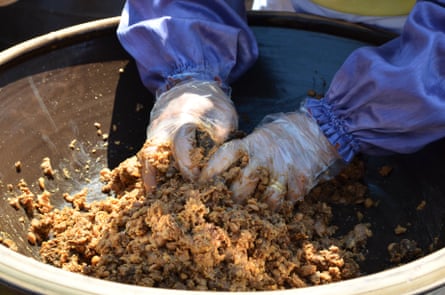
Master Ki carefully breaks down lumps in doenjang (fermented soybean paste), ensuring consistent texture before the next stage of ageing.
Master Ki carefully breaks down lumps in doenjang (fermented soybean paste), ensuring consistent texture before the next stage of ageing. Photograph: Raphael Rashid/The Guardian

At 75, Ki is the 10th-generation custodian of her family’s sauce-making legacy. When she married into a prestigious family at 23, she inherited not just a household but the responsibility for preserving fermentation techniques dating back 370 years.

Ki is a traditional jang maker, a term that describes a family of fermented soybean condiments that season virtually every Korean dish: ganjang (soy sauce), doenjang (soybean paste), and gochujang (fermented chilli paste). These aren’t just seasonings but the foundational flavours that define Korean cuisine.

“Our jang and doenjang are like the roots of Korean people,” Ki says firmly. “When we talk about Korean food, we’re talking about jang. Without it, you cannot call it Korean cuisine.”

What began as a domestic obligation for Ki has since transformed into a mission to safeguard a cornerstone of Korean culinary heritage. In December 2024, after years of dedicated work by Ki and other traditional jang makers, their craft was officially recognised by Unesco as an intangible cultural heritage of humanity, a testament to generations of meticulous preservation.

‘We begin only after bathing to purify ourselves’

Unlike mass-produced commercial sauces and pastes, Ki’s process begins in winter when soybeans are boiled, crushed and shaped into blocks called meju.
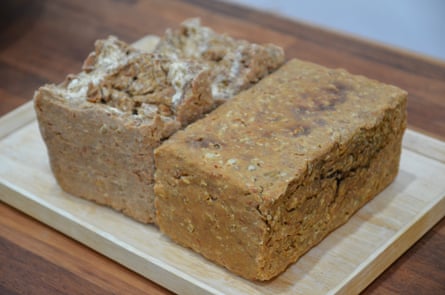
A block of meju, made from crushed soybeans and fermented with beneficial bacteria, forms the foundation of Korean jang-making culture.
A block of meju, made from crushed soybeans and fermented with beneficial bacteria, forms the foundation of Korean jang-making culture. Photograph: Raphael Rashid/The Guardian
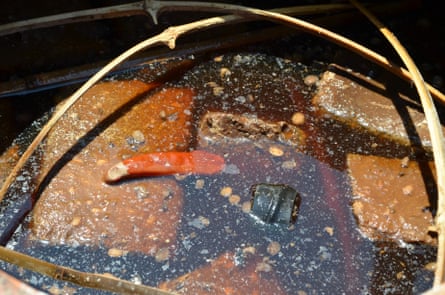
Meju blocks float in brine made with water drawn from 160-metre-deep wells and bamboo salt. Red chillies for sterilisation, charcoal for purification, and jujubes to enhance fermentation surround the fermenting blocks.
Meju blocks float in brine made with water drawn from 160-metre-deep wells and bamboo salt. Red chillies for sterilisation, charcoal for purification, and jujubes to enhance fermentation surround the fermenting blocks. Photograph: Raphael Rashid/The Guardian

These blocks are tied with rice straw and hung indoors, where the beneficial bacteria from the straw help develop unique flavours during fermentation. After around 50 days, they’re submerged in brine made with bamboo salt, which Ki creates by baking sea salt inside bamboo at high temperatures.

“The day for boiling meju must be a good day,” she says. “We begin only after bathing to purify ourselves and saying prayers. This requires extraordinary devotion, but our family has followed these same rituals for 370 years. It’s how we’ve always done it.”

The resulting solids that sink to the bottom transform into doenjang, while the liquid will become ganjang after around a year of fermentation. The most precious of all is her jinjang, a soy sauce aged for more than five years that has developed a depth of flavour that has captivated top chefs from around the world who have made pilgrimages to her sanctuary.

Her dedication gained international attention in 2017 when her then 360-year-old “seed sauce” known as ssiganjang, a family heirloom continuously replenished with each year’s best batch (in a way similar to a sourdough starter), was selected to season beef ribs served to then US president Donald Trump during a state banquet. The press marvelled at a sauce that was “older than American history”.

Ki also produces gochujang. In the seventh month of the lunar calendar, she ferments meju made specifically for the paste, which is then powdered and mixed with steamed glutinous rice, chilli powder, ganjang, and malt syrup from sprouted barley. Among her creations is a distinctive strawberry gochujang, which uses Damyang strawberries for a natural sweetness that balances the heat and saltiness.
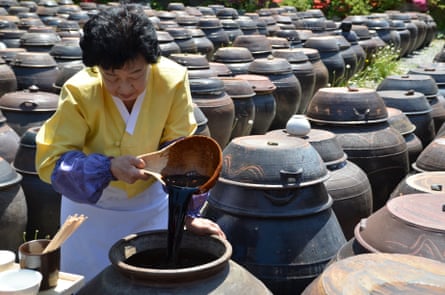
Ki Soon-do checks the colour and aroma of her ganjang (soy sauce), assessing its development through sensory evaluation developed over decades of experience. "You just know when the flavour won't develop further."
Ki Soon-do checks the colour and aroma of her ganjang (soy sauce), assessing its development through sensory evaluation developed over decades of experience. "You just know when the flavour won't develop further." Photograph: Raphael Rashid/The Guardian

Ki believes that her devotion to traditional fermented foods has benefited her own health. “I’ve never been hospitalised or taken regular medication,” she says matter-of-factly. “Everyone pursues happiness, and to be happy, you need to be healthy. People now eat fast food, but fermented foods maintain health. What could be better than that?”

Today, Ki works alongside her family, who also help manage their traditional food company. Together, they’re committed to preserving ancient methods while finding ways to share their heritage with a wider audience. To share her traditional knowledge, Ki established a fermentation school in 2023.

Changing seasons

Yet Ki worries about the future of traditional jang-making. Where once every Korean household had its own jang recipes and jars, today most Koreans reach for factory-produced bottles and tubs.

The climate crisis poses another challenge. “Korea used to have four distinct seasons, but winter is shorter, spring passes quickly, and summer is long,” Ki laments. The heat affects fermentation, turning doenjang darker and accelerating moisture loss. Unwanted bacteria proliferate in the warmer temperatures, forcing adaptations.

“We used to make larger meju, but too many different bacteria would grow,” she says. “So we cut the meju size in half to shorten the fermentation time. I’ve also planted balsam flowers around the pots to provide shade during the summer. If the climate continues to warm, we may need to move our jang to cooler storage places.”

Beyond her own productions, Ki sees herself as part of a broader struggle to preserve cultural knowledge in an age of convenience. The Unesco recognition of jang-making as an intangible cultural heritage has given her both pride and a sense of responsibility.

As the afternoon light casts shadows across her precious jars, Ki reflects on her life’s work. “This isn’t just about jang,” she says. “It was my fate to inherit this tradition, and it has become my destiny to preserve it.”


Read the original article

Comments

  • By konfusinomicon 2025-05-2220:506 reply

    I delved into the world of soy sauce a few years back and id say if your looking to go beyond kikkoman, or god forbid that swill they call la choy, go for kimlan. super special, I-Jen (for something a little different), light, or aged..pearl river bridge isn't too bad either just watch out for brands with a bunch of added chemicals in the ingredients

    • By exhilaration 2025-05-2313:441 reply

      or god forbid that swill they call la choy

      An interesting note: La Choy is synthetically fermented (whatever what means!) and is usually the only alcohol-free option for those with medical or religious restrictions on the consumption of alcohol. Soy sauce is specifically listed as something recovering alcoholics taking Antabuse should avoid [1], though I've read it only rarely triggers any reaction. But there is a sometimes a reason for La Choy!

      [1] https://advantagetherapy.com.au/the-impact-of-antabuse-on-al...

      • By konfusinomicon 2025-05-2320:471 reply

        yikes, antabuse users I'll give a sympathetic pass, but if whatever god one prays to condemns its followers to a life to salty water+caramel coloring condiments, all believers must collectively come together in songs of praise to request a slight rule change.

        • By teleforce 2025-05-240:371 reply

          A tiny amount of alcohol produced through natural fermentation, especially less than 1%, is generally considered permissible or halal.

          The main verses from the Quran for alcohol intoxicant prohibition come from this verse [1]:

          O believers! Intoxicants, gambling, idols, and drawing lots for decisions are all evil of Satan’s handiwork. So shun them so you may be successful.

          And another [2]:

          They ask you O Prophet about intoxicants and gambling. Say, “There is great evil in both, as well as some benefit for people - but the evil outweighs the benefit. They also ask you O Prophet what they should donate. Say, Whatever you can spare. This is how Allah makes His revelations clear to you believers, so perhaps you may reflect.

          Fun facts, Surah Al-Maidah name literal meaning is The Table Spread with Food, in reference to the event of the Jesus apostles were asking for ready foods directly from heavens, from God (not Jesus since Islam consider him as one of the prophets sent by God similar to Adam, Noah, Abraham, Moses and Muhammad). This particular event is famously known as The Last Supper [3].

          [1] Surah Al-Maidah (The Table Spread with Food), verse 90:

          https://quran.com/al-maidah/90

          [2] Surah Al-Baqarah (The Cow), verse 219:

          https://quran.com/ms/al-baqarah/219

          [3] Last Supper (Section: In Islam):

          https://en.wikipedia.org/wiki/Last_Supper

          • By konfusinomicon 2025-05-2422:221 reply

            I suppose we can be greatful MSG wasn't discovered until 1908 and hasn't made it into any holy texts yet, the intoxicating allure of its flavor experience as it may be. if it was any better the gods would have kept it for themselves.

            • By teleforce 2025-05-2423:31

              > if it was any better the gods would have kept it for themselves.

              Fun facts, in Semite languages namely Arabic, Hebrew and Aramaic (language of Jesus) God is called Allah. This word has no plural meaning, thus God by this very definition is only one.

              Funny that you mentioned MSG, personally I can detect certain amount of MSG that went into my consumed food by my nose being itchy and uncomfortable.

              MSG however is not intoxicant to the brain like alcohol, marijuana, meth, etc that badly effect the state of mind immediately. The verse clearly mentioned intoxicant and by extension any new substances that make you lose your mind (temporarily or permanent) is not permissible or haram.

              This is an excellent video by the health experts if you not yet convinced that any amount of alcohol consumption is bad for human brain and health in general based on published research evidences [1].

              [1] Psychiatrist Reveals What Alcohol Actually Does to Your Brain [video]:

              https://www.youtube.com/watch?v=5QWMSLmVVyw

    • By getnormality 2025-05-2222:06

      Pearl River Bridge has a seasoned soy sauce that's been my constant for over a decade.

    • By eth0up 2025-05-233:171 reply

      La choy is to soy sauce what Maruchen is to real ramen or Kraft to French cheese. Try San J, available in most 'health' grocers, eg Food Hole, Sprouts, etc. it's not fine, but it's good.

      • By metaphor 2025-05-234:481 reply

        > La choy is to soy sauce what Maruchen is to real ramen

        Oh come on now, surely Maruchan deserves a bit more credit...at the very least, no one is breaking the bank while desecrating their soul.

        In contrast, at my local Walmart, a 15-oz bottle of La Choy is priced +50% higher than its (subjectively superior) Kikkoman alternative of the same size!

        • By eth0up 2025-05-235:361 reply

          I'm enjoying the throes of salmonella presently and it all seems unappealing. The fucking pain. But even in this wretched state, I have some memory of desire for Paldo, but none for Maruchan.

          Yeah, I'm in genuine agony, probably preparing to puke from all holes, and I'm reading HN... while writhing and moaning.

          I guess you could say I'm sick. And so is la choy

    • By gniv 2025-05-237:052 reply

      Which prepared foods show off the qualities of the soy sauce best?

      I feel like in most of my cooking the soy sauce is overpowered.

      • By throwaway2037 2025-05-238:293 reply

        This is a good question. I would offer that there are at least two major types of soy sauce: light and dark. They are used in a variety of ways in Northeast Asian cooking (Mainland China, Koreas, Japan, Taiwan, Hongkong, Macao). For example, when you steam a fish (southern Chinese/Canto style), you use a combination of light and dark soy sauces. (I have no idea why, but this is a traditional recipe taught to me years ago.) Soy sauce has two primary "taste" components (previously I discussed visual components): (a) the fermented soy beans and (b) the umami (MSG/monosodium glutamate). Even if you feel like (a) is overwhelmed by your cooking, it is still enhanced by (b) which, for most people, makes any savory food taste more appealing.

        For me, nothing beats raw fish (sashimi or sushi) as a taste test for a soy sauce, but I frequently use a mixture with Japanese ponzu... so ignore any expertise that I have on the matter! I am sure that each culinary region in Northeast Asia will have a different answer. You could probably interview 100 chefs from the region and get 25 different answers.

        Lastly, there is a third type of soy sauce used in Southeast Asia called sweet soy sauce, or kecap manis in Bahasa Melayu/Indonesia.

        • By unwind 2025-05-239:062 reply

          Surely, "salt" has to be mentioned when talking about the primary taste components of soy? Normal soy is around 17% salt, which is a lot and really plays a part, in my opinion.

          • By teleforce 2025-05-240:55

            Fun facts, the Malay word garam for salt most probably come from the Roman word Garum, a very popular fermented fish sauce from an ancient Malay Champa kingdom [1]. The Champa kingdom used to rule majority of Vietnam and the South China Sea used to be called Champa Sea even in ancient Chinese chronicles [2]. If I'm not mistaken the Vietnamese themselves still calling this particular fish sauce as Champa fish sauce, while the rest of the world call this Vietnamese fish sauce [3].

            The original world from Old Malay for salt is probably "asin", that's now become the word for taste of salt or "masin" meaning salty.

            [1] Garum:

            https://en.m.wikipedia.org/wiki/Garum

            [2] The Cham: Descendants of Ancient Rulers of South China Sea Watch Maritime Dispute From Sidelines:

            https://www.nationalgeographic.com/science/article/140616-so...

            [3] Did fish sauce in Vietnam come from ancient Rome via the Silk Road? (111 comments):

            https://news.ycombinator.com/item?id=23980279

          • By dismalaf 2025-05-2315:40

            Soy sauce is meant to largely replace the salt component of your dish. If you're using so much that it's particularly salty, you're using too much.

            Way back in the day, when salt was scarce and expensive, the whole point of stuff like fish sauce, miso, soy sauce, etc... was to provide salt but also cut it by adding other ingredients.

        • By kunwon1 2025-05-2313:241 reply

          Kecap manis is delicious, I get the ABC brand. It's as thick as molasses. Wonderful drizzled over some chicken rice

          • By throwaway2037 2025-05-245:511 reply

            Have you tried Bango brand kecap manis? I recommend it. It is less sweet and has stronger flavour.

            • By kunwon1 2025-05-2718:14

              I haven't. Thanks for the recommendation, I'll try it out

        • By gniv 2025-05-2311:041 reply

          Oh, sweet soy sauce is a thing in Asia? I thought it was a French invention (all restaurants here give you both savory and sweet soy sauce).

          Also I just had gyozas with Lee Kum Kee light soy sauce and thought it's a good test for it.

          • By throwaway2037 2025-05-253:33

            I assume if it appears in France, then it was borrowed from their SE Asian colonies.

      • By konfusinomicon 2025-05-2311:24

        plain white rice is a good vessel

    • By SwtCyber 2025-05-237:02

      Once you step outside the usual suspects like Kikkoman, there's a whole world of nuance out there.

    • By rustcleaner 2025-05-236:47

      Will vouch for Kimlan, my late mother's favorite!

  • By NelsonMinar 2025-05-2218:414 reply

    Fermentation is such wonderful technology. It both preserves and makes things more delicious.

    • By bobsmooth 2025-05-2222:091 reply

      So much of human society relies on the byproducts of other organisms. Pickles, bread, antibiotics.

      • By znt 2025-05-2222:542 reply

        Yoghurt + Kefir + Kumis.

        Golden Horde conquered the known world fueled by milk byproducts.

        • By bigiain 2025-05-2223:05

          Surely alcohol is by far the biggest example.

        • By bobxmax 2025-05-2223:512 reply

          Aside but I've always hated the phrase "known world". It means "known to the Europeans"

          • By 0_____0 2025-05-235:24

            I think in this instance it means "known to the Mongols"

          • By dismalaf 2025-05-2315:421 reply

            "Known world" in the context of history usually means Eurasia + Africa. Basically all the places that aren't the new world and random islands in the middle of nowhere.

            • By bobxmax 2025-05-2418:371 reply

              Known world does not usually mean Africa. It generally means Europe and central Asia... because that's the known world to European explorers.

              Oceania, Africa, the Americas are not included in that nomenclature usually.

              • By dismalaf 2025-05-285:40

                Considering Rome ruled a bunch of Africa I'm pretty sure they knew about it...

    • By kunwon1 2025-05-2313:28

      I got into making hot sauces recently. I didn't really care for any of the results until I started fermenting them. Chop up ingredients, add brine, put everything in a jar with a fermentation lid that allows gas to escape. Then let it sit on the counter for a week or two. blend and maybe add a bit of vinegar. That's the basic process, and in my humble opinion, it's the absolute best way to make hot sauce

      (YMMV, do your own research, there are obviously risks to letting food sit out at room temperature for two weeks)

    • By SwtCyber 2025-05-237:042 reply

      It's kinda wild how fermentation does both - keeps food from going bad and somehow makes it taste better. Like, who figured that out and thought, "Yeah, let’s just let this sit and see what happens"?

      • By agos 2025-05-238:292 reply

        "let's make this stuff go bad, but in a good way" and somehow humans created cheese, soy sauce, wine, bread, pickles, chocolate...

        • By ljf 2025-05-2310:21

          Isn't it more 'let's store this surplus' - then 'oh man it looks and smells different now but somehow better'.

          For example cheese was likely discovered when people tried transporting milk in water carrying bags made from sheep stomachs. While carrying water in them would be fine, putting milk in there for a couple of unrefrigerated days would lead to cheese from the rennet in sheep's stomach that would stay on in the vessel, even after it has been cleaned and even dried.

          Same with wine - let's store some fruit juices - it is pretty hard NOT to make wine unless you know about pasteurisation, and even if you do boil it, there are so many natural yeasts just ready to make wine.

          Grains that get wet actively want to produce beer :)

          Wholemeal flour is chock full of wild yeasts, and wants to become a sourdough starter if you just give it a little water and time.

        • By SwtCyber 2025-05-2515:29

          Yet now half our favorite foods owe their existence to it

      • By NelsonMinar 2025-05-2316:23

        Arguably our tastes evolved or adapted to enjoy the flavors of fermentation. And it's not universal: a lot of people don't like the smell of cheese, or natto, or even cucumber pickles. I love them all!

    • By carabiner 2025-05-2218:447 reply

      It also makes things rotten. The difference between spoilage and fermentation/aging is whether humans like the result at the end.

      • By montebicyclelo 2025-05-2221:241 reply

        > The difference between spoilage and fermentation/aging is whether humans like the result at the end

        Is not whether it makes humans unwell quite an important factor..

        • By GoatInGrey 2025-05-2222:371 reply

          Liking the result at the end in a qualifier that encompasses "does not make me ill", "does not taste terrible", and various other factors.

      • By dlisboa 2025-05-2219:271 reply

        The difference is whether humans get ill or not.

        • By charcircuit 2025-05-2221:311 reply

          People get ill from alcohol, yet it's called fermentation.

          • By algorias 2025-05-2221:332 reply

            No, people get ill from excessive quantities of alcohol.

            • By literalAardvark 2025-05-2222:08

              Acetaldehyde is always toxic, so no, they always get sick, just less sick.

            • By bobxmax 2025-05-2223:533 reply

              Getting drunk is literally poisoning yourself. Some humans just happen to enjoy the symptoms of said poison.

              • By accrual 2025-05-230:00

                Kind of reminds me of dolphins taking turns chewing on pufferfish, apparently for fun/altered states.

                https://www.smithsonianmag.com/smart-news/dolphins-seem-to-u...

              • By nitwit005 2025-05-230:345 reply

                Most people aren't getting drunk every time they drink.

                Try wine and grape juice side by side. Baring truly awful wine, the wine will taste better (I suppose you could have awful grape juice too, but, you get the idea).

                • By kranner 2025-05-231:482 reply

                  Taste is subjective. To people not used to consuming any alcohol the wine might taste worse than plain grape juice.

                  • By nitwit005 2025-05-233:341 reply

                    Sure, but it's a taste people have spent a couple thousand years working on, and it's remained popular through huge changes in culture and diet. People clearly like it.

                    • By kranner 2025-05-234:56

                      Some people, sure, but not all people.

                  • By SwtCyber 2025-05-237:11

                    Context and experience shape so much of how we taste things

                • By ac29 2025-05-234:36

                  > Try wine and grape juice side by side. Baring truly awful wine, the wine will taste better

                  The unfermented juice of wine grapes has many similarities to the wine it would produce if fermented. "Grape juice" is usually pretty one note, just sweet.

                • By bobxmax 2025-05-230:402 reply

                  Sure, but if alcohol didn't get you drunk consumption would plummet 95%.

                  • By OJFord 2025-05-231:212 reply

                    I wouldn't be so sure... I'm certain my own would increase. (Assuming 'get you drunk' means something like 'contain ethanol' i.e. no 'buzz' or whatever but also no adverse effect on liver, the next day, ...).

                    If you want a cold drink that isn't sweet, your choices are pretty much alcohol, alcohol-free alternative, water.

                    • By astura 2025-05-2314:18

                      >If you want a cold drink that isn't sweet, your choices are pretty much alcohol, alcohol-free alternative, water.

                      Uh, no.

                      There's also seltzer, flavored seltzer, flavored water, iced tea, iced coffee, herbal infusions (like hibiscus, rooibos, honeybush, etc), broth, milk and plant based milk alternatives, and fermented drinks like kombucha + kefir. That's just off the top of my head.

                      Hibiscus even has the benefit of helping regulate blood pressure.

                      I almost never drink sweet drinks or plain water and rarely drink alcohol. My fluid consumption is almost entirely: hot tea, iced tea, kombucha, and hibiscus infusion. Sometimes seltzer. Sometimes coffee.

                    • By alisonatwork 2025-05-231:302 reply

                      Tea and coffee don't have to be sweet either, and there are lots of cold versions of those.

                      • By kranner 2025-05-231:472 reply

                        Also plenty of traditional cold drinks that are savoury or can be savoury: doogh, ayran, lassi, jaljeera, buttermilk, kvass

                        • By OJFord 2025-05-2317:371 reply

                          I guess simply 'milk' I also missed, which is a bit sweet of course but I wasn't intending to lump it in with fruit juices and added-sugar drinks.

                          I did almost mention jaljeera, but thought that might be a bit niche. It is also often sweetened though. I've never known not-sweet lassi though? Salted lassi is still sweet underneath, like salted caramel, ime. We could count it with the sweet-ish milk drinks, anyway.

                          • By kranner 2025-05-2323:30

                            Lassi is a traditional drink where I’m from and contains only salt traditionally. Sweetened lassi is a relatively recent restaurant-led innovation. When I was a kid “lassi” meant salted; you had to specify “sweet lassi” for the sweetened version.

                        • By aziaziazi 2025-05-235:212 reply

                          I’ll add legumes juices : both raw, fresh blend or the water from a soup that you separate and put in a fridge. Those are delicious.

                          Kvaas contain alcohol, doesn’t it?

                          • By thesz 2025-05-236:44

                            Of about kefir percentage. Kwas has 0.5-1.5% ABV, kefir has 0.02-2.0% ABV.

                          • By kranner 2025-05-236:14

                            > Kvaas contain alcohol, doesn’t it?

                            I think only as much as kombucha, not enough to cause a buzz

                      • By metaphor 2025-05-236:54

                        To be fair, the concept of iced tea as an objective desire is considered the provenance of blasphemous original sin by a not insignificant percentage of natives where the parent hails from.

                  • By nitwit005 2025-05-232:24

                    That seems unlikely. Non alcoholic drinks are already an enormous market, and people would have less reason to limit consumption with the health downside removed.

                • By voidUpdate 2025-05-2310:171 reply

                  If you hate the taste of alcohol (like me), I think the grape juice would taste better

                  • By astura 2025-05-2314:02

                    I like beer and I think the taste of wine is absolutely vile.

                • By chamomeal 2025-05-234:02

                  Totally agree. I love beer. I just love it. I would drink beer all day if it didn’t have that damned alcohol in it.

                  I like alcohol too, but not nearly as much as I like beer. Kinda sounds nonsensical, but that’s how I feel!

              • By ljsprague 2025-05-236:58

                The dose makes the poison.

      • By tough 2025-05-2219:05

        Same could be said of fire and burnt food

      • By talkingtab 2025-05-2222:183 reply

        What is fermentation really? It is a process whereby bacteria et al. process a food source, breaking it down. And the same process goes on inside your gut. Ouch, now there is spoilage for you!

        There is at least some research that says fermented foods have some benefits including reducing inflammation. My personal guess based on subjecting myself to more and more fermenting foods is that much of the obesity and many of the common health issues have to do with not eating enough fermenting foods. Just a guess based on a sample of one.

        • By elhudy 2025-05-232:12

          In the case of this style of korean soy sauce, it is actually fungal enzymes from molds that colonized the meju slowly breaking down the proteins and starches over time, whilst being protected from outside forces by high salinity water. I realize you said "et al." but I couldn't help myself. There's very little bacterial activity going on in there.

        • By modo_mario 2025-05-238:25

          AS far as downsides go. Don't koreans have a much higher incidence of bowl cancer due to a bad bacteria that can pop up during fermentation?

        • By Beijinger 2025-05-232:141 reply

          No, fermentation is a process of enzymatic transformation.

          Black tea is fermented, for example. No need for bacteria.

          • By aziaziazi 2025-05-235:311 reply

            I have to disagree: black tea only had an oxidation while fermented tea had an oxidation plus a fermentation by microbial activity: https://en.m.wikipedia.org/wiki/Fermented_tea

            The term "fermentation" is very often used buy common language to describe both fungic and microbial activity.

            • By Beijinger 2025-05-2616:55

              1. Classical (Microbiological) Fermentation: This is the most common definition, especially in biology and food science:

              Fermentation is the metabolic process by which microorganisms (like bacteria or yeast) convert organic compounds—typically sugars—into other substances such as alcohol, acids, or gases.

              Examples:

              Yeast turning sugar into alcohol in beer or wine.

              Lactic acid bacteria fermenting lactose in yogurt.

              2. Enzymatic (Non-Microbial) Fermentation: In certain fields, especially tea processing, cigar aging, or cocoa fermentation, the term fermentation is also used more broadly to describe biochemical changes driven by enzymes—either from the plant itself or from microorganisms.

              Examples: Tea (e.g., black tea): The so-called "fermentation" is actually oxidation catalyzed by enzymes in the tea leaves themselves (like polyphenol oxidase), with little to no microbial activity.

              Cigars (tobacco leaves): Enzymes within the tobacco leaf, often activated by warmth and moisture, cause internal biochemical transformations (not always microbial).

              Cocoa beans: Initially microbial fermentation, but internal enzymes in the bean also break down compounds, affecting flavor.

      • By ceejayoz 2025-05-2219:43

        The line between spoiled and fermented… blurs, at times.

        https://en.wikipedia.org/wiki/H%C3%A1karl

      • By Carrok 2025-05-2219:561 reply

        What point are you even trying to make? The difference between gone bad and fermented is pretty obvious, but fine, don’t eat anything fermented if you like.

        I’ll be over here enjoying cheese, kimchi, beer, miso, pickles, sauerkraut, etc etc etc

        • By soperj 2025-05-2220:021 reply

          chocolate

          • By sho_hn 2025-05-2220:291 reply

            TIL! I had no idea chocolate-making involves fermentation. Turns out fermenting the beans is highly involved in producing the characteristic flavor.

      • By nkrisc 2025-05-2222:15

        And veggies and meat begin decaying the moment they die. So what?

        The difference between spoilage and fermentation is whether it’s spoiled.

  • By jihadjihad 2025-05-2216:156 reply

    So is it like tamari? Seems to be made from fermented soybean paste, which is how tamari is made too (byproduct of miso paste).

    Most of the soy sauce you encounter in the US has wheat, while in Japan (and seemingly South Korea) there's no wheat added.

    Personally once I switched to tamari I never went back to "regular" soy sauce, the flavor is quite a bit richer and more versatile in cooking, in my opinion.

    • By least 2025-05-2216:463 reply

      > Most of the soy sauce you encounter in the US has wheat, while in Japan (and seemingly South Korea) there's no wheat added.

      This is incorrect with regards to Japan. Shoyu is made with wheat. Tamari is not. Their production process is different.

      Kikkoman is the most popular brand in the West AND in Japan, which is a koikuchi shoyu, which is the "standard" shoyu type in Japan. It is made with wheat.

      • By rjsw 2025-05-2217:361 reply

        The Kikkoman gluten free variant is also labelled as tamari.

      • By lanfeust6 2025-05-2217:19

        Yes, and Chinese "light soy" is also similar to shoyu.

      • By steveBK123 2025-05-2220:211 reply

        For me I always have Kikkoman in the fridge (especially because thats what wife grew up with) as the staple soy sauce. I like to dabble in having 1-2 other variants in the fridge at once, but they can tend to have too strong a flavor for some peoples taste. Or certain variants are best with certain dishes, etc.

        • By molf 2025-05-2221:313 reply

          This is the first time I hear about keeping soy sauce in the fridge. Is this common?

          • By Ekaros 2025-05-238:41

            I have feeling that I should do it. The difference between open bottle that have stayed outside and fresh bottle is pretty clear. Refrigeration would slow down any reactions and thus keep taste better longer.

          • By NaOH 2025-05-2223:241 reply

            Every soy sauce label I remember seeing has said, "Refrigerate after opening." I don't know why this seems to be rarely done (at least in the US).

            • By steveBK123 2025-05-2223:47

              Yeah I just follow food safety instructions on packaging

          • By alisonatwork 2025-05-2223:231 reply

            I keep sweet soy like kecap manis and 醬油膏 in the fridge because occasionally it can catch mold otherwise. I do the same with sweet vinegar like balsamic. However I think this depends a lot on how hot and humid your environment is. In cool and dry climates it's probably not necessary.

            • By divbzero 2025-05-2223:49

              醬油膏 = soy sauce paste

              It’s one of my favorites. I try to find ones without much additives and refrigerate after opening to keep it fresh.

    • By alistairSH 2025-05-2216:382 reply

      I was under the impression that traditional Japanese soy sauce (shoyu, not tamari) also contains wheat (close to 50/50 ratio) - it's used to help start the fermentation.

      • By mlinhares 2025-05-2216:442 reply

        It does, when it doesn't that's when you call it tamari.

        • By AlotOfReading 2025-05-2216:49

          Tamari is "low wheat" rather than specifically "no wheat". Many manufacturers (particularly when selling to Western markets) will simply take the extra steps to expand the market.

      • By elhudy 2025-05-232:08

        Eh, it depends what you mean by traditional. Ramen is "traditional" in japan, but it was invented in the early 1900s. Similarly, since wheat wasn't commonly imported into japan prior to the 1800s, most actually old tradition recipes didn't contain wheat either.

    • By squidsoup 2025-05-2221:211 reply

      > Most of the soy sauce you encounter in the US has wheat, while in Japan (and seemingly South Korea) there's no wheat added.

      My favourite jang is made from fermented wheat and soy - chunjang. Chunjang is the star ingredient in one of the most delicious noodle dishes ever conceived, Jjajangmyeon.

      • By konfusinomicon 2025-05-2223:221 reply

        buldak ramen introduced me to jjajang. I stir fry 1 of them and one 2x spicy together with green and yellow onion, red pepper, garlic, ginger, and whatever leftover protein I have from the week. top with some type of Lao Gan Ma and there is basically no reason to ever order takeout

    • By fermentation 2025-05-2219:351 reply

      Once I had to switch to tamari due to a celiac diagnosis, I found it was one of the few things that actually tastes better without gluten. I think most of the world would enjoy soy sauce made without wheat more if they tried it.

      Also, most soy sauce in Japan absolutely has wheat unfortunately.

    • By pcurve 2025-05-2216:482 reply

      Good question... I think they're pretty different in taste and how they're made (which is why they taste so different)

      Miso and "dwen jang" taste very different because miso is usually mixed with soybean and rice, whereas dwen jang is all soybean. They are also aged differently. Miso is packed into more air tight container, whereas dwen jang is shaped into a block, hung outside to air dry.

      • By t3rra 2025-05-2220:461 reply

        The block to hang up outside for air drying is called 메주 (meju) which is form before made into 된장 (dwenjang). There is more process involved to make it into dwenjang. Actually from that meju we make daenjang and soy sauce.

        • By unlikelytomato 2025-05-2319:33

          Don't forget the larva which is apparently a sign of a good 메주. I wonder how many people can still put up with the smell of making it at home.

          I really need to learn to make 된장찌개 at home. This thread reminded me how tasty it is.

      • By squidsoup 2025-05-2221:29

        I've really come to appreciate daenjang more than Japanese miso over time. It has funkier, earthier but arguably less refined taste than Japanese miso.

    • By thinkingtoilet 2025-05-2217:321 reply

      Same. Tamari seems to have a much richer flavor than soy sauce. I would recommend others try it a replacement.

      • By bananalychee 2025-05-2218:561 reply

        Western tastes favor intense flavors, so tamari may provide better balance than standard (koikuchi) soy sauce in that sense, but in Japanese cooking, "richness" is not necessarily a desirable characteristic, and tamari would overwhelm many dishes when substituted for koikuchi in similar amounts. Reprocessed (sai-shikomi) soy sauce, made by fermenting soy sauce twice, is considered a middle ground between koikuchi and tamari in terms of richness and is popular for dipping. But there is also a relatively wide range of flavor within the koikuchi category, and the US-made Kikkoman sauce that many people are familiar with is not very flavorful.

        • By throwaway2037 2025-05-238:581 reply

              > Western tastes favor intense flavors
          
          What a ridiculous generalisation. Much of French and Italian cuisine is subtle in its flavourings. What about Sichuan or Korean spicy food? Some of that stuff can knock your socks off the flavours are so strong. And don't get me started about Malaysian or Indonesian food.

          • By bananalychee 2025-05-2314:32

            That's why I expressed a generalization and not a universal statement. You don't have to prop up a strawman to express disagreement.

HackerNews