*The Telepathy Tapes* claims that autistic children have the ability to read minds. Where do their claims come from — and why do so many people believe them?
Ky Dickens, the director of The Telepathy Tapes, repeatedly describes her findings — namely, that non-verbal autistic people can read minds — as “paradigm-shifting.” This is not a cherry-picked hyperbole: at the official Telepathy Tapes website, t-shirts bearing the phrase “paradigm shifted” are on sale for $40 USD (plus shipping & handling).
The series is a roughly 500-minute explanation, spread across 10 episodes, of a silent revolution taking place among autistic individuals. One by one, the program presents the charged testimonies of families crushed by bleak diagnoses deemed “severe” or “profound,” peppered with recollections of callous doctors who suggest letting go of hope for the future. Defiant parents and teachers refuse this fate, and against all odds, manage to help the nonspeakers in their lives find some means of communicating.
It’s easy enough to understand the appeal of such accounts, in which extraordinary individuals triumph over seemingly insurmountable adversity. But The Telepathy Tapes aims to do more than share feel-good stories. It seeks to lend credence to a truly radical claim that nonspeakers — not just the few featured on the show, but all nonspeakers — have tapped into something the rest of us have allowed to atrophy, a part of the mind capable of accessing a universal collective consciousness.
Farfetched as it may sound to the uninitiated, it’s a notion that’s garnered enduring appeal among a widespread audience. For a brief period at the start of 2025, the series eclipsed podcast juggernaut Joe Rogan on Spotify’s top podcast charts. In February, Rogan invited Dickens onto his show to speak at length for an audience of millions. By July, Spotify’s editorial team named The Telepathy Tapes one of the “best breakout series of 2025.”
Beyond the less-than-reliable realm of The Joe Rogan Experience, the possibility of psychic thought transmission has captivated individuals not usually prone to magical thinking. Dickens’ truth-seeking odyssey stems from informal, unreviewed research conducted by Dr. Diane Hennacy Powell, a Johns Hopkins-educated neuropsychiatrist and former Harvard Medical School faculty member. Despite the unsubstantiated nature of her findings — Powell has never submitted her telepathy work to peer review — frequently cited and highly respected professor of psychology Dr. Scott Barry Kaufman sat Powell down for an interview, in which he expressed earnest interest in conducting further experimentation on the subject of telepathy. In the same exchange, Kaufman also revealed that prominent autism researcher Simon Baron-Cohen had expressed a similar interest in working alongside Powell.
The message has found still more purchase outside of the sciences. Influencer and entrepreneur Packy McCormick praised the series to a readership of over 250,000 people. “[We are] moving past the stranglehold of the dogmatic rational materialist paradigm…and towards something both ancient and cutting-edge,”he wrote in a glowing review of the series. Author and investor Scott Britton, following a conversation on Telepathy with Ky Dickens, boldly claimed that “we will reach a tipping point in collective belief during this lifetime that will open up the aperture for much greater human capacity.”
Most recently, NewsNation — a scrappy, centrist cable network that deems itself “America’s source for fact-based, unbiased news” — featured an hour-long promotional interview with Ky Dickens and cognitive neuroscientist parapsychologist Dr. Julia Mossbridge. There’s also a feature-length documentary currently underway, said to premiere sometime in the spring of 2026.
But amidst all the chatter about paradigm shifts, the voice I’ve found myself reflecting on most is my grandmother’s.
In life, she was a devout Catholic, with the same steadfast faith that guided Acadian ancestors. For her last three decades on Earth, night after night, she punctually prayed that God would grant her one simple request. Though the act of prayer itself was a private matter, she candidly spoke of what she asked for one hundred thousand times over: that my eldest brother, Chris, would speak to her.
When initially presented with the possibility that my brother might be telepathic, I thought immediately of her kitchen table in the soft morning light, where my family would sit, and my grandmother would tell us that her prayers had been answered overnight in the form of a dream. While she pieced together the conversation she supposedly shared with my brother, Chris would sit silently beside me, stabbing at the stack of brown sugar flapjacks in front of him or fiddling with the loose knob of a pot lid.
If anyone else had doubts about the recollections she shared with such conviction, they were suppressed. Who were any of us to claim to better understand the nature of dreams, or to challenge a belief that brought her such unbridled delight?
Since discovering The Telepathy Tapes, I’ve frequently found myself revisiting this composite memory. In many ways, my brother resembles the non-speakers featured on the podcast. Despite being a few years shy of his 40th birthday, Chris would likely neglect many of his most basic needs if not for the gentle, constant patient prodding of my mother and father. He expresses himself through gestures, a few simple signs, and an occasional monosyllabic utterance, but he never truly talks. It has been this way since before I was born, and I’ve fully accepted that it will likely always be this way.
Though the nuances of a highly variant neurodevelopmental condition like autism are difficult for a child’s brain to comprehend, I managed to discern two laws concerning Chris early on. Firstly, there is an enormous divergence in the way Chris and I understand the world, and this results in a struggle for him to accomplish things that come naturally to most, including communication. This is the basis of the second law: There will always be depths to my brother that I cannot know.
Acceptance of these statutes have guided me through the most challenging parts of our strange and wordless relationship. They have explained his howls that occasionally rip through the chatter of restaurant dining rooms, his fixation with the flow of running water, his tendency not to react at all when I talk to him. When he flips through the pages of books, I am not sure if he is reading or up to something else entirely. The countless uncertainties become far easier to embrace and appreciate with the laws in place.
But recently, I’ve been forced to question the laws that have long guided me. Something about The Telepathy Tapes — and, by extension, the suggestion that my brother and grandmother did find some impossible way to speak — rings true to a surprising number of people. It’s enough to make me wonder, if only for a moment, whether I somehow missed a sign of recognition all those years ago at the kitchen table, in the twinkle of my brother’s eye, or deep within the hint of a smile.
My fleeting moments of self-doubt are always quieted by the stark juxtaposition between the idealistic claims presented by The Telepathy Tapes and my own lived experience, never mind the lack of compelling scientific evidence. Autism is a magnet for pseudoscientific theory, and I’ve formed skeptical calluses in response.
All the same, I’ve found myself vexed by the tight grip these psychic notions have, particularly on otherwise skeptical individuals and organizations. When something strikes so close to your heart, you have no choice but to dig for answers — not just about the nature of telepathy, but of the cultural movement that wants to believe it’s real.
The strongest pieces of evidence for autistic telepathy are the anecdotal accounts shared by the caregivers, case workers, and educators who work firsthand with nonspeakers. Their stories are captivating, all the more because they are perfectly suited for audio. Naturally, The Telepathy Tapes leans heavily on these testimonies. From the opening of the first episode onwards, Dickens implores her audience to not only listen, but to believe the words spoken by oft-ignored parents and teachers.
Unshakable faith is an absolute necessity moving forward with the series, because the fantastic claims that follow defy rational explanation.
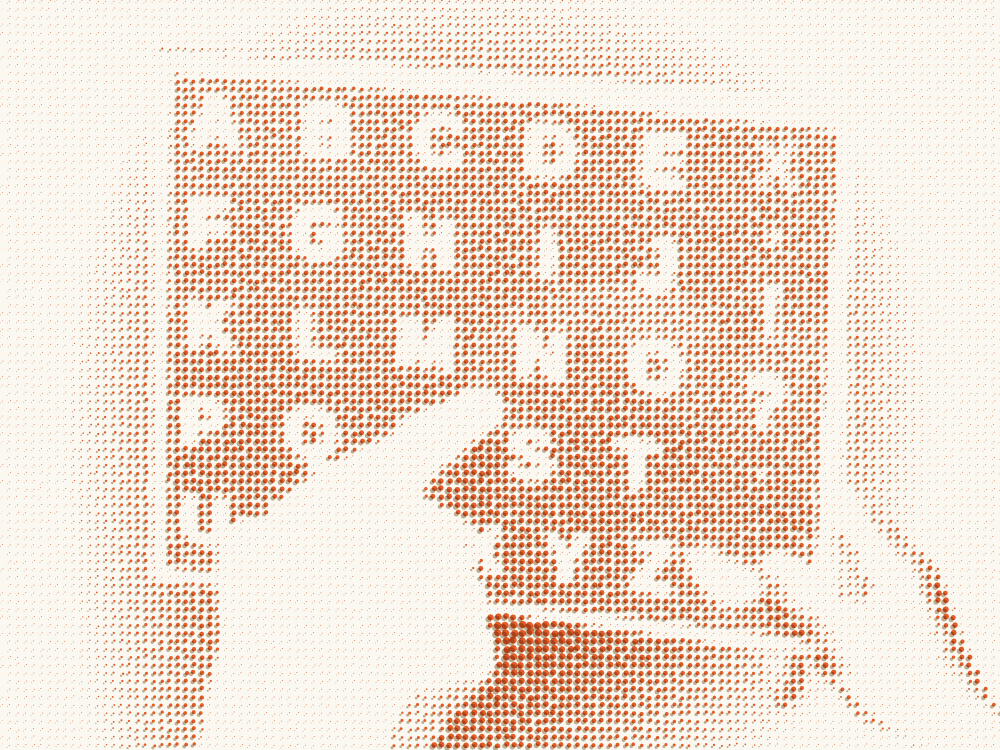
Dickens and her crew travel the United States to both meet nonspeakers who have found means of communicating and — crucially — conduct tests to verify their supposed abilities. To do this, nonspeakers are presented with stencil-like boards bearing numbers and letters, which they use to meticulously spell out messages. This in itself is remarkable, but The Telepathy Tapes takes things a step further. Dickens proceeds to ask nonspeakers to identify numbers drawn from a deck of UNO cards, or write words generated at random on an out-of-sight iPad. The podcast’s carefully curated sound bites suggest that the nonspeakers respond with astounding accuracy. Ever-present caregivers, always privy to the correct answers, enthusiastically encourage their sons, daughters, and students. Dickens posits that this astounding precision is attributable to the crystal-clear line of telepathic communication nonspeakers share with those they’re closest to.
After establishing the infallibility of the nonspeaker’s mind-reading abilities, Dickens teases that telepathic communication merely represents “the tip of the iceberg” of autistic superpowers. By episode three, tales are told of non-speakers from across the world gathering on an astral plane called “the Hill” to chat. In episode seven, a little girl named Emelia exhibits an ability to read ancient Egyptian hieroglyphs. When asked how she learned to decipher the symbols, Emelia matter-of-factly spells, one letter at a time, that God taught her. Some nonspeakers are said to be able to predict the future. Others can confer with the dead.
Disparate findings from a variety of “scientists” are strung together in an attempt to make further sense of some (but not all) of the extraordinary assertions. Electrical engineer turned parapsychologist Dr. Dean Radin describes the methodology of Ganzfeld experiments, an ESP assessment conducted for the sake of those seeking “proof-oriented research”. Cambridge-educated Dr. Rupert Sheldrake recounts a series of past experiments on potential telepathic bonds shared between humans and dogs. At one point, the notion of quantum entanglement is introduced as a possible explanation for telepathic communication. It’s disjointed, and The Telepathy Tapes knows it. However, definitive scientific proof isn’t really the point. Dickens posits that the majority of phenomena featured on the show lack a concrete explanation because our perception of reality itself is deeply flawed. We, as a species, cling too closely to materialism, the concept that our world is built upon energy and matter alone. Ultimately, the argument for autistic telepathy relies on faith. Specifically, faith in a single assumption: that every thought communicated through nonspeakers is accurate.
Early in the series, Dickens insists that telepathy is a pure form of communication, because the autistic nonspeakers themselves are pure of heart. Throughout, The Telepathy Tapes works hard to establish that all statements fit into a binary of truth and lie. And, as Dickens explains in episode seven, there’s a universal unwillingness to lie among nonspeakers. Why would they tell anything but the truth, given the intense effort it takes for them to produce sentences at all? “We can’t all be lying,” one exasperated mother partway through episode eight sighs.
And she’s right. They can’t all be lying. Decades worth of documentation suggests that the messages coming from nonspeakers are something else entirely. In fact, the communication methods employed by the nonspeakers of The Telepathy Tapes are incompatible with intentionality at all.
For individuals with speech difficulties, there exists a range of reliable augmentative and alternative communication techniques. In some cases, nonspeakers are able to use AAC techniques that are familiar and straightforward, such as sign language or a simple pencil and paper. Others with profound, comorbid intellectual or physical disabilities require supplemental aids or devices, like tactile and digital picture boards or text-to-speech apps. Such aids take individual impediments into account and allow users to independentlyconvey messages using whatever the skills they have.
That said, aided AAC can sometimes feel hollow and unsatisfying. Particularly if you are working with a nonspeaker who may not know how to read or write, messages can be practical but limited. Throughout the years, my brother has sporadically used the Picture Exchange Communication System, or PECS®, which consists of picking out and placing simple laminated picture cards sequentially on a velcro-laced sentence strip. If the mood suits him, he responds to concrete requests, such as what he’d like to eat for dinner, with vague, terse responses such as “CHICKEN” or “SHRIMP”. Rarely are there hints regarding how he’d prefer those dishes be prepared, or what he’d like on the side, or whether he’d like to stay at home or go out to eat. They’re the sort of answers that leave you craving further detail.
The communication techniques featured on TheTelepathy Tapes participants are something else entirely. They go by several different names: Supported Typing, Typing to Communicate, Rapid Prompting Method (RPM), and Spelling to Communicate (S2C). Dickens uses the catch-all term “Spelling” to refer to them from episode two onwards.
Spelling techniques, in theory, offer a degree of communicative freedom, and the deep, insightful, detailed correspondences reflect that. It’s wildly appealing to those who have spent lifetimes making educated guesses regarding the needs and wants of their loved ones.
However, the Spelling utilized by the nonspeakers on The Telepathy Tapes is collaborative in a way that spelling, in the traditional sense, is not. Spelling is very much dependent on neurotypical communication partners, who prop up unfixed letter boards, assist in interpreting messages, and occasionally, correct perceived mistakes in messages. They act as guides, and are often (understandably) deeply biased and deeply invested in the success of the nonspeaker. In the case of TheTelepathy Tapes, they are the very people claiming to share telepathic connections.
Modern Spelling methods are uniformly rooted in a contentious technique called Facilitated Communication (FC). It’s a term most people aren’t familiar with, because the practice fell out of favor before it had a chance to sincerely take off. Dickens herself readily admits that Spelling is a spiritual successor to FC, which she nonchalantly suggests was unfairly dismissed by the ableist masses. Conveniently left out of The Telepathy Tapes story are the uncomfortable controversy that led to the denouncement of FC, and the grueling trials that caused many to lose faith in it entirely.
When Australian educator and disability advocate Rosemary Crossley first developed Facilitated Communication, her initial reports were nothing short of miraculous.
As a hospital assistant in the mid-1970s, Crossley met Anne McDonald, a nonverbal teenager diagnosed with cerebral palsy and severe intellectual disability. Since age 3, Anne had been institutionalized at the St. Nicholas Hospital in Melbourne. The facility was understaffed, its conditions horrendous, and Anne spent much of her time writhing on the floors. Nonetheless, Crossley thought she sensed something special in Anne, a hidden potential that belied all of her previous diagnoses.
To realize this, Crossley developed a means of communication centered around pointing out word and letter blocks. However, due to her profound motor and coordination issues, Anne struggled to point. At some point, Crossley thought to support her client’s unsteady arm. Immediately, Anne’s messages became much clearer.
Anne lacked any formal education, yet within the span of about three weeks, she was spelling in complete sentences. As time passed, she expressed familiarity with topics ranging from advanced mathematics to international nuclear policy. Crossley speculated she’d picked all this up through overheard conversations and the TV. Eventually, Anne spoke out about the abuses she faced in the institution that housed her, and expressed her desire to escape the substandard living conditions. At one point, she even accused a St Nicholas’ pediatrician of attempting to smother her with a pillow. A subsequent investigation ultimately dismissed these claims, but Crossley did manage to convince a court of Anne’s competency. Anne won her freedom, then went on to earn a humanities degree and pen a memoir, co-written by Crossley.
Beautiful, poetic, and — above all — hopeful, the story spread across the country. All along, the only thing Anne needed was for someone to reach out and, quite literally, lend a helping hand. Her newfound words convinced many to reconsider decades' worth of human rights violations occurring in state-run asylums and psychiatric hospitals.
Australia’s scientific community was skeptical. However, their misgivings were largely kept private, fearing that to cast doubt on Crossley’s methodology would unintentionally jeopardize the promising strides toward civil liberty the story inspired. It wasn’t until 1987 that the country’s top communications specialists banded together to publish a statement of concern. Specifically, they cited a significant risk that the thoughts and biases of facilitators might muddle the messages of nonspeakers.
Even so, Crossley shared her breakthrough technique with other nonspeaking clients. Soon, FC was applied as a blanket treatment for nonspeakers facing a variety of physical and cognitive diagnoses, particularly autistic children.
Eventually, word of facilitated communication reached Doug Biklen, a Syracuse University professor researching intellectual disability.
Astounded by the extraordinary outcomes Crossley’s method yielded, Biklen traveled to Australia to record a series of qualitative observations detailing her technique, which were published by the Harvard Educational Review in 1990. Biklen presented a theory that autistic difficulties in communication stemmed from “praxis rather than cognition”. Put simply, he believed autism might be a problem of physical expression rather than cognitive understanding.
Word of FC’s efficacy spread through North America with fervor. Biklen touted it as a universally applicable communication aid guaranteed to bring out the locked-away thoughts of nonspeakers. Diane Sawyer described FC as “an awakening.” The New York Times, in a 1991 article, mused that the technique “could upset a half-century of thought” concerning autism treatment. In 1992, Biklen founded the Facilitated Communication Institute at Syracuse University. Students, parents, and clinicians, eager to serve as a conduit for the voiceless, clamored to be trained as facilitators. Story after story emerged of children with limited vocabularies expressing literacy and intellect far surpassing previous expectations.
Then a disturbing trend emerged.
Letter by letter, a rapidly growing number of newly communicative FC users described graphic accounts of sadistic sexual and physical abuse. Almost always, these accusations pegged loved ones and caretakers as victimizers.
Compared to the general population, rates of abuse run markedly higher among those facing intellectual disabilities. It’s also true that a significant number of perpetrators are primary caretakers or disability service providers. Even so, the rate of new allegations was staggering, considering the relatively small number of people practicing FC. By the end of 1994, at least 60 such cases were reported across the United States — which, seasoned AAC professionals were quick to note, far outpaced rates of abuse reported by nonspeakers communicating through independent means.
Trusted teachers faced termination and permanently tarnished career prospects. Devoted parents were caught entirely off guard by brutal rape allegations. Some cases culminated in criminal charges. Accused parties faced harsh consequences, including decades of jail time and staggering legal fees.
In one exceptionally extreme case covered in a 1993 FC-centered Frontline report, 16-year-old Betsy Wheaton accused everyone in her family – father, mother, brother, even grandparents – of sexual abuse. As a precaution, Betsy was thrust into the foster care system. While separated from her family, Betsy lost ten pounds, suffered two black eyes, and developed a severe ear infection that went undetected for weeks before rupturing.
Betsy’s physical deterioration signaled to investigators something very wrong was afoot. Despite enduring excruciating physical pain, Betsy never used FC to express her discomfort. The local attorney covering her case then began to question whether Betsy was as capable of communication as she seemed.
The court had a moral dilemma to untangle. If Betsy’s communications were accurate, sending her home would be unconscionable. If they weren’t, keeping her in the foster system would be unjust. All parties agreed to consult with an expert in communication. Betsy was brought to Boston Children’s Hospital, where Dr. Howard Shane conducted a series of tests to determine Betsy’s true communicative prowess. Frontline described them as follows:
“Shane had devised a double-blind test…to objectively determine who was authoring the messages, Betsy or the facilitator who transcribed the allegations. He showed both a series of pictures and asked them to type what they saw. When both Betsy and her facilitator saw a picture of a key, the letters K-E-Y were typed. But Shane wanted to discover what would happen if each saw a different picture. When Betsy saw a cup, she didn't type "cup," she instead typed "hat" — what the facilitator saw. So too when she was shown a boat but spelled “sandwich,” or was shown a dog but spelled “sneakers.”
The findings were bittersweet. Betsy’s family was cleared of wrongdoing, but the determination brought with it broader, disturbing insinuations regarding FC. The results of Dr. Shane’s testing suggested that, whether intentionally or not, facilitators were influencing facilitated messages. They cast doubt on the driving philosophy of FC: the idea that “good” minds are locked behind faulty, apraxic, inherently uncooperative bodies.
The unsettling discovery kicked off a series of similar controlled studies testing for evidence of independent authorship through FC, conducted between 1992 and 2014. The results they yielded were unequivocal: across thousands of hours of experiments conducted on more than three hundred and sixty participants, just six showed evidence of independent communication through FC. In simple message-passing and double-blind tests, study participants almost uniformly failed. Conversely, whenever facilitators knew the right answers, participants consistently provided accurate responses.
Most taken aback by these results were the facilitators themselves. Despite having good intentions, facilitators were unwittingly falling victim to the ideomotor effect; automatic muscular movements, tainted by unconscious thought.
This phenomenon was first identified in the mid-19th century, at the height of the Spiritualism movement. Nearly two hundred years before the recording of The Telepathy Tapes, scientists were puzzled by lost souls channeled through planchette-wielding mediums. Rigorous testing led inquiring minds to conclude that simple suggestions can oftentimes influence minuscule, involuntary motions.
Part of caring for a nonspeaker is to be vigilant and attentive. Family members and care workers cooperate in the interest of loved ones, but also often maintain a healthy degree of suspicion in one another. After all, abuse is most likely to happen in the home or classroom, and nonspeakers cannot easily advocate for themselves. It’s entirely possible that small grains of unconscious mistrust, fed by nightmarish hypotheticals, were the catalyst that sparked the slew of graphic allegations. Through the ideomotor phenomenon, FC contorted legitimate devotion and love into something monstrous..
Still, some families and educators weren’t ready to give up on FC. Accepting the nature of the ideomotor phenomenon is easy enough when it’s used to rationalize the realm of Ouija boards, hypnotists, and carnival bits. But FC felt real. It was the answer to a million desperate prayers. No parent wants their child’s declarations of love compared to a show pony trick. No teacher wants their valiant efforts likened to the mechanics of a children’s game. Scientific findings become secondary when you’ve seemingly seen a miracle happen before your eyes. The idea of letting go was unbearable.
So instead of fading into obscurity, FC quietly continued. The pain of past tragedies dulled, and advocates, unconvinced of the risks, perpetuated the practice.
In their eyes, little harm could come from trying.
30 years have passed. Surface-level changes have obscured FC just enough to hide its ugly past. But for those intimately familiar with the practice, it’s all too obvious that little has effectively changed.
A cosmetic rebrand has partially allowed FC to avoid further scrutiny. As early as 2014, John Hussman – a hedge fund manager turned FC philanthropist – emphasized a need to phase out the term “facilitated communication.” While speaking at an FC conference held in Syracuse, he called for advocates of the technique to “come up with some other name to fly under the radar and maintain credibility.” Spelling — again, Dickens’ preferred term — has since taken its place.
Spelling skirts FC comparisons due to a single fundamental difference. To avoid accusations of outside influence, communication partners are discouraged from touching nonspeakers during sessions. Instead, communication partners are instructed to suspend a letter board in front of nonspeakers. It’s argued that the lack of physical contact makes it impossible for facilitators to influence messages.
In practice, however, touch often plays a role in the Spelling process. The very first example of telepathy in an autistic nonspeaker, introduced 15 minutes into the very first episode of The Telepathy Tapes, featured a 12-year-old named Mia whose mother held her head as she pointed to her letter board. “I'm one of these people that thinks whatever the individual needs to help them communicate, it's okay,” Ky Dickens later divulged in her interview with Joe Rogan. “If you need a little touch so you know where your arm is, or sometimes it helps you go faster if there's a little push, I think, go for it.”
Even in ideal scenarios where there is no physical contact between nonspeakers and communication partners, the danger of message interference still exists. Facilitators still maintain control of the letter board they hold. Even the steadiest hands are wont to drift, no doubt driven by conscious or subconscious desire for there to be some profound meaning in the words-in-progress. The slightest inadvertent slip is all it takes to move a board just enough to change the meaning of a message entirely.
This tendency is perhaps best illustrated in a 2024 documentary simply titled SPELLERS THE MOVIE. Around the four-minute mark, a nonspeaker named Aiden selects GQREKA, which is interpreted as GREA, before the facilitator shifts the board to better position the letter T in the path of Aiden’s pointer. The same subtle mid-word movements can be seen around the 11-minute mark, when Jamie points to characters on a laminated alphabet held out by his father, and again at the 21-minute mark, when Cade spells with a facilitator after a day spent at the beach.
It’s difficult to rule out influence, even in scenarios where communication partners aren’t touching letter boards at all. The involuntary blinks and twitches of a communication partner several feet away might not register to an unfamiliar onlooker, but provide a wealth of information to a nonspeaker with an intimate bond and a lifetime of experience interpreting body language.
These blatant perils are still largely unknown. Stories glorifying FC and Spelling sporadically attract mainstream recognition. As recently as October 2025, the New York Times published a letter to the editor which is very likely a facilitated message claiming that profound autism does not exist. Doug Biklen has co-produced at least two feature-length documentaries on the subject, one of which, Autism is a World, received an Academy Award nomination in 2005.
Communication “success” stories have found a niche in short-form, feel-good formats that don’t bother to dig deep into difficult details. Now and then, you’ll find inspirational speech journeys featured as a human-interest puff piece for a local news station. And sometimes, there’s reason to believe that the subjects have in fact found a voice. But little effort is made to distinguish the differences between the child who independently expresses themself through an image-based AAC iPad app and the child who relies on facilitator intervention heavily susceptible to bias. Messy histories, efficacy rates, and complicated ethical considerations are elided in favor of a five-minute snippet of hope.
As cable television has atrophied, these incomplete narratives have migrated to the feral internet, to platforms like YouTube and TikTok, where they’ve found larger audiences than ever. There, they are entirely unbound by any semblance of journalistic integrity. Under tags like #s2c and #rapidpromptingmethod and #autismodyssey are posts akin to diary entries, chronicling efforts to reach nonspeakers.
It’s hard to be angry with such content creators, or the vast majority of people who turn to Spelling as a means of support. Few are dishonest or seeking clout. Instead, most feel that documenting their experience is a means of giving back to the community. Without trudging through the damning findings, the reports that explain the mechanical risks, a speller in action is an incredibly convincing sight — the sort of wonder you’d be crazy not to evangelize. In all likelihood, some Spelling advocates aren’t aware that there’s any reason to be cautious at all.
And they never learn, because skeptics generally don’t care to push back. They face the same dilemma that Australian speech pathologists faced in the 80s, when FC was first unleashed. At best, poking at the truth risks dismantling the dreams of people who have endured struggles unimaginable to most, who have done nothing wrong, without so much as a promising alternative. At worst, doubting capability can be misconstrued by bad actors and defensive caregivers as an attack on the very humanity of a nonspeaker.
And in the collective, comfortable silence, nothing has changed.
The Telepathy Tapes claims to be a paradigm shift. In actuality, claims of an autism and telepathy link have festered for decades. In 1960, child psychologist Dr. Mira Rothenberg, in her book Children with Emerald Eyes, described the “penetrating unconscious communication” shared between autistic individuals and their mothers as telepathic. Archived Usenet forums dating as far back as 1992 speak of links drawn between FC and paranormal phenomena. “Telepathy is another mode of expression bonded in intimacy…while many of our loved ones with autism may be blessed with the gift of telepathy, they may not yet fully comprehend it. A gentle and loving caregiver will need to explain it,” author William Stillman wrote in a 2006 publication titled Autism and the God Connection.
Stillman’s words touch on a long-established trope of caretaker as savior, of “something more” being reached through the arduous efforts of someone who believes hard enough. It’s the overarching theme that colors FC since the first dialogues between Rosemary Crossley and Anne McDonald.
Should you choose to pay $9.99 and gain lifetime access to footage depicting uncontrolled tests conducted by The Telepathy Tapes crew, you’ll witness the same red flags indicating ideomotor interference that have long troubled psychologists. Supportive hands, unstable letter boards, and anticipatory mothers an arm’s reach away link together The Telepathy Tapes “evidence”, and serve as visual confirmation of the complete lack of care concerning potential facilitator bias.
It’s all part of an endless cycle of fallacy, sustained by inaction. Even so, Dickens is not entirely off when she presents a tectonic shift in reality. Or rather, a wholehearted rejection of it.
For months, I was puzzled as to why a great number of listeners wholly ignorant of the autistic experience were so enamoured by The Telepathy Tapes. Those seeking to navigate relationships with nonspeakers do not have the luxury of ignoring reports that might offer some sliver of insight into their loved ones, but everyone else has a sea of content to sift.
With the October 2025 premiere of the second season, though, I feel I’m finally starting to understand. Moving forward, the series has expressed a desire to explore the wider nature of consciousness and explore topics outside of the autistic community. No longer is the focus on the voiceless. As much as it might try to convince audiences otherwise, The Telepathy Tapes was never about disability advocacy or propelling the stories of marginalized caretakers. It’s always been a larger call to rebel, and to disregard everything you think you know in favor of a defiant unknown.
This is the selling point that caught the attention of Joe Rogan and sent the podcast soaring to popularity. It’s a message that speaks to a wide range of people newly discontented with consensus reality: the psychonaut whose epistemics have been permanently disrupted by ego-death, the post-rationalist convinced that “magic” is just the term we use for phenomenology we don’t understand, the meditators who’ve touched something transcendent and abandoned skepticism in favor of a more open and permissive worldview. The notion of telepathy is beguiling to wildly successful innovators who grew up on sci-fi and refuse to be limited by outdated standards and reasoning in their efforts to push forward. Last year, Elon Musk proclaimed that the first Neuralink brain implant would quite literally be marketed as “Telepathy”, and this past spring, the company filed an application with the US Patent and Trademark Office for exclusive ownership of the term. Meanwhile, Dr. Julia Mossbridge, who is collaborated Dickens in the second season of The Telepathy Tapes, has toyed with the development of AI agents capable of unconditional love. Telepathy is irresistible to those who view themselves as boundary pushers who spend their days trying to defy what’s possible.
Non-speakers and the ones closest to them simply serve as the emotionally-charged lynchpin that holds the anti-establishment romance together.
It’s impossible to say whether or not The Telepathy Tapes would have resonated with audiences ten years ago, before COVID, when truth felt a little less fragile. Perhaps the siren call to suspend disbelief is one we’ll always be drawn to. After all, if the content of The Telepathy Tapes proves anything, it’s that we’re fated to repeat ourselves, no matter how detrimental the end results may be. We are — have always been — desperate to believe that we are something more than meets the eye.
All the while, promises to “Make America Healthy Again” imply that we are all somehow profoundly sick; frequently, it’s been implied that autism is one of the primary culprits holding us back from greatness. With autism rates rising to 1 in 31, anxiety is at a fever pitch. It hardly matters whether the uptick is due to some environmental epidemic or complex genetics or a change in diagnostic criteria, just that we find a way to reverse course.
When RFK Jr. and Dr. Oz talk of “cures”, I recoil, because my brother’s autism is so deeply ingrained in his identity that imagining him otherwise is impossible. The notion of somehow erasing autism is one both deeply unrealistic and not particularly comforting to those who live within and alongside it each passing day.
The Telepathy Tapes offers something slightly more attainable than a mythical cure. It presents a reality where nonspeakers, beneath their perceived deficits, are the same as, if not superior to, everyone else.
The first thing Ky Dickens claims, at the opening of her podcast, is that the loved ones of nonspeakers are being ignored. As one of those loved ones, this is what I’d like the world to hear: my brother’s greatness is not conditional on being just like everyone else. He is representative of everything fearmongers catastrophize. There are things that he will always struggle with, and parts of him I’ll never know. And that’s okay. None of that matters. He is fascinating and wonderful, challenges and all.
My greatest desire is that he somehow finds a way to say everything he might want to say, not for my sake, but his own. I think this was all my grandmother wanted, too, when she spoke of conversing in dreams. To hear him state in eloquent, unambiguous terms that he thinks about me as much as I think of him, that he’s always cared for me in his own quiet way, would be phenomenal.
Even so, my love for him — not my idea of some trapped, imaginary, internal him, but the wordless him that physically inhabits this world — trumps that pining. There is no need to demonstrate “something more” than I can see and hear. He is inherently worthy of respect and dignity, not something to be feared. I want the world to know that my brother is human, no more, no less. And should he ever find a way to share the things I long to hear, I want there to be no questions of where they’re coming from.
Page 2
“That was a book from the 1980s — crudely printed, roughly translated by today's standards — but I was absolutely electrified. I stayed awake for days and nights in university reading it, dreaming even then of building a world-class company.”
In 1987, Lei Jun 雷军 was a 21-year-old student in Wuhan University’s computer science program. The book that had set his imagination alight was Fire in the Valley 硅谷之火, which chronicles the evolution of 1970s homebrew hacker culture into global titans like Apple, Microsoft, and IBM. The heroes of that story, of course, were visionaries like Steve Jobs. Lei Jun’s trajectory — he founded Joyo.com (later acquired by Amazon), built Xiaomi into a smartphone colossus, then wagered billions on electric vehicles — would unfold directly from that initial act of reading. His nickname became “L-obs,” a portmanteau fusing “Lei Jun” with “Jobs.”
Last August, the writer Tanner Greer published an influential post on the “Silicon Valley canon.” Tech luminaries like Patrick Collison and Nils Gilman followed up with their own contributions. Lei Jun’s story compels me to ask: What is the Chinese tech canon? What intellectual works fuel Chinese entrepreneurs’ ambitions, running continuously in their cognitive background?
And does a unified “Chinese tech canon” even exist? China’s tech elite spans wider generational and ideological gaps than its Silicon Valley counterpart. A founder who came of age in the 1970s during the heyday of Maoism has a fundamentally different outlook on the world from a 2020s AI entrepreneur who graduated from Stanford and decided to go back to Shanghai. Unlike Silicon Valley’s relatively cohesive aristocratic class identity where everyone shares certain intellectual touchstones — Chinese tech founders remain fragmented by generation and relationship to state power.
Still, there are some things they have in common. Some Chinese tech founders see themselves as Silicon Valley’s progeny. They code, they build, they disrupt, they invent, they conquer — to borrow Greer’s words. Yet they inevitably remain embedded within China’s distinctive historical trajectory, its institutional framework, and its market dynamics.
More recently, China’s unstoppable technological ascent has forced elites in Silicon Valley and Washington to question their assumptions about American exceptionalism. Silicon Valley has been consumed by China curiosity, and in some cases even envy. Yet the communication flows asymmetrically. Silicon Valley, along with its Western knowledge apparatus, has long served as the center of systematic intellectual production, exporting ideas unidirectionally with overwhelming force. By contrast, Chinese tech methodologies, frameworks, and even memes have not been transmitted to the West with equivalent scale or depth.
“We are the progeny of the Valley”
As the host of the popular tech podcast Bg2 observed: “Every founder and VC in China studies the West to a nauseating degree. They listen to all the podcasts, read everything, study every talk, and comb the financials. The West doesn’t do that for China.”
At times, the attention can look like ritualistic devotion to Silicon Valley texts. After Lei Jun discovered Jobs’s story in Fire in the Valley, he devoured the wave of management classics circulating in translation — Jim Collins’s Built to Last, Geoffrey Moore’s Crossing the Chasm, Eric Ries’s The Lean Startup. Lei embedded their lessons directly into Xiaomi’s innovation DNA: rapid prototyping, obsessive user focus, blitzscaling to capture markets.
Wang Xing 王兴, founder of Meituan, one of China’s super apps, became famous as China’s philosopher-founder. A compulsive blogger during his days on Fanfou (China’s Twitter clone), Wang posted more prolifically than Elon Musk does now. His archived thoughts — over 150,000 posts rescued by devoted fans — wandered from Qing dynasty history to Montesquieu.
Most of all, their thinking shows the influence of Peter Thiel. Wang frequently cites Thiel’s concepts in both public speeches and internal discussions, and regularly recommends Zero to One, Thiel’s 2014 bestseller. He even frequently poses Thiel’s signature question: “What important truth do very few people agree with you on?” Thiel argues successful companies should pursue “monopoly profits,” escaping endless price competition to focus on innovation and long-term value creation. Meituan exemplifies this theory applied to Chinese internet markets — achieving dominance through patient market-building rather than direct confrontation.
The pattern extends across generations. When Tencent CEO Pony Ma 马化腾 wrote the foreword for the 2011 Chinese edition of Clay Shirky’s Cognitive Surplus, a book arguing that the internet helps individuals use their free time to create instead of just consume, he described the regular user’s cognitive surplus as “one of the greatest dividends the internet age has bestowed upon internet practitioners.” In the years following, Tencent’s products — the superapps dominating content, video, and communication, alongside their gaming empire — evolved toward increasingly open platforms that encourage user-generated content and sharing. Baidu’s founder Robin Li’s 李彦宏 regular reading encompasses Ben Horowitz’s The Hard Thing About Hard Things, Ray Dalio’s Principles, and multiple Malcolm Gladwell works. Reflecting on Horowitz’s memoir, Li said: “Reading it feels like reliving my own experiences.” This intimate identification with Silicon Valley narratives reveals how deeply American entrepreneurial mythology has penetrated Chinese tech consciousness.
Today’s new generation of AI founders also expressed their devotion to the Silicon Valley canon. Moonshot AI’s Yang Zhilin 杨植麟 cites David Deutsch’s The Beginning of Infinity as formative for his thinking on large language models. Horizon Robotics’ Yu Kai 余凯 channels Thiel verbatim: “What's the secret others don't see? Where's the bug in the world?” Li Auto’s Li Xiang 李想 distributes the “Steve Jobs Trilogy” alongside The 7 Habits of Highly Effective People.
China’s publishing industry has pursued translation with extraordinary aggression. When Ashlee Vance’s Elon Musk biography appeared as Iron Man of Silicon Valley in the summer of 2016, I was home from California for break. Beijing’s subway line four was plastered with Musk’s crossed-arm pose — a futuristic strongman image. How many young Chinese engineers read that story and plunged into EVs, creating today’s dominance? The three founders of China’s EV triumvirate “NIO-XPENG-Li Auto” — all cite the biography as an important influence. The cult runs so deep that Musk’s mother Maye became a Xiaohongshu influencer after her memoir topped Chinese bestseller lists.
Wired founder Kevin Kelly commands even stranger devotion. The Valley’s tech oracle discovered his quasi-Daoist cosmology resonating with Chinese appetite for grand frameworks. His vision of technology as an autonomous force merged seamlessly with state rhetoric about “indigenous innovation.” The creator of WeChat, Zhang Xiaolong 张小龙, made Kelly required reading at Tencent, publicly endorsing his books Out of Control and What Technology Wants. Within the WeChat team, product managers carried copies of Out of Control like scripture; Zhang had declared that any product manager who hadn’t read it possessed an incomplete knowledge structure. Unlike his niche American influence, Kelly became a cultural phenomenon in China — traveling constantly, lecturing at universities and corporations. His latest book, 2049: The Possibilities of the Next 10,000 Days, was co-authored with Chinese collaborator Wu Chen, using 2049 — the People's Republic’s centennial — as the title. Written for and published within China, no English version has been announced. I read the book and found it genuinely endearing. Kelly stands as a rare figure in Silicon Valley — an influential voice whose authentic intellectual curiosity translates into optimistic analysis, refreshingly free from the prejudice and defensive alienation that mars most Western discourse on China’s technological rise.
The publishing ritual that most intrigues me is perhaps best exemplified by the Chinese edition of James Gleick’s The Information, a history of the information age published in 2011. When it arrived in Chinese, the book carried multiple forewords: Lei Jun, Zhang Xiaolong, Wu Jun (a well-known tech writer who translated Fire in the Valley), and even a philosopher from the Chinese Academy of Social Sciences. Four or five prefaces sometimes crowd a single book — each entrepreneur competing to demonstrate proximity to Silicon Valley’s intellectual currents.
This multiplication of endorsements is uniquely Chinese. Each preface transforms the book into a symposium, with founders vying to show they belong to the same conversation as Jobs and Musk. The subtext reads: “I too participate in the lineage of global innovation.” Their hunger for legitimacy betrays persistent anxiety — Chinese entrepreneurs refuse to remain passive recipients of Silicon Valley wisdom; they demand recognition as active contributors to the same intellectual project.
The red canon and grey canon
When I dug into books about Ren Zhengfei 任正非, the founder of Huawei, I was obsessed with his frequent use of Maoist vocabulary. At eighty years old, Ren belongs to the same generation as Xi Jinping, shaped by the psychological architecture of the Mao era. This generation appears to be tougher and more patriotic than their younger counterparts. But “reading Mao, using Mao” extends far beyond Ren’s cohort. I discovered that many companies operating in China’s gladiatorial markets — those requiring deep penetration, mass mobilization, territorial expansion, and maintenance of “iron armies” (华为铁军) of salespeople — turn to The Selected Works of Mao Zedong. Wang Xing, the Meituan CEO, captured this phenomenon precisely: “After several years of entrepreneurship, I increasingly admire the Communists before 1949. Politics aside, I find it simply incredible that they could survive and grow stronger under such harsh conditions.”
Within the operational context between founders and middle management, The Selected Works of Mao Zedong circulates more like a tactical manual than political doctrine. On Protracted War’s strategy of “encircling cities from the countryside” translates directly into capturing third and fourth-tier markets before ascending to first-tier cities — the essential playbook behind the rise of PDD (the parent company of Temu). “Serve the People” ( 为人民服务) becomes “Customer First” for consumer applications; “self-reliance” merges seamlessly with “avoiding technological bottlenecks” — vocabulary drawn directly from Mao’s conceptual universe.
Needless to say, Mao’s transformation of China penetrated the cultural marrow. For many founders, Maoist texts serve practical purposes. This “red canon” provides blueprints for grassroots organizational mobilization: how to rapidly recruit, train, motivate, and retain thousands of front-line workers — delivery personnel, merchants, customer service representatives — in environments characterized by information opacity, brutal competition, and shifting regulatory boundaries. It offers a shared public language that compresses communication costs while maintaining morale and directional clarity.
The red canon and Silicon Valley canon never contradict — they coexist seamlessly within the same enterprise. Huawei, as one of the world’s most successfully globalized companies, appears intensely patriotic precisely because of this effortless code-switching between intellectual frameworks. Internally, Huawei has nearly replicated IBM's Integrated Product Development process wholesale, adopting thoroughly Western management practices. Yet from the outside, you would never detect the company’s profound absorption of Silicon Valley orthodoxy. This dual fluency — speaking the language of revolutionary struggle for internal mobilization while implementing McKinsey-grade operational excellence — represents a uniquely Chinese form of corporate bilingualism. The company’s public patriotism masks its private cosmopolitanism.
Simultaneously, there exists what I call the “grey canon” — a collection of texts that are opaque, ancient, yet foundational. The corpus of classical Chinese texts rarely appear on glossy startup booklists, yet they silently scaffold how entrepreneurs think about power, time, and their place in the world.
Confucius’s Analects 论语 and Laozi's Dao De Jing 道德经, along with centuries of commentary, remain the grammar of Chinese organization and authority. To read them is to access the operating system that still governs how hierarchies are constructed, how authority gains legitimacy, and how individuals negotiate between duty and innovation. Han Feizi's 韩非子 Legalist doctrines resurface in boardrooms when founders speak of “iron armies” of sales staff, or when delivery companies design ruthless incentive systems calibrated with Legalist precision between reward and punishment. The Confucian-Legalist synthesis constitutes China’s “deep infrastructure” no less than its electrical grid or high-speed rail network: invisible to casual observers, yet indispensable for making complex systems cohere.
To describe Chinese philosophy as a footnote to Confucius is deliberately provocative, yet not entirely misleading. Just as Western political institutions remain haunted by Plato and Aristotle, China’s bureaucratic and corporate life still moves within Confucian orbits — mediated by Daoist flexibility and Legalist severity.
For me, approaching these texts as an adult—after years of resisting Confucian orthodoxy in school — proved revelatory. They explained more about the enduring value gaps between China and the West than any management manual or policy paper. When Arthur Kroeber describes China as a “deep and turbulent ocean” where ancient currents persist beneath contemporary surfaces, he gestures toward this submerged canon. Without it, the Chinese tech scene looks like an erratic product of capital frenzy and policy chaos. With it, apparent disorder resolves into patterned continuity spanning two millennia of statecraft and survival.
Policy texts also receive scrutiny equivalent to scripture. Just to name a few: The National Medium- and Long-Term Program for Science and Technology Development (2006–2020), the Made in China 2025 plan, Xinhua and People’s Daily “commentator articles” are sometimes parsed line by line, with slogans like “new quality productive forces” migrating overnight into company slogans.
Finally, there exists the reform-era and contemporary canon. Ezra Vogel’s Deng Xiaoping and Deng Xiaoping’s Selected Works contribute mantras such as “development is the hard truth” and “crossing the river by feeling the stones.” Xi Jinping’s On the Governance of China is quoted selectively by corporate spokespeople seeking alignment with Party narratives and political loyalty.
Jin Yong and Liu Cixin: the Tolkien and Asimov for China’s Tech
“Every man must read Jin Yong,” according to Jack Ma. Yong’s sprawling martial-arts saga offered a distinctly Chinese romantic cosmos — the jianghu, a world of outcast martial artists which is at once archaic and modern, saturated with obligations, betrayals, quests for transcendence, and the stubborn pull of human sentiment. Across fifteen novels, over a thousand characters, and nearly ten million words, he provided millions of Chinese readers with their first encounter with a hero’s journey, idealism, and the bittersweet compromises between loyalty and ambition. If Silicon Valley’s celebration of reading has blended uncomfortably with the worship of power — as political scientist Henry Farrell argued in his response to Greer’s essay — then China’s tech canon reveals a more complex entanglement: reading intertwined with fear and reverence of state authority, the perpetual tension between individualism and collectivism, and the ancient Confucian dilemma of chushi 出世 (withdrawing from the world) versus rushi 入世 (engaging with worldly affairs). Jin Yong’s work is a moral laboratory for modern Chinese identity — teaching readers how to navigate power without fixed rules, how to build reputation in opaque hierarchies, and how individual mastery coexists with collective belonging.
Just as tech founders mined Tolkien’s legendarium for names like “Palantír” and “Andúril,” Alibaba embedded Jin Yong into its corporate DNA. Employees took on “huaming” (literary sobriquets) from Jin Yong’s characters; meeting rooms became “Guangmingding” (Bright Summit) or “Peach Blossom Island”; Ma’s own office was named after a reclusive martial-arts utopia. Even the company’s value systems were couched in martial-arts metaphors such as the “Nine Swords of Dugu” or the “Six Veins Divine Sword.” To be inside Alibaba was to symbolically inhabit a Jin novel. In fact, this is more broadly true of the early Chinese internet. The first generation of Chinese internet users, my own father among them, often chose their online IDs from Jin’s novels. This was not mere nostalgia but a way of extending the jianghu into digital life. In my childhood memory, my father’s screen name came from Flying Fox of the Snowy Mountain, typed out with the era’s quintessential skill: mastering the Wubi input system.
More recently, Liu Cixin’s Three-Body Problem has become for China what Asimov’s Foundation was for the United States: a literary scaffolding for thinking about technology, geopolitics, and the fate of civilizations. As Fudan University professor Yan Feng observed, Liu “single-handedly elevated Chinese science fiction to the world stage.” His novels minted phrases that have since entered China’s everyday political and business lexicon: jiangwei daji (dimensional reduction strike), mianbizhe (wallfacer), pobiren (wallbreaker), the “dark forest law,” the “chain of suspicion,” and the “technological explosion.” These terms are now common shorthand in boardrooms and policy circles, invoked to describe competitive landscapes, strategy under uncertainty, or the fragility of trust in both markets and diplomacy. The tech community has seized upon them with particular enthusiasm. Countless essays have drawn “internet strategies of the Three-Body universe” or even “Three-Body management science,” treating Liu’s cosmic metaphors as diagnostic tools for China’s entrepreneurial reality.
Silicon Valley has always drawn heavily on speculative literature as a kind of literary infrastructure for imagination and naming. Elon Musk’s ambitions are inseparable from Robert Heinlein’s interplanetary visions. Jeff Bezos invoked Iain M. Banks’s Culture novels in his dreams of post-scarcity space habitats. Peter Thiel filled his companies with references from The Lord of the Rings — Palantir itself, but also Valar Ventures and Mithril Capital. Even the libertarian edge of Silicon Valley borrows its metaphors from science fiction: Neal Stephenson’s Snow Crash and Cryptonomicon have been required reading in certain circles, shaping not only the early culture of cryptocurrency but also the techno-libertarian conviction that code could constitute a parallel sovereign order.
Tolkien, Asimov, Heinlein, and Stephenson provided entire vocabularies and ontologies that Silicon Valley internalized. They offered shared myths of rebellion against bureaucratic stagnation, of a frontier that remained technologically open even if geopolitically closed, of engineers as wizards and coders as world-builders. In Palo Alto cafés, it is not unusual to hear founders quote Asimov’s Foundation when describing their startups, or to frame their ambitions as “building the bridge to the Expanse.” These works are not simply entertainment but tools for communicating a shared ethos.
The Chinese entrepreneurs grew up seeing the jianghu as a model for navigating opaque power structures, forging alliances, and cultivating individual mastery in a world without fixed rules. To read Jin Yong was to learn that survival depended as much on soft power — guanxi, renqing — as on hard power. And in Liu Cixin’s Three-Body Problem, they encountered metaphors of cosmic precariousness that resonated with their own competitive landscape. Together, Jin Yong and Liu Cixin gave Chinese technologists an imaginative toolkit as rich as Tolkien and Asimov had given Silicon Valley: one rooted in jianghu ethics and cosmic existentialism, the other in systems of magic and spacefaring empires.
Where Silicon Valley imagines itself through Middle-earth, Mars, and cyberspace, China’s tech world thinks simultaneously in terms of the jianghu. Both are literary infrastructures, invisible yet omnipresent. They don’t dictate policy or product, but they shape theimaginative baseline — what a hero looks like, what failure means, how a society might collapse or endure.
Silicon Valley spends enormous energy thinking about China — tracking every policy shift, parsing every regulatory crackdown, jealously looking at every fancy breakthrough. Yet this attention rarely translates into genuine understanding. We’ve become experts at watching China while remaining determinedly ignorant about how Chinese tech founders actually think. The reading list is right there. Chinese tech elites have done their homework — maybe it's time to start your book club.
Page 3
“It may be readily surmised that where the best thinkers have failed to produce an unexceptionable classification, the failure must be due to some inherent difficulty of the subject.” — Edward Charles Spitzka, Insanity: Its Classification, Diagnosis, and Treatment (1883)
In his 2013 essay “Book of Lamentations,” cultural critic Sam Kriss reviews the fifth edition of the Diagnostic and Statistical Manual of Mental Disorders as if it were a work of dystopian literature, a kind of nightmarish encyclopedia in the lineage of Borges. Kriss argues that the manual is a literary object with a deeply unreliable narrator, who writes with a coldly compulsive voice that cannot perceive its own madness. “As you read, you slowly grow aware that the book’s real object of fascination isn’t the various sicknesses described in its pages, but the sickness inherent in their arrangement.” The idea that the focus on DSM-style classification might itself be a symptom of pathology has trickled into pop culture since then. A 2018 headline in The Onion, “American Psychiatric Association Adds ‘Obsessive Categorization Of Mental Conditions’ To ‘DSM-5’,” reads as a punchline to Kriss’s argument.
Kriss sees the DSM as a device of absurdity and detachment because he reads it as making assumptions that are not explicitly present in the book itself: that madness is internal, individual, and biologically determined. The DSM’s silence on these issues does little to dispel this interpretation. But it would be more accurate to say, as psychiatrist John Sadler does in his book Values and Psychiatric Diagnosis, that “the DSM is decontextualized and decontextualizing only if it is split away from the context of good clinical practice.” It's not until a clinician steps in, ideally someone attuned to the nuance and idiosyncrasies of human experience, that the diagnostic categories and criteria in the DSM acquire their context.
If literary provocation offers one way to wrestle with the DSM’s contradictions, my own instinct is to reach for the Greek myths of punishment. Sisyphus, Tantalus, and Prometheus are each good candidates, but perhaps the most apt is the Danaids — the fifty daughters of Danaus who were condemned to the underworld, forever carrying water in jars riddled with holes.
Since its first edition in 1952, the DSM has gradually evolved from a slim document meant to standardize psychiatric recordkeeping into a sprawling classification system that shoulders a set of responsibilities it was never designed to bear. It is expected to guide clinical care, enable research, satisfy insurance companies, anchor epidemiological studies, shape patient self-understanding, and serve as a platform for public policy. Each of these demands pulls the manual in different directions.
Like the Danaids’ jars, diagnoses leak relevance and accuracy as they move across contexts. And yet — the task goes on, because clinicians still need a shared language, insurers still need billing codes, governments still need their statistics, and researchers still need clear descriptions of who to enroll in clinical trials.
The first serious attempts to design psychiatric diagnostic systems were made in Europe. One of the most influential was created by Emil Kraepelin, a German psychiatrist who developed a way to group mental illnesses based on shared symptoms and how each condition progressed over time, which he presented in nine prominent psychiatry textbooks published from 1883 to 1927. Kraepelin was an academic physician engaged in a scientific project of classification, akin to — he hoped — other natural sciences. He was also a skilled clinician who aimed to provide practical guidance. He worked in a period when asylum populations were expanding and argued that more clinical data and better classification could support public health planning. His categories lent themselves to recordkeeping and eventually fed into the bureaucratic machinery that tracked asylum patients.
In the United States, early classification systems were shaped by the practical needs of managing larger, state-run asylums, which dramatically expanded over the first half of the 20th century. In 1918, a guide called the Statistical Manual for the Use of Hospitals for Mental Diseases was created by the American Medico-Psychological Association and the Census Bureau. It was meant to standardize data collection across hospitals, but didn’t include clear definitions or criteria for diagnoses.
World War II served as the catalyst for what would become the first edition of the DSM. Influenced by Swiss psychiatrist Adolf Meyer’s theory of psychobiology, which would reshape psychiatry in the years to come, military doctors had come to understand that otherwise ordinary individuals could develop lasting mental health problems under extreme stress. Meyer’s ideas were a key influence on a 1943 document known as the “War Department’s Technical Bulletin, Medical 203.” Medical 203 marked the first time that the military recognized that systematic, standardized psychiatric classification was essential for managing large-scale mental health challenges. When the American Psychiatric Association moved to publish its own manual, DSM-I, in 1952, it relied heavily on Medical 203’s framework and terminology.
DSM-I was shaped by many hands, including military psychiatrists, public health experts, and psychoanalysts. It mostly reflected the psychological thinking of the time — that mental disorders were reactions to life stresses or interpersonal conflict, not biologically rooted diseases. The first manual included 106 disorders, though its definitions were kept vague. It also gave little consideration to whether doctors would be able to make and use the diagnoses consistently. Still, DSM-I established the American Psychiatric Association as the central voice in psychiatric diagnosis, paving the way for future editions. Over the next 70 years, it would be revised every one to two decades
In the postwar decades, American psychiatry became dominated by Freudian ideas. DSM-II, published in 1968, was eclectic in influence but emphasized concepts like “neurosis,” capturing the psychoanalytic idea that unconscious conflicts and defense mechanisms gave rise to symptoms. Because psychoanalytic theory emphasized continuums and peculiarities of individual psychological development, the classifications in the second edition remained loose — and not particularly important. Diagnoses like “anxiety neurosis” or “depressive neurosis” were common, but they weren’t meant to sharply distinguish one state of illness from another.
The 1960s and ‘70s saw the rise of the antipsychiatry movement. Critics from within psychiatry, like Thomas Szasz and R.D. Laing, from academics such as Michel Foucault and Gilles Deleuze, and from civil rights activists, accused psychiatry of pathologizing everyday behavior, classifying deviations from social norms as if they were medical disorders. One major point of contention was the inclusion of homosexuality as a mental disorder, which led to organized protest and its eventual removal from DSM-II in 1973.
Distrust in the system that used the manual was not without cause. It was already clear in the mid-20th century that psychiatry faced a crisis of reliability. As early as 1949, a pre-DSM-I study found that three clinicians agreed on a specific psychiatric diagnosis only 20% of the time; even on the major category of disorder, each agreed only 45% of the time.
Regular reports of international diagnostic discrepancies prompted the creation of a cross-national project. A 1971 study from that project, led by Robert Kendell and colleagues, is the most famous. It was conducted using videotapes of unstructured diagnostic interviews with eight patients. Serious disagreements arose in some cases where the majority of American psychiatrists gave the diagnoses of schizophrenia, while the majority of British psychiatrists diagnosed either manic-depressive illness, personality disorder, or neurotic illness.
There was also the fact that it appeared trivially easy to feign serious illness. Inspired by a lecture given by Laing, David Rosenhan led a famous experiment in which eight healthy volunteers, in addition to himself, presented at various hospitals with minimal, fabricated symptoms of auditory hallucinations. In a 1973 paper in Science, “On being sane in insane places,” he described the results. All were admitted, each diagnosed with schizophrenia or manic-depressive psychosis and treated with antipsychotics — despite behaving normally after admission. The study is now known to be largely fraudulent, thanks to investigative journalism by Susannah Cahalan, but at the time it highlighted the fragility of psychiatric diagnosis, both at the level of specific categories like schizophrenia and at the level of “mental disorder” itself.
Another movement within psychiatry looked to the field’s past. Emil Kraepelin had believed that mental illnesses were distinct, biologically based conditions that could be identified by a predictable mix of symptoms and physical or genetic markers. His late-20th century followers, often called neo-Kraepelinians, revived this idea in the 1970s and ‘80s. Eli Robins, Samuel Guze, and other psychiatrists examined the associations between symptom clusters and factors like family history, various laboratory markers, and course of illness to determine whether symptom-based diagnoses were connected to other medical information.
All of these pressures culminated in the heavily revised DSM-III, released in 1980. Led by Columbia University psychiatrist Robert Spitzer, DSM-III abandoned psychoanalytic ideas and adopted a symptom-based model to align more closely to the diagnostic practices of general medicine. Spitzer built heavily on the “Feighner criteria,” the first systematic set of operationalized rules for the psychiatric diagnosis of 15 conditions, introduced in 1972. For the first time, disorders were classified by a list of specific symptoms, including severity and time thresholds — a step forward from Kraepelin’s system, which didn’t have operationalized criteria for different conditions. These changes made it easier for different doctors to agree on a diagnosis and for researchers and insurance companies to use the manual.
“Anxiety neurosis” in DSM-II, for example, was simply described as “characterized by anxious over-concern extending to panic and frequently associated with somatic symptoms… anxiety may occur under any circumstances and is not restricted to specific situations or objects.” Compare this to the current version of the DSM, where criteria for generalized anxiety disorder require “excessive anxiety and worry” occurring “more days than not” for “at least six months” and accompanied by three or more symptoms out of six: restlessness, easily fatigued, difficulty concentrating, irritability, muscle tension, and sleep disturbances
. In addition, these symptoms must cause “clinically significant distress or impairment in functioning.”
Thus DSM-III marked a new era in psychiatry, one that emphasized descriptive operationalization and practical use. It also reflected a growing belief in the profession that mental illnesses should be seen as diseases of the brain, rather than reactions to life circumstances or manifestations of unconscious mental conflicts, though the manual itself did not officially take any position on this matter. The next editions continued to refine and expand the symptom-based model. The 1987 DSM-III-R (for revised) aimed to fix inconsistencies and allowed for multiple diagnoses at once, while 1994 DSM-IV incorporated field trials and evidence-based reviews.
As it became more systematic, the DSM also grew in size. There were 106 diagnoses in DSM-I and 182 in DSM-II. According to Blashfield and colleagues (2014), there were 228 diagnoses in DSM-III and 383 in DSM-IV — out of which 201 had defined diagnostic criteria.
As the number of diagnoses grew with each edition of the DSM, so did professional and public criticism. Some argued that the manual was over-pathologizing normal behavior. Conditions like ADHD, autism, and bipolar disorder were diagnosed at higher rates than had been expected, sparking debates about overdiagnosis, and where and how a clinician should draw the line between normal and disordered. The sociologist Allan V. Horwitz, for example, notes: “Community studies based on the DSM-III criteria had estimated the lifetime prevalence of bipolar conditions at 1–2 percent of the population. Studies using the DSM-IV criteria indicated that far more people were bipolar in any single year than previous lifetime estimates.” The DSM-IV task force had similarly estimated that changes in autism criteria would only modestly increase prevalence, but the rate actually increased more than 16-fold, from 1 in 2,500 to 1 in 150 over a decade.
In advance of the DSM-5, there were hopes for a “paradigm shift” which would incorporate findings from neuroscience and create a more dimensional, biologically based system.The neo-Kraepelinians had believed that with iterative research, biological validators would point towards the hidden disease entities, in much the same way that syphilis had been identified in the early 20th century as a cause of a then-common condition “general paralysis of the insane.” But by the 1990s, it was becoming obvious to scientists that validators of DSM categories did not converge in any neat fashion. For example, while data from relatives suggested that schizophrenia was a broad spectrum of conditions, looking at patients’ prognoses suggested it was a more narrowly defined illness. Many of the genes associated with schizophrenia were also associated with conditions such as bipolar disorder and autism, and changes in brain circuitry were neither uniformly present nor specific to the disease. Some percentage of people with schizophrenia might even have an undiagnosed autoimmune illness — we do not quite know how many. The idea that many conditions are hiding within the syndrome of schizophrenia has a long history; in fact, Eugen Bleuler, the psychiatrist who coined the term “schizophrenia” in 1908, described it as “the group of schizophrenias.” There isn’t one tidy answer.
The developers of the DSM-5 had no new paradigm to offer. Internal disagreements within the profession, public criticism, and scientific limitations led to a rather cautious and conservative update. In particular, the manual stuck to its traditional categorical format. (Among the changes that did happen was a shift from Roman to Arabic numerals in the title of the book.)
Like earlier editions, the DSM-5 came under fire for pathologizing ordinary emotions. Allen Frances, the chairman of the taskforce that had developed DSM-IV, accused DSM-5 of out-of-control medicalization. He called the publication of DSM-5, “the saddest moment in my 45 year career” and urged his colleagues not to buy, use, or teach the manual (quoted in Allan V. Horwitz's DSM: A History of Psychiatry’s Bible (2021), p 143.) In fact, the DSM-5 is objectively very similar to the DSM-IV, but its few changes were often high-profile and fiercely debated. Alterations like removing the exception for a two-month period of grief for a diagnosis of major depression and expanding autism into a spectrum became symbolic targets for anger over the perceived pathologization of everyday life.
The APA also came under scrutiny for potential conflicts of interest. The APA owns the DSM and earns revenue from its sale and license — some several million dollars a year — while also controlling its content. Furthermore, 57% of DSM-IV task force members and 69% of DSM-5 task force members had financial associations with the pharmaceutical industry. Whether and how these potential conflicts influence decisions about diagnoses remains contested and undetermined, but the relationships continue to be a source of mistrust.
And then there were the scientific critiques. Thomas Insel, then director of the National Institute of Mental Health, distanced the NIMH from the manual. In a scathing public statement, he stated that the DSM lacked scientific validity, that “patients deserve better,” and announced a new research initiative, the Research Domain Criteria, which aimed to base diagnosis on genetics and neuroscience. A few years later, another scientific alternative emerged from a grassroots consortium of quantitatively-minded psychologists — Hierarchical Taxonomy of Psychopathology, or HiTOP — which was focused on describing statistical patterns of symptoms across populations.
DSM-5 became the symbol of a deep tension within the field. Psychiatry wanted to be seen as part of clinical neuroscience, but didn’t yet have the evidence to fully support that shift. The controversy around DSM-5 also hurt its public image. While it remains the go-to manual in practice — since no alternative has been able to displace it — it no longer carries the same unquestioned authority.
The realization that psychiatric disorders had no neat biological explanation opened the door for critics who argued that diagnoses are sociocultural constructions. Antipsychiatry critics such as Bonnie Burstow, following Thomas Szasz, have maintained that psychiatric diagnoses function as tools of social control and it is no surprise that we have failed to discover their biological basis. Philosopher Ian Hacking introduced the idea of “looping effects,” the notion that once people are diagnosed, they start to change in response to the diagnosis itself, which in turn changes future classifications. Unlike insects or diseases, people behave differently when they know they are being labeled.
Still, the skeptical social-constructionist view also has its limits. Yes, mental health categories are influenced by culture, and the patterns we see can be described in different ways, but that doesn’t mean symptom patterns have no relationship to biological processes. Even if genes or brain scans do not line up with DSM categories, researchers have found plenty of evidence that biological processes such as genetic factors, inflammation and brain circuitry are involved in mental illness. These patterns aren’t random or meaningless; they’re just far more complicated and messier than we had hoped. “Biology never read that book,” Thomas Insel famously said about the DSM.
Once we relinquish the idea that diagnosis must “carve nature at its joints,” the DSM is revealed for what it is: a practical, serviceable tool. It doesn’t capture whatever distinctions exist among the causes and mechanisms of mental disorders, but it does describe meaningful patterns of symptoms. Across large groups, diagnostic categories correlate with differences in trajectories, treatment responses, personality traits, and physiological processes, but it is also abundantly clear that these syndromes are not disease entities, like Rubella or Huntington’s Disease — illnesses with a defined cause, set of characteristics, and distinct course. Psychiatric disorders are, in the stark words of psychiatrists Bruce Cohen and Dost Öngür, “heterogeneous in all ways and at all levels studied, in cause, mechanism, and expression of illness.”
All this would be manageable if only psychiatrists read the DSM. But another strand of discontent centers not on science or treatment outcomes, but on the DSM’s sociocultural impact — how it has reshaped our relationship to our own inner lives.
The psychoanalyst Nancy McWilliams captures this concern with unusual clarity in her 2021 essay “Diagnosis and Its Discontents.” She reflects on a shift that began with the release of DSM-III, when psychiatry embraced a more descriptive, symptom-based diagnostic model. The change, she notes, quietly restructured how people speak about themselves in therapy. Once, a client might enter the room and say, “I’m painfully shy and I’d like help relating better to others.” Today, a similar person is more likely to announce, “I have social phobia,” as if an unwelcome and alien force had colonized an otherwise intact psyche.
All it means for a person to “have,” say, generalized anxiety disorder in the DSM sense is for the anxiety to meet certain thresholds of severity and duration, and to negatively impact a person’s life. What that means for the state of one’s biology or for one’s self-understanding is both scientifically and philosophically unsettled. And yet, in the new clinical, atomized, and oddly impersonal idiom, “having OCD” or “having ADHD” invites one to imagine essences within oneself that do not exist. This linguistic shift, McWilliams observes, often accompanies a deeper psychological distancing. People present themselves as hosts to diagnostic entities, rather than agents struggling through difficulties. In the most extreme cases, that essence becomes all-pervading, a core of who they are.
The DSM was never crafted with the purpose of helping individuals make sense of their own psychological struggles, nor is it particularly well-suited for that task. The DSM is a tool for clinicians and researchers. It presumes a baseline of clinical training and medical knowledge, and an appreciation of methodological limitations. It is not a guidebook for laypeople navigating their inner worlds.
Yet the DSM’s design seems to invite this kind of lay appropriation. Its apparent clarity, readable prose, and approachable format disguise its status as a technical document. Sadler notes that, in contrast to the DSM, the International Classification of Diseases by the World Health Organization rarely becomes the butt of jokes or fodder for op-eds. That may be because the ICD wears its technocratic nature on its sleeve: dry, dense, and unmistakably aimed at professionals. The DSM, with its deliberately “user-friendly” format and preference for everyday language, appears vulnerable to misinterpretation by the public.
In Categories We Live By, psychologist and author Gregory L. Murphy discusses how people tend to believe that certain categories are grounded in something deep, some hidden property that gives the category its identity, even if they cannot say exactly what that something is. Psychologist Woo-kyoung Ahn and her colleagues at Yale have explored how this kind of essentialist thinking plays out in the realm of mental illness. Their studies reveal that laypeople tend to see psychiatric categories as more “real” and more unified than clinicians do. If someone has a particular DSM diagnosis, then they imagine that there must be some internal “thing” responsible for the illness, something that is shared across all cases. Experienced clinicians and professionals, on the other hand, are less likely to think that way.
The psychologist Eric Turkheimer has commented that psychiatric diagnosis is a “relief from the Sisyphean burden of understanding the relationship between our bodies and our intentions.” It’s exhausting to ask, again and again, why we suffer so intensely, despite our efforts to feel otherwise, or why we return to self-destructive habits even when we know better. Our struggle with these questions leaves us emotionally depleted. If calling these struggles “disorders” offers a kind of balm, a way to temporarily suspend the ambiguity, then maybe that’s a mercy.
The writer Lauren Oyler arrives at the opposite verdict, at least as far as she herself is concerned. In her essay “My Anxiety,” she describes how the bureaucratic dance of diagnosis and treatment seems so fraught, so burdened with hidden costs, that it feels not just unhelpful but actively undesirable. As she puts it:
I do not want to have these problems that are notoriously difficult to solve, about which there is no professional agreement. I do not want to embark on a years-long project dedicated to my own mind… I do not seek a diagnosis, probably, because I do not want to be trapped in a single term… Like everyone else’s, my mind dabbles in an array of mental illnesses to create a bespoke product, and I find all the terms I know either ludicrously broad or ludicrously specific.
Her resistance is against an epistemic narrowing of the self. Where in Turkheimer’s perspective diagnosis offers a reprieve, it offers only confinement to Oyler. She doesn’t want to be cornered by language, to have her fluctuating experiences pinned under a diagnostic term. This resistance, however, shows just how powerful those terms can be. We seem to need them for our suffering to feel real, and yet we bristle when they confine us.
There is a temptation to think that all these troubles stem from the DSM itself, that if only we could replace it with something more scientific — say the HiTOP system proposed by more quantitatively oriented scientists — then the relationship between diagnosis and self would no longer be so thorny. The error here is that we are conflating two fundamentally different enterprises. Psychiatric classification as a clinical and scientific project is not designed as a tool for existential self-definition. It is not for you. No diagnostic manual can tell people who they really are.
Psychiatric conditions are surely relevant to who a person is. If someone struggles profoundly with social communication and engages in repetitive behaviors, recognizing that this pattern exists will unavoidably shape their view of themselves. The same is true for someone who has lived with sustained difficulties in attention, or recurring psychotic episodes, or the pendulum of mania and depression. But recognizing that is not the same as anchoring those experiences in checklists, or presuming that they map neatly onto singular disease mechanisms, or that their inclusion or exclusion from a diagnostic handbook confers them greater or lesser meaning.
One of the controversies during the development of DSM-5 was that the diagnosis of Asperger’s syndrome, a form of high-functioning autism, was subsumed into the broader category of autism spectrum disorder. A vibrant community had organized itself around the identity of Asperger’s and many felt that their identity was being taken away when the category was eliminated. The debate around Asperger’s syndrome should have sparked a collective realization: that the sense of self shared by those who identify as “Aspies” never needed to hinge on whether the DSM retained that term. How can a medical manual, subject to change, driven by evolving criteria, have the authority to define or dissolve a social identity? Social identities live and die on their own terms.
In my own clinical work, I often find myself attempting to deflate the power of these categories. I remind patients not to lean too heavily on the label I’m offering. Not because the label is meaningless, but because the problems it captures are typically imprecise, shifting, deeply contextual. I describe symptom patterns in relation to broader psychological structures, early experiences, temperament, and life stressors.
My hope in these conversations with patients is to plant a seed of resistance, to offer an account of suffering that acknowledges complexity, contingency, and context beyond categories. I try to say, in effect: this pattern of symptoms reflects something meaningful about your psychological life, but it doesn’t define you. It shouldn’t be the scaffold upon which you build your entire self. You’re free to acknowledge it, even to use it as a lens, but don’t let it confine you. Do not let it determine your story.
And yet, I am aware that at a certain level this message is deeply unsatisfying, both to those who see diagnosis as a scaffolding and to those who see it as a trap. In gesturing toward the messy interweaving of temperament and trauma, and softening the solidity of diagnoses, I refuse to indulge our strange masochistic desire for categorical self-confinement.
The work of self-definition, especially in the presence of mental illness, is profoundly difficult. The challenge is so enormous that it exhausts us — and DSM categories, imperfect and unsuitable for this task though they are, are nonetheless, for many, a welcome respite from the burden.
I have a pet theory (certainly unoriginal) that humans as a species feel a compelling need to indulge in some form of magical thinking in order to cope with existential horror.
A few things are simultaneously true:
1. We have a truly fantastic level of agency as actors in the world. A single human can build a house out of raw materials, write a book series with hundreds of settings and believable characters, start a war, etc.
2. In order to make the most of that agency, we need a psychological system that makes us feel empowered to use it. Having nature's most impressive brain would be pointless if we all believed everything we tried was doomed to fail anyway so we should just sit in the dirt and eat slugs.
3. We are also corporeal objects made of surprisingly fragile meat and bone subject to the careless whims of physics. Through no fault or intention of anyone, all of your agency can be completely taken in an instant. Just be standing in the wrong place when a tree branch snaps off, have one cell misdivide and become cancerous, choke on a grape.
We need 2 in order to make the most of 1. But the more we believe ourselves in control, the more horrific contemplating 3 becomes.
I often wonder if we evolved magical thinking and all of its manifestations like religion, parapsychology, destiny, fate, etc. in order to hold these three realizations in some sort of stable configuration.
“A tendency to superstition is of the very essence of humanity and, when we think we have completely extinguished it, we shall find it retreating into the strangest nooks and corners, that it may issue out thence on the first occasion it can do with safety.”
In addition to the accidental things already listed under 3, there is also the additional points that:
- Other people exist and they also have a lot of agency, the exercise of which sometimes directly interferes with your life. Not to mention how much capacity bigger entities like countries have to mess with your life it they wanted to.
- In opposition to point 1: while humans do have tremendous agency, they also have very little agency when seen against how big the universe really is. There are more stars in the sky than people on Earth, by a considerable margin. Nobody can do anything at all to influence them. Hell, we can't even manipulate the orbit of our own planet in any meaningful way. I think many of the magical thinking paradigms are ways to cope with that as well.
Ironically, scientism is also a manifestation of "magical thinking":
Going through ritualistic motions of scientific appearances without actual understanding, getting positive feedback from the multitudes being just as incompetent.
Here, with the "Telepathy Tapes", the subject matter is immediately categorized as "magic": stuff deemed to be impossible because of it "obviously/implicitly contradicting scientific knowledge".
But that contradiction doesn't really exist?
To give a decidedly clumsy, but entirely "physically possible", explanation of "telepathy": little green men from outer space might facilitate that effect using extremely advanced technology, hiding their presence and foiling attempts at getting easily understood evidence.
While such a scenario is highly inconvenient for current human academia to address, it's not "impossible" in any way?
Isn't it really "magical thinking" to assume, such "outlandish" scenarios were excluded by natural law?
Ritualistic “magical thinking” stays the same regardless of outcomes or new information. Science does the exact opposite - predictive power determines what’s true. Nobody said your alien hypothesis is impossible; just that it’s highly implausible. No predictions, no evidence, no way to test it.
Your assessment of "magical thinking" being impervious to criticism funnily applies just the same to the attitude exhibited here regarding "fringed" ideas like "telepathy".
The "Telepathy Tapes" are "new information", people's attitudes stay the same regardless.
"Predictive power" isn't the source of truth in science, evidence for that attribute is. Given even only a hint of such evidence, scientists are supposed to work in order to acquire more, not to ignore the hint because that work would inconvenience them.
You claim that "alien hypothesis" was implausible, but that statement would require solid arguments in its favor. And those don't exist. You rather argue from ignorance, but absence of evidence isn't evidence of absence.
Again, your pretense of "no predictions, no evidence, no way to test it" is simply counter-factual. You argue from ignorance. (To reiterate, evidence isn't the same as "proof")
The “Telepathy Tapes” aren’t new information. They repeat a setup already tested under controlled conditions: facilitators know the answers and guide participants through non-telepathic cues, usually without realizing it. When those cues are blocked, the “telepathy” disappears. Scientists did the rational thing, tried to replicate the effect, and it failed.
Absence of evidence isn’t proof of absence, but when every controlled test comes up empty, that’s the result. You might as well call a magician’s card trick new evidence for magic.
You invoke magic when you pretend, those "tests" were somehow "proof" instead of merely evidence against the claim.
Argument from authority is no valid scientific approach, neither is you putting up a straw-man (your claim how the supposed effect came to be). Just because that's how you can imagine how the "trick" might work doesn't mean, it's what's actually happening.
Just because the result (dis-)pleases you doesn't mean, the experiment was done (in-)correctly.
I am not invoking magic. When proper controls are added, the effect disappears. That is probabilistic evidence against the claim, not proof of anything. Just the outcome of repeated tests.
No one is appealing to authority. The experiments are public, the methods transparent, and the results reproducible. If there is a better design, describe it.
Facilitator cueing is not a guess or straw man. It has been directly measured in controlled studies, and when those cues are removed, performance drops to chance. That is what the data shows.
You say tests are not proof, which is true, but repeated failure still counts. You call cueing a straw man, though it has been measured directly. Is there any outcome that would convince you the effect isn’t there? If not then this isn’t a discussion about evidence anymore.
So, to explain one invisible and unprovable thing for which there is zero evidence, you have invented a completely different invisible and unprovable thing for which there is also zero evidence. Great job :)
There are many "invisible" things that exist.
"Telepathy" isn't "unprovable".
The "Telepathy Tapes" are evidence in favor of telepathy (It appears, you confuse "evidence" with "proof").
The explanation I suggested is neither "invisible" nor "unprovable".
There actually is evidence for it as well (again, your idea of evidence is wrong).
In other words, your assessment is entirely counter-factual and simply false.
Noting the absurd down-votes on my comment in conjunction with the lack of comments providing any rational argument is actually evidence in favor of the hypothesis presented there.
Telepathy in principle could be easily tested in well controlled experiments. However, so far every time that it has been tested with rigorous controls (e.g. James Randi type of scepticism as regular scientists can be easily fooled) it has disappeared. Now, that's not proof that it doesn't exist, but it is very strong evidence that it doesn't exist and it means that you cannot meaningfully say anything about the behaviour of telepathy except that there's no reason to think that it exists.
You are deeply confused. TT is not an evidence of telepathy. It is an evidence of someone talking about telepathy. So yes, it is evidence per dictionary definition. But it is completely and utterly useless in regards to a question if telepathy is real. Spoiler alert: it is not.
But don't you see? My two invisible things with no evidence support each other, giving each other evidence! Hey, what are you doing... put down that razor!
Your "scientist" seems to be somewhat of an idiot - that particular telepathy claim could be fairly well tested with a supply of sick and well kids and sufficient barriers to prevent sound/sight/smell from providing clues to the kid being tested. It's the kind of double-blind test that has been used to test if dogs can diagnose disorders e.g. Parkinson's.
Interestingly, there's a woman who can detect Parkinson's through smell alone. When she was initially tested (double-blind sniffing of t-shirts that had been worn overnight) she identified all the diagnosed Parkinson's sufferers correctly, but also diagnosed one other person. However, a few months later, that participant was also diagnosed with Parkinson's which means that there should be chemical markers (that produce the scent) that could lead to early diagnosis.
We can do the test with sick kids, or broken machinery, or whatever parents would claim. Should be easy enough to set up in proper way, organizer would get his once in a lifetime Nature publication. Parents and a kid would get a million dollars award for performing real magic, and kid would become an instant celebrity for life. Like meeting with Presidents level celebrity. Everyone wins, right?
Except parents lie of course, and if pressed to participate it would become apparent that 100% is actually 50%, that their kid must meet a test subject kid in person in advance (so an attentive person can spot elevated temperature of a test subject kid, or sweat, or maybe odor (there are a few proven unicums who could do this) etc.). Basically reducing telepathy claim to either complete fabrication or cases of hyper attentiveness.
Humans make meaning, as far as we have observed we are the meaning making organ of the universe in a totally literalist physicalized sense. Stars convert mass to energy, humans convert energy to semantic meaning with high syntactic complexity, density and causal leverage.
We build the libraries, we deflect the asteroids for the foreseeable future (we really should check and see if dolphins would like thumbs.)
Flight existed before apes but - in a purely non-woo sense - a few of us gave the universe the how and why of it.
We haven't yet definitively ruled out the possibility of altering spacetime topology, or solving entropy, or plucking entities out of the light cone.
Humans tend to bring what they desire into the world. Wheat threshers, combines, tricorders, harry potter cloaks.
Listen to interviews of people who lived from the mid 1800's to the mid 1900's. They say the whole damn world changed, everything changed.
Now,
A large contingent of Humans want eternal life, want resurrection.
There is this kind of speculative naturalists pascals wager at play right now that we are losing at.
Where a certain contingent of the population simply refuses to believe that the earth could be destroyed by an asteroid, or if it was it will be part of the fulfillment of their wishes for a new heaven and earth.
But if they have the least doubt in the quite moments of the night they need to realize. That if only what we empirically observe is stable and true, then their only hope for their desires coming true might be humans making it happen. We don't know yet, we just don't know, it's early days yet, nothing or everything might be in the future.
So we really need to preserve humans so they can keep making meaning, make our existence more resilient and keep pushing the edge and expansion of knowledge.
At one point humans thought travel to the moon was impossible, some living people still do, but the very strange implications is that us and other meaning making agents might actually fill the universe with meaning, we might end up giving the universe meaning, as semantically less complex dna bootstrapped us we may bootstrap the whole universe.
I find it highly unlikely but I cannot rule it out and no one else can either. We really need to protect human and the life we can see.
My theory is that this all about "I know something you don't know." The people I have met with the most fringe theories don't have much agency in life. I suppose it could be a form of narcissism as well.
It can be, depending on your thought process while playing. If you're indulging in feeling like your willpower can affect what cards get drawn, then yes. If you're just thinking about betting strategy and your opponents, then less so.
My own magical thinking indulgence is fishing. I'll tell myself dumb stuff like "the next cast will be the one". I think any sort of gambling-like experience where random chance is heavily involved can be an outlet for magical thinking, healthy or otherwise.
Blocked & Reported (the podcast) did two episodes on this [1] and [2] that breaks down most of the controversy. This has completely ruined me on anything even adjacent to this, like whether Koko the gorilla could actually communicate.
This is what I was taught once upon a time -- that scientists acknowledged she could sign "food" and "thank you" and such, but is this language?
But this doesn't hold up. Nobody but her handler could interpret the signing even for basic gestures. Identical signs were often interpreted differently depending on the context. Similarly, unrelated gestures were given the same translation, also in context.
No reason to suspect any malfeasance or anything; the interpreter (as in the telepathy tapes and FC) is most likely acting in good faith and just unaware how much weight they are giving to their own mental model of the subject.
Sure. But often one of the two sides has an obvious agenda.
I thought of James Randi and "spoon bender", Uri Geller. I suppose if you're cynical enough you can presume that both are desperate for airtime, self-promotion and we should therefore be skeptical of both.
Randi though for me has much less to gain in exposing frauds.
Being convinced without the ability to explain the argument is troubling.
But more importantly, mainstream scientists have the "obvious agenda" (well documented by now) to avoid ridicule and mockery. So if you're willing to weaponize ridicule and mockery, you can successfully suppress scientific investigation into whatever areas you choose.
Let's not forget, the CIA invented the very term "conspiracy theory" to suppress investigation into illegal intelligence activities.
I mean, at some point we are convinced as a convenience. You can use mathematical formulations describing _how_ a motor works without understanding why they are true. Similarly, I don't believe that there is a grand conspiracy involving chemtrails, even though I haven't proven that all the theories I've heard are false. I'm just fairly confident that this _could_ be done, given enough time and resources. But practically, I have to get on with my life.
Being lazy incurs costs. With regard to "conspiracies" that cost is explicitly vulnerability to them.
Neither "chemtrails", "UFOs&aliens" nor "telepathy" appear particularly "plausible". But that could just as well be a statement about your method of determining 'plausibility'?
You invoke limited personal resources to justify complacency. Likely, you estimate the costs of being wrong as negligible since you never really thought about possible implications and do not know about any being particularly relevant to you. That's an argument from ignorance.
Ya, I agree, my main point is that arguments from ignorance are acceptable sometimes. My main claim to schiffern is something like "Being convinced without the ability to explain the argument is sometimes fine." As specific examples, I propose chemtrails and how-motors-work. I think it is totally acceptable to dismiss the in-depth explanation for most people, because for most people they just aren't that important.
Are you claiming that you never dismiss anything without fully understanding it? Do you completely understand all of Christianity, Islam, Judaism, Hinduism, Baha'i, etc? I think it is possible to generate an infinite list of things you don't fully understand. And yet you of course have to take a practical stance on some of these things for your everyday life.
Catch 22. The best way to avoid hard facts is to scare away scientists. ;)
But I agree, this is just garbage pseudoscience. I listened to the Banned & Reported episode, and TL;DR the Telepathy Tapes experiments had a non-blinded 'facilitator' touching the blindfolded 'psychic.' My mind immediately went to Clever Hans, before the podcast hosts even brought it up later in the episode.
Just watch any Derren Brown video to see how easy it is to 'cue' someone from across the room. This is James Randi 101, folks...
An ideal listen for anyone looking to sharpen their critical thinking. The reasoning moves are subtle, and it’s easy to miss the small leaps and omissions that reveal how persuasive but unsound arguments work.
If you want to test your logic radar, keep a Reasoning-Error Bingo Card handy — here are some of the most common moves to watch for:
- Anecdotal Evidence as Proof – moving personal testimonies presented as sufficient evidence.
- Cherry-picking – highlighting the few “hits” or successful moments and ignoring null or failed sessions.
- Facilitator/Ideomotor Bias – unacknowledged influence of helpers who already know the answers.
- Lack of Experimental Control – demonstrations without blinding or verification procedures.
- Equivocation on “Spelling” and “Communication” – shifting definitions of what counts as independent expression.
- Over-extension/Universal Claim – extrapolating from a handful of cases to “all nonspeakers.”
- Appeal to Emotion and Narrative Framing – using distressing or inspiring stories to disarm skepticism.
- Appeal to Authority – invoking credentials, research funding, or famous supporters in place of data.
- Confirmation Bias/Omission of Counter-Evidence – excluding decades of research debunking similar methods.
- Shifting the Burden of Proof – implying critics must disprove telepathy rather than producers proving it.
- Quantum-Language Hijack – invoking “quantum entanglement” or “energy fields” as pseudo-explanations.
- False Dichotomy (“open-minded vs. materialist”) – framing skepticism as moral or emotional failure.
- Paradigm-Appeal Fallacy – claiming we’re witnessing a scientific “revolution” instead of providing data.
- Ambiguous Success Criteria – redefining what counts as a correct answer or “connection.”
- Halo Effect through Compassion – moral halo from helping disabled children transferred to truth of the claim.
Ironically, in trying to transcend “materialism,” the series repeats Descartes’ old mistake — treating mind and matter as mutually exclusive instead of as aspects of a single natural order. That move saddles them with the same impossible burden Descartes faced: explaining how an immaterial mind could causally interact with the physical world on top of everything else they need to prove.
I had a realization that logical biases and fallacies form well-known patterns only at uni and only on my own.
I then had a much worse realization - that most people still don't know about them and that they don't care.
You can't make people care, that only comes when they are the ones getting hurt by others being manipulated. But you can give them tools to know what they should care about when that happens.
The interface also allow to comment, post and interact with the original HN platform. Credentials are stored locally and are never sent to any server, you can check the source code here: https://github.com/GabrielePicco/hacker-news-rich.