
Do we have any idea how many people there are in the world?
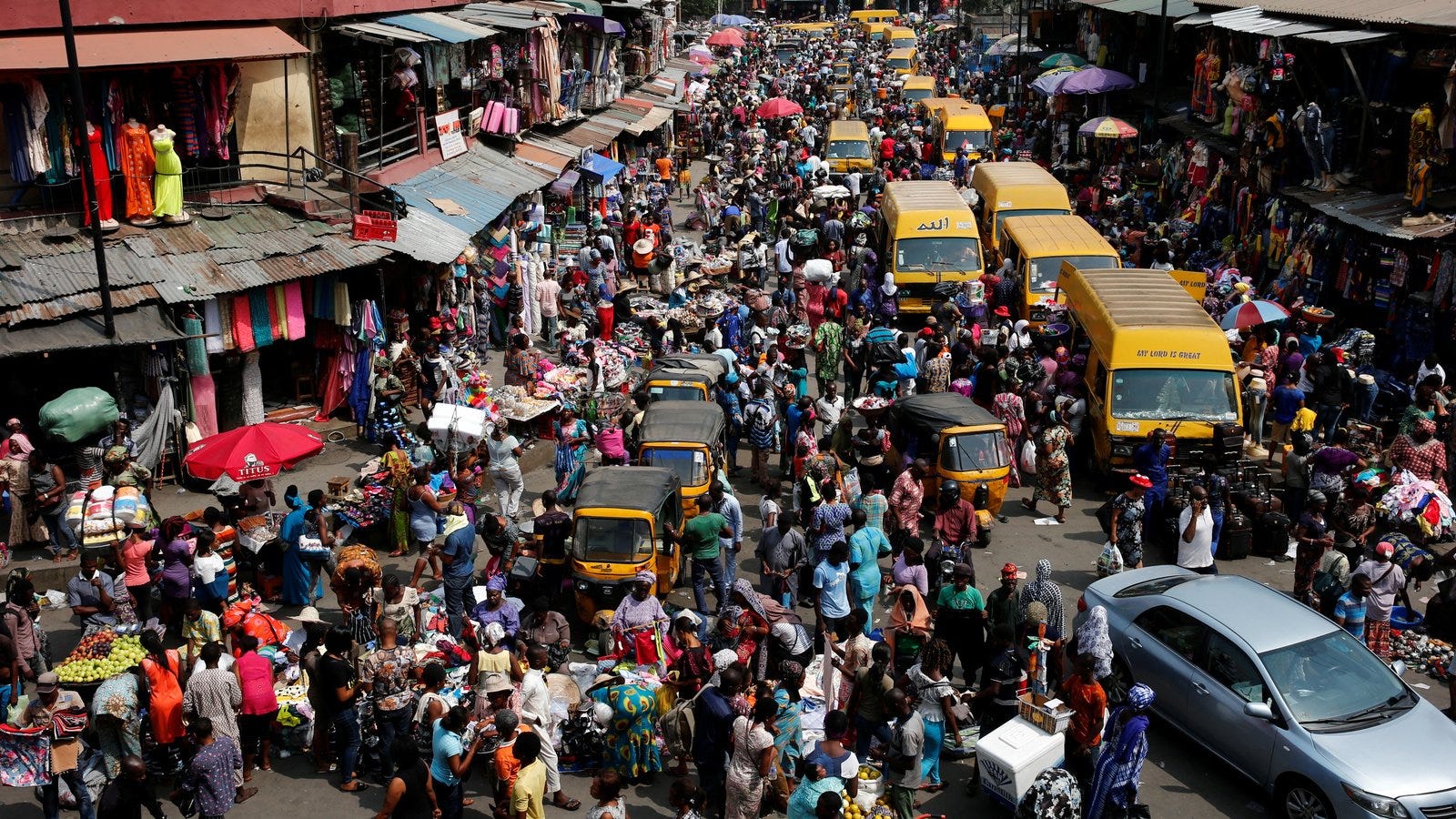
Here’s the story of a remarkable scandal from a few years ago.
In the South Pacific, just north of Australia, there is a small, impoverished, and remote country called Papua New Guinea. It’s a country that I’ve always found absolutely fascinating. If there’s any outpost of true remoteness in the world, I think it’s either in the outer mountains of Afghanistan, in the deepest jungles of central Africa, or in the highlands of Papua New Guinea. (PNG, we call it.) Here’s my favorite fact: Papua New Guinea, with about 0.1 percent of the world’s population, hosts more than 10 percent of the world’s languages. Two villages, separated perhaps only by a few miles, will speak languages that are not mutually intelligible. And if you go into rural PNG, far into rural PNG, you’ll find yourself in places that time forgot.
But here’s a question about Papua New Guinea: how many people live there?
The answer should be pretty simple. National governments are supposed to provide annual estimates for their populations. And the PNG government does just that. In 2022, it said that there were 9.4 million people in Papua New Guinea. So 9.4 million people was the official number.
But how did the PNG government reach that number?
The PNG government conducts a census about every ten years. When the PNG government provided its 2022 estimate, the previous census had been done in 2011. But that census was a disaster, and the PNG government didn’t consider its own findings credible. So the PNG government took the 2000 census, which found that the country had 5.5 million people, and worked off of that one. So the 2022 population estimate was an extrapolation from the 2000 census, and the number that the PNG government arrived at was 9.4 million.
But this, even the PNG government would admit, was a hazy guess.
About 80 percent of people in Papua New Guinea live in the countryside. And this is not a countryside of flat plains and paved roads: PNG is a country of mountain highlands and remote islands. Many places, probably most places, don’t have roads leading to them; and the roads that do exist are almost never paved. People speak different languages and have little trust in the central government, which simply isn’t a force in most of the country. So traveling across PNG is extraordinarily treacherous. It’s not a country where you can send people to survey the countryside with much ease. And so the PNG government really had no idea how many people lived in the country.
Late in 2022, word leaked of a report that the UN had commissioned. The report found that PNG’s population was not 9.4 million people, as the government maintained, but closer to 17 million people—roughly double the official number. Researchers had used satellite imagery and household surveys to find that the population in rural areas had been dramatically undercounted.
This was a huge embarrassment for the PNG government. It suggested, first of all, that they were completely incompetent and had no idea what was going on in the country that they claimed to govern. And it also meant that all the economic statistics about PNG—which presented a fairly happy picture—were entirely false. Papua New Guinea had been ranked as a “lower-middle income” country, along with India and Egypt; but if the report was correct then it was simply a “lower-income” country, like Afghanistan or Mali. Any economic progress that the government could have cited was instantly wiped away.
But it wasn’t as though the government could point to census figures of its own. So the country’s prime minister had to admit that he didn’t know what the population was: he didn’t know, he said, whether the population is “17 million, or 13 million, or 10 million.” It basically didn’t matter, he said, because no matter what the population was, “I cannot adequately educate, provide health cover, build infrastructures and create the enabling law and order environment” for the country’s people to succeed.
But in the end, the PNG government won out. To preserve its dignity, it issued a gag order on the report, which has still never been released. There was some obscure behind-the-scenes bureaucratic wrangling, and in 2023 the UN shelved the report and agreed with the PNG government’s existing estimate. And so today, PNG officially has approximately 10 million people, perfectly in line with what had been estimated before.
The truth, of course, is that we have no idea how many people live in Papua New Guinea.
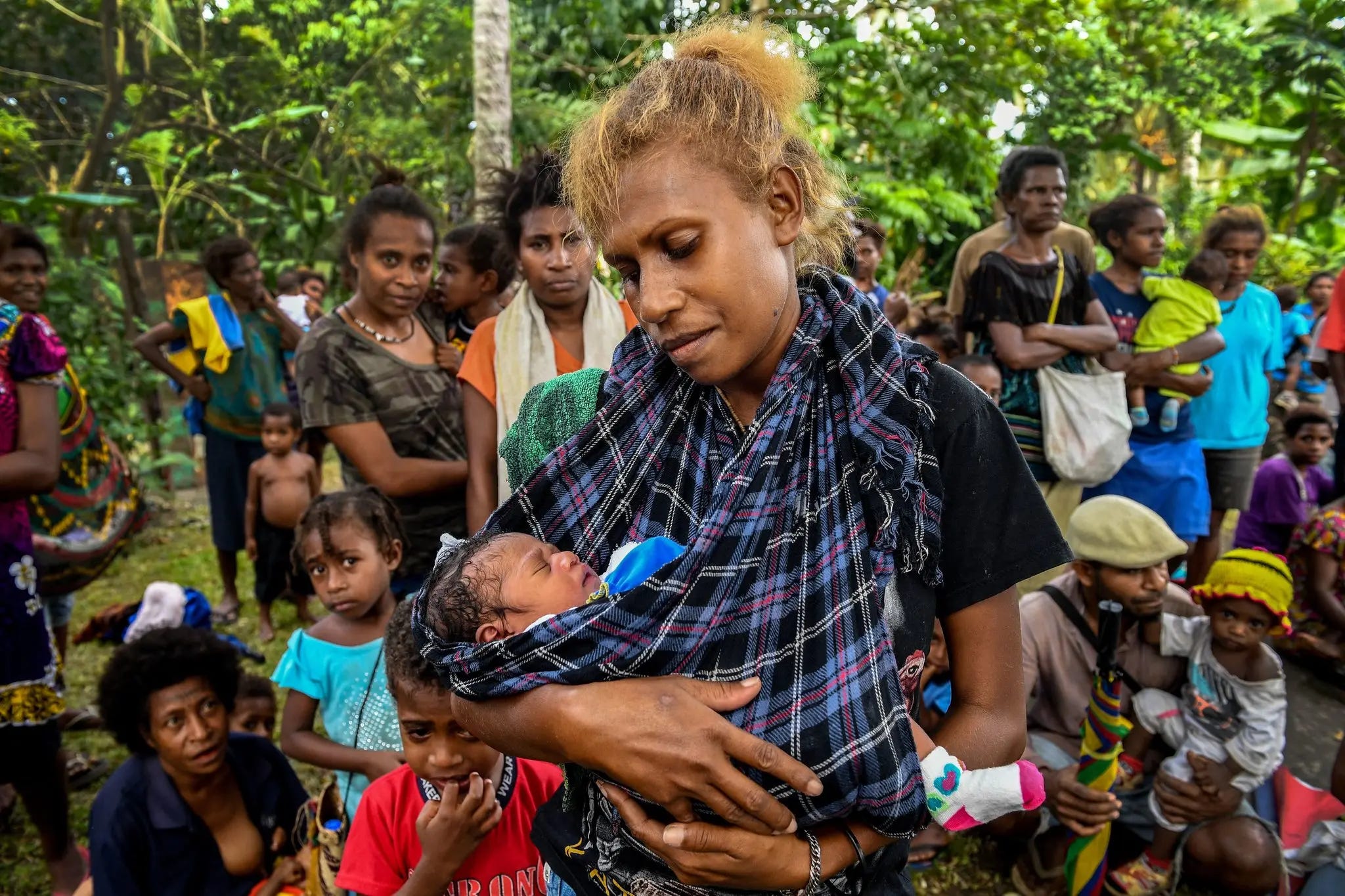
Last week, someone calling themselves Bonesaw went viral on Twitter for a post that claimed that China’s population numbers were entirely fake. China, they said, had been lying about its population for decades: it actually had only about 500 million people. In fact practically every non-Western country had been lying about its population. India’s numbers were also badly exaggerated: the idea that there are 1.5 billion Indians was absurd. The true population of the world, Bonesaw said, was significantly less than 1 billion people.
This is obviously an extremely stupid idea. It’s possible that Chinese population numbers are mildly exaggerated, but the most credible estimates—the ones advanced by Yi Fuxian—are that the exaggeration is on the order of a few percentage points. (It’s also worth noting that no reputable source has yet backed Yi Fuxian’s theory.) Actually faking the existence of billions of people would require a global conspiracy orders of magnitude more complex than anything in human history. Tens or hundreds of thousands of people, spread across every country in the world, would have to be in on it. Local, regional, and national governments would all have to be involved; also the UN, the World Bank, the IMF, every satellite company, every NGO that does work in any of these places. Every election would have to be fake. Every government database would have to be full of fake names. And all for what? To get one over on the dumb Westerners?
So we can dismiss Bonesaw’s claim pretty easily. But, as much as I hate to admit it, his argument does have a kernel of truth. And that kernel of truth is this: we simply have no idea how many people live in many of the world’s countries.
This is not the case for most countries, of course. In wealthy countries, like Germany or Japan or Sweden, populations are generally trusting and bureaucracies are generally capable. Sweden, for its part, maintains such an accurate daily birth-and-death count of population numbers that it no longer even needs to conduct a census. And population numbers are also not so much of a problem in countries like China, India, or Vietnam. These places might be poorer, but they have strong central governments that have a strong interest in knowing what’s going on inside the country. Population counts might be slightly overstated in these places because fertility is falling faster than expected (which could be the case in a country like India where fertility rates are falling quickly), or because local officials are exaggerating the number of students in their schools to secure more education subsidies (that’s Yi Fuxian’s theory of population counts in China), or because more people have emigrated than expected (as was the case in Paraguay when a census revealed its population to be smaller than officials expected). But if the state is in full control of a country, it will want to know what’s going on inside that country; and that starts with the simple fact of knowing how many people live there.
But “the state being in full control of a country” is not a criterion that holds in much of the world. Which brings us to Nigeria.
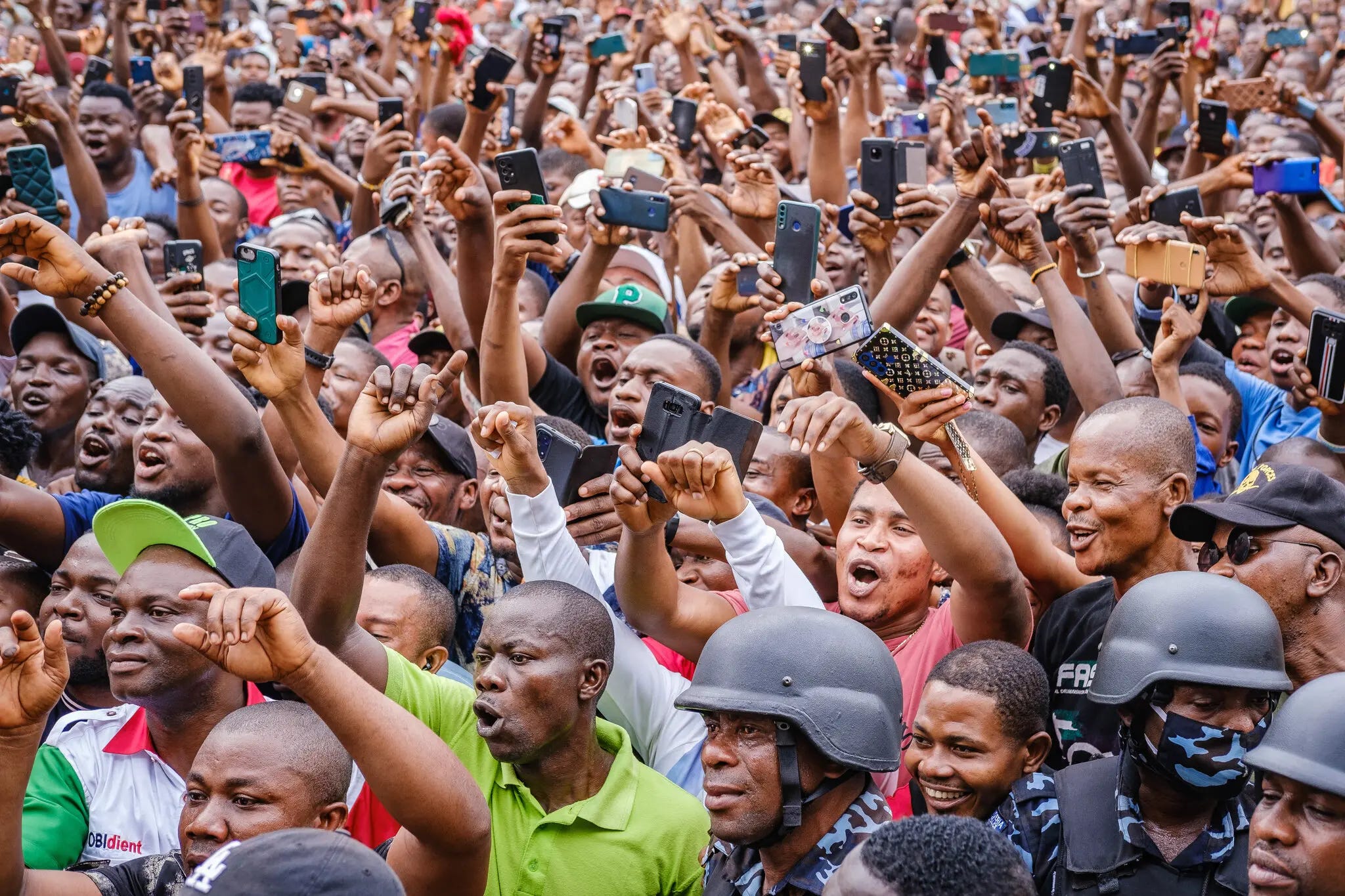
Nigeria is a huge place. Officially, it’s a nation of 240 million people, which would make it the most populous country in Africa and the sixth most populous country in the world. And without a doubt, there are a lot of people in Nigeria. But we actually have no idea how many there are.
Like PNG, Nigeria is supposed to conduct a census every 10 years. But in Nigeria, the census is a politically fraught thing. Nigeria is not a natural polity, and its ongoing unity as a single country is fragile. And so Nigerian elites expend enormous effort to ensure that Nigeria remains one country. They have two important tools at their disposal. The first is the relative representation of different regions in the Nigerian state. And the second is the distribution of Nigeria’s vast oil revenues. Both of these—how many seats a state is given in the Nigerian parliament, and how large a share of oil revenues it receives—are determined by its share of the population.
So local elites have a strong incentive to exaggerate the number of people in their region, in order to secure more oil revenue, while national elites have a strong incentive to balance populations across states in order to maintain the precarious balance of power between different regions. And so the overwhelming bias in Nigerian population counts is toward extremely blatant fraud.
It’s long been the case that censuses in Nigeria are shoddy affairs. When Nigeria was a colony of Britain, its censuses were limited to Lagos, a few townships, and a small number of villages: so the 1931 census for Nigeria yielded numbers that were too low by as much as 75 percent. Once Nigeria became independent, in 1960, the bias swung from underestimation to overestimation. Nigeria’s first census as an independent state came in 1962, and it immediately caused a political problem: the ruling regime was dominated by northern elites, but the census found that southern Nigeria had more people. And so another census was ordered the next year, which conveniently found an extra eight million people in the north. This pattern of brazenly false numbers continued for decades. The next census, in 1973, was such an obvious fraud that the government opted not even to publish the results. For eighteen years after that there was no attempt even to conduct a census. The next census, in 1991, was by far the most credible, and it shocked many people by finding that the population was about 30 percent smaller than estimated. But even that one was riddled with fraud. Many states reported that every single household had exactly nine people.
In 2006, Nigeria tried once again to count its population. And as luck would have it, it found that since the last census each state’s proportion of the national population had remained exactly the same: so there was no need to change the composition of the Nigerian parliament or the distribution of oil revenues. But this census was an extremely rocky affair. The city of Lagos, for instance, rejected the results of the census, which it claimed undercounted its population in order to preserve northern power; so it conducted its own (technically illegal) census and found that it had eight million more people than the national census had reckoned. And there was also a good deal of violence that accompanied the census: about ten people were killed in clashes around the census, usually in regions with separatist activity. The whole experience was so difficult that Nigeria has opted not to repeat it. The 2006 census was the last time that Nigeria has tried to count how many people live in the country.
So the Nigerian government’s figure of 240 million people is, as is the case in Papua New Guinea, an extrapolation from a long-ago census figure. Is it credible? Very few people think so. Even the head of Nigeria’s population commission doesn’t believe that the 2006 census was trustworthy, and indeed said that “no census has been credible in Nigeria since 1816.” (Nigeria’s president fired him shortly thereafter.) There are plenty of reasons to think that Nigeria’s population might be overstated. It would explain, for instance, why in so many ways there appear to be tens of millions of missing Nigerians: why so few Nigerians have registered for national identification numbers, or why Nigerian voter turnout is so much lower than voter turnout in nearby African nations (typically in the 20s or low 30s, compared to the 50s or 60s for Ghana, Cameroon, or Burkina Faso), or why SIM card registration is so low, or why Nigerian fertility rates have apparently been dropping so much faster than demographers expected.
None of this evidence is conclusive, of course. (There are credible third parties—like the Against Malaria Foundation—that believe that Nigerian population counts might actually be understated.) But the crucial thing, as in Papua New Guinea, is that we don’t know how many people live in Nigeria. It might be that there are 240 million Nigerians, as the Nigerian government claims; or that there are 260 million Nigerians; or that there are only 180 million. We don’t know. But we have plenty of reason to think that the official numbers have little relationship to reality.
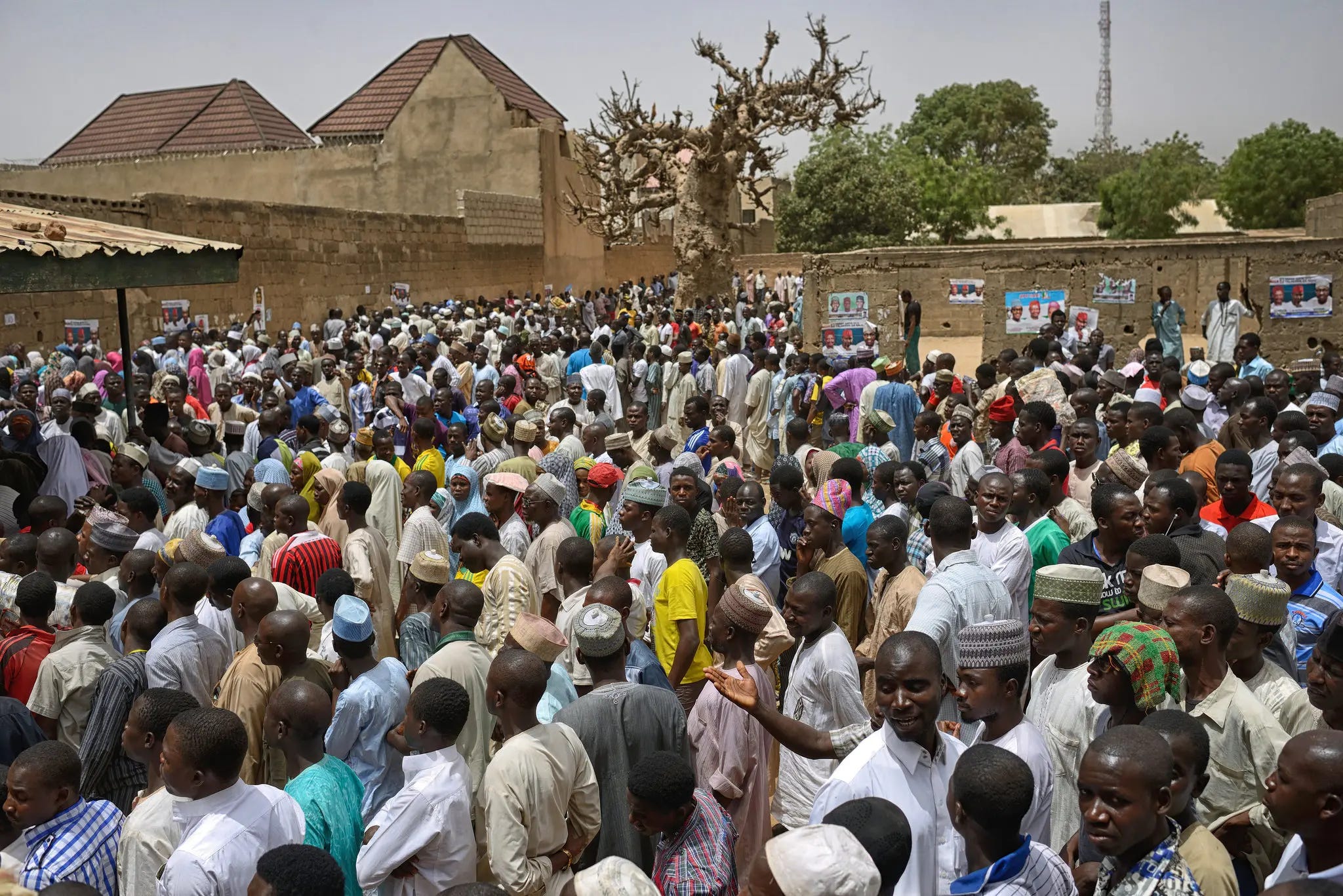
What about other countries?
Nigeria is not the only poor country with an extremely patchy history of censuses. Indeed we find that countless poor nations with weak states have only the vaguest idea how many people they govern. The Democratic Republic of the Congo, which by most estimates has the fourth-largest population in Africa, has not conducted a census since 1984. Neither South Sudan nor Eritrea, two of the newest states in Africa (one created in 2011 and the other in 1991), has conducted a census in their entire history as independent states. Afghanistan has not had one since 1979; Chad since 1991; Somalia since 1975.
The various bodies that interest themselves in national populations, from the World Bank to the CIA, reliably publish population numbers for each of these countries. But without grounding in trustworthy census data, we simply have no idea if the numbers are real or not. Estimates for Eritrea’s population vary by a factor of two. Afghanistan could have anywhere between 38 and 50 million people. Estimates for the DRC’s 2020 population range from 73 million to 104 million. How did the country reach its official number for that year, 94.9 million? We have no idea. “It is unclear how the DRC national statistical office derived its estimate,” the U.S. Census Bureau said, “as there is no information in its 2020 statistical yearbook.”
Many other countries do conduct more regular censuses, but do a terrible job of it. Enumerators are hired cheaply and do a bad job, or they quit halfway through, or they go unpaid and just refuse to submit their data. An unknowable number simply submit fake numbers. These are not, after all, technical experts or trained professionals; they are random people sent into remote places, often with extremely poor infrastructure, and charged with determining how many people live there. It is exceptionally difficult to do that and come out with an accurate answer.
So even those countries that do conduct regular or semi-regular censuses often arrive at inaccurate results. The most recent South African census, for instance, undercounted the population by as much as 31 percent—and that is one of the wealthier and better-run nations in Africa. In poorer and less functional countries, statistical capacity is often just nonexistent. Take, for instance, the testimony of the former director of Sudan’s statistical bureau, who said that the most accurate census in Sudan’s history was conducted in 1956, when the country was still under British rule.
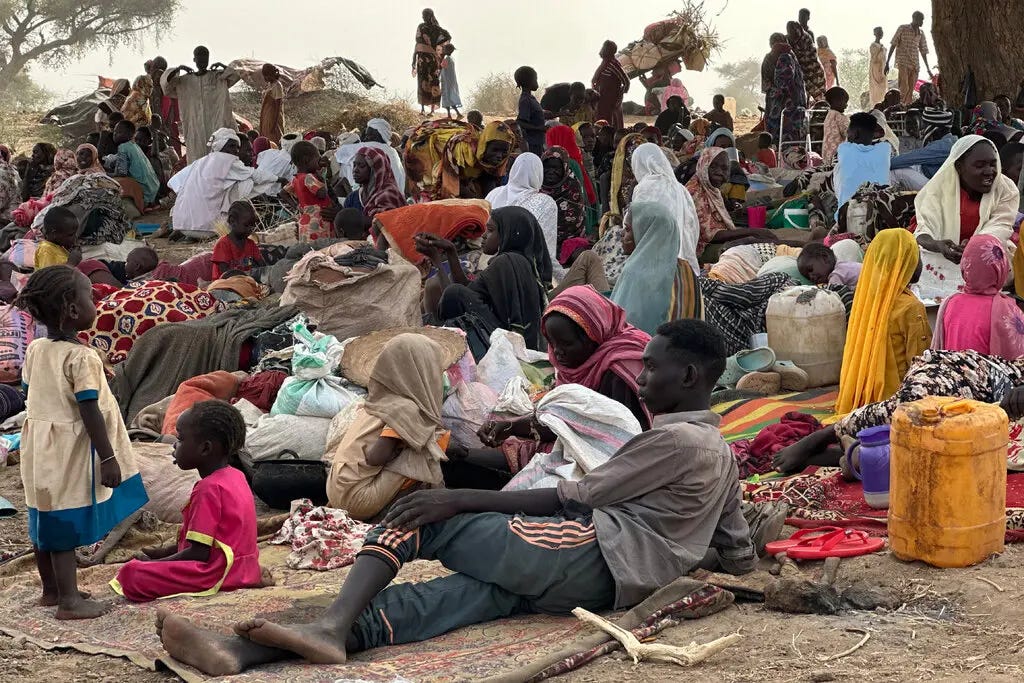
It shouldn’t be new to anyone that population data in the poor world is bad. We’ve known about these problems for a long time. And for an equally long time, we’ve had a preferred solution in mind. Technology can compensate for the deterioration of human coordination: we have satellites.
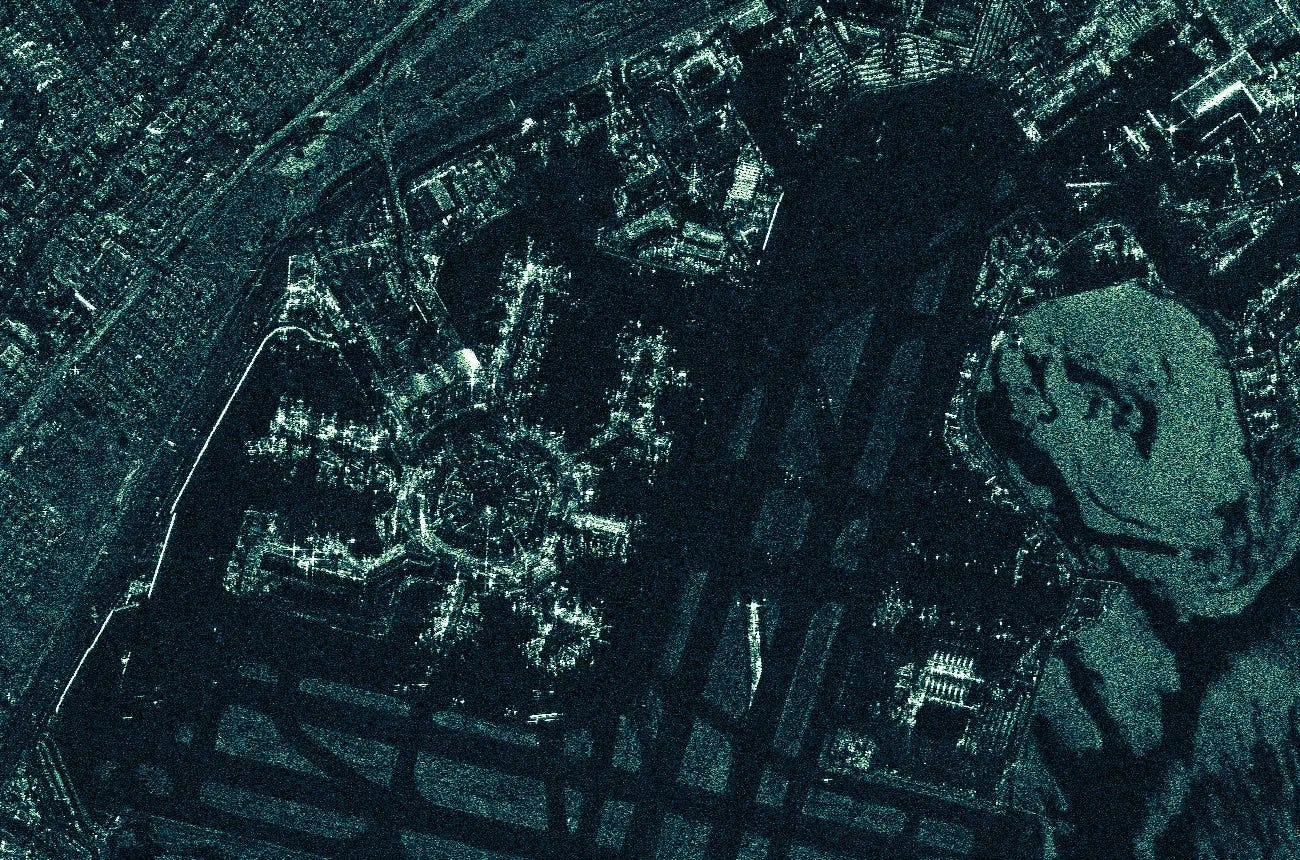
Satellites have two great benefits for counting populations. First, satellites can see pretty much any part of the world from space, and so you entirely obviate the logistical problem of sending people into remote areas: all you need is a small count of some portion of the area under study, which you can use to ground your estimates in something like reality. And second, you don’t have to rely on local governments to obtain the data—so you can get away from the bad incentives of, say, Nigerian elites.
But satellite data can only tell us so much. A satellite can look at a house, but it can’t determine whether three people live there, or six people, or eight people. And often the problem is worse than that. Sometimes a satellite can’t tell what’s a building and what’s a feature of the landscape. Dense cities are a problem; and so, by the way, are jungles—satellites can’t penetrate thick forest cover, and there are quite a few people around the world who still live in forests. (The “forest people” of central Africa, for instance, or a few million of the Adivasi in India.)
So guessing population numbers from high-resolution satellite imagery is an extraordinarily difficult problem. The various companies that guess population numbers from satellite imagery—working with groups like the World Health Organization that might be interested in mapping, say, malaria cases—take different approaches to tackling this problem. And the different approaches they take can lead to wildly different results. For example: Meta and WorldPop both used satellite imagery to predict the population of the city of Bauchi, in northeastern Nigeria. But the numbers that they reached were entirely different, because they take different approaches: Meta uses a deep learning model to detect individual buildings in images and then distributes population proportionally across those structures, while WorldPop feeds a machine-learning model with dozens of variables (land cover, elevation, road networks, so on) and uses that to predict population. Meta guessed that Bauchi has 127,000 children under the age of five; WorldPop says that it has 254,000, about twice as many. So Meta’s estimate is about 50 percent lower than WorldPop’s. We see similar differences in other regions. Meta says that Ganjuwa, also in northeastern Nigeria, has 76,000 children under the age of five; WorldPop says that it has 162,000.
And when we do have ground-truth data, we tend to find that satellite-based data doesn’t perform much better. Last year, three Finnish scientists published a study in Nature looking at satellite-based population estimates for rural areas that were cleared for the construction of dams. This was a useful test for the satellite data, because in resettling the people of those areas local officials were required to count the local population in a careful way (since resettlement counts determine compensation payments), and those counts could be compared to the satellite estimates. And again and again, the Finnish scientists found that the satellite data badly undercounted the number of people who lived in these areas. The European Commission’s GSH-POP satellite tool undercounted populations by 84 percent; WorldPop, the best performer, still underestimated rural populations by 53 percent. The pattern held worldwide, with particularly large discrepancies in China, Brazil, Australia, Poland, and Colombia. Nor is it just rural areas being resettled: WorldPop and Meta estimated slums in Nigeria and Kenya to be a third of their actual size.
(All of this, by the way, is a good reason to think that the report that the UN commissioned on Papua New Guinea’s population is probably inaccurate. And indeed, when the PNG government conducted a new census in 2024, its results broadly supported its own numbers. But we are not out of the woods yet: that census was also riddled with accusations of severe undercounting. So again we must return to the central fact: we just don’t know how many people live in Papua New Guinea.)
So satellite data is not a panacea. It might be that in the future the tools advance to the point where they can produce reliable estimates of human populations in areas of arbitrary size. But we are not really close to that point.
Where does that leave us?
I don’t think there’s any reason to embrace the sort of idiotic conspiracism of Bonesaw. We simply have no reason to think that the number of people in the world is dramatically different from what official estimates indicate; indeed while there are specific cases where the numbers might be dramatically off, there’s just no reason to think that this is the case for every country. There are many places, like perhaps Papua New Guinea, where population counts are probably too low. The only thing that can be said with any reliability is that we simply don’t know how many people live in these countries.
Given that we don’t have much evidence of a systematic bias in population counts—Nigeria might overcount, but Sudan might undercount, and at scale these differences should cancel out—the best we can do is assume that there is a sort of “law of large numbers” for population counts: the more units we have under consideration, the more closely the numbers should hew to reality. So population counts for individual countries, particularly in Africa, are probably badly inaccurate. It wouldn’t be surprising if the total population for Africa is off-base by some amount. But we don’t have much reason to think that the global population is very different from what we believe it to be.
But it’s good to be reminded that we know a lot less about the world than we think. Much of our thinking about the world runs on a statistical edifice of extraordinary complexity, in which raw numbers—like population counts, but also many others—are only the most basic inputs. Thinking about the actual construction of these numbers is important, because it encourages us to have a healthy degree of epistemic humility about the world: we really know much less than we think.
Read the original article

Comments
I happened to have participated in census work before. For instance, in a country like China, the national census conducted every ten years generally yields accurate overall data, but the data for individual regions is indeed based on estimates. There are several reasons for this:
1. Population Mobility: Generally speaking, in economically developed areas, population figures are often underestimated because a large number of people freely migrate into these regions, and local governments are actually unclear about the exact increase in population. In contrast, in less economically developed areas, population figures are often overestimated because many people leave to work in cities, only returning to their hometowns for brief periods each year.
2. Mortality Data: China’s birth data is already quite accurate. Nowadays, the vast majority of babies are born in hospitals, unlike decades ago when midwives would come to homes to assist with deliveries. Moreover, birth certificates must be issued immediately after a baby is born. However, China’s mortality data is not precise, primarily because burials are still common in many rural areas, and these death records are often delayed.
For example, my city conducted multiple rounds of mass COVID-19 testing in 2021. Each time, more than 4.4 million people were tested, but our small city's 2020 census results only showed a population of 3.7 million.
> our small city > 3.7 million
China's and India's population numbers always boggle my mind.
Made several friends during my master that were from China. One of them was from Shenyang. Never heard the name before and I'm usually pretty decent with geography. Around 8m inhabitants. Not even in the top 10 population wise. There isnt a single city in the 100 largest cities in China that is below 1m.
It's a common source of confusion. The administrative definition of a 'city' is the equivalent of its metropolitan area + all satelite 'towns' and their suburbs (including farm lands).
My hometown has a population of 3.4 million (prefecture level city or 3rd tier as people call it). But it has an area about 6000 km^2, easily reaching the total size of London. At its core the central town has roughly a population of 700,000. And there are 4 more towns after the central one, each has smaller villages and suburbs under them. People living in these towns wouldn't consider they are living in the same city.
By dumb1224 2026-01-3011:10 Forgot to add context, my hometown is under zhejiang province (as different regions have different population structures).
By dumb1224 2026-01-3020:30 I got the area wrong. Greater London is apparently 1500 km^2 so the total area of my administrative city is 4 times the size of that (with a total population of 3.4 mil)
It's interesting that China does not have exact data. Don't they require everyone to register their address? I know foreigners must do it, and chatting with the locals they told me they were registered as well.
I would have imagined that the data could be used to get mostly accurate numbers.
Even if they required it that's no guarantee people actually do it. I have lived for a couple of years at an address different than the one I was registered at. Illegal in my country, but easy to conceal. (I had to because the apartment I lived in didn't strictly allow people of my sort to permanently reside in it.)
By hybrid_study 2026-01-2915:2210 reply The post leans too hard on “we have no idea.” Population numbers are estimates with error bars, especially in places with weak census infrastructure, but that’s not the same as ignorance. Most countries run censuses (sometimes badly) and use births/deaths/migration accounting to update totals. Calling them “fake” is misleading — it’s uneven data quality, not numerology. “Large uncertainty” ≠ “no idea.”
> The Democratic Republic of the Congo, which by most estimates has the fourth-largest population in Africa, has not conducted a census since 1984. Neither South Sudan nor Eritrea, two of the newest states in Africa (one created in 2011 and the other in 1991), has conducted a census in their entire history as independent states. Afghanistan has not had one since 1979; Chad since 1991; Somalia since 1975.
By hybrid_study 2026-01-2923:551 reply Two countries, ranking 32nd and 41st in Africa have not had a census. Those others have had old census conducted: so we have "some idea" of their population.
By nine_k 2026-01-304:04 Given their tumultuous history, the population of these countries may have halved, or doubled, since the last census.
By nostrebored 2026-01-2915:305 reply Countries have incentives to manipulate population data. Most error that I’m aware of is not attributable to poor data quality. For example, if you have a real estate bubble you have a strong incentive to show population growth.
By Muromec 2026-01-2915:53 >For example, if you have a real estate bubble you have a strong incentive to show population growth.
That's one source of bias that is present at a specific time. Mostly you would have competing incentives. There is usually more than one agency that runs does the counting. Vital records registration, voter rolls and tax payers lists, for example are separate agencies in some countries. Not every tax payer is a voter and not everyone who was born still lives in the country. The sources are sometimes cross-referenced too. Then there is usually a place that needs to do macroeconomic forecasting and needs to have some numbers to do it's job.
I doubt places where the data is poor like Somalia or Afghanistan are making up their numbers because of a real estate bubble
By therein 2026-01-305:25 There are many other incentives, such as cities getting funding from the state proportional to their population.
By PlatoIsADisease 2026-01-300:08 [flagged]
Agree. I feel that it is beneficial to present yourself larger than you really are.
By willturman 2026-01-300:24 The first rule in Saul Alinsky's Rules for Radicals:
1. Power is not only what you have but what the enemy thinks you have.
By tolciho 2026-01-305:50 King Louis XIV lost a bunch of his land to astronomers able to more accurately measure said land. This is the sort of thing that can happen when you want to turn your country into a world leader in science.
Not just that. Poorer countries inflate their numbers so they can get more financial aid
By nerevarthelame 2026-01-2916:141 reply Do you have specific examples?
This study published in Nature [0] says that rural populations in particular are typically UNDERCOUNTED (exactly like the Papa New Guinea in the OP's article), and that this happens at similar rates across poorer and wealthier countries: "no clear effect of country income on the accuracies of the five datasets can be observed."
By MarkusQ 2026-01-3023:06 That study has...issues.
https://human-settlement.emergency.copernicus.eu/ruralPopDis...
By johngossman 2026-01-2917:54 You are conflating known and unknown unknowns, otherwise known as Knightian uncertainty. As the article says, many countries have not run censuses in many years and/or manipulate the numbers.
By hugh-avherald 2026-01-303:341 reply I think "no idea" is an entirely reasonable summary of the magnitude of the uncertainty.
By Dylan16807 2026-01-303:422 reply To me, "no idea" suggests the number is likely off by an order of magnitude or more, and even the worst case country in this article was less than 2x with bigger countries having better numbers.
By tjwebbnorfolk 2026-01-304:07 That might be true in measuring abstract absolutes. But I'd agree that if you don't even know if your population is larger or smaller than it was 40 years ago, then it's perfectly fair to say that you have "no idea" what's going on.
To me, "no idea" simply means we don't have strong evidence to support any given conclusion, which I think is a well-defended position from the OP.
By Dylan16807 2026-01-3019:46 Widening your claimed range makes your evidence for the claim stronger. In this situation we can make useful conclusions with strong evidence, with population ranges that are annoyingly wide but not that wide.
By 627467 2026-01-303:52 And yet... The examples mentioned and the justifications for big errors/fakes in many countries (that historically have been highlighted for scares around overpopulation) are very plausible. "Most countries run census" is not the same as "most countries run mostly reliable census" or "most of the world population is covered by a reliable census".
Aren't there plenty of incentives for over expressing population numbers in many countries, specially in underdeveloped ones?
By veunes 2026-01-3012:08 I think you're right in principle, but the article is pointing at a slightly different failure mode than just "wide error bars"
By pfdietz 2026-01-302:03 I remember the study of people who live to very old age found that the frequency of such people is most correlated with lack of birth records.
There are growing sentimental, denialist, conspiracy, narratives on social media that anything that paint US being out of proportion has to be fake. It's up there with flat earths and "birds don't exist" theories. From the article...
This isn't the first time I had encountered this specific type of ... char arrays. I think the major part of the author's intent is to just vent.> The true population of the world, Bonesaw said, was significantly less than 1 billion people.By Animats 2026-01-308:02 Worldwide, there are over 5 billion smartphones.[1] Yes, some people have more than one. They have to connect to the network, so there's a constant census of cellphones.
By StopDisinfo910 2026-01-300:48 I think you are missing one of the key point of the article. Some census are indeed fake, as in falsified not as in uncertain, because population is used to allocate resources and as a proxy for power and there is therefore a strong interest in falsifying them.
That's why somme statistics look weird. That's also why things heavily relying on demographic data need to be question. It's particularly significant when it comes to green house gas emissions for example and climate modeling.
By porridgeraisin 2026-01-309:061 reply This comment is LLM generated.
Quoting from the article "But here’s a question about Papua New Guinea: how many people live there? The answer should be pretty simple."
That sounds a very strange expectation. Most of my life post university I realized most of questions have complex answers, it is never as simple as you expect.
If the author would check how things biology and medicine work currently, I think he will have even more surprises than the fact that counting populations is an approximate endeavor.
This is a literary device. The article continues to explain why this isn’t a simple problem, and it’s clear from the conclusion that the author understands the complexity.
>But it’s good to be reminded that we know a lot less about the world than we think. Much of our thinking about the world runs on a statistical edifice of extraordinary complexity, in which raw numbers—like population counts, but also many others—are only the most basic inputs. Thinking about the actual construction of these numbers is important, because it encourages us to have a healthy degree of epistemic humility about the world: we really know much less than we think.
By anal_reactor 2026-01-2915:201 reply I guess this is why reading things other than technical documentation remains important.
By quietbritishjim 2026-01-2916:142 reply Or it's a reason why literary devices should only be employed when they aren't distractingly wrong.
By tjwebbnorfolk 2026-01-304:12 or to not jump to conclusions from reading a single sentence of a multi page article
By rustystump 2026-01-303:11 I guess dune should be totally different given how distractingly wrong it is…
By PlatoIsADisease 2026-01-2923:404 reply As someone who reads epistemology for fun. Its so much worse than you know.
Everything is basically a theory only judged on predictive capabilities. Even the idea that Earth is not at the center of the solar system is a judgement call of what we define as the solar system and center.
The math is simpler sure, but its arbitrary how we define our systems.
By lotsofpulp 2026-01-2923:514 reply You lost me with your example. What could the word center mean if the thing that all the other things orbit around in the solar system is not referred to as being in the center?
Barycenter is a good candidate, and apparently it's often outside of the Sun[0].
[0] https://astronomy.stackexchange.com/questions/40782/where-is...
By Dylan16807 2026-01-303:441 reply Slightly outside the sun. The comment above was talking about the Earth being center as a judgement call, which is a wildly different idea.
If all you care about is measurements/predictions relative to Earth, then it makes no sense to transform everything into Sol-centric frame, do the math there, and then untransform results back to Earth-centric frame.
Put another way, there's a reason we use latitude/longitude for terrestrial positioning, instead of Cartesian coordinates with Sol being at (0, 0, 0). For one, it keeps the math time-invariant.
By Dylan16807 2026-01-3019:41 You can do math from any position. If you're on a train you'll do a lot of calculations relative to your train. That doesn't mean things are actually orbiting your train. You would never declare to all of humanity that your train is the 'center' of everything.
By PlatoIsADisease 2026-01-300:141 reply They orbit the earth in a different shape that is more complex than an ellipse.
For further reading, I like Early Wittgenstein, but warning, he is a meme for a reason, you will only understand 10%...
Imagine we have a table with black and white splotches. We could use a square fishnet with a fine enough resolution to accurately describe it. But why use a square fishnet? Why not use hexagons? They both can accurately describe it with a fine enough resolution.
All of science is built on this first step of choosing (squares or hexagons).
Maybe something easier than Wittgenstein, there is Waltz Theory of International Politics, specifically chapter 1. But that is more practical/applied than metaphysical. I find this a difficult topic to recommend a wikipedia article, as they are too specific to each type of knowledge and don't explain the general topic. Even the general topic gets a bit lost in the weeds. Maybe Karl Popper too.
By Dylan16807 2026-01-303:482 reply > They orbit the earth in a different shape that is more complex than an ellipse.
But they don't. We know they don't. Not unless you use a weird definition of orbit that is very different from the one lotsofpulp was using. And if you do that you're not countering their argument, you're misconstruing it.
We know they do. An orbit is a mathematical object, and elliptical orbits only exist in universes that have exactly two objects with mass in them. Add another object, even far away, and as far as we know[0] we no longer even have a closed-form description of resulting motion patterns.
And our universe has tons of matter with gravitational mass everywhere, few other types of interaction beyond gravity, and a vacuum that just doesn't want to stay empty.
--
[0] - Not sure if this was mathematically proven, or merely remains not disproven.
By Dylan16807 2026-01-3019:39 When I said "don't" I was talking about the complex shape that applies to orbiting the Earth, old school epicycles.
Actual orbits being slightly off ellipses isn't what I meant.
By PlatoIsADisease 2026-01-311:061 reply > Not unless you use a weird definition of orbit that is very different from the one lotsofpulp was using. And if you do that you're not countering their argument, you're misconstruing it.
All of science is like this. Change your frame of reference/theory. Why did we pick one system vs another? Its arbitrary.
By Dylan16807 2026-01-316:04 The thing lotsofpulp was talking about is not arbitrary.
By t-3 2026-01-305:06 Orbits are influenced by gravity and momentum and are always changing as the objects pull on each other and are pulled on. It only appears to be stable because the scale is so immense and our lives are so short in comparison.
By sdwr 2026-01-300:06 Depends on how many epicycles you add!
By Atlas667 2026-01-301:02 Just cause knowledge can be reduced to predictive capabilities and judgement calls does not mean systems are defined arbitrarily. Everything is defined as to its relative function in/to society and our material endeavors and the social forces that limit or expand on areas of these systems.
First we have to live. That has implications; it's the base for all knowledge.
Knowledge is developing all the time and can be uncertain, sure, but the foundations aren't arbitrary.
You are doing an idealism.
By 1718627440 2026-01-3020:54 > Even the idea that Earth is not at the center of the solar system is a judgement call of what we define as the solar system and center.
If you don't have a definition of the solar system, the question about its center is meaningless. If you have then you can answer it according to that definition.
I remember a lot of pop sci being centered around "elegance", looking for simple models that are broadly predictive. Newton, Galileo, Einstein, Darwin. Feels like people are leaning the other way now, and seeing reality as messy, uncertain, and multifaceted.
By syphia 2026-01-301:29 A case study of myself as an overeager math student:
I used to focus so much on finding "elegant" proofs of things, especially geometric proofs. I'd construct elaborate diagrams to find an intuitive explanation, sometimes disregarding gaps in logic.
Then I gave up, and now I appreciate the brutal pragmatism of using Euler's formula for anything trigonometry-related. It's not a very elegant method, if accounting for the large quantity of rote intermediate work produced, but it's far more effective and straightforward for dealing with messy trig problems.
I tried to check a list of literary devices (Wikipedia) and couldn't exactly map to a specific category - would be interesting to know if there such a category.
The problem I have with this literary device is that I think it works if most / many questions would fit it then he would go to disapprove it. Using it, for me, kind of indirectly reinforces the idea that "there are many simple answers". Which I came to loathe as it is pushed again and again due to social media. Everything is "clear", "simple", "everybody knows better", "everybody did their research".
How did this literal device make you feel? Interested? Curious? Bored? When I read it my initial instinct was "no, it's definitely not simple, so if that's what are you going to explain me, I will not bother".
By ajkjk 2026-01-2922:43 The list of literary devices on Wikipedia is a tiny subset of the list of literary devices in reality. Although in this case it is a well-documented one: it's just a rhetorical question.
anyway it is just a writing style. if you don't like it, fine. If you can't parse it, well, now you can.
By dugidugout 2026-01-2923:31 I didn't feel much at all. It's simply a rhetorical question which sets up the explicit claim being made in the title of the article. The structure is quite clear if you account for the entire text which I'm sure the author intended. Do you mean to assert that reasoning through the Socratic tradition is something to loathe and push against? In other words, you are leaning on a lot of ancillary personal concerns which I don't believe the author earned.
By jklinger410 2026-01-2915:012 reply > Most of my life post university I realized most of questions have complex answers, it is never as simple as you expect.
I find the complication comes from poor definitions, poor understanding of those definitions, and pedantic arguments. Less about the facts of reality being complicated and more about our ability to communicate it to each other.
I’ve noticed the inverse as in the more I understand something, the less “simple” it looks.
Apparent simplicity usually comes from weak definitions and overconfident summaries, not from the underlying system being easy.
Complexity is often there from the start, we just don’t see it yet.
By somenameforme 2026-01-2915:251 reply There's a great analog with this in chess as well.
~1200 - omg chess is so amazing and hard. this is great.
~1500 - i'm really starting to get it! i can beat most people i know easily. i love studying this complex game!
~1800 - this game really isn't that hard. i can beat most people at the club without trying. really I think the only thing separating me from Kasparov is just a lot of opening prep and study
~2300 - omg this game is so friggin hard. 2600s are on an entirely different plane, let alone a Kasparov or a Carlsen.
Magnus Carlsen - "Wow, I really have no understanding of chess." - Said without irony after playing some game and going over it with a computer on stream. A fairly frequent happening.
By ric2b 2026-01-2915:37 Funny how the start of your scale, 1200 Elo, is essentially what I have as a goal and am not even close yet, lol.
By StopDisinfo910 2026-01-2915:35 I think it's more of a curve from my point of view.
Beginner: I know nothing and this topic seems impossible to grasp.
Advanced beginner: I get it now. It's pretty simple.
Intermedite: Hmm, this thing is actually very complicated.
Expert: It's not that complicated. I can explain a simple core covering 80% of it. The other 20% is an ocean of complexity.
By jklinger410 2026-01-2915:245 reply I suppose we'll just have to agree to disagree. Simplicity comes from strong definitions, and "infinite" complexity comes from weak ones.
If you're always chasing the next technicality then maybe you didn't really know what question you were looking to answer at the onset.
>If you're always chasing the next technicality
This sounds like someone who has never studied physics.
"Oh wow, I figured out everything about physics... except this one little weird thing here"
[A lifetime of chasing why that one little weird thing occurs]
"I know nothing about physics, I am but a mote in an endless void"
---
Strong or weak definitions don't save you here, what you are looking for is error bars and acceptable ranges.
By jklinger410 2026-01-2916:02 Your response along with others is proving my point in an unfortunate way.
If you think I'm saying that the world is not infinitely complex, you are missing the point.
IMO both perspectives have their place. Sometimes what's missing is the information, sometimes what's lacking is the ability to communicate it and/or the willingness to understand it. So in different circumstances either viewpoint may be appropriate.
What's missing more often than not, across fields of study as well as levels of education, is the overall commitment to conceputal integrity. From this we observe people's habitual inability or unwillingness to be definite about what their words mean - and their consequent fear of abstraction.
If one is in the habit of using one's set of concepts in the manner of bludgeons, one will find many ways and many reasons to bludgeon another with them - such as if a person turned out to be using concepts as something more akin to clockwork.
By jklinger410 2026-01-2918:04 Yes, we're in complete agreement about conceptual integrity.
Reality is such that, without integrity, you can prove almost anything you want. As long as your bar for "prove" is at the very bottom.
By WJW 2026-01-2917:35 Simple counterexample: chess. The rules are simple enough we regularly teach them to young children. There's basically no randomness involved. And yet, the rules taken together form a game complex enough that no human alive can fully comprehend their consequences.
By nathan_compton 2026-01-2916:01 This is actually insightful: we usually don't know the question we are trying to answer. The idea that you can "just" find the right question is naive.
By breuleux 2026-01-2917:15 > Simplicity comes from strong definitions
Sure, you can put it this way, with the caveat that reality at large isn't strongly definable.
You can sort of see this with good engineering: half of it is strongly defining a system simple enough to be reasoned about and built up, the other half is making damn sure that the rest of reality can't intrude, violate your assumptions and ruin it all.
By empressplay 2026-01-2915:46 Wisdom comes from knowing what you don't know.
By nathan_compton 2026-01-2916:00 Haha.
By veunes 2026-01-3012:11 Not simple in the sense of easy, but simple in the sense of foundational: if a government can't even roughly say how many people it governs, everything built on top of that gets shaky
By leesec 2026-01-2916:41 "It shouldn’t be new to anyone that population data in the poor world is bad" from the same author and same article. but cherry pick away if it makes you feel intelligent.
By adamrezich 2026-01-2917:19 Most people believe that most things are knowable, and happily defer to published statistics whenever possible.
By bjourne 2026-01-3011:31 Nitpickinging is a quaint obsession.
By AniseAbyss 2026-01-2917:43 [dead]
