
Lessons you will learn living in a snowy place

2026-02-0614:49311333eukaryotewritesblog.com

6. Snow is heavier than you think. You might think physical strength is useful for lots of things, like overall health or familiar household tasks or picking up dudes (literally or metaphorically.)…

1. In the first really heavy winter storm of the year, your power might go off. This is understandable but you do have to think about it beforehand.

2. If the power’s been off for a while, like, over 24 hours, and then suddenly it comes back on for a few minutes, and then it immediately goes out again – you might understandably believe that that means that the power company is about to restore your electricity, and there was a hiccup but it’s about to come back on for real. Unfortunately, nothing in this life is knowable.

3. The instruction manuals for things – cars, snowblowers, wood stoves, etc – often have useful information about using the thing. A surprising number of my peers don’t realize this.

4. You have a lot of batteries, flashlights, shelf stable food, warm clothes, and drinking water stored, right? Good.
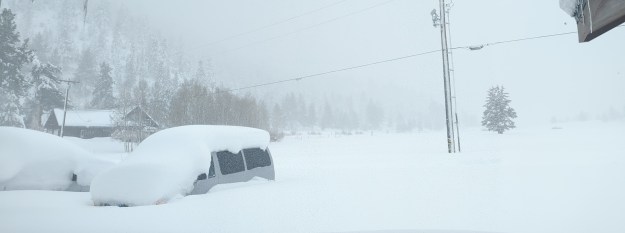
A foggy landscape blanketed in three feet of snow.

5. Snow is easiest to shovel when it’s just fallen. The more time passes, the more freeze-thaw cycles – even gentle ones – build up and make the fallen snow denser and tougher. (This might be less true in very cold places where it never gets above freezing during the day? I don’t know, honestly.)

6. Snow is heavier than you think.

You might think physical strength is useful for lots of things, like overall health or familiar household tasks or picking up dudes (literally or metaphorically.) But actually, the main thing physical strength is useful for is letting you shovel more snow.

Push comes to shove, you can probably substitute grit for physical strength. But I suspect that muscle is easier to build than grit, for most people, not to mention less injurious.

Anyway, digging snow is hard. And snow is the easiest thing you can dig. How do hobby tunnelers do it??

7. Have neighbors up the street with a snowplow. They will save your skin.

8. Speaking of snow being heavy, my Alaskan friend tells me that at some degree of snowfall, you will also want to clear snow off of your roof so that it doesn’t break your whole house. I didn’t know that. Thankfully, my roof survived (for now). There are various tools made for this, one of which is called an avalanche and looks really fun.

(I am further cautioned by a different friend that you gotta wear a hooded coat while scraping snow off the roof, or else snow will 100% fall down the back of your neck. And hey, it’s cold enough out there already.)

9. Even if your house technically runs on propane, and you have propane, electricity might still run the propane, so your house is going to get cold. Unless you run the woodstove. Which you will.

If you’re short on kindling, sufficient cardboard CAN be used to light a big log on fire.

10. You should own rainpaints. (Or snowpants. Some kind of waterproof outer layer for your legs.)

11. If it’s too late for that, keep one pair of pants to put on when you go out into the snow for quick trips – and then immediately change into a different pair when you get back inside. This is important for staying dry.

12. Do NOT get wet and cold.

13. You already own gaiters, right? Of course you do. Gaiters are the pinnacle of fashion. Nobody realizes this, but you know that these slick garments can be made in a variety of styles, highlight the calf, and visually break up the block of the leg, adding new intrigue and aesthetic possibilities to the modern conception of dress. You are nobody’s fool, and naturally, you already own a pair of outdoors gaiters.

The situation you find yourself in now is one of the many cases where gaiters are also practical – put them on, go tromp around outside, and suddenly less snow winds up packed in your boot. It’s not a slam-dunk, because when the snow is four feet high it will also top the gaiters – what you really want is rain pants. But it’s still better than not having them, and you’ll feel real good about yourself and your practical, correct clothing takes. Good on you!

14. If possible, live in a house that a Burning Man camp runs out of in the summer. This means that even if the house is otherwise pretty well-stocked for winter storms, you will keep finding manifold useful things along the way that someone stashed in some moment of hurried summer madness, which will now make your time more pleasant – like battery powered string lights, or better shelf-stable food, or hard liquor.

In fact, in the hour of your despair (when you’re out of firewood next to the house, and the rest of the firewood is some 30 feet away but now buried under four feet of snow because you forgot to fix the roof on the woodshed during summer – and see Point 6, “Snow is heavier than you think” – and you’d have to dig your way over there and dig the wood out and then dry it, and you don’t want to do any of that) you will remember that over the summer, someone inexplicably left a garbage can full of firewood next to the truck, sealed under a plastic bag lid, and that’s only 20 feet away AND it’s already dry. You have no idea why that ended up there but in this moment it will give you strength. You can tromp over there and use a plastic child’s sled from the garage to drag wood back to the porch, and thus you will be warm another couple of nights.

15. You certainly already know: Absolutely do not run a generator inside, or “kind of inside” (open garage, etc), under any structures that contain live people or animals that you care about. This little box loves to make electricity and sparks and carbon monoxide. You must respect it.

16. In fact, any generators you may have around would look just darling in a little structure raised off the ground, with a covered roof, some 20 feet at minimum away from an occupied structure, wouldn’t they?

17. Any generators you might have around should also be checked in the fall to make sure they work, and put away at the end of winter winterized as per the manual instructions. You did that, right? Right? Uh oh.

18. Your house’s well is, of course, also electricity-powered. This adds another layer of complication. You did bleach ten gallons of well water for long-term storage already earlier in the year, right? Good.

Anyway, to flush a toilet without a running tank, dump about a gallon of water right into the bowl as fast as possible. (If you do it slowly, it won’t overfill, but it won’t ‘flush’ all at once either.)

19. Even if you didn’t have plenty of drinking water stored up, you wouldn’t be in trouble, because you can fill a big cooking pot with snow and put it on top of the wood stove. But you do have a lot of bottled water. Good on you.

20. You might think, at least finally I’ll have time to read one of my many unread books or do one of several arts or crafts I have around. And you will, a little. But it will bring you no joy. You will wish you were playing Animal Crossing.

21. One of the books you’ll read is Shadows on the Koyukuk, a memoir by the son of a fur trapper & a Koyukuk Athabascan native, on his life growing up and living in Alaska in the early 1900s. It’s a great book in any circumstance. But certain parallels will occur to you now, especially. You must thicken your skin to appreciate them. For instance, author Sidney Huntington will recount how he got lost in the woods at night with damp clothes, while it was well under -30° Fahrenheit out, carrying only an axe – so he remembered some advice he’d gotten once, and chopped down some trees, and started two fires to keep him warm and let him sleep through the night until it was daylight and he could find his way home.

Not only is it about 60° warmer where you are, you’ve never even cut down ONE tree with an axe. (Or built a boat, or killed a grizzly bear, or…)

But you must remind yourself that despite your shortcomings, you almost certainly know about more kinds of fish than Huntington did at your age, so modernity has not failed you utterly. And you don’t know anyone who’s ever died from tuberculosis or starvation, which is cool too.

Your ego thus buoyed (in case you needed it), you can find common ground, for instance, about the problem of snow – Huntington mentions how when two people are walking across snowfields in snowshoes, it’s more exhausting to be the person in front breaking the trail. He and his brother would take turns. You can relate to this, now. The second time walking over a path really is easier.

22. While making your little plans, at some point, you will learn – using the threads of cell power you’re able to obtain from the last live power bank you didn’t even know was in the house until you tore through it looking for one – that another storm is due in the next couple days, and that the power company has no ETA on a repair. You will look at your dwindling supply of easily available firewood. You will look at your to-do list: 

a) dig out enough space for the large generator, which you think might be more likely to turn on than the small one 

b) dig out the truck, just in case 

You will look at your two “uh, yeah, I have a blog” noodle arms. You will consider Point 6.

Spend your energy digging the truck out. Throw some clothes inside. Get the hell out of there.

23. You already know that if you’re trying to drive a car over snowy ground, and the wheels start spinning but the car is stuck in place, you need to stop doing what you’re doing right away and try doing something else with the wheels, right? Good.
A hillside with bushes buried in snow, with the sun shining on it.

Read the original article

Comments

  • By yokoprime 2026-02-117:0629 reply

    > In the first really heavy winter storm of the year, your power might go off. This is understandable

    Having lived in Norway most of my 40+ years on this earth, I can with some confidence say that this is not an universal truth. I don’t think I’ve experienced any power interruption of over 1 hour in winter ever, and it’s been at least 5 years since the last time. Yes it snows here. A lot.

    • By coffeebeqn 2026-02-118:053 reply

      Article should be called Lessons you learn living in a place where it regularly snows but with terrible infrastructure and seemingly no societal preparedness for said regular snow

      • By throwaway173738 2026-02-1116:564 reply

        In other words most of the US outside of a major metro area. I’ve lived various places in Western Washington and the advice about generators and food and batteries and heat ring true everywhere more than an hour away from Seattle or Tacoma

        I would add that you should have a backup plan for preparing any holiday meal using a camping stove because the power could go out an hour into roasting a turkey. In fact don’t invite anyone over unless you’ve confirmed ahead of time that they don’t mind sleeping in the same room, together with your family, in front of the wood stove. This could happen even on a clear day. Don’t rely on the electricity in the winter ever.

        • By toast0 2026-02-1118:57

          > I’ve lived various places in Western Washington and the advice about generators and food and batteries and heat ring true everywhere more than an hour away from Seattle or Tacoma

          I live on the west side of puget sound, and get two nines of utility power. Undergrounding distribution lines is very expensive given the natural expenses of undergrounding and the shallow soil most of the region has. Undergrounding transmission lines is basically not happening outside of very special cases. Shallow soil also makes trees less stable, so that makes treefall -> utility outage more probable. Roads can get pretty nasty in winter storms too which also contributes to high time to repair.

          People can say "bad infrastructure" all you want, but nobody wants to pay a lot more to fight geography for one more nine. Also at least in my community, every tree is sacred even though it's all third growth backfill from multiple clear cuts over the past who knows.

          Article doesn't even mention cell towers go down in extended outages. Around me, it's about 4-6 hours, a little longer overnight, but only 30 minutes past when people wake up.

        • By caseysoftware 2026-02-1118:31

          > In other words most of the US outside of a major metro area.

          Not just outside, I spent 15 years in/around Austin and it got to be ridiculous.

          2020 - cleared out the stores at covid.. alright, few people were prepared, none had done it before

          2021 - cleared out the stores for the blizzard, lost power for 45min and water for 5 days.. almost no one was prepared, despite the year before

          2023 - cleared out the stores for the blizzard, lost power for days due to heavy icing.. some were prepared but not at scale

          Some people just don't learn.

          Luckily after '20, we prepared. Then in '21, we moved to rural Texas and got solar+battery backup so 2023 wasn't even a blip.

        • By bproctor 2026-02-1121:09

          I've lived 40+ years in several places in the northern US, mostly in rural areas and this isn't my experience at all.

        • By maxerickson 2026-02-1123:161 reply

          I live in a small town in northern Michigan and while we do somewhat regularly have power outages during the winter, it's when we get freezing rain, snow isn't really a problem (and really, I haven't had issues here in town, I'm describing the issues that have hit the region).

          • By gwillen 2026-02-121:16

            In my experience with winter-storm-related power outages, the core problem is often _wind_ rather than precipitation.

      • By inglor_cz 2026-02-1112:08

        Or somewhere remote. Czechia is a small country with a well-developed grid and nothing here is really "remote" compared to, say, Alaska.

        But people still do have chalets/huts in the mountains, and the authorities won't spend money on burying 10 km of cables in complicated terrain just for a small hut colony or a solitary hut. Which means that the cables go through the air, which means that a fallen tree can sever them, and you won't be particularly prioritized. That said, people who actually live there or spend longer holidays there during winter months, tend to have enough firewood collected to survive such situations comfortably.

        It is a different story in cities/villages with compact house patterns. I don't think I ever saw a snow-related blackout in such a place. There, your worst risk is actually flooding. We've had some serious floods in the last decades, and even buried cables will get damaged and short-circuited in such an event. For example, the cable needs to cross a stream, so it is attached to a bridge, high water comes and tears down the entire bridge with the cable as well.

      • By throwaway290 2026-02-118:442 reply

        Even in deep Russia I don't think "power goes out with first winter storm" is a thing. and I thought russian infra sucked...

        That said I remember power could go out from a lightning storm or without any reason. But pretty rarely

        • By ansgri 2026-02-119:131 reply

          Russian infra doesn’t suck that much, I guess it was overbuilt in soviet times. Armenian, on the oner hand… But they’re “societally prepared” in the sense that repairs are quick usually, and there are even some upgrades recently.

          • By ChrisMarshallNY 2026-02-1111:19

            I had a Russian friend tell me that the Soviet mindset was to overbuild.

            He said they tended to build “two of everything,” which is why there’s so many sets of two.

            If one craps out, the second can be used in its place, or scavenged for parts.

        • By lisper 2026-02-1110:07

          I am in Honolulu right now and the power has gone out twice in the last three days because of high winds.

    • By boringg 2026-02-1114:517 reply

      This article is a bit painful to read. It should be lessons from living in the remote wildnerness in winter. Pretty much all those problems are relative to rural infrastructure and poor home building. If you live in an area with heavy snow load you want an A-frame roof to de-load the roof (for example see: Tahoe, CA ~ 500-800" snow a year).

      • By ctoa 2026-02-1118:03

        Most Tahoe buildings are not A-frames, 500-800" snow years are big years, not average, and also those are resort numbers, not towns where more houses are. Modern buildings in Tahoe are engineered to hold very high snow loads, typically have a lot of snow on the roof, you need to do snow removal as needed.

        I live in Mammoth where the town is significantly snowier than say Truckee or lake level Tahoe. The grocery store is open and operating normally no matter how snowy it is. Including the 22/23 winter when 695" fell in town. Lots of buildings did collapse that year though and snow removal was a constant struggle.

        But A-frames or other very angled roofs are not typical here, roofs have to handle 300 lbs/sq foot, and there are requirements for where a roof is allowed to shed to. Typically they will angle in one direction to control where shedding happens. Keeping the snow on the roof also provides insulation, in a typical snow year we may do basically no removal and just have a blanket of snow on the roof the whole winter.

      • By dathinab 2026-02-1118:471 reply

        This isn't fully true.

        Snow can be bad enough to a point where even modern cement build building can have trouble.

        EDIT: I didn't realize A-frame refers to a _very_ steep angle instead of "just" a slightly steeply tilted roof.

        And A-frame roof help but do _not_ magically fix it, with the right kind of snow condition it can get stuck to the roof anyway and turn into ice there. This can be dangerous in 2 ways. 1. Weight and 2. if it randomly comes all crashing down potentially hitting people. And sure it's should be a rare exception if you have stable build buildings. But rare exceptions happens anyway even in places with good infrastructure and/or cities etc.

        Similar while power outages really should not happen, sometimes there are natural catastrophes (or terrorist attacks) and power is gone for days anyway.

        Being prepared helps. Even if it's a situation which counts as natural disaster and external help will be provided, knowing that you aren't reliant on it and they can focus on people much more in need is nice.

        PS: I'm not a preper or anything, just prepared in the sense of basic knowledge and some minimal preparations like flash lights, water, food you can eat without stove, a larger battery, somewhat weather proof clothes, etc. Nothing fancy, nothing usable long term. Just enough to bridge some days of an local emergency situation.

        • By derefr 2026-02-1121:06

          > This can be dangerous in 2 ways. 1. Weight and 2. if it randomly comes all crashing down potentially hitting people.

          A-frames are steeply-angled enough that the weight mostly loads on itself (i.e. a snow drift builds up against the side of the house) rather than loading the roof. The whole point of the design is to be steeper than the https://en.wikipedia.org/wiki/Angle_of_repose of snow, so that snow can't pile up on the roof to the point that it forms ice; it must slough off quickly, as soon as it reaches some aggregation threshold — just like water droplets must drip down off a shower door after some aggregation threshold.

          ("Slow" snowfall, meanwhile, gets melted away rather than frozen on; the A-frame is the entire building envelope, and is also usually made of a highly thermally-conductive material; together, these properties mean that 99% of heat lost from the interior is lost into this giant metal heatsink that wraps around the building, where the heat then conducts quickly inside that giant metal heatsink, warming up whatever cold spots there are anywhere along its surface. As long as the building has any kind of heating going on inside, the roof is essentially acting like a heated windshield.)

          A-frames also go all the way to the ground. There's nowhere for a person to stand where "snow (or even ice) sloughing off the sides" is dangerous, because there's never a plummet phase to that slough-off; the snow arrives at the ground with very little speed, having been lightly friction-braked the whole time, since it was basically sliding down a metal slide. (That being said, you would never build an A-frame house under the expectation of having accessible sidewalks around it during the winter. You assume that snow drifts will pile up on both sides. You want to go to the back yard? You go through the house. This is also why you never see an A-frame surrounded with a fence: the inevitable snowdrift would knock any side-fences over.)

      • By tjohns 2026-02-1122:42

        The part about power outages is certainly true in Tahoe. I grew up there and remember a week-long power outage as a kid, since the snow took out the feeder lines from both CA and NV simultaneously.

        Outages that long aren't common, but it's not uncommon to lose power for about a day a few times each winter.

      • By citrin_ru 2026-02-1116:391 reply

        A-frame houses are not efficient in terms of space inside and thermal properties (both because of low volume to surface ratio). It's sufficient to have 40-45° root pitch to avoid snow accumulation.

        • By boringg 2026-02-1116:451 reply

          Depends what you are optimizing for -- roof collapse in a high snow load local or the level of efficiency for thermal properties. You can drive for high efficiency of your thermal properties but when your roof collapses those efficiencies are meaningless.

          Home design is a game of engineering tradeoffs with the occasional new technology to improve things or lower costs.

          • By UltraSane 2026-02-1116:523 reply

            An A-frame is a overkill solution to snow load when you can just make a shallower roof stronger.

            • By dathinab 2026-02-1118:531 reply

              only to a limit

              enough snow, especially if compacted, especially if it involves melting + refreezing cycles turning part of it too ice and even robust concrete building can have some surprising issues

              but it's true that for what most places in the world need a slightly tilted and structural stable roof is good enough, if you know how to clean it if things to south

              • By UltraSane 2026-02-1120:331 reply

                If you get that much snow you should build heating into the roof to melt the snow just enough to slide off

                • By derefr 2026-02-1121:241 reply

                  A-frames are often used in snowy climates as a vacation home, park ranger patrol station, or https://en.wikipedia.org/wiki/Wilderness_hut. Such buildings are un-lived-in for much of the year, if not "indefinitely until needed." The building needs to survive, not being crushed by snow, without any human supervision.

                  As TFA emphasizes, grid electricity is unstable in rural places in winter; which means that even if such a building were able to be grid-connected (often not), and even if the building's owner was willing to spend electricity heating the building year-round in their absence (almost certainly not), the building would be likely to lose electricity at the worst possible moment: when there's tons of snow piling up and no humans there to shovel it.

                  • By UltraSane 2026-02-1323:52

                    Use slippery metal roofs then. They are so good at shedding snow that people actually add devices to PREVENT snow from sliding off of them.

            • By pastage 2026-02-1117:183 reply

              Tradition says that this is not true but honestly I have no real experience except I have done the calculation for our roof. According to our local building standards at 60⁰ you basically have zero snow load, I am not sure what angle a shallow angle roof is but 30⁰ is max load. 6kN/m² is a lot of extra strength.

              • By cheeseface 2026-02-1117:491 reply

                In Finland, where you can easily get 30cm or more snow, all roofs are required to stand 100-300kg/m2 by law and most roofs are less than 30 degrees (e.g. 1:2 ratio).

                A-frame or even 45degree angle roofs are very rare.

                • By jaggederest 2026-02-1119:591 reply

                  30cm is just kinda cute. Try 600cm - you'll find a lot of A-frames up the mountain, where they routinely get >700cm of snow each year and generally no thaw until spring. Alaska, similarly, but there you'll find more domes and steep-roofed chalets, since it gets proper cold (-40) and insulation uber alles is the rule.

                  The other benefit of an A-frame is that the snow drifts deeply enough that winter-only cabins don't need as much insulation, because there's a 4m drift on all sides except the front.

                  Those kinds of places are also where you find "doors to nowhere" on the 2nd floor, because that's the winter access. One door at ground level for summer, one door ~1.5-2m up for winter.

                  I love visiting, but I'll never live there!

                  • By jimnotgym 2026-02-1120:431 reply

                    I read this as in Finland you can get 30cm snow in a day. And the second person is comparing that to 600cm in a year. Am I right?

                    • By jaggederest 2026-02-1121:301 reply

                      Total accumulation matters in roof design, not single-day dumps. The mountain I'm referring to (and others like it) can get 100cm+ single day, but that's not super common.

                      Helsinki, for example, only gets a total of ~90cm a year. So the mountain sees more snow in a single event some years than Helsinki all year.

                      • By jimnotgym 2026-02-1122:271 reply

                        Just looking at a map though, and Helsinki is on the south coast. It appears Finland extends right up to the Arctic circle. I would guess they get more snow up there? Any Finns like to chime in?

                        • By jaggederest 2026-02-1122:41

                          https://en.ilmatieteenlaitos.fi/snow-statistics

                          Upwards of 80cm in finnish lapland, so quite a bit of snow, but not the ~2-3 meters common in the high sierras and cascades. This is mostly because the elevation is low and the sea exposure is smaller (wind blows from the pacific over the mountain and dumps snow). The Paradise Snowtel on Rainier, for example, routinely has 3-6 meters / 10-20 feet of snow in winter, and is one of the snowiest places on earth. The only place I'm aware of that has more is Aomori Prefecture in Japan and they have similar geography.

              • By UltraSane 2026-02-1117:511 reply

                The only limit to how strong you can make a roof is really money. If you space joists or trusses half as far apart you will about double the max snow load.

                • By derefr 2026-02-1121:251 reply

                  At a certain point the problem stops being the roof, and starts being subsidence of the ground under the increasingly-heavy building.

                  • By UltraSane 2026-02-1122:47

                    That would be a LOT of snow.

              • By citrin_ru 2026-02-1310:33

                With 60⁰ there is no snow accumulation at all but 35⁰-45⁰ pith roof will not hold all snow either. After it will accumulate some amount of snow (depending on the weather and an exact pith but rarely more than 50cm) snow will start to slide down.

            • By xnx 2026-02-1119:49

              Why not "just" make a weaker roof steeper?

      • By waffletower 2026-02-1119:15

        You'll even find ubiquitous A-frames in Southern California in mountain ranges. Crestline, Arrowhead, Big Bear, etc.

      • By greenie_beans 2026-02-1121:24

        imagine finding this painful to read because it doesn't describe your world

      • By fleroviumna 2026-02-1121:58

        [dead]

    • By eitland 2026-02-118:161 reply

      It is really interesting for me to hear your experience.

      I have lived in Norway all of my >45 years on this earth and I can say that in the first half of my life were I lived on the west coast, power outages was totally expected.

      We had a generator, and we had a gas stove ("everyone" in Norway use electricity for cooking) for those days, a kerose lamp and a wood stove.

      The longest power outage I experienced was 3 days, somewhere around 1986 I think, but a few hours could happen multiple times and overnight outages were not unusual.

      • By b112 2026-02-118:241 reply

        Likely city vs rural.

        • By doubled112 2026-02-1116:37

          Parts of Ottawa, Canada were without power for 10+ days after a windstorm in 2022. Not rural, but the suburbs.

          > Ottawa Hydro restored power to just over half its customers after one week

          https://en.wikipedia.org/wiki/May_2022_Canadian_derecho

          Fortunately, you can't freeze to death in May, and the roads are clear so you just go to where the power is.

    • By cucumber3732842 2026-02-1115:21

      As much as a bunch of people on HN want to attribute this to European superiority or tax rate or investment or whatever, it's not. It's just a willingness to maintain things and not let idiots with no real problems roadblock the process.

      I live in a formerly industrial city in the US that gets serious snow every year and probably a multi foot storm every couple years. My power outages in the past decade consist of several seconds long blips and one 1hr outage at 8am on a national holiday when a transformer on my street went bang.

      My extended family lives hundreds of miles away in the same state, in a lesser snow climate in a city within spitting distance of the same population and density. They have power outages out the wazoo because the utilities can't cut trees and can't update infrastructure without the towns acting as a roadblock at the behest of a bunch of Karens who don't wan't their decorative 100yo trees losing limb and don't want construction activity to maintain or improve anything (not just utilities, they're actually less burdened but burdened nonetheless) performed without intentionally prohibitive and expensive environmental study this and approval that and so of course less gets done proactively.

      I'll leave assuming the demographic makeup of these cities and relative wealth levels up to the reader but I assure you it tracks stereotypes.

    • By westpfelia 2026-02-117:361 reply

      Live in Nordland on a island. Lost power for about two and a half minutes on Christmas day. I dont even think anyone but me noticed since it was still early.

      Even when I was living in the snowier parts of America we didnt lose power. I would say losing power is not a universal truth in the slightest.

      • By fwsgonzo 2026-02-118:071 reply

        Same here, also on an island. We lost power for ~8 hours during a storm, however that is the longest I've ever experienced. I have this stone fireplace: https://www.norskkleber.no/ovner/marcello/ (Marcello 140), which kept my 75sqm living room heated through the whole thing.

        Since that storm, we have decided to buy a second fireplace for upstairs with a cooking top.

    • By thaumasiotes 2026-02-118:54

      https://satwcomic.com/you-re-hot-then-you-re-cold

      Whatever weather people are used to will be handled seamlessly. If it's unusual, it will cause failures. Doesn't really matter what kind of weather it is.

      This is basically the Netflix Chaos Monkey theory of systems, applied to weather response.

      (A friend of mine lives in Shanghai. She's shocked whenever I mention a power failure; in her mind, a functioning country wouldn't have them at all.)

    • By wasmainiac 2026-02-1117:511 reply

      Also live in Norway, nord Trøndelag. Power went out 3 timeslast year, few times for days, but that was an unusual winter. This years it’s only gone out for a few hours.

      Seems to be a maintenance issue, trees are not cleared well enough. Sambo said that the warmer winters make the trees more likely to fall over.

      • By dathinab 2026-02-1119:00

        ironically sometimes warmer winters are worse

        like if a typical winter is slightly but consistently below 0C then a warmer winter would have

        - more black ice

        - more ice rain

        - more snow melting and refreezing (so ice on roofs, ground or trees etc.)

        - wetter snow (so heavier)

        etc.

        Through where I live it is/was the opposite this year. Normally we have mostly above 0C degrees and rarely ice rain/black ice or similar. Also some way colder days (-10C and below) too cold to have much ice issues. This year for ~a month the temperature did non stop bounce between enough above 0 during the day to slightly melt things (but not fully) and below 0 at evening + cold ground to fully freeze any water produced by melting. So non stop icy walkways, streets etc. for nearly a month. During the last days before it got warmer some unmaintained walk way I passed by had 4cm of solid ice on it. At the same time it wasn't cold enough to do ice skating on lakes. It really wasn't a nice winter.

    • By FuriouslyAdrift 2026-02-1117:481 reply

      Indiana here. Power outages due to fallen tree limbs, frozen trees "exploding", ice accumulation on lines, etc. is fairly common.

      It can take days to bring a grid back up after a major outage. The lead time to replace a city-sized transformer is nearly 4 years, now (ask Puerto Rico about that).

      https://www.powermag.com/the-transformer-crisis-an-industry-...

      • By bombcar 2026-02-1121:112 reply

        It’s not really a question of urban/rural but more a question of “buried transmission lines” or not.

        We have buried lines and have few if any power issues. richer town a bit over does not, and loses power once a winter or so.

        • By jabroni_salad 2026-02-1122:02

          Unfortunately that won't always save you. One of my clients spent a pretty long time unpowered because some creek bed froze (why did they bury thru a creek bed???). When I called for followup they advised me that the truck they sent to remediate had its hydraulics freeze so there was an additional delay.

        • By FuriouslyAdrift 2026-02-1215:25

          Buried cables are extemely expensive for urban areas (and dangerous over time). Downtown Indianapolis (like most city centers) has buried cables all over and we had exploding manholes for a few years as old main lines aged out[1].

          If I remember correctly, buried lines in our area cost around $1 million per mile and they estimated something like $100 billion to do the whole city. It's also 10 times more expensive to repair when repairs are needed. That's why they use poles in less dense areas.

          [1] https://www.wthr.com/article/news/for-fourth-time-explosion-...

    • By silcoon 2026-02-118:482 reply

      I lived in Australia in Far North Queensland until last year and power was running out every heavy rain. The point is that in that region there are only two seasons: a short dry season and a long wet one.

      So everyone expects multiple power off a year and every household has generators and stock of fuel and matches for emergency.

      Locals have a “it’s gonna be fine” attitude against a poor (but expensive) infrastructure. I was really disappointed, growing up in Europe, where a power off it’s extremely rare (even if we have rain and snow).

      • By theothertimcook 2026-02-1111:16

        "she'll be right" =/= "it's gonna be fine"

        More of a it's not going to be fine but we will deal with it.

        1000+KMs away in/not far from the capital city of Queensland it's not unheard of to have a multi-day power outage after a severe storm.

        Considering QLD is almost 6x the size of Norway it's not actually that bad.

      • By rgmerk 2026-02-1110:14

        Worth keeping in mind that nobody freezes to death in FNQ if the power goes out.

    • By Sharlin 2026-02-1117:451 reply

      Living in Finland, there's always news about tens of thousands of households being left without power for days after particularly heavy winter storms. It works as a reminder that yes, some people do still live in rural backwoods, their local electricity distribution depending on fragile wires suspended on wooden poles. Whereas living in a town of any size, blackouts caused by weather simply never happen.

      • By Maakuth 2026-02-1211:421 reply

        Since the Tapani storm of 2011 there's been a massive undergrounding of the power grid, so much of the rural areas are now also quite safe from outages. But there are still a lot of the old type of grid left and the economics for undergrounding those are increasingly unfavorable. Perhaps grid connected batteries next to the transformers might soon be more economical for many of these areas. They could serve other functions beside backup power, after all.

        • By Sharlin 2026-02-1216:27

          Yeah. That's partly why it feels so foreign to me that these blackouts would still affect tens of thousands of homes.

          The Tapani storm was such a divisive experience. In the city the only effect of the storm I remember was that the windows were ringing quite a bit that night. Otherwise nothing out of the ordinary.

    • By colechristensen 2026-02-117:095 reply

      Those of us with above ground power lines especially not in cities experience power outages. Particularly when it's near freezing and there's significant ice accumulation.

      • By mzi 2026-02-117:271 reply

        In the Nordics it's very rare. There were power outages this year that lasted for more than 24h for some customers. So naturally there was a public inquiry into how the power companies let that happen.

        • By brabel 2026-02-117:502 reply

          In Sweden it also almost never happens but this year there was a hurricane like storm that fell lots of trees and thousands of people had no power for days. But yeah it wasn’t because of snow.

          • By phony-account 2026-02-1118:50

            > In Sweden it also almost never happens

            This just isn’t true, at all - electricity is regularly out for hundreds or thousands of people in Sweden because of snow. This year was especially bad, where thousands were without any electricity for up to 10 or 12 days, but every year brings the same problems. Just google “elavbrott snö” and you’ll find many current examples - just as one instance:

            https://www.horisontmagasin.se/2026/01/06/nya-elavbrott-nu-p...

          • By a96 2026-02-1112:23

            Parts of Finland, too. Few people lost power for a long time. I didn't even notice. Depends on how many things break and where.

      • By dlcarrier 2026-02-118:282 reply

        My parents have underground power lines, and they've lost power multiple times, from vulnerabilities in the infrastructure. The transformers are still above ground, in big green boxes, and occasionally someone will drive into one and knock out power. The substation is also above ground, and once they lost power because a mylar balloon landed in the substation and shorted some lines.

        They've also lost power from rolling blackouts due to not having enough power plants, but that's a California thing, at least compared to first-world countries. In a similar vein, a substation in the city my dad grew up in was once taken out by a sniper: https://en.wikipedia.org/wiki/Metcalf_sniper_attack

        • By phil21 2026-02-1121:40

          Underground power lines are weirdly vulnerable to lightning strikes.

          I lived through two >24hr power outages at my previous place that had buried power lines into the subdivision. Both due to lightning strikes on trees that happened to be close to the buried lines. The lightning then fed into the line, and you could literally see black scorch marks on the lawn that followed the wiring until it eventually dissipated.

          This required digging up 30-40ft of melted wiring each time and re-running it. These appeared to be direct-burial cables fwiw.

          Talking to the utility guys, it was pretty common for this to be the failure mode. I found it pretty interesting and somewhat ironic.

        • By benttoothpaste 2026-02-1117:23

          My neighborhood has underground power lines and we lose power every time there is a hurricane/tropical storm or even a major thunderstorm.

      • By nxpnsv 2026-02-117:244 reply

        We have above ground power lines in the nordics too. They are just built to handle our climate.

        • By MaulingMonkey 2026-02-117:55

          Where I live (pacific northwest), it's not snow that's the problem, but windstorms. Presumably knocking over trees, which in turn takes down power lines - which of course implies said trees are tall, in proximity to the power lines, and not cut down. I maybe average 24 hours of outage per year (frequently less, but occasionally spiking to a multi-day outage.)

          I don't think that's something that can be solved with just "build quality"... but it presumably could be solved through "maintainence" (cutting down or trimming trees, although that requires identifying the problem, permissions, a willingness to have decreased tree coverage, etc.)

        • By matttproud 2026-02-117:532 reply

          Yeah, it was interesting to see some above-ground-to-the-premises power delivery in some of the smaller Norwegian villages above the arctic circle. Things looked rather robust, though.

          I lived in the Oklahoma and in Minnesota, and the difference there is already stark:

          * OK suffered from plenty of storm-induced winter power outages (massive freezing rain cycles were common in my life). My mother's cotton bath robe, which she kept using until late in her life, had burn marks from when she reached for something over a lit candle during a power outage when I was four years old.

          * MN suffers some, but people knew to develop meaningful contingency plans.

          Both states have variegated buried-power-to-the-premises usage. It's not really to be expected as the norm in either place, but MN has far more than OK (funnily enough I grew up in a place in OK with it). Either way, the infrastructure robustness in North America looks like it arose from a dismal cost-benefit analysis versus a societal welfare consideration.

          I left North America about 14 years ago for Europe. The difference is stark. We've only had one significant power interruption in that time (not even in winter); whereas stochastic neighborhood outages were commonplace in North America. What really freaks me out about the situation in North America is just the poor insulation of the structures and their low thermal mass. They will get cold fast.

          Aside: A lot of friends and family in North America balked at the idea of getting a heat pump due to performance during a power outage: "when the power goes out, I can still run my gas." When I asked them whether the house was heated with forced air or used an electronic thermostatic switches, the snarky smile turned to a grimace.

          When you live in a cold place, you learn to do things differently. You're naive if you don't pack warm blankets and water in your vehicle, for instance. You never know when you might find yourself stranded somewhere due to vehicular breakdown …

          • By kalleboo 2026-02-119:04

            > whereas stochastic neighborhood outages were commonplace in North America

            I believe this has to do with the design of the North American split phase vs European three-phase grid. The European grid has more centralized, larger neighborhood step-down transformers, whereas the US has many more decentralized smaller pole-mounted transformers. NA proponents say any given outage will affect fewer people, EU proponents say it's easier to maintain fewer pieces of infrastructure.

            (That said I live in Japan where we have a US-style grid and have only had like 2, <5 min outages during typhoons and nothing else so maybe it's just the quality of the maintenance)

          • By a_better_world 2026-02-1115:31

            or might find SOMEONE ELSE stranded somewhere due to vehicular breakdown.

            yes, obviously "put on your own oxygen mask before helping others" (so you remain an asset instead of a liability), but please remember the "helping others" part (so you remain an asset instead of a liability).

        • By fuzztester 2026-02-119:14

          how?

      • By LeafItAlone 2026-02-118:00

        I lived in such a place and never had power outages. Mostly because the power company came through on a regular basis (two years or so) and chopped down and trees that could cause problems. Some areas definitely looked terrible from a beauty standpoint, but it meant keeping power.

      • By watwut 2026-02-117:48

        That is bad infrastructure problem. Not a necessary feature. Near freezing should be non issue.

    • By sgt 2026-02-118:16

      A lot of people in Norway lose power though, once in a while. Depends where you are. Just a few months ago thousands of people outside of Bergen were without power.

    • By cess11 2026-02-118:22

      In large parts of the nordic countries we have either killed off all the trees or dug down the cables, making power interruptions uncommon except when someone with an excavator cuts a line by mistake or bad maintenance leads to a fire or short.

      In the population wise very small county here I live in Sweden we haven't come that far yet, so when the storms a while ago did their thing some people were without power for several days. Mine was out for some six hours or so. The forests around here look like "plukkepinn" and tore down many, many above ground power lines.

      When I grew up in the late eighties, early nineties further south we had interruptions at every other thunderstorm and most regular storms. This is one reason why we had a wood stove and self-circulation for heating rather than a heat pump. Around the turn of the millenium they buried the power lines and since then my family there see almost no interruptions.

    • By da_chicken 2026-02-117:57

      I've lived in Michigan for about the same length of time, and even with the terrible service our current power companies are providing the only time I've lost power for more than a few minutes during the winter has been after an ice storm.

    • By dathinab 2026-02-1118:37

      It's pretty much a "countries with bad infrastructure" problem.

      But it can happen anywhere, so you should be prepared anyway. Like I'm living in a city and had a surprise 5 day power outage this winter. And it's not a place with bad infrastructure I can't remember any noticeable power outage in the last 8+ years. But unusual shit happened and power was gone for days.

      Luckily it wasn't too cold. But at the last night before power was returned it was 10C in my room. Not too bad if you are prepared, very much bad if you are not (as it was the last day I was kinda half prepared, that night did suck).

    • By BrtByte 2026-02-1111:24

      Snow isn't inherently the villain; mediocre infrastructure is

    • By cwillu 2026-02-117:47

      Yeah, that's not a thing here in saskatchewan either.

    • By pastage 2026-02-1117:22

      Might be all of that infrastructure paid by oil, on the other side of the border in a not that remote of an area (10people/km²). We have absolutely had power outages lasting several days.

    • By ghc 2026-02-1115:073 reply

      living in New England, I have also never heard of this and I don't think it's understandable at all. Trees are pruned around power lines for a reason.

      • By bitbckt 2026-02-1117:34

        Multiple day outages in Winter are not unusual in our part of Maine. Nearly everyone has a whole home generator for good reason.

      • By ghaff 2026-02-1115:592 reply

        Live in ex-urban MA and it’s not common but have had a couple of multi-day power outages in both winter and summer over the decades I’ve lived here. Don’t remember the details of the summer outage but the winter one was a massive ice storm.

        • By ghc 2026-02-1116:452 reply

          Sure, but that's not the same as losing power during the first snowstorm every year. The massive ice storm was back in 2010 IIRC.

          • By mindslight 2026-02-1120:401 reply

            The major ice storm I remember might have been 2012 or 2013. There was also a different snow storm (maybe that was 2010?) at the end of October when all the leaves were still on the trees. My parents lost power for something like 6 days (so much damage the crews were swamped). I had been visiting them, and gtfo as the snow was falling, and never lost power 2 hours away.

            I think this comes back to the framing of the article, stated as universal truths when it's really just someone who was woefully unprepared for a snow storm and subsequent power outage. Life threatening and horribly inconvenient for them yes, but nowhere near a universal experience.

            Prepare a few days ahead getting groceries, gas, etc. Make sure firewood totes are full. It starts snowing. Do a little shovel work to keep fire fed, if power goes out (rare, but always possible of course) a little more shovel work to set up generator. Wait for snow to stop, clean up with snowblower/tractor/shovels/etc, taking a variable number of sessions depending on how much snow fell.

            The main lesson is "be prepared", not all the little things the author got surprised by due to a wholesale lack of preparation.

            • By ghaff 2026-02-1123:461 reply

              Going wholesale generator prep takes a lot of effort and money. Never gone quite that far. I did have a major outage in, I think, 1998. Ice storm was bigger in Canada than where I live in Massachusetts although still ended up with power being out for multiple days.

              • By mindslight 2026-02-125:49

                I'd say the cost highly depends on what you put into it. 2-pole breaker ($30), OFBRND transfer lockout ($20), 20ft of NM-B for inlet right next to service entrance ($35), OFBRND inlet and extension cord ($100). Then a small synchronous generator $250? So that's <$500 total? Of course you'll find yourself saying I want a bigger generator, I want non-OFFBRAND electrics, I want this other extra, and the total cost creeps up.

          • By PyWoody 2026-02-1119:18

            Oof, you just reminded me of the Ice Storm of '98.

            I can still hear all the trees just exploding. It was wild.

        • By swiftcoder 2026-02-1116:13

          Couple of tail-ends of hurricanes in summer offlined a big chunk of Massachusetts when I was living there. Likely one of those?

      • By dd82 2026-02-1117:271 reply

        come up to maine and see how much pruning the power companies do. there's a reason high wind and heavy snow storms trash power lines

        • By ghc 2026-02-1117:45

          As an adolescent in Fayette (Maine), I had great fun helping out our neighbors with summertime tree-pruning parties. FWIW we had few power issues during winter, and our winters frequently featured 4-6 feet of snow cover.

    • By DrBazza 2026-02-118:51

      We usually hear about the US and Canada losing power mostly due to freezing rain across a continent sized area as most of the power cables are on poles.

      How does that compare to Norway?

    • By goalieca 2026-02-1121:34

      Canada here, and it's gone out in winter. Not normal during snow storm but very common during ice storms.

    • By nancyminusone 2026-02-1116:50

      Rural-ish Michigan here. It doesn't happen most years, and almost never in winter, but it can. It seems to happen a lot less than when I was a kid.

      Regardless, "my power never goes out" isn't a great plan for what to do if your power goes out. Ask Texas, they once thought the same.

    • By micromacrofoot 2026-02-1117:55

      This is largely true in places with above ground power lines, like the US. I happen to live in an area with buried lines and have never actually lost power due to snow.

    • By emeril 2026-02-1112:291 reply

      Norway is probably one of the better managed countries on earth

      • By wasmainiac 2026-02-1118:08

        I like it, but your statement is an generalisation.

    • By jjtheblunt 2026-02-1115:151 reply

      growing up in chicagoland when it snowed blizzard level often with lots of accumulation (70s, 80s), the power never went off, to your point also.

      • By titzer 2026-02-1115:471 reply

        Losing power is highly correlated with above-ground power lines. Who'd a thunk that.

        • By dd82 2026-02-1117:28

          and wildfires, see PG&E in CA.

          they're expecting to spend 10B burying lines in the mountains.

          New england is pretty much one big rock garden/shelf where you're not digging through soil in alot of places but rock ledges.

    • By dboreham 2026-02-118:131 reply

      Even a backward country like the USA, our power has never gone out in the winter. Only in the summer due to lightning strikes.

      • By mannykannot 2026-02-132:56

        I guess you probably don’t live in Texas, then!

    • By mikestew 2026-02-1117:30

      I grew up in the middle of nowhere Midwest (where it snows plenty), and our electricity came from a rural co-op ("rural co-ops", because no one else is going to drag electrical wires out here, so we'll do it ourselves). We rarely lost power, the infrastructure where the TFA author lives just sucks.

  • By Stratoscope 2026-02-118:162 reply

    Lately I've been fascinated by Yakutsk, the coldest large city on Earth.

    About 350,000 people live there, and winter temperatures can drop to –64°C (−83°F).

    And regardless of the temperature or time of year, they have shopping malls, restaurants, and everything else you might expect to find in any big city.

    Here are a few recent videos I enjoyed:

    24 Hours in the Coldest City on Earth

    https://www.youtube.com/watch?v=D-WGGDRyf68

    How We Live in the World's Coldest City - Typical Apartment Tour

    https://www.youtube.com/watch?v=ikUSFU7TlYc

    How We Heat Our APARTMENT at -64°C| -83°F

    https://www.youtube.com/watch?v=cHbsYYELV94

    • By qingcharles 2026-02-118:28

      Living in a place that often drops down to insane temps, I am also obsessed with watching the YouTubes from there.

    • By disillusioned 2026-02-118:241 reply

      The outdoor market in that 24 hours video really got me. These women are just out here, selling very, very frozen fish, for hours at a time. Like... they didn't want to move that market inside?

      • By Stratoscope 2026-02-118:32

        It really is something.

        Of course, large commercial kitchens often have walk-in refrigerators and walk-in freezers.

        In Yakutsk, you have an open-air walk-out freezer.

        There are a few months in the summer when temperatures are similar to the Bay Area. I could probably wear my usual aloha shirts!

  • By 827a 2026-02-1115:303 reply

    Interesting conversation I had with someone from a semi-warmer climate recently, as they visited: After seeing all the snow on the ground, they commented "wow it must snow all the time here". Me: "Well, we had that big winter storm, when was that, three weeks ago? I don't think its snowed much since then". You can see the gears turning as they come to the realization that snow doesn't, like, go anywhere. If it snows below freezing, that snow stays on the ground. It doesn't melt. The city can move it to more convenient locations, and a very few rich cities have snow melting machines, but most cities don't. Its obvious when you think about it, but if all you're used to is rain its not trivially obvious: The grand snow strategy of most municipalities is "hope it gets warm soon".

    • By pants2 2026-02-1115:434 reply

      This is an interesting way to frame it, but then the obvious question is, for areas where it almost never gets above freezing, why doesn't the snow get infinitely thick?

      The other main ways you lose snow are: sublimation, wind blowing it elsewhere, compaction, and getting dirty (darker color helps it melt in the sun). All of these are relevant for other cities in the snow.

      • By dathinab 2026-02-1119:16

        > but then the obvious question is, for areas where it almost never gets above freezing, why doesn't the snow get infinitely thick?

        this is how glaciers are created

        snow getting stuck up, not melting, compressing by weight into much much smaller ice and then more stacking up. And during the last ice age this repeating for a very long time (because snow is mostly air, so the amount of ice you get from it is very little).

        The reasons why this isn't too big of an issue on the north/south pool, Antarctica etc. is because this places are also very dry/don't have a lot of snow fall.

        To have snowfall you need water in the air. Which mostly comes from heat evaporating water. This doesn't happen in non stop freezing cold places.

        So the wind needs to carry the wet air over.

        But there is a gradient between hot wet air places and very cold places. So a lot of water rains or snows off before reaching the places where snow doesn't melt.

        A large part of the south pool is technically a desert as it has hardly any _new_ snow fall. Just a lot of years old snow getting moved around by wind.

      • By nancyminusone 2026-02-1115:49

        It does, see: Antarctica

      • By fulafel 2026-02-147:57

        Glaciers wouldn't get inifinitely thick anyway since they're of finite age, but also they flow out to sea. It happens at a very slow, one might even say glacially slow, pace.

        (and the poles are very dry, rarely snows)

      • By sophacles 2026-02-1117:14

        Compaction doesn't lose snow. It loses air. This causes the pile of snow to shorten.

    • By lkuty 2026-02-129:02

      I realized this when I was on vacation in the french alps in summer time and saw a place dedicated for snow storage and labeled as such. I was "what ???" and then the penny dropped and I was impressed by that notion of having to store the snow somewhere since it does not disappear by itself. Funny

    • By testing22321 2026-02-1123:09

      I had to fix a wheel bearing on my car in winter, no garage, just in the driveway. I was telling my Aussie dad it’s hard to be outside, lying on the ground etc when the air temp is past about -35.

      He said why not wait till the sun comes out and it warms up? The temp only goes up a couple of degrees during the day.

      Yukon.

HackerNews