Recommended soundtrack for this post • As we all know, the march of technological progress is best summarized by this meme from Linkedin: …
Cross-posted from Telescopic Turnip
Recommended soundtrack for this post
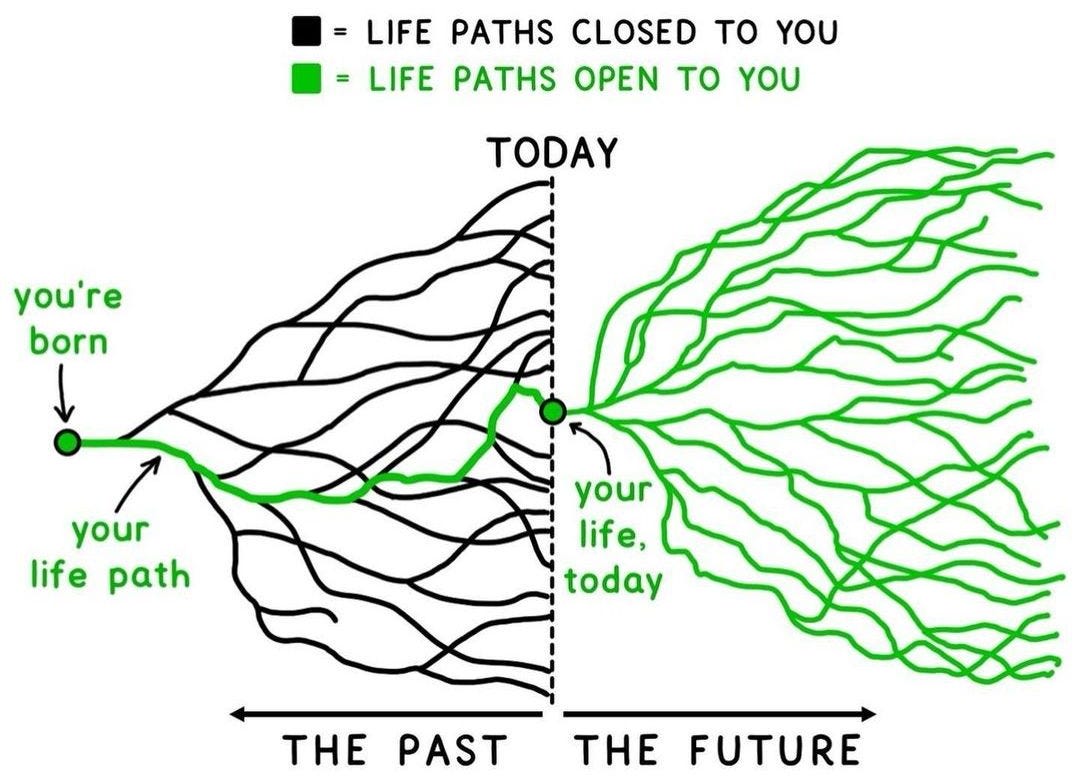
As we all know, the march of technological progress is best summarized by this meme from Linkedin:
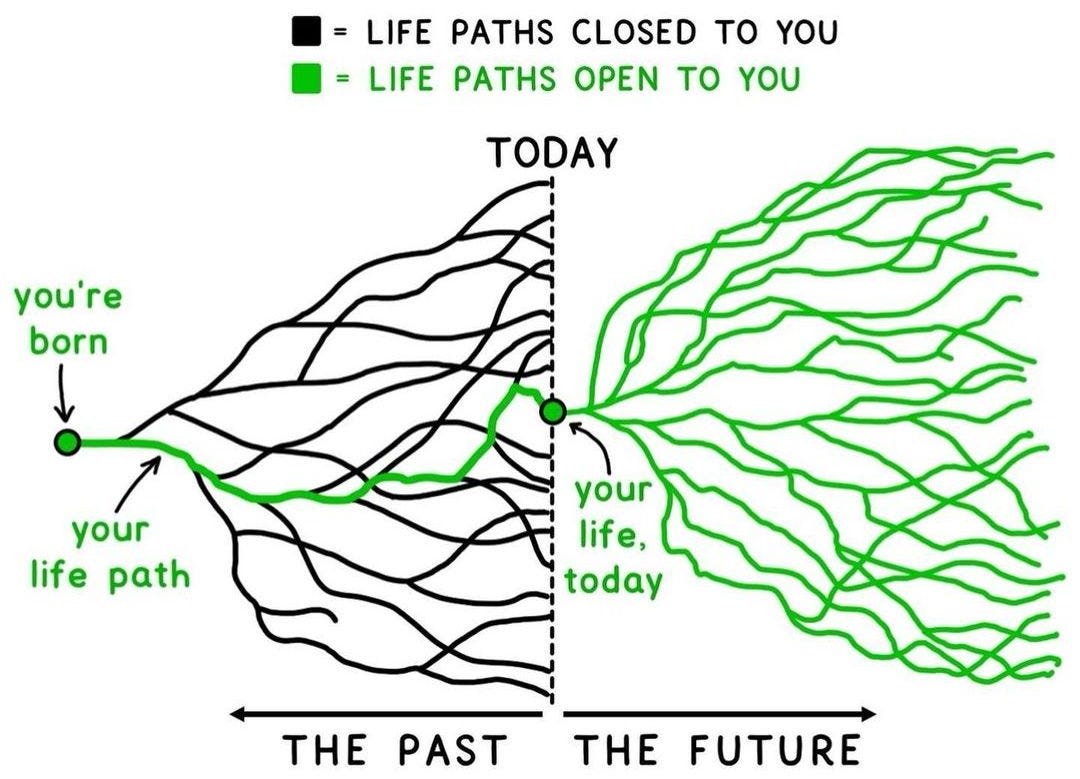
Inventors constantly come up with exciting new inventions, each of them with the potential to change everything forever. But only a fraction of these ever establish themselves as a persistent part of civilization, and the rest vanish from collective consciousness. Before shutting down forever, though, the alternate branches of the tech tree leave some faint traces behind: over-optimistic sci-fi stories, outdated educational cartoons, and, sometimes, some obscure accessories that briefly made it to mass production before being quietly discontinued.
The classical example of an abandoned timeline is the Glorious Atomic Future, as described in the 1957 Disney cartoon Our Friend the Atom. A scientist with a suspiciously German accent explains all the wonderful things nuclear power will bring to our lives:
Sadly, the glorious atomic future somewhat failed to materialize, and, by the early 1960s, the project to rip a second Panama canal by detonating a necklace of nuclear bombs was canceled, because we are ruled by bureaucrats who hate fun and efficiency.
While the Our-Friend-the-Atom timeline remains out of reach from most hobbyists, not all alternate timelines are permanently closed to exploration. There are other timelines that you can explore from the comfort of your home, just by buying a few second-hand items off eBay.
I recently spent a few months in one of these abandoned timelines: the one where the microwave oven replaced the stove.
First, I had to get myself a copy of the world’s saddest book.
Microwave Cooking, for One
Marie T. Smith’s Microwave Cooking for One is an old forgotten book of microwave recipes from the 1980s. In the mid-2010s, it garnered the momentary attention of the Internet as “the world’s saddest cookbook”:

To the modern eye, it seems obvious that microwave cooking can only be about reheating ready-made frozen food. It’s about staring blankly at the buzzing white box, waiting for the four dreadful beeps that give you permission to eat. It’s about consuming lukewarm processed slop on a rickety formica table, with only the crackling of a flickering neon light piercing through the silence.
But this is completely misinterpreting Microwave Cooking for One’s vision. Two important pieces of context are missing. First – the book was published in 1985. Compare to the adoption S-curve of the microwave oven:
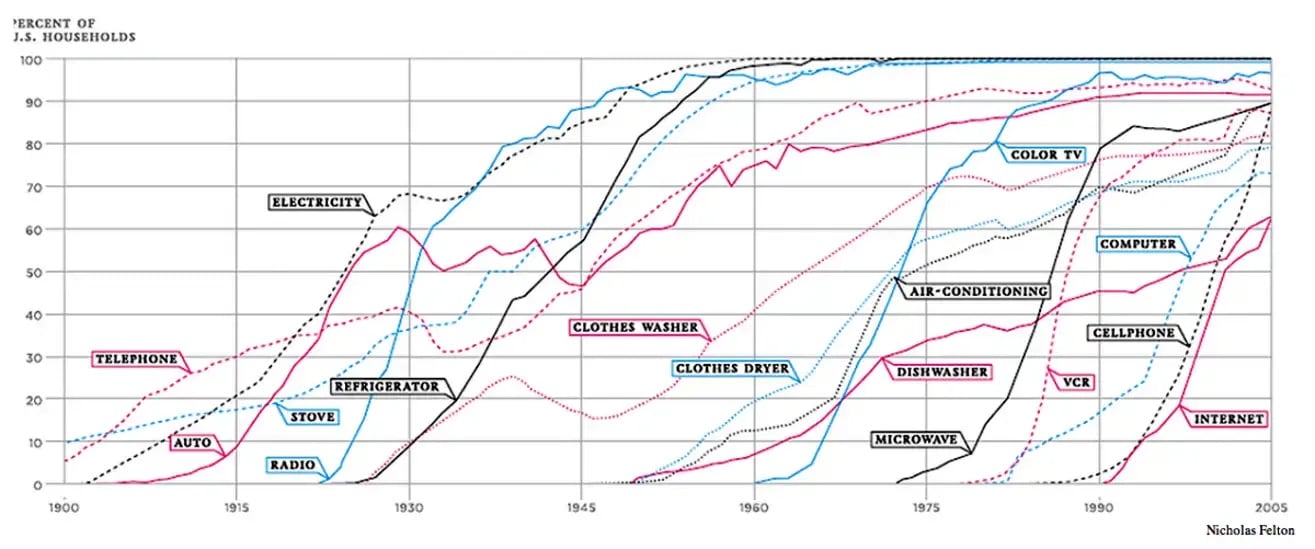
When MCfO was published, microwave cooking was still a new entrant to the world of household electronics. Market researchers were speculating about how the food and packaging industries would adapt their products to the new era and how deep the transformation would go. Many saw the microwave revolution as a material necessity: women were massively entering the workforce, and soon nobody would have much time to spend behind a stove. In 1985, the microwave future looked inevitable.
Second – Marie T. Smith is a microwave maximalist. She spent ten years putting every comestible object in the microwave to see what happens. Look at the items on the book cover – some are obviously impossible to prepare with a microwave, right? Well, that’s where you’re wrong. Marie T. Smith figured out a way to prepare absolutely everything. If you are a disciple of her philosophy, you shouldn’t even own a stove. Smith herself hasn’t owned one since the early 1970s. As she explains in the cookbook’s introduction, Smith believed the microwave would ultimately replace stove-top cooking, the same way stove-top cooking had replaced campfire-top cooking.
So, my goal is twofold: first, I want to know if there’s any merit to all of these forgotten microwaving techniques. Something that can make plasma out of grapes, set your house on fire and bring frozen hamsters back to life cannot be fundamentally bad. But also, I want to get a glimpse of what the world looks like in the uchronia where Marie T. Smith won and Big Teflon lost. Why did we drift apart from this timeline?
Out of the frying pan, into the magnetron
Before we start experimenting, it’s helpful to have a coarse intuition of how microwave ovens work. Microwaves use a device called a magnetron to emit radiation with wavelengths around 5-10 cm, and send it to bounce around the closed chamber where you put your food. The idea that electromagnetic radiation can heat stuff up isn’t particularly strange (we’ve all been exposed to the sun), but microwaves do it in an odd spooky way. Microwaves’ frequency is too low to be absorbed directly by food molecules. Instead, it is just low enough that, in effect, the electric field around the molecules regularly changes direction. If the molecules have a dipole moment (as water does), they start wiggling around, and the friction generates plenty of heat.
As far as I can tell, this kind of light-matter interaction doesn’t occur to a noticeable degree anywhere on Earth, except in our microwave ovens. This is going to be important later: the microwave is weird, and it often behaves contrary to our day-to-day intuitions. (For example, it’s surprisingly hard to melt ice cubes in the microwave. This is because the water molecules are locked in a lattice, so they can’t spin as much as they would in a liquid.) Thus, to tame the microwave, the first thing we’ll need is an open mind.
With that in mind, let’s open the grimoire of Microwave Cooking for One and see what kind of blood magic we can conjure from it.
The book cover, with its smiling middle-aged woman and its abundance of provisions, makes it look like it’s going to be nice and wholesome.
It’s not going to be nice and wholesome.
Microwave cooking is not about intuition. It’s about discipline. The timing and the wattage matter, but so do the exact shape and size of the vessels. Smith gives us a list of specific hardware with exceedingly modern names like the Cook’n’Pour® Saucepan or the CorningWare™ Menu-ette® so we can get reproducible results. If you were used to counting carrots in carrot units, that has to stop – carrots are measured in ounces, with a scale, and for volume you use a metal measuring cup. Glass ones are simply too inaccurate for where we are going.
The actual recipe section starts with the recipe for a bowl of cereal, which I am 70% sure is a joke:
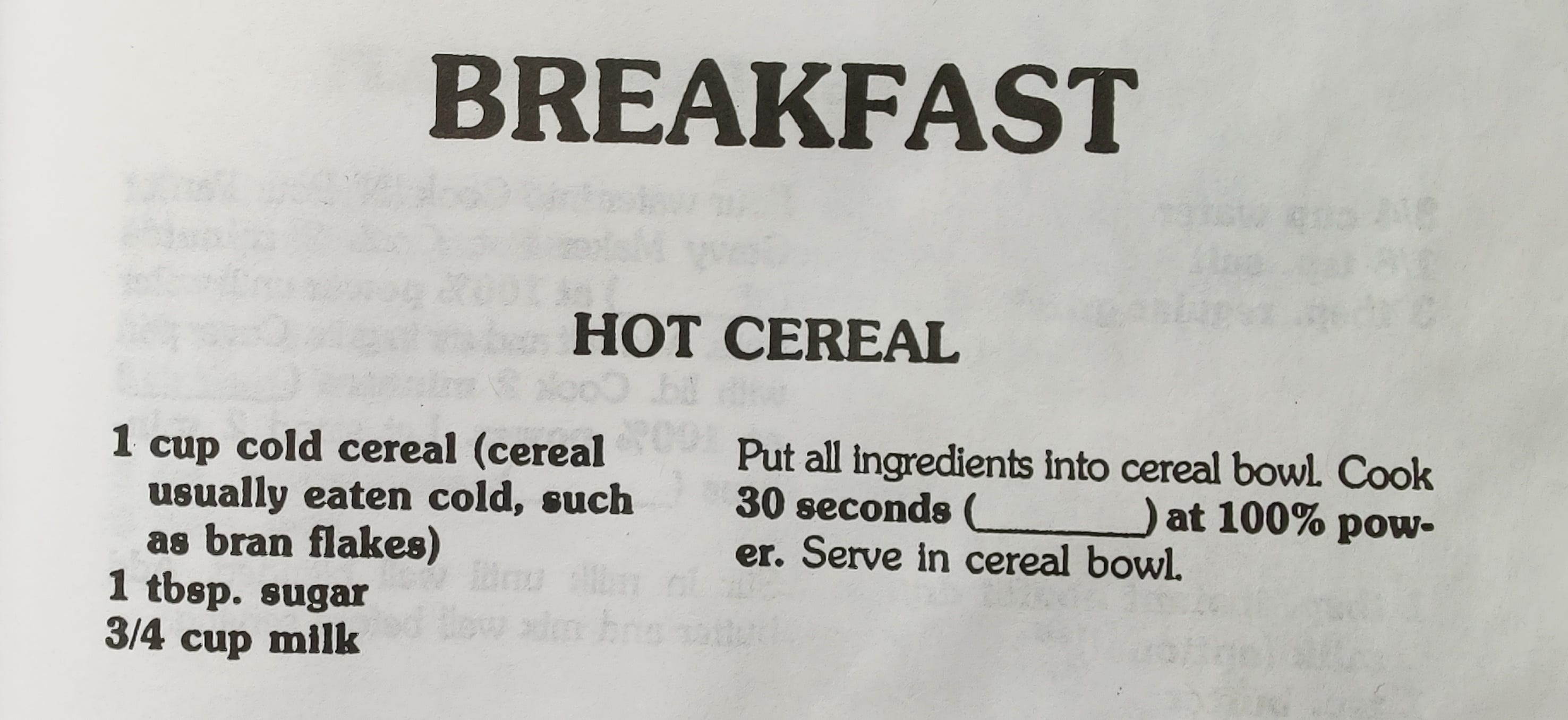
Whenever a cooking time is specified, Smith includes “(____)” as a placeholder, so you can write in your own value, optimized for your particular setup. If your hot cereal is anything short of delicious, you are invited to do your own step of gradient descent.
A lot of recipes in the book involve stacking various objects under, above, and around the food. For vegetables, Smith generally recommends slicing them thinly, putting them between a cardboard plate and towel paper, then microwaving the ensemble. This works great. I tried it with onion and carrots, and it does make nice crispy vegetables, similar to what you get when you steam the vegetables in a rice cooker (also a great technique). I’d still say the rice cooker gives better results, but for situations where you absolutely need your carrots done in under two minutes, the microwave method is hard to beat.
But cardboard contraptions, on their own, can only take us this far. They do little to overcome the true frontier for microwave-only cooking: the Maillard Reaction.Around 150°C, amino acids and sugars combine to form dark-colored tasty compounds, also known as browning. For a good browning, you must rapidly reach temperatures well above the boiling point of water. This is particularly difficult to do in a microwave – which is why people tend to use the microwave specifically for things that don’t require the Maillard reaction.
But this is because people are weak. True radicals, like Marie T. Smith and myself, are able to obtain a perfectly fine Maillard reaction in their microwave ovens. All you need is the right cookware. Are you ready to use the full extent of microwave capabilities?
Tradwife futurism
In 1938, chemists from DuPont were trying to create a revolutionary refrigerant, when they accidentally synthesized a new compound they called teflon. It took until the early 1950s for the wife of a random engineer to suggest that teflon could be used to coat frying pans, and it worked. This led to the development of the teflon-coated frying pan.
In parallel, in 1953, chemists from Corning were trying to create photosensitive glass that could be etched using UV light, when they accidentally synthesized a new compound they called pyroceram. Pyroceram is almost unbreakable, extremely resistant to heat shocks, and remarkably non-sticky. Most importantly, the bottom can be coated with tin oxide, which enables it to absorb microwave radiation and become arbitrarily hot. This led to the development of the microwave browning skillet.
In the stove-top timeline where we live, the teflon-coated pan has become ubiquitous. But in the alternate microwave timeline, nobody has heard of teflon pans, and everybody owns a pyroceram browning skillet instead.
I know most of you are meta-contrarian edgelords, but nothing today will smash your Overton window harder than the 1986 cooking TV show Good Days, where Marie T. Smith is seen microwaving a complete cheeseburger on live TV using such a skillet.

I acquired mine second-hand from eBay and it quickly became one of my favorite objects. I could only describe its aesthetics as tradwife futurism. The overall design and cute colonial house drawings give it clear 1980s grandma vibes, but the three standoffs and metal-coated bottom give it a strange futuristic quality. It truly feels like an object from another timeline.

The key trick is to put the empty skillet alone in the microwave and let it accumulate as much heat as you desire[1] before adding the food. Then, supposedly, you can get any degree of searing you like by following the right sequence of bleeps and bloops.
According to Marie Smith, this is superior to traditional stove-top cooking in many ways – it’s faster, consumes less energy, and requires less effort to clean the dishes. Let’s try a few basic recipes to see how well it works.
You’ll microwave steak and pasta, and you’ll be happy
Let’s start with something maximally outrageous: the microwaved steak with onions. I’d typically use olive oil, but the first step in Smith’s recipe is to rub the steak in butter, making this recipe a heresy for at least three groups of people.
The onions are cooked with the veggie cooking method again, and the steak is done with a masterful use of the browning skillet.
I split the meat in two halves, so I could directly compare the orthodox and heretical methods.[2] The results were very promising. It takes a little bit of practice to get things exactly right, but not much more than the traditional method. The Pyroceram pan was about as easy to clean as the Teflon one. I didn’t measure the energy cost, but the microwave would probably win on that front. So far, the alternate timeline holds up quite well.
As a second eval, I tried sunny-side up eggs. On the face of it, it’s the simplest possible recipe, but it’s surprisingly hard to master. The problem is that different parts of the egg have different optimal cooking temperatures. Adam Ragusea has a video showcasing half a dozen techniques, none of which feature a microwave.
What does Marie Smith have to say about this? She employs a multi-step method. Like with the steak, we start by preheating the browning skillet. Then, we quickly coat it with butter, which should instantly start to boil. This is when we add the egg, sprinkle it lightly with water, and put it back in the oven for 45 (___) seconds. (Why the water sprinkling? Smith doesn’t explain. Maybe it’s meant to ensure the egg receives heat from all directions?)
Here again, I was pleased with the result – I’d go as far as saying it works better than the pan. With that success, I went on to try the next step of difficulty: poached eggs.
Poached eggs are my secret internal benchmark. Never in my life have I managed to make proper poached eggs, despite trying every weird trick and lifehack I came across. Will MCfO break my streak of bad luck?
Like for veggies, the egg is poached in the middle of an assemblage of multiple imbricated containers filled with specific amounts of water and pre-heated in a multi-step procedure. We are also told that the egg yolk must be punctured with a fork before cooking. (What happens if you don’t? The book doesn’t say, and I would rather not know.)
The recipe calls for 1 minute and 10 seconds of cooking at full power. Around the 1 minute and 5 seconds mark, my egg violently exploded, sending the various vessels to bounce around the walls of the oven. And listen, as I said, I came to this book with an open mind, but I expect a cookbook to give you at least enough information to avoid a literal explosion. So I wrote “LESS” in the “(____)” and never tried this recipe again.
The rest of the book is mostly made of variations of these basic methods. Some recipes sound like they would plausibly work, but were not interesting enough for me to try (for example, the pasta recipes primarily involve boiling water in the microwave and cooking pasta in it).
All in all, I think I believe most of the claims Smith makes about the microwave. Would it be possible to survive in a bunker with just a laptop, a microwave and a Cook’n’Pour SaucePan®? I think so. It probably saves energy, it definitely saves time washing the dishes, and getting a perfect browning is entirely within reach. There were failures, and many recipes would require a few rounds of practice before getting everything right, but the same is true for stove-top cooking.
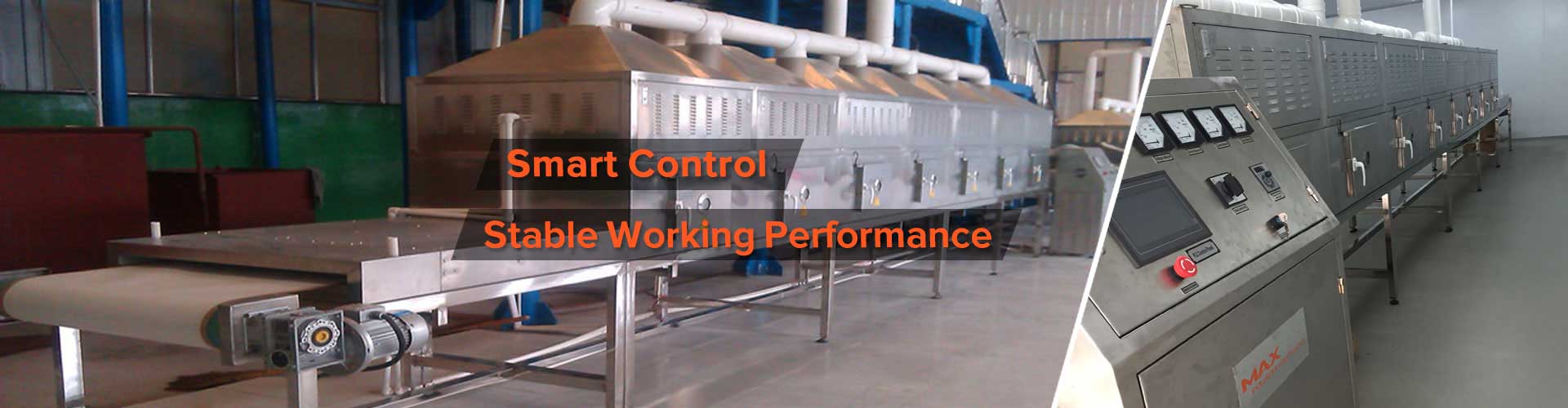
On the other hand, there’s a reason the book is called Microwave Cooking for One and not Microwave Cooking for a Large, Loving Family. It’s not just because it is targeted at lonely losers. It’s because microwave cooking becomes exponentially more complicated as you increase the number of guests. I am not saying that the microwave technology in itself cannot be scaled up – if you really want to, it can:
you are not a true pro-natalist
But these industrial giant microwaves are processing a steady stream of regular, standard-sized pieces of food. Homecooking is different. Each potato comes in a different size and shape. So, while baking one potato according to MCfO’s guidance is easy and works wonderfully, things quickly get out of hand when you try baking multiple potatoes at the same time. Here is the sad truth: baking potatoes in the microwave is an NP-hard problem. For a general-purpose home-cooking technology, that’s a serious setback.
The weird thing is, the microwave maximalists of the 1980s got the sociology mostly right. People are preparing meals for themselves for longer and longer stretches of their lives. Women are indeed spending less time in the kitchen. The future where people cook For One – the one that was supposed to make the microwave timeline inevitable, arrived exactly as planned. And yet, the microwave stayed a lowly reheating device. Something else must be going on. Maybe the real forking path happened at the level of vibes?
Microvibes
To start with the obvious, the microwave has always been spooky, scary tech. Microwave heating was discovered by accident in 1945 by an engineer while he was developing new radar technologies for the US military. These are the worst possible circumstances to discover some new cooking tech – microwave manufacturers had to persuade normal civilians, who just watched Hiroshima on live TV, to irradiate their food with invisible electromagnetic waves coming from an object called “the magnetron”. Add that to the generally weird and counterintuitive behavior of food in the microwave, and it’s not surprising that people treated the device with suspicion.
Second, microwave cooking fell victim to the same curse that threatens every new easy-to-use technology: it became low-status tech. In Inadequate Equilibria, Eliezer makes a similar point about velcro: the earliest adopters of velcro were toddlers and the elderly – the people who had the most trouble tying their shoes. So Velcro became unforgivably unfashionable. I think a similar process happened with microwaves. While microwave ovens can cook pretty much any meal to any degree of sophistication, the place where they truly excel is reheating shitty canned meals, and soon the two became inseparable in the collective mind, preventing microwaves from reaching their full potential for more elaborate cuisine.
Third, compared to frying things in a pan, microwave cooking is just fundamentally less fun. I actually enjoy seeing my food transform into something visibly delicious before my eyes. But microwave cooking, even when done perfectly right, gives you none of that. You can still hear the noises, but not knowing what produced them makes them significantly more ominous. Some advanced recipes in MCoF call for 8 minutes at full power, and 8 minutes feel like a lot of time when you are helplessly listening to the monstrous anger of the oil, the stuttering onions’ rapid rattle, and the shrill, demented choirs of wailing pork ribs.
With all that said, I do think Microwave Cooking for One is an admirable cookbook. The recipes are probably not the finest cuisine, but they’ll expand your cooking possibilities more than any other recipe book.[3] What I find uniquely cool about Marie T. Smith is that she started with no credentials or qualifications: she was a random housewife who simply fell in love with a new piece of technology, spent a decade pushing it to its limits, and published her findings as a cookbook. Just a woman and a magnetron. You can just explore your own branch of the tech tree!
Let’s not oversell it – if your reference class is “tech visionaries”, maybe that’s taking it a bit too far. If your reference class is “Middle-aged Americans from the eighties who claim they can expand your horizons using waves”, then Marie T. Smith is easily top percentile.
Read the original article

Comments
> It’s about staring blankly at the buzzing white box, waiting for the four dreadful beeps that give you permission to eat.
I thought it was near universal that everybody staring at the microwave was engaged in a game of chicken where you try to open the door as close to zero as possible while preventing the beeps.
The beeps must not sound.
I have no idea why it’s important to prevent the beeps, but it feels like a deep primal compulsion. Our ancestors must have learned that the beeps attracted sabretooth tigers or something
By nandomrumber 2026-02-235:302 reply Just be careful doing this if there’s a radio telescope nearby:
However, about 25 FRBs detected mainly by the Parkes Radio Telescope and a few other observatories presented signatures that were very different. Although they covered a wide frequency range just like the other FRBs, the frequency-time structures of many of these events defied any physical model, and they did not show differences in the arrival times between the higher frequencies and the lower frequencies of the burst. Also, the location of these FRBs was difficult to pinpoint; the radiation seemed to come from all directions. The Parkes astronomers, mystified, dubbed these "abnormal" FRBs "perythons" after a mythical figure invented by the Argentinian author Jorge Luis Borges. The perythons’ signatures caused astronomers to doubt the extragalactic origin of FRBs [PDF] althogether. They might originate on or nearby Earth, the scientists began to believe, and some astronomers even suggested that these strange bursts might be produced by extraterrestrial civilizations.
Not long after focusing their attention on the perythons, the Parkes astronomers noticed that these FRBs seemed to take off during weekends. In 2014, they installed a radio frequency interference monitor at the observatory and decided that the culprits were probably some microwave ovens inside the observatory building. Tests with these microwave ovens yielded nothing—they emitted no radio pulses while they were running. The astronomers were flummoxed—that is, until one of the testers, during a third attempt, opened the door of a microwave oven before the magnetron was shut off by the timer.
https://spectrum.ieee.org/microwave-ovens-posing-as-astronom...
I know it's silly, but I always used to open the microwave door to stop it, and since reading that story, these days I always stop the microwave with the 'stop' button before opening the door. Just in case. :)
I heard a story from someone whose relative was in the Korean War - apparently people manning radar stations used to warm up by getting in between some microwaves. I just looked it up and the danger isn't cancer - but you stay too long you can get unexpectedly cooked (particularly eyes) because your body isn't detecting being warmed up like that.
By louky 2026-02-2320:35 My Grandfather was around in the early days, had a ham call sign from the early 1930s and was involved in the Manhattan Project as a senior non-scientific engineer.
He was also involved in the development of radar/microwave comms after the war.
He and colleagues did the same - warming their hands in front of microwave antennae.
He developed and later died of some unknown neurological issues related to nerve transmission in the early 1990s. He had been exposed to so many different possible dangers that it's impossible to tell.
After he died I helped clean out and save/donate the double-garage full of ham equipment and home-built telescopes - one was ~.75metre diameter and ~3 metres long, just huge - I was just a teen and let most of it go as my grandmother didn't care by then.
There were also many containers of classified documents, related to WWII and after. Those were appropriately dealt with.
I've always HAD microwaves but have been aware of the issues. I'm a ham as well and still occasionally use the morse key he gave me when I was 7. Still miss him, he taught me so much.
72s
By ceejayoz 2026-02-2316:53 https://en.wikipedia.org/wiki/Percy_Spencer
> According to legend, one day while building magnetrons, Spencer was standing in front of an active radar set when he noticed the candy bar he had in his pocket melted. Spencer was not the first to notice this phenomenon, but he was the first to investigate it. He decided to experiment using food, including popcorn kernels, which became the world's first microwaved popcorn. In another experiment, an egg was placed in a tea kettle, and the magnetron was placed directly above it. The result was the egg exploding in the face of one of his co-workers, who was looking in the kettle to observe. Spencer then created the first true microwave oven by attaching a high-density electromagnetic field generator to an enclosed metal box. The magnetron emitted microwaves into the metal box blocking any escape and allowing for controlled and safe experimentation. He then placed various food items in the box, while observing the effects and monitoring temperatures. There are no credible primary sources that verify this story.
Seriosly? They leak emissions if you OPEN THE DOOR WHILE ITS RUNNING?
I thought they were actually, like, certified? How can this not have been tested and fixed... shutting down the magnetron can not take long, right? Making it react fast enough doesnt feel like an intractable problem at all!
By WorldMaker 2026-02-2317:111 reply Having been trained to listen to the hum of the magnetron for several reasons (among them: it affects how popcorn pops and if you are in lunch room setting with a complete mixture of models you have to listen to know which sort of microwave you "lucked" into that day and adapt to its challenges to avoid burning popcorn) it takes a surprising amount of time for even a good one to spin up to full speed as much as a quarter second. As microwaves age or get cheaper some of them take a full wall clock second or two. Some of the cheap models even lie to you and don't start their own timers until after the magnetron hits full speed.
Something that becomes more apparent the more you listen (but also if you actually pay attention to diagrams of how a microwave works): the magnetron is a spinning thing with its inertia. Even if you immediately cut power to it, it still spins on its own for some amount of time. Given how much energy and wall clock time it takes to spin up to full speed, it shouldn't be surprised it needs similar wall clock time, if not energy to full stop.
But also, yeah the door pull sensor is a classic analog latch detector that has a slower sensing time than a button would by its very nature (and trying to avoid false positives from a loose/vibrating door). It's an easy thing to cut corners on and some sensors are worse than others.
(And also, safety certifications include a margin of error that it still "generally regarded as safe", what's a few extra microwaves escaping into your body among friends as long as it isn't full power?)
By estimator7292 2026-02-2322:51 Ackshully that's not strictly true. Some (very) old models did not rotate the food, but instead rotated the microwave emitter in the top of the cavity.
By WorldMaker 2026-02-2320:19 As a first approximation of referring to magnetic fields and their flux and inertia, "spins" is still a useful and common word for that. But yes, not necessarily the best technically correct word.
If I'm understanding the paper correctly, the bursts had a mean duration of 0.14 seconds, which for a 1000 W microwave would expose you to 140 joules, enough to heat about a shot's worth of water by 1°C. Seems plenty fast to me.
By rnhmjoj 2026-02-2316:37 The magnetron itself has about about 65% efficiency, but the paper conjectures that the longer duration of the pulses is due to defects in the cavity that result in some emission at a lower frequency (1.4 rather than the normal 2.4 GHz), so the energy radiated must be a tiny fraction of the nominal power.
By mlyle 2026-02-2318:44 This assumes all the energy is leaked when you open the door, and that the power is constant rather than ramping down. I'm guessing a -lot less- leaks than this.
(And, of course, you don't absorb all of what leaks).
Those extremely rare moments when you open the door literally on zero, with no sound, and the display showing 0s, are like half of the reason I use a microwave. Man vs machine at its most visceral, it makes me feel alive
The only thing that comes close is trying to stop the fuel pump on a nice round dollar amount.
By nakedneuron 2026-02-235:281 reply Supermarket checkout with a round amount feels like winning some lottery, admittedly.
By SpaceNoodled 2026-02-239:281 reply You'd think that it would happen around 1% of the time, but it doesn't seem to.
By randallsquared 2026-02-2317:321 reply Prices aren't random, after all.
By SpaceNoodled 2026-02-2416:101 reply Yes, but how random is the number of items purchased?
By randallsquared 2026-02-250:05 Not, even if you only consider between one and a hundred, it'll be strongly tilted toward low numbers, which means that prices, which are typically like X.49 or X.99 or more rarely X.00, will often float in the aggregate in the 40s or 90s before sales taxes in places that have them. So, if there is no sales tax, one would expect a strong band just under $1 or 50 cents, and if there are, it'll be more complicated, but still not evenly distributed across all possible cents.
I’m half-expecting a Therac-25 situation in those edge-case operating moments, but then remember that microwave ovens, unlike the Therac-25, have physical interlocks to prevent open-door operation.
By taneq 2026-02-238:33 You really don't want to succeed in faking it out, though. Not because it'll microwave you, but because part of the safety mechanism is a fuse that blows if the door is open while the magnetron is on.
I remember having some microwave oven that started rotating if I opened the door partially at just the right angle. Hopefully does not mean the magnetron was actually running.
By mkbosmans 2026-02-257:03 That seems to be due to he microcontroller using its pins in duplex. There is indeed no radiation being emitted in that case, just the lamp and rotation.
By japanuspus 2026-02-238:033 reply I completely agree in the game of chicken. Usually I spend the time up to T-3s wondering how the crazy beepers on microwave ovens is still a thing, generations after the novelty has worn of.
I can sort of understand why beepers where a cool sales gimmick back when the microwave was the only appliance with a micro controller, but really -- it doesn't make sense: Firstly, immediate attention is not critical when the time is up: unlike a stove or an oven, energy transfer stop the moment the magnetron is de-energized. Secondly, the microwave (at least my microwave) is not exactly silent: if you are not deaf, chances are you can easily tell when it is done.
Maybe I should apply the Joe-treatment from my old lab: whenever there was a new shipment of frequency meters for the lab (we always needed more), Joe would meticulously unbox them and stick a pointed screw-driver through all the piezo buzzers to make sure the would never make a sound.
[Edit] microtron (sic) -> magnetron
By pjc50 2026-02-2311:51 My rice cooker has solved this: it plays a pleasant little tune, once, at almost inaudible volume, and then shuts up while keeping the rice warm.
By mrguyorama 2026-02-2318:581 reply >Usually I spend the time up to T-3s wondering how the crazy beepers on microwave ovens is still a thing, generations after the novelty has worn of.
Because, for at least 40 years, it has always been something you can turn off. It's like two sentences in the manual. They often have more options than off/on too.
It's astonishing to me how often people own something, don't read the manual, and then complain about something that already exists.
I read every instruction manual I ever had access to. There used to be tons of great info in them, niche use cases explained clearly, things to watch out for, how to know if it needs maintenance etc.
But nobody every read it, so now manuals have nothing, and the people who used to be paid to write all that important info are gone, and all the features they helped sell and the quality they helped emphasize is gone. I'm so sad.
By toast0 2026-02-2319:40 The problem with turning it off is they usually don't keep the settings when you have a power outage, and often not even a power flicker. So then you need to remember to set it every time it loses power... pretty soon you just give in and open the door as the time expires.
By AlecSchueler 2026-02-238:471 reply Or why there's not just a switch you can flip to turn the ring off or on.
By TheCoreh 2026-02-2314:30 Many microwave models have this. It's either a dedicated button or holding a specific button down
My microwave beeps regardless. It beeps with every button push. It beeps when the door is opened. It beeps when the door is not opened. I swear I heard it beep unplugged in the garden just now
By TheFlyingFish 2026-02-240:37 I once managed to trigger what I think was a race condition in a microwave's beep routine. It was one of the type that does a single long beep rather than individual beeps, and like most it would cut the beep short when you opened the door. But one time, one single time, I managed to open the door PRECISELY as the timer finished, and the beep just didn't stop. I finally closed and opened the door after maybe 30 seconds, and that stopped it.
I was never able to trigger it again, so I have no idea whether it was a race condition or some other random one-in-a-million happenstance, but it makes a fun theory at least.
By ragazzina 2026-02-2314:49 Only the people who grew up with microwaves are obsessed with the beep. For most of my life I didn't have one but wanted one, now I own one and let it sing.
By jihadjihad 2026-02-2315:101 reply > try to open the door as close to zero as possible while preventing the beeps
To go easy on the door switches, which operate at high voltage and can wear down if they're being used to break the circuit on every run, it's better to press the Stop/Cancel button instead.
But believe me, it is a hard, hard habit to break.
By SkyMarshal 2026-02-241:00 I thought the microwave beeps several times to ensure the radiation has completely dissipated from the chamber before you open it. I always let it beep and then some.
By SAI_Peregrinus 2026-02-2319:00 I hate machines that beep at me. I disable them wherever I can. My current & previous microwave have both had a built-in method to turn off the beeps, yours might too (check the manual). For devices which are safer to open than microwaves that lack such a setting, physical removal of the piezo buzzer works.
By parliament32 2026-02-2317:46 In my head, the old CS "counter-terrorist win" soundbyte plays every time.
By Cthulhu_ 2026-02-2315:57 The gamification of microwaves and food preparation has gone TOO FAR!
...or not far enough, if there's anything that a smart microwave would have any benefit it would be this, lol.
By paul_h 2026-02-2316:17 no_unused_seconds_meme.jpg
You know that you can remove the piezo beeper from the microwave, right? Or add a series resistor to lower the volume.
This defeats your training to achieve zero with no beep though, a valuable skill when dealing with any appliance with a timer that beeps.
By Rooster61 2026-02-2315:47 I pity the poor bastard that lets this skill atrophy, then finds themselves unable to hit a round number while pumping gas
By throwaway2037 2026-02-239:102 reply
I am really laughing at this one. You got me good. This is either some kind of farming game where I need to "unlock" a valuable skill... ("training" makes me think of NES Super Marios Brothers 3 with the slot machine game after each level), or a skill that I need to add to my LinkedIn profile to check if anyone is reading it. (I recall years ago two guys adding recommendations to each other's profiles with very funny and implausible notes to see if anyone was looking. Does anyone remember that?)> a valuable skillBy toast0 2026-02-2319:49 > NES Super Marios Brothers 3 with the slot machine game after each level
a) It's either Super Mario Brothers or Super Marios Brother
b) SMB2 (aka Super Mario USA in Japan) has the Bonus Chance slot machine after each level, SMB3 does have the Goal card at the end of each level with a match 3 mechanic, but I don't consider that to really be a slot machine.
By anarticle 2026-02-2318:35 I used to endorse people for "spiritual warfare". Sadly they removed this feature, and now my friends can't show off their skills.
By db48x 2026-02-237:18 You can remove the buzzers from all of your appliances and then live in bliss.
Removing an offensive buzzer or beeper or overbright LED is far more satisfying. Plus, nobody can trivially unmute the thing.
But that said, I wouldn’t mind a microwave that could be quieted without completely muting it. They could mute the buttons but still let it beep once when a timer or cooking cycle finishes. On the other hand I have a phone that I can time things with, so I’m not really looking to replace my microwave merely for that.
By ErroneousBosh 2026-02-2311:49 Microwaves that don't beep after 1930 so that $small_child doesn't hear you dinging a bag of popcorn and get out of bed to come downstairs for some to be confronted by whatever scary-ass film you're watching once they've gone to bed.
Edit: file under "design problems you didn't know you had until you became a parent"
By nandomrumber 2026-02-235:372 reply What? No way!
<checks YouTube>
What!
I guess I should have read the docymantasion.
By fractallyte 2026-02-238:241 reply Your last word brought to mind the science fiction short, "Come You Nigh: Kay Shuns" by Lawrence A. Perkins, which used exactly this technique as an encryption method!
Analog SF, April 1970 - available here: https://www.luminist.org/archives/SF/AN.htm
(BTW, that site is one of the hidden treasures of the Internet, on a par with Archive or Wikipedia...)
By nandomrumber 2026-02-2311:33 It’s also the handle of the poster who’s comment I replied to 8)
By XorNot 2026-02-238:41 YouTube and Google are very confident this feature exists but drilling down to my model the answer is no it does not.
I think I'm getting the screwdriver out this weekend.
I'm surprised no one has mentioned inverter microwaves. Unlike plain old regular microwaves where power settings just adjust the time that the magnetron is running at full blast the inverter ones can actually change the power of the magnetron. Makes it tons easier to cook food evenly and calmly. Never am I buying again one without.
It's kinda hard to find them though. Most manufacturers hardly list this but Bosch seems to have inverters in most of their mid and higher-end ones. My favourite is the Bosch BFL634GB1. Bosch BFL7221B1 was a huge downgrade due to the shitty touch screen and wheel along with a multi-second boot time.
This explains a lot, American microwaves have these settings for different types of food etc, it seems most people throw something in and just 'nuke it'. European microwave ovens on the other hand, have a setting for different wattages (90W up to 720W 'Max' in my case), which, combined with instructions in the recipe or on the box, provide the right setting for this particular food.
By notachatbot123 2026-02-2311:002 reply Are you sure that European microwaves actually use continuous power at those wattages and not also "simulate" the wattage by using short bursts of a fixed power?
By adrian_b 2026-02-2311:32 Some have inverters for continuous power adjusting, others turn on and off the magnetron.
In any case, all that I have ever used have 2 dials, one for power and one for time (and a button to allow to chain multiple time intervals, each with a different power level). I have always used only these 2 dials and I have never used any other buttons that may exist for preset programs.
For many years I have used microwave ovens only for reheating food. Now I consider that I was stupid and I cook all the food that I eat in a microwave oven, from raw ingredients.
This is much better than by traditional means, because it is much faster and perfectly reproducible. Moreover, cooking in a microwave oven removes the need for continuous or periodic stirring that is required in many traditional cooking methods, because the microwave-cooked food is homogeneous (without lumps etc.) even with no stirring, if the time and power level are chosen correctly.
By ahartmetz 2026-02-2311:28 They switch the magnetron on and off, unless they have inverters I guess. I have seen the two knob ones (and I prefer these) and the fancy ones, which all have cryptic user interfaces and usually no manual next to them.
By cwmma 2026-02-2313:53 American microwaves almost always have a fairly easy way to change the power level, it's just nobody bothers to use it.
Rtings has a post saying that they aren't effective: https://www.rtings.com/microwave/learn/research/microwave-in...
Curious to hear more about your personal experience
By margalabargala 2026-02-2315:034 reply Read that and got to this ludicrous claim:
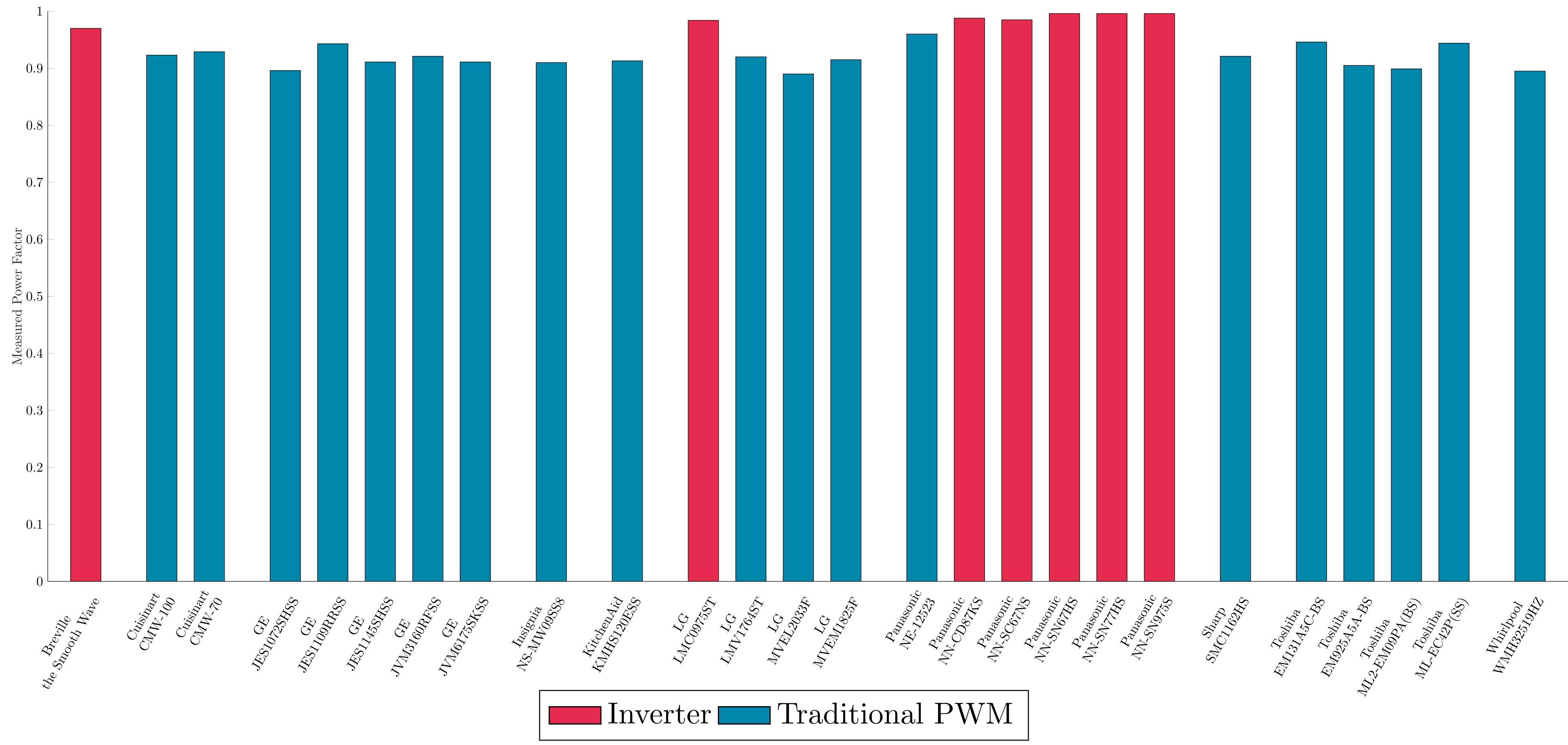
> The inverter models are marginally better at converting the total power they draw from an outlet (the apparent power) to useful work (the active power). However, your residential electricity bill is calculated based on active power use, so an inverter microwave won't save you any money.
If any power company has the ability, much less the inclination, to not charge you for your appliances waste heat that would be news to me.
This is referring to active vs reactive power and the concept of power factor [1]. You're still paying for all the real energy consumed (including waste heat). Inverter microwaves tend to have a higher power factor than traditional models (measured data [2]). Residential electricity bills are based on active energy (kWh), not apparent power or reactive components, so a better power factor by itself doesn’t lower your bill. We’ll take a look at the article to clarify it.
[1] https://en.wikipedia.org/wiki/Power_factor [2] https://www.rtings.com/assets/pages/hRDTskis/power-factors-l...
By margalabargala 2026-02-2417:15 Okay, this is a new concept for me so mind if I try explaining it to confirm I understand?
Inverter microwaves have an actual power consumption that more closely resembles what you see at the wall. Non-inverter microwaves will appear to draw more power from the wall than is actually delivered to food, but it doesn't matter that much, because that "extra" power is stored inductively in the magnetron, which gets returned to the grid when the microwave shuts off. There are some minor conversion losses from this, but not nearly as great as one might initially think looking at wall vs radiated power.
Is that correct?
By tired_star_nrg 2026-02-2317:312 reply I’m trying to figure out how they misinterpreted things to come up with that statement. Maybe they are mixing up start-up draw and constant draw? Idk
By estimator7292 2026-02-2322:55 Power factor is the only thing that makes any kind of sense to me. Utilities don't typically bill you for bad power factor unless you're an industrial power consumer.
I don't know offhand what the power factor of a microwave looks like, but I bet it's not great. I can see an inverter style having better power factor.
By margalabargala 2026-02-2320:31 Yeah, I have no idea. The article was published in late 2024, maybe they used a late 2024 LLM to help write it? Seems like the sort of confident-but-obviously-wrong mistake that was common back then.
By elil17 2026-02-246:57 Wow that's wild. I usually consider Rtings pretty reliable so that's a big surprise to me.
By Brian_K_White 2026-02-2417:15 Could they be talking about power factor? Still doesn't make sense anyway.
By tambre 2026-02-2413:26 I've found inverter microwaves for example useful when making porridge. A traditional one at 50% power blasting at full for 5 seconds makes it boil over, but on an inverter microwave 50% continuous heats it evenly and consistently such that it doesn't boil over. Sure you may be able to lower the traditional one so it does it even shorter steps but then it takes longer to get done or the result might be rather poor due to the inconsistent heating steps.
I also could never get traditional ones to heat potatoes well. Scalding hot on the outside, cold on the inside. With inverter ones it's simpler: just a lower power setting for longer.
I wonder why microwaves can't work like modern radio transmitters. Magnetrons generate ~2.4 GHz radio waves using resonance and a strong magnetic field acting on free electron orbits. That was necessary in the 1940s for radar transmitters. But today, solid state electronics generate 2.4 GHz (and higher) waves without any trouble - cf. WiFi and Bluetooth hardware. I'm not the first to have this question, and it looks like there is some ongoing work. https://www.digikey.com/en/blog/will-the-microwave-ovens-mag...
By ErroneousBosh 2026-02-2311:462 reply Because transistors for generating even very low microwaves like 2.4GHz are extremely expensive comparatively speaking, and don't produce much power. They're good, though, because you can produce very precisely tuned and modulated signals and very precisely controlled output powers - as long as they're less than a couple of watts.
A cavity magnetron is a block of metal with some holes drilled in, two bits of glass glued on, and all the air sucked out. They're hard to tune to exact frequencies and hard to regulate to exact powers, and modulation is as you've already discovered kind of limited to just turning them on and off - but they're extremely cheap to make, last a very long time, and require minimal support circuitry to generate double-digit kilowatts of RF.
You don't need to be cock on frequency to heat up a pie.
Now there are gallium nitride microwave transistors that can produce very high microwave power at very high efficiency. So that is no longer a limitation.
Microwave ovens with such transistors have been demonstrated, which have the advantage of modulating the microwaves in such a way as to achieve a more uniform heating throughout the oven, than can be achieved with the fixed-frequency magnetrons.
At least for now, such microwave ovens with transistors might be encountered only in some professional applications, because these transistors together with the associated control circuits remain much more expensive than magnetrons.
By ErroneousBosh 2026-02-2316:431 reply They would be ridiculously expensive compared to a cavity magnetron and have no real advantage though.
By adrian_b 2026-02-2318:20 They are ridiculously expensive, but there was an article in a magazine that said that a certain vendor of ready-to-eat food uses for cooking its food an industrial microwave oven with gallium nitride transistors instead of a magnetron.
Like I have said, the advantage of transistors is that it is easy to modulate in frequency the microwaves. This avoids to have standing waves inside the oven, which cause cold spots and hot spots, so they ensure that heating is uniform everywhere in the oven.
I assume that this advantage is more important for a big industrial oven, where many portions of food are cooked simultaneously and it is desired that all of them are cooked uniformly.
But for home users, magnetrons will not be replaced any time soon.
By ahartmetz 2026-02-2312:17 Ah, thanks, good to know. I thought solid state power electronics had come down in price more than they apparently did. I guess it's high frequency plus high power that's still expensive. For not so high frequencies (< 1 MHz), mass production for ubiquitous switched-mode power supplies and electric cars has surely brought down the price.
(Side note, modern very high power radio transmitters might also still use some vacuum tube technology - my latest information is that there's a slow transition going on)
By estimator7292 2026-02-2323:00 Magnetrons are cheap, reliable, and work well enough. Their one and only job is to produce energy at about 2.4GHz, and to make a lot of it. You merely put in electricity and through the magic of geometry you get RF out.
A transistorized solution is, simply, inappropriate. The RF section alone will cost more than an entire microwave off the shelf, and plus that you need all the control circuitry and high speed crap to generate a 2.4GHz tone. Not to mention that putting kilowatts through silicon creates a much higher risk of catastrophic failure: transistors blowing out into a plume of plasma and such.
You're asking why we haven't reinvented the wheel. There's simply no improvement to be had.
You want high power RF in a given frequency band, you want a magnetron. It's just a lump of iron with some wires. You don't need any electronics. At all.
By com2kid 2026-02-2318:51 I love inverter microwaves so much. I got a cheap one at Target for maybe $100 or so. I almost never use full power, typically I go for 50% or 60%. Food heats through evenly, every time.
I try and tell friends about it and they all think I am crazy. I've had more luck with induction cook tops, probably because there is more general buzz around them.
I really with Alex on Technology Connections would do a video on inverter microwaves to get the word out!
By fulafel 2026-02-2418:23 Why would it make a significant difference? On/off modulation intuitively seems likely to have the same effect.
By candiddevmike 2026-02-2311:391 reply Isn't that just the power % option? I don't think mine is fancy but I can adjust the power %
Unless you have an inverter microwave it simply adjusts the % of the time that the magnetron is turned on. So at 50% you will have the magnetron at full blast 700W for 5 seconds and then 5 seconds off (or similar timestemps). On older microwaves you may be able to hear the magnetron cycling between being on and off.
By tmp10423288442 2026-02-2317:44 I have a new microwave and can definitely hear the magnetron cycling, but it's a fairly subtle difference in sound.
I want a variable power ("inverter") microwave with two rotary knob. One for power, and one for timing.
I hate every microwave I have ever had the displeasure to operate during my lifetime, except the old stuff witn the teo mechanical knobs.
With a rotary encoder we can get second precision and minute granularity at the same time.
Is that time for a Kickstarter?
By adrian_b 2026-02-2311:40 I had until now (in Europe, for somewhat more than the last 2 decades) a couple of Panasonic microwave ovens.
Both of them match your description. They had some other buttons, which I have never used. Besides the 2 rotary knobs, I use 3 buttons: start, stop and a button for chaining multiple time intervals, each with a different power level.
I cook all the food that I eat in the microwave oven, from raw ingredients.
By Gibbon1 2026-02-2311:53 Breville BMO850BSS
By mietek 2026-02-2310:35 Sign me up!
By Animats 2026-02-234:57 Restaurants are doing more of this than most people think.
Here's an article from the head chef from a commercial microwave oven company, on how to get more done faster.[1] Commercial microwave ovens have about 2KW-3KW of power, and some of them have true variable power, not the on/off thing most home microwave ovens use. "I’ve shown teams how to make mug cakes, molten chocolate brownies, and steamed puddings with just a microwave. The reactions are always the same: "I had no idea a microwave could do that.”"
[1] https://totalfood.com/revolutionizing-microwave-cooking-comm...