
How a single unappetizing shrub became dozens of different vegetables.
Alex Wakeman explains how centuries of selective breeding turned a single wild weed into everything from broccoli to Brussels sprouts.
Every crop we consume came from a wild ancestor. Through breeding, people selected for bigger grains, juicier fruit, more branches, or shorter stems – gradually turning wild plants into improved yet recognizable versions of their originals. The rare exception is Brassica oleracea, wild cabbage: the origin of cabbage, bok choy, collard greens, broccoli, Brussels sprouts, cauliflower, and much else.
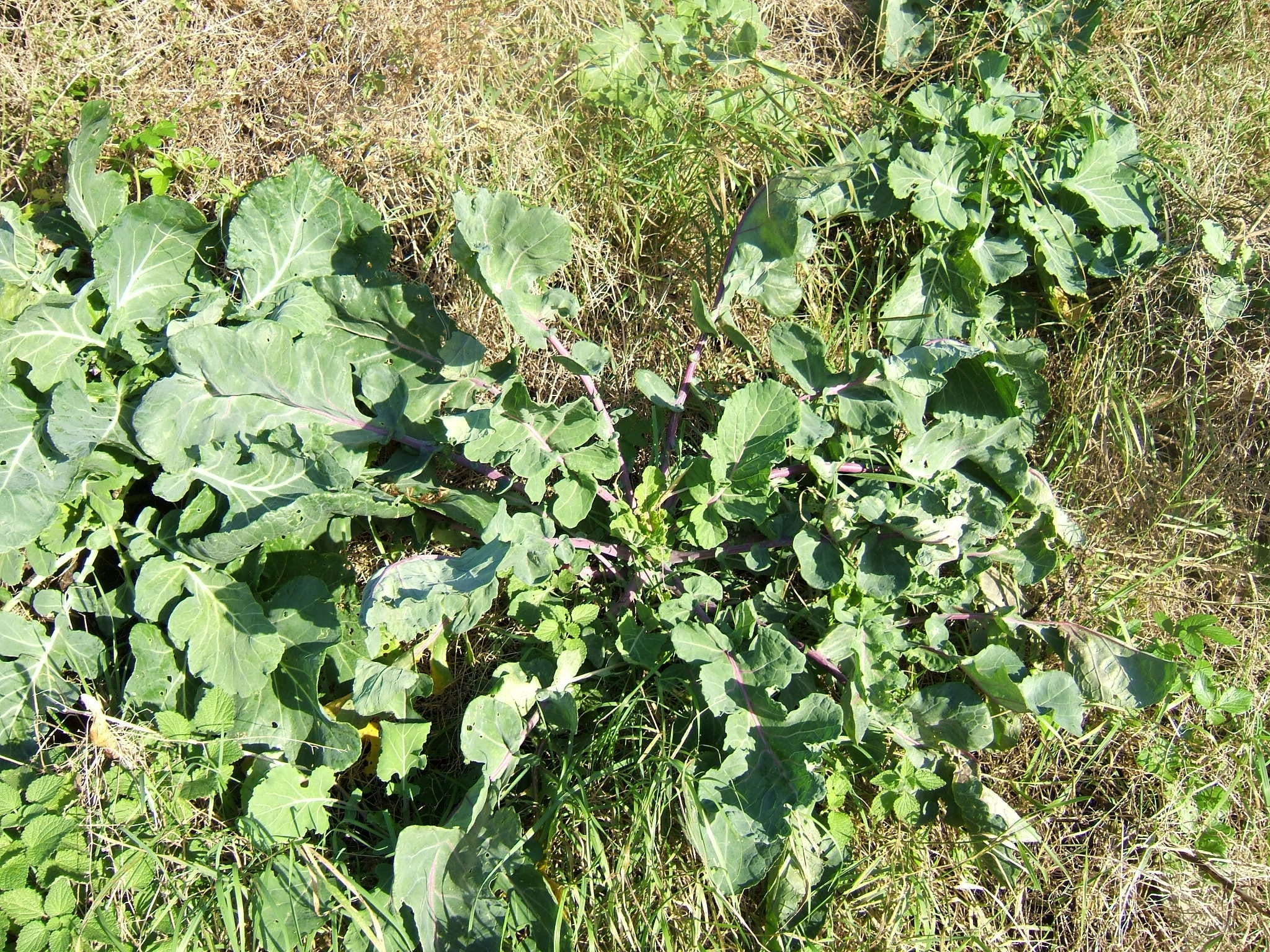
Wild cabbage is unassuming: some untidy leaves and a few thick, coarse stems on the browner side of purple that poke out from the soil. Nothing about it looks appetizing.
Nevertheless, many cultures have recognized something special in this plant. By selecting plants with denser layers of leaves, ancient people created modern cabbage and kale. Others bred for the inflorescence, a dense bundle of small flowers that forms the head of cauliflower and broccoli. By favoring large, edible buds, thirteenth-century farmers living around modern day Belgium created Brussels sprouts. Under different selection pressures, Brassica oleracea has become German kohlrabi, or Chinese gai lan, or East African collard greens.

This level of morphological diversity is unusual. Modern tomatoes, for example, vary in size, shape, and color, but are all recognizably tomatoes. Since the 1920s, scientists have worked to understand how Brassica oleracea was domesticated and to deepen our knowledge of evolution and artificial selection.
By combining modern genetics, genomics, and molecular biology with linguistic, historical, and sociological sources, researchers are now beginning to develop conclusive answers.
Domesticating a plant means prioritizing certain structures over others. Wheat shoots are completely inedible, so farmers have bred plants to focus on their grain. Modern wheat typically grows to around waist height; a few hundred years ago it was closer to head height. These shorter, modern wheat ears also produce more and larger grains than ancient species.
Whereas other plants have a single most useful element, such as the grains of wheat or the fruit of tomatoes, wild cabbage has many. Although people didn’t know about it until the twentieth century, Brassicas are high in fiber and micronutrients like calcium, iron, and vitamin A.
Genetic sequencing has shown that kale is the modern Brassica oleracea crop most closely related to wild cabbage. Early farmers likely started by selecting plants with the largest or most palatable leaves and replanting their seeds. By around 400 BC, after hundreds of generations of selection, the plants became more extremified. This resulted in modern kale, composed almost entirely of leaf, but with little in the way of shoots, buds, or inflorescences. Later, farmers focused instead on buds or stalks. By the time written records appeared, we had already inherited most of the main categories of brassica cultivated by our ancestors.

A plant’s above-ground architecture develops from a group of cells called the shoot apical meristem. These stem cells generate every part of the plant’s structure above the soil. Whether they become shoots, leaves, or inflorescences is determined by the meristem’s stage of life. In the earlier vegetative stage, the stem cells produce leaves, while in the later reproductive stage, they grow into inflorescences. This is why no one has bred a plant that has the leaves of a cabbage and the head of a broccoli.
When ancient humans selected for certain architectures, they were really altering the movement between these stages, selecting for longer in the vegetative or reproductive stages.
In the last few years, genomics has offered an explanation for Brassica oleracea’s unusual adaptability. Ancient wild cabbages underwent a process called polyploidy. Humans are diploid, meaning that we usually have two copies of each of our 23 chromosomes. Many cabbage varieties are triploid or even more complex.
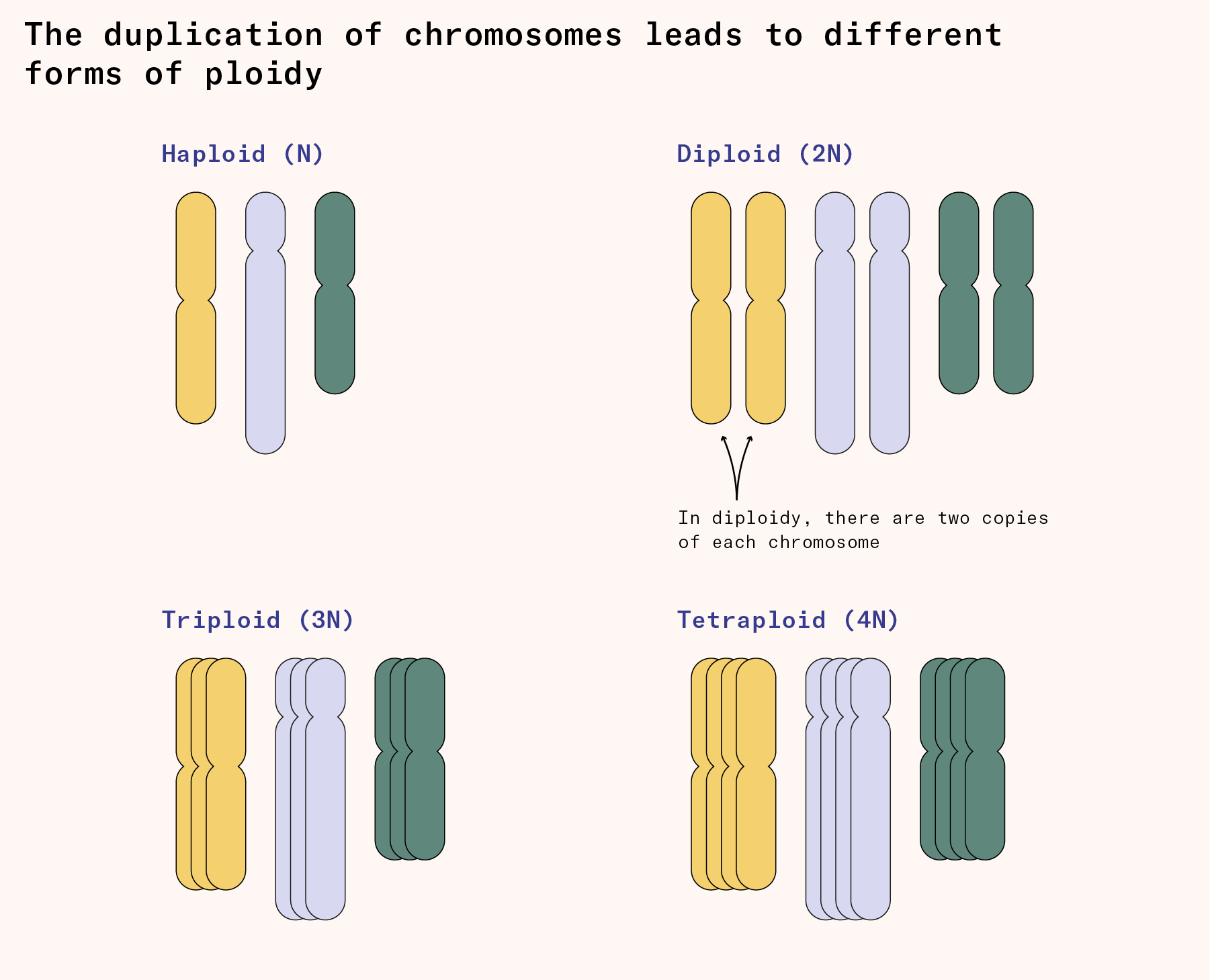
The more polyploid a species, the greater its capacity for gradual evolution. For haploid species like ants, which have a single chromosome set, mutations routinely result in certain death. Diploid species, like humans, can tolerate more genetic experimentation. A single mutation in both copies of HBB causes sickle cell anemia, but the same mutation in a single copy of the gene can confer greater resistance to malaria. Triploid plants, with multiple backups of every gene, take this even further. Harmful mutations are masked by healthy copies, reducing risk while allowing much richer genetic diversity than would otherwise be possible.
Polyploidy sets the stage for our Brassica oleracea varieties, but someone had to push wild populations to create more leaves, buds, or inflorescences to create the crops we know today.
Archeological evidence of Brassica oleracea domestication goes back thousands of years. Fossilized samples of wild and early domesticated varieties can be found across Europe, North Africa, and the Middle East. Domesticated Brassica oleracea reached China around the seventh century, and by the eighth it had been bred into an early form of gai lan, or Chinese white kale.
But like genomics, traditional archeological methods don’t tell us where Brassica oleracea originates. Our earliest samples of cabbage seeds date to around the sixth century BC, but no clear evidence supports their cultivation prior to the fourth. No pottery with biological residue suggests the cooking of cabbage, nor do contemporary illustrations depict anything resembling them. Fossilized seeds are difficult to classify: samples are just as likely to be turnip or canola as they are to be Brassica oleracea.
As a result, researchers have turned to linguistic methods. Unlike ancient Egyptian, Celtic, or Fertile Crescent cultures, Latin and Greek sources include frequent references to ‘caulis’ or ‘krombe’ respectively, which likely refer to early forms of domesticated kales and cabbages. Ancient Greek texts are particularly rich: they include recipes, myths about cabbages growing from the sweat of Zeus, commonly used idioms such as ‘μὰ τὴν κράμβην’ (roughly translating to ‘by the cabbages!’), and a wide variety of synonyms.
Literary analysis also supports the theory that the first domesticated varieties initially focused on the leaves, as Ancient Greek distinguishes between distinct wild, curly-leaved, and smooth-leaved varieties.
Assuming that Greeks in the Hellenistic period had cabbages, ecologists modeled the potential range of Brassica oleracea based on the predicted climate of ancient Italy and Greece between the fourth and second centuries BC. This narrowed down the likely range to the coasts and islands of the Aegean Sea.
So wild cabbages were probably first domesticated into leafy vegetables in ancient Greece, before being spread to around the Mediterranean, then northern Europe and Asia (probably by the Romans). Their genetic makeup made them highly adaptable, allowing new varieties and new feral populations to emerge wherever they were introduced.

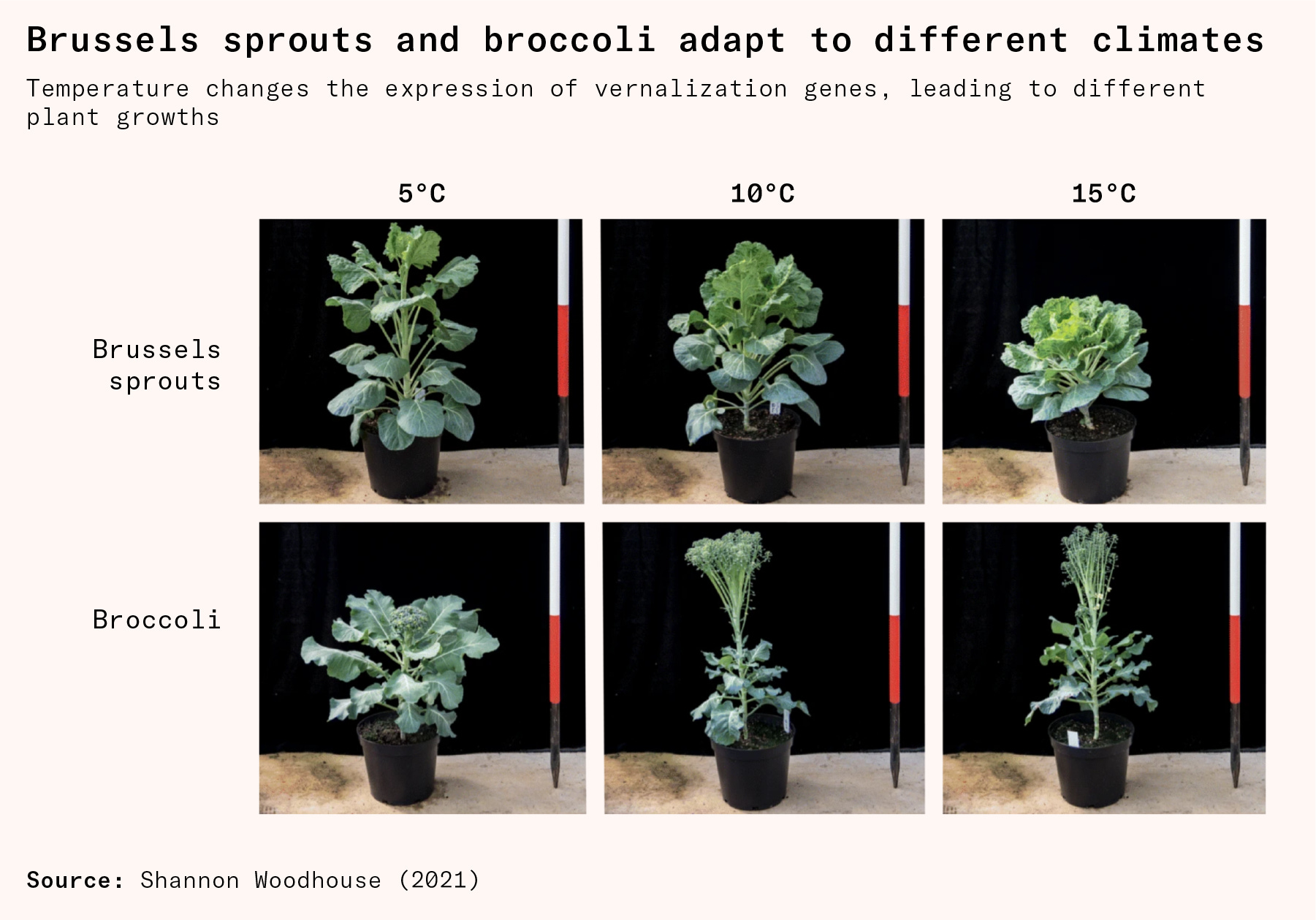
Cabbage’s adaptability, which once allowed it to produce such a wide variety of useful crops, will make it equally valuable in the future. Many of the varietal differences may have first arisen as the plant adapted to new climates. Brussels sprouts not only look distinct from broccoli but thrive in cooler climates, such as those in Belgium rather than the Mediterranean.
Wild populations must survive on their own, without irrigation, fertilizer, or pesticides. These varieties are naturally more resilient to climate change and to pests. By studying the differences between these feral cabbages and their cultivated relatives, we might identify ways to improve today’s plants. Most of broccoli’s genetic diversity resides in landraces, uncommon varieties found in a localized area and not grown as part of industrialized global agriculture. These varieties could hold countless useful alleles that could be bred back into modern crops.
The evolution of cabbages reflects our own history: how human culture has reshaped a wild coastal plant into a family of vegetables that now feed billions. As climate, culture, and technology change, so will the cabbages we grow. And like the farmers of the past, we’ll keep sculpting them one generation at a time.
Alex Wakeman is a postdoctoral researcher at the University of Leeds. You can follow him on Twitter here.
Read the original article

Comments
By icegreentea2 2026-03-1513:022 reply Because I love cabbage... the blog post shows "Gai lan" as an Asian example. There are so much more!
You are probably aware of napa cabbage, but there's also Taiwan Cabbage (goes by other names of course...) https://www.westcoastseeds.com/products/taiwan-cabbage
It looks a lot like a flatter "green/european" cabbage. It's leaves and stems are finer and softer than a European cabbage, while still being pretty crunchy (as opposed to napa). Compared to European cabbage, you could actually just stir fry these.
Gai lan is just one variety of "Chinese broccoli" - there are multiple varieties with different stem thicknesses, and "branching ratios". This will let you pick to suit your preferred level of crunch and leaf area to coat with sauce =)
And finally, all of the bok choys are also part of this family.
If you look, you can straight up find the half way points between subfamilies https://i.guim.co.uk/img/media/080bca1a659bf2f8b12bca1494c67...
By culi 2026-03-1516:44 Speaking of Asian vegetables, Brassica oleracea tends to get all the love because Europeans are more familiar with cauliflower, kale, Brussels sprouts, collard greens, etc but Brassica rapa is perhaps even more diverse.
You might be familiar with turnips, bok choy, napa cabbage, and mizuna, but within Asia, there are a dizzying array of vegetables barely documented that are all derivatives of this weedy mustard.
Vegetables like Jima Turnip of the Tibetan plateau, Taicai, Wutacai, etc are hardly documented in English at all
By lovich 2026-03-161:55 celery has a similar differentiation with stalk celery(the standard one in american supermarkets), celeriac, and leaf celery
By sebastiennight 2026-03-155:134 reply I already knew about this phylogenetic tree (although I have always heard the common ancestor be called the "wild mustard", not wild cabbage), but the article was quite interesting.
I only wish that as a PSA, they had included the reminder to people over 30 years old who hate Brussels sprouts, that the delicious ones you can eat today are not the ones they hated in their youth, and if you haven't had sprouts in years you might want to give them a second try (salted, oiled and baked, not boiled or steamed of course!)
By InfiniteRand 2026-03-166:57 My family has typically stir fried them, chopped up with olive oil salt and pepper, so I always got confused by Brussels sprouts horror stories
I think the sprouts trauma is the result of picking the wrong cooking method.
I was so surprised when I tried baked sprouts for the first time (use a really host cast iron skilet for even better results) that I started to believe that every vegetable can be delicious as long as you bake it!
There’s many delicious and easy ways to eat vegetable! Two of my favorite:
- Belgian Stoemp: basically smashed-potatoes with smashed-other legumes. Cook everything together (with herbs if you can), smash, add lipid and salt and you’re done!
- German Ein Topf: put vegetables, beans and sausages in a pot (I use tofu ones or tempeh). Cover, cook slowly. It’s almost a salty Tajin from the north.
- Recover bland vegetables (sprouts or anything) to a fantastic soup in 5 minutes: add a bit of water, coconut cream (or caw cream / silken tofu…), spices. A bit of tahin and corail lentils if you have. Mix and adjust water.
Bon appétit :)
By lokar 2026-03-1514:26 a popular concept:
By bikesharing 2026-03-1517:58 [dead]
The modern cultivars literally taste different, it's not just cooking method. The bitter compounds were identified and bred out.
By flir 2026-03-1512:18 I wish I could find "authentic" sprouts in supermarkets. I'm sure there's a niche for it.
By lukan 2026-03-1514:30 "I started to believe that every vegetable can be delicious as long as you bake it!"
Baking is good, but I also came to another conclusion - vegetables that are disgusting if they are cooked to a slimy paste, can be delicious eaten raw in a salad!
By glenstein 2026-03-1516:10 Great point about brussel sprouts and it's truly fascinating on a number of levels. I think we're all tempted to believe the story that our palate just changes as we get older. But that's not what happened with brussel sprouts! They became cultivated differently to change their taste and so the modern ones we have are not the bitter ones we had as a kid.
I think there's a similar story for, say, canned peas which used to be nasty and made me think I didn't like peas. Granted I still don't consider myself someone who likes peas from a can, but fresh peas in a salad, or flash frozen peas in a bag that stores in the freezer, I'm open to those.
That's not to say that our tastes don't change, but brussel sprouts are kind of a fascinating mirage where it seems like the change might have been growing up into adulthood when really it was a chang in cultivation. These are just off the top of my head, but over the past couple of decades, there's been a quiet revolution in mass produced veggies on a number of levels that in each of their individual instances trace back to fascinating stories of science.
If you liked this, you will be delighted to learn about the “Triangle of U”: the common brassicas are not just tetraploid, they are Frankensteinian mashups of earlier diploid species with different numbers of chromosomes!
Bonus trivia: unlike nearly all plants, brassicas make do without symbiotic mycorrhizal fungi!
Yeah the family is pretty unique for not relying on mycorrhizal fungi but it does still rely on other fungi like Serendipita indica which is a basidiomycete fungus and acts as a facultative endophyte. Meaning it can live on its own in the soil but it can also develop inside plant roots and play many of the same roles mycorrhizal fungi play.
It's actually at the center of a lot of research attention right now for its potential to act as a booster for vegetables that DON'T make traditional mycorrhizal associations
By mjd 2026-03-1520:04 I didn't know about this. Thanks!
By IAmBroom 2026-03-1513:15 What the...
That's like hearing some mammal babies don't consume milk!
By culi 2026-03-1516:53 Just as fun is the Citrus triangle
https://en.wikipedia.org/wiki/Citrus_taxonomy#/media/File:Ci...
Citrons, Pomelos, and True Manderins are the progenitor wild species that were hybridized to give us everything from clementines to grapefruit to key limes and more


