
In their latest attempt to disrupt the iOS anti-ad tracking feature, Facebook has stooped to a new low
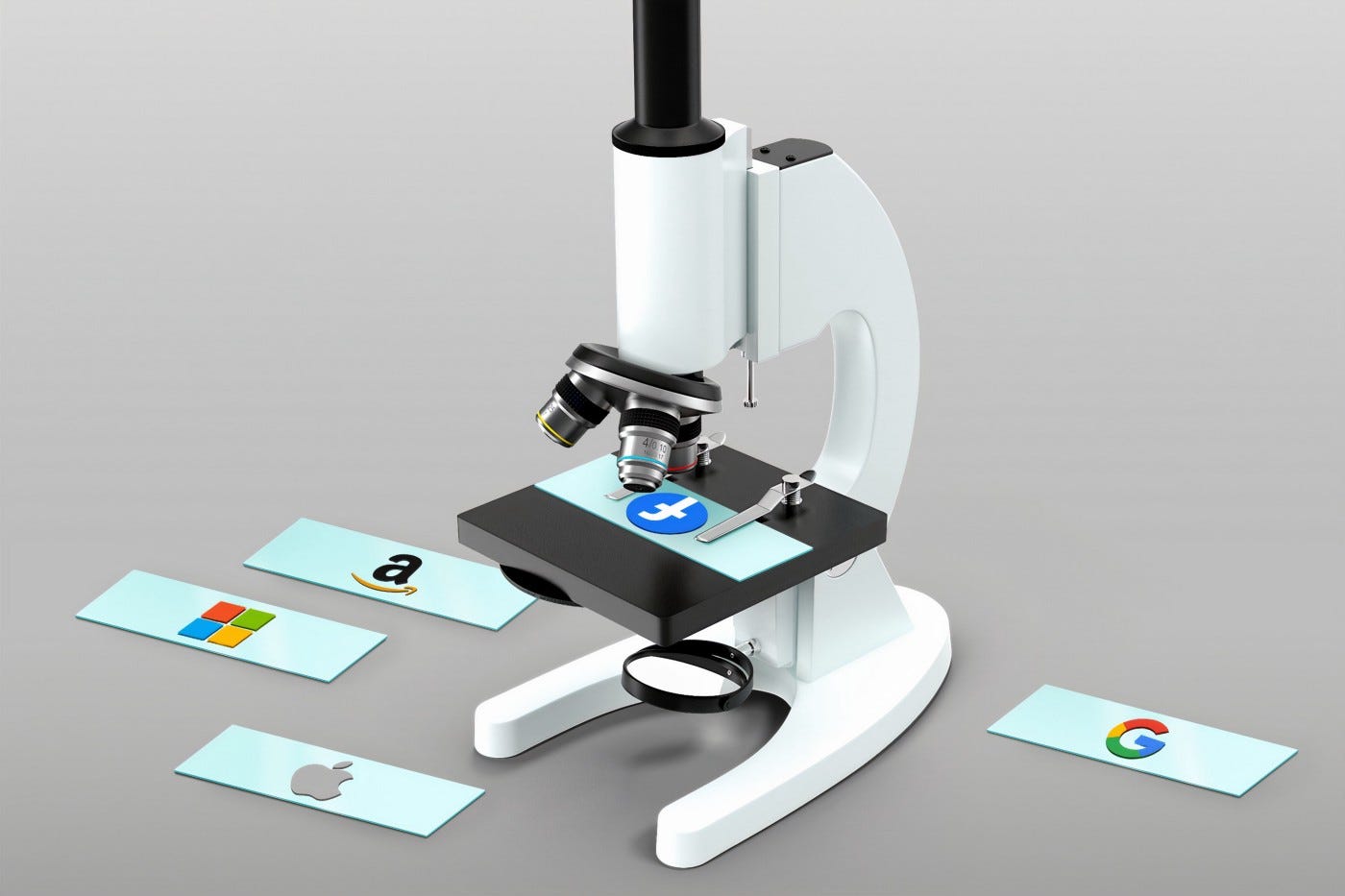
During WWDC 2020, Apple had announced a new iOS 14 privacy-based feature that sent chills down the spine of advertisement agencies.
Specifically, there’s a new AppTrackingTransparency framework introduced with iOS 14 which renders the unique advertising identifier useless.
This means advertisement agencies can no longer track users across apps and websites without their consent.
At the moment, over 100K apps on the App Store use the Facebook SDK to track user activity, run campaigns, record ad clicks, usage time, and subsequently serve personalized advertisements. Understandably Facebook pays them a huge share
But with iOS 14 advertisement agencies are about to stare at diminished returns since they would no longer be able to track a single user as effectively.
This led to an outcry by Facebook a few months back. They called it a foul play. Given the times we’re in and the fact that this is a major change, Apple obliged and gave developers and marketers more time to get ready for the changes.
Now, with the deadline to ship apps with the new privacy-focused SKAdNetwork framework only a month away, Facebook is trying to sabotage it by running campaigns to pressurize Apple into postponing the new iOS 14 privacy feature.
Facebook is rolling out newspaper ads to attack Apple
Only recently, Facebook doubled down on its marketing campaign against Apple.
The social media giant rolled out full-page ads across popular publishing houses such as the New York Times, Wall Street Journal, Washington Post, and more.
Ironically, the headline of the ad states: “We’re standing up to Apple for small businesses everywhere”.
According to Facebook, “over 40 percent of small to medium businesses are using personalized ads today”. And the new iOS 14 privacy features threaten to kill those businesses by causing a revenue drop of as much as 60 percent per dollar.
For noobs and non-techies, it may seem as Facebook is the savior since Apple is being projected as the antagonist here.
But the marketing stunt is only one side of the story. There’s a lot more than what meets the eye and Facebook is clearly omitting the truth.
For one, it’s worth knowing that Apple isn’t blocking Facebook from targeting users for personalized ads. Instead, they’re only giving the user an option — whether or not they want to be tracked.
But Facebook perceives this feature as Apple’s way of killing their billion-dollar ad empire as it spreads awareness about data privacy amongst users. This is why Facebook is crying foul play and attacking Apple since the WWDC 2020 event.
But Facebook’s marketing campaign is terribly, laughably wrong
Facebook has been accusing Apple of playing double standards with privacy. The social media giant claims that the iPhone maker is leveraging privacy for their own profitability and to keep a hold over its App Store monopoly.
But the manner in which Facebook is projecting their anti-Apple campaign through the “they will hurt small businesses” slogan is terribly, laughably wrong.
Calling their move cynical won’t be an overstatement since it’s pretty clear that Facebook isn’t worried about small businesses. Instead, they’re concerned that they won’t be able to mint as much money since from those advertisement agencies that now might begin looking elsewhere.
The most bewildering thing is that a company that’s widely using shady business tactics, makes profits off user data, and is long known for its “copy, buy or kill” strategy against booming startups is actually hoping to rile up everyone against Apple, a consumer-focused trillion-dollar firm.
Just because Facebook could get away with app privacy measures a decade back and managed to build an ad-empire out of abusing free data, doesn’t mean that they can continue to do so.
Attacking Apple through such campaigns only shows how less Facebook actually cares about user’s privacy. In fact, it clearly portrays that Facebook is only interested in retaining and monetizing off the user’s personal data to preserve their monopoly.
This makes Facebook's move to evoke compassion for small businesses a shrewd way to protect their own best interests — which is indeed a quintessential case of hypocrisy.
Worse, Facebook has launched this campaign at a time when they find themselves already embroiled in the biggest antitrust lawsuit of the decade. The timing of this factless marketing move couldn’t have been poor.
Conclusion
The biggest takeaway from this feud is that Google has surprisingly stayed silent all along.
It’s a no brainer that the search engine giant will be compelled to bring a similar anti-ad tracking feature on Android to keep the mobile ecosystem in sync.
This makes Facebook’s whole fight against Apple a losing cause already. As the two leading mobile operating systems will continue to double down on data transparency, Facebook’s access to user data would be curtailed significantly.
It won’t be dramatic to state that Apple’s new opt-in popup permission dialog will cripple Facebook’s advertisement business and push them into oblivion.
That’s it for this one. Thanks for reading.
Liked what you read? Please feel free to share this story far and wide!
Read the original article

Comments
By ogre_codes 2020-12-187:2212 reply Facebook and Google have completely smashed the online advertising industry. The whole reason online advertising is so difficult to profit on is because Facebook and Google have sucked all the profit out of the room. The Open Web is a total shambles because of nonsense from Google and Facebook so many companies don't even have an alternative to fall back on... Now Facebook is claiming they are defending small business. What a joke.
Anything which causes Facebook to make this much noise must be good.
Apple is selling this as defending privacy, which is fair. But their motivations aren’t entirely altruistic. It also plays to their business model.
By choking off in-app ad revenue, they force developers who want to monetise towards paid and freemium apps.
That shifts revenue away from the ad networks (Facebook and Google) towards the app store, on which Apple can take their 15-30% share.
I am totally in support of this shift in business model.
Paying for the service you are using in a transparent and predictable way vs deceptively having your personal information monetized should be the norm.
Google and Facebook have been hiding behind an army of lawyers writing opaque TOS and lobbyists defending their user hostile monopolies.
This is wrong. Paying for a service does not automatically mean the service doesn't take your personal information.
* You pay for Windows but Microsoft still tracks you. * You pay for iPhone & Mac but Apple still tracks you. * You pay for Android phones but they still track you.
And so on..
I don't understand the shift from "usage tracking" towards "usage tracking for ads". The goal should be no tracking at all instead of "we don't track you to show ads".
It removes a huge incentive for usage tracking.
But there is a huge difference between usage tracking and usage tracking for ads. Usage tracking of the kind Microsoft engages in (outside of Bing and their ad focused usage tracking that is), is largely telemetry used to change their product.
Usage tracking for ads, however, is used to change your behavior both within the product and outside the product.
Usage tracking for ads is significantly more damaging to humans as individuals as well as societies.
Perhaps tracking ought to be opt-in only. I don’t remember ever installing Debian and not opting in to the popularity contest (popcorn). Angular CLI also asks if it may do some telemetry. I don’t buy that opt in means we are stuck with bad data.
An exception is for testing.
I use Firefox nightly and developer edition where I can. I think by installing a pre release version of Firefox I opted into telemetry. I’m volunteering for telemetry. However, I don’t consent to opt out tracking in the production version of Firefox or running nonsense marketing-driven “experiments”.
By MereInterest 2020-12-1813:292 reply This is the basis of the GDPR, which requires explicit, freely-given, revocable, and opt-in consent before any tracking can be done. I wish the US would get its act together and pass something similar for us in the US.
By diveanon 2020-12-1816:43 As an american web dev living in asia.
GDPR is the best thing to happen to the web since javascript.
If you ever get that in US, I sure hope your people are more competent than ours and they come up with something that actually works. Because in EU, GDPR didn't actually solve anything. It's a pain in the ass both for businesses and consumers, and it only had one real (good) effect: it made (some) people aware of the fact that software tracks their lives. Nothing more than that.
The problem with GDPR is the EU member states' cowardly lack of enforcement. You'd think that as soon as they had a stick as big and powerful as GDPR, they'd immediately start beating the big, worst offenders with it. Yet, how often have we seen headlines about "BigScummyCorp fined 4% of annual global turnover" in the news?
EDIT: Corrected, thanks, colejohnson66
By colejohnson66 2020-12-1816:281 reply Does GDPR even allow the 4% fine at first? I thought the point was to start “small” and ramp up if they don’t improve. Because, while GDPR applies to Facebook, it also applies to everyone. So that small business down the street may not be able to handle a 4% fine while FAANG could. If a 0.5% fine fixes the problem, then going to 4% is unnecessary and would only serve to satisfy vengeance (which laws are not supposed to do[a]).
There’s also the fact that GDPR is a directive. Each state (nation) has to implement it in their own laws. So the EU itself can’t enforce it, only the member states.
[a]: The purpose of laws are not to be an “eye for an eye”, but to curb bad behavior (theoretically)
By newerduder 2020-12-2116:32 > There’s also the fact that GDPR is a directive. Each state (nation) has to implement it in their own laws. So the EU itself can’t enforce it, only the member states.
It's not. It's a "Regulation", a similar kind of legal act to a Directive, but comes into effect all on their own, across the whole of the EU. https://en.wikipedia.org/wiki/Regulation_(European_Union)
By 8note 2020-12-190:23 Theres no reason that paid apps can't also profit from add placements
By ogre_codes 2020-12-1816:181 reply > This is wrong. Paying for a service does not automatically mean the service doesn't take your personal information.
No, but it does mean the developer has a lot of incentive to write software for you as opposed to catering to the advertising companies who are paying their bills.
By johannes1234321 2020-12-1816:241 reply The advertisers only pay the bills as long as users are using the software. But yes, with a "free" software users probably are quite a bit more tolerant to issues.
By edoceo 2020-12-1820:19 No-one is so entitled as the person who just got something for free
By 6gvONxR4sf7o 2020-12-1818:55 I prefer "we don't track you around the entire internet, just our site" to "we track you around the whole internet." That's frequently the ad tracking tradeoff. Plus ad tracking is just so egregiously one sided in the loss of privacy for the user for minuscule user benefit and large tracker benefit.
And furthermore an ad-supported product doesn't necessarily misuse your personal information either. Whether the user pays in dollars or ad impressions doesn't change the need to build a product that people actually want to use, otherwise there is no market for ads to begin with.
By ogre_codes 2020-12-1816:251 reply > And furthermore an ad-supported product doesn't necessarily misuse your personal information either.
What you mean is they don't necessarily intend to misuse my personal information. The reality is many companies with the best intentions end up spilling that information in a variety of ways.
- They get acquired and their new parent abuses that information.
- They get breeched.
- Employees abuse the information they have access to.
- Employees leak your information to a third party.
- Government employees get access to that information and abuse it.
All of these things have happened to companies where people thought their information was being safely held. Many of these things have happened at the biggest, supposedly secure workplaces. The best way to avoid this is to not put your information out there.
Sure, but these risks aren't specific to businesses that use advertising as a monetization strategy.
By ogre_codes 2020-12-1818:21 The poster I replied to suggested advertising supported companies won't mis-use your data. My point is anyone—advertising company or not—who has my data is a risk.
You're absolutely right, non-advertising companies are a risk too. The difference is most developers who collect $2.99 for their app usually don't ask me for personal information unless they have a need which benefits me.
By jimktrains2 2020-12-1818:41 Ad supported products may not, but the ads themselves most likely do.
By diveanon 2020-12-1816:40 A man paying a prostitute doesn't necessarily misuse the prostitute.
By kube-system 2020-12-1819:46 Incentives matter, and not all "tracking" is created equal.
You are right that paying for a service doesn't guarantee you won't be tracked. What is important is that that business model makes it possible for you to not be tracked. This is critically important, because it is extremely improbable to win a fight against tracking when billions of dollars are stacked against you.
By diveanon 2020-12-1816:36 These are not mutually exclusive concepts.
You can pay for what you use and have sound regularly bodies policing user privacy.
By diveanon 2020-12-1817:09 How many times have you written code because nobody told you to?
Exactly I don't understand this idea that paying mean they won't track you. IMHO unless strong legislation and its enforcement comes into effect, nothing will change.
By diveanon 2020-12-1817:06 Legislation is the entire point.
Of course anyone would agree that transparent and predictable payments are better than deception...
But I don't think it's that clear cut or even about that. Usually we favour open markets, where companies can compete on features and price. The App Store has a monopoly on iPhones as it's the only App Store, and the only reason the fees are that high is because Apple owns both the market and the only player, and they can set the fee to whatever they want.
If Apple wasn't the only one running the App Stores on iPhones, it's not as clear cut that they would act in the same way. But since they are, it makes sense they push people towards apps and paid apps from the App Store.
By buran77 2020-12-1811:33 > the only reason the fees are that high is because Apple owns both the market and the only player
The fact that Google enforces the same fees while allowing competing app stores and varied OEMs access to that market paints a different conclusion than yours.
I agree with the "free market" point but in reality the market is just about as free as the biggest players (with the most capital, whatever that may represent) allow it to be. Sure, consumers have the same power as a whole to sway the market. Unfortunately it's fragmented among billions of people all veering in their own direction, uncoordinated. On the other side the power is concentrated with a few big players who just happen to have more or less the same goals and aim to achieve them almost single-mindedly.
And unfortunately the free market comes at a cost even when it works: a sort of dictatorship of the majority. The free market will want cheaper and will accept the compromise of paying in other ways. You don't get something for nothing and since laws aren't keeping up with this it's up to the tech giants to police themselves. You pay with money and with your data, the ratio is up to each company.
The reason this works to to the user's advantage (read: more money - less data) with Apple is because they saw the business opportunity of this policing. They wanted to compete with Google and Facebook at their own game but had to admit defeat so they realized a much better business model is to position themselves as the antithesis of those and cater to a different market Google and FB cannot target, by design.
There probably are ways in which Apple can open up the store and still retain control on what is allowed or monetize on that but make no mistake, if an app is present on Apple's (spun out?) app store for $1 but free of any shady data collection, and also present on the Apps'R'Us store for $0 but encrusted with data collection modules we all know what most users will pick.
By random5634 2020-12-1811:19 Ps5 / Sony?
Just because an app is not free (it charges users) does not mean they are not harvesting their users personal data and selling it to data brokers etc.
By alibarber 2020-12-1811:38 Of course - but Apple here are working to make that much harder, to get to a state where harvesting and selling data won't really be an option regardless of if you're paying for it or not.
By AndrewDavis 2020-12-1810:56 Arguably your information is worth more, because you are someone willing to pay for an app or subscription
By JMTQp8lwXL 2020-12-1811:042 reply Practically speaking, even if you did pay for free services, I'd expect the data to be monetized. You pay your ISP, yet there's tons of data being sold, for example. When it's free, at least you don't pay twice.
You always pay once with your data. You might pay twice with actual cash. There's no way to prevent the former, even if the latter occurs because they aren't mutually exclusive.
By jfk13 2020-12-1811:16 > There's no way to prevent the former
Of course there is. Make invasive tracking and targeting practices illegal, and aggressively penalize violators, and the business model would change.
By addicted 2020-12-1811:58 There are ways to prevent the former. In fact there are very easy ways to prevent the former.
Yes, but why do we need to depend on Apple to regulate this market? Regulation performed by a company sounds like to worst of two worlds.
By addicted 2020-12-1812:00 We “need” it because governments in certain jurisdictions won’t do it.
But wherever you may fall on the government regulation spectrum, there’s a simple response if you don’t like Apples action. Don’t use iOS. Go to Android where FB and friends are free to track and sell your data only constrained by your government policies.
By ogre_codes 2020-12-1817:18 If the government would step up, it would be great.
Until then, Apple "regulating" it is the least of bad option.
If pay to use is the only model, lots of developers would only target developed countries.
By Betelgeuse90 2020-12-1815:551 reply I don't see what's stopping these developers from lowering prices for users in less developed countries.
By ogre_codes 2020-12-1817:19 App Store prices vary by region. Developers can have lower prices in less developed countries.
A user on my platform costs me $0.02 per year.
If you can't compete gtfo.
By edoceo 2020-12-1820:22 Your cost calculation may be off but the point about competition is spot on
By Fnoord 2020-12-1815:52 Apple isn't altruistic, they're a business. However their business interests can be aligned with privacy.
Back in the days, Microsoft was evil, and FOSS was good. That's what sprouted Facebook and Google. They contribute to FOSS, as does Microsoft. They have proprietary applications (including web applications), as does Microsoft. They're into advertising and profiling, as does Microsoft. Microsoft's software stack is partly FOSS (e.g. Edge), just like Google's (Chrome, Android, ...). I still prefer Unix/Linux over Windows but other than that its more of the same these days.
I was one of these people who was happy with Windows 10 free upgrade. But thinking back of it, perhaps I'd rather pay and then keep my privacy (without hassle).
The danger is that the poor are indirectly paying for devices and services with their privacy while those who are wealthy are able to afford privacy-friendly Apple. Its already more or less like that. The cost of privacy when it boils to Android devices, and how much profit it yields, isn't transparent.
That's great! That is exactly what I would like to see happen. Software comes at a cost, and nobody should expect to get software "for free", where "free" is actually a lie, because you pay by giving up your privacy.
Unfortunately, that comment precludes the Free Software and the Open Source software side of things. In those cases, it is free code under a usually strong license of permissions.
And tracking for the most part, has been a manner of "Do you want to allow tracking? Default:OFF" (thinking of Debian Popcorn)
By ogre_codes 2020-12-1816:47 > Unfortunately, that comment precludes the Free Software and the Open Source software side of things.
I don't think this precludes free software at all.
Free software has always co-existed with paid commercial software. I suspect it always will. There are always going to be corners of the software market OSS developer aren't interested in pursuing. I doubt there are a lot of developers interested in building garbage collection routing software in their spare time. There are however plenty of developers who want to pay their rent who will.
By encom 2020-12-1810:25 "Free" is also not nickel-and-diming or bait-and-switching people with in app purchases. I'm not saying data mining my PI for profit is better, but the app store as a market place is an extremely toxic place.
And I would like the choice of ad supported apps (albeit with better transparency around data collection)
By ogre_codes 2020-12-1816:39 > And I would like the choice of ad supported apps (albeit with better transparency around data collection)
This is in a nutshell exactly what Apple's changes do. They preserve ad supported options and increase transparency.
By madeofpalk 2020-12-1811:58 Glad to see they still exist!
I've saved a comment I read on reddit that perfectly captures my point of view on this, I want to share because this way of thinking in either-or is what I believe is wrong when playing the card of "but Apple is not altruistic as well" as I'm very aware of that and think many others are:
> Both Apple and Facebook are evil corporations that only care about profits, but Apple’s priorities benefit me and my desire for privacy while Facebook’s absolutely do not. I hope Apple’s new privacy controls are so effective that they put Facebook out of business. Fuck Facebook.
By ogre_codes 2020-12-1816:521 reply No idea what the source is, but it's exactly my perspective as well. Whether Apple is a "Good" megacorp or not is irrelevant. Their policies and their profit incentives are fairly well aligned with mine. Not always, they also do lots of shit which frustrates the hell out of me too. But more often than their competitors. That is about the best you can hope for.
Like most phone manufacturers, they're incentivised to exploit the people manufacturing phones. I'd pay money for iCloud, but never for their hardware (until they clean up their act, anyway).
By r00fus 2020-12-191:23 Honestly gotta ask why you use iCloud if you have no Apple devices...?
By Lio 2020-12-1812:40 Apple are not choking off in-app advertising revenue.
That option is still available, developers just have to tell people what they're doing up front and allow opt-in control of tracking.
So if you want to give informed consent for targeted in-app advertising you still can.
As an Apple customer I pay Apple to provide that, altruism has nothing to do with it.
Facebook won't do it on their own because they don't want users to have the choice.
By zwaps 2020-12-1913:55 The mere fact that Facebook is protesting that consumers get a choice on whether they are tracked, something that many countries have literally legislated to be a lawful right, shows that this is absolutely necessary.
At that point, it matters very little what Apple's motives are, and it matters little what this change means for any business.
What matters is that Apple is implementing a change that represents a technical necessity for consumer rights.
All current measures do not work. These opt-out websites largely do not work and, besides, the law in most places legislates opt-in and not opt-out. Apps continue to ignore any privacy setting, including facebook.
It is sad that we need to rely on Apple to make that change, but I am happy for any incentive Apple has to do so. I am sure it will take quite some time before we see something comparable on Android, if ever.
Again: Our rights as consumers are blatantly ignored. All current methods that are supposed to implement these rights are useless and largely ineffective.
Devices need to ensure that no one can grab data without consent. Apple does this. It is good.
By ogre_codes 2020-12-1816:17 > By choking off in-app ad revenue, they force developers who want to monetise towards paid and freemium apps.
If you write software that is supported by advertising, you are selling your software to the advertisers. If you aren't paying for software, it's not written for your benefit. If you enjoy ad-driven software, it is, at best a happy coincidence or altruism on the part of the developer.
What ad driven software has done is rob developers of good quality paid apps of the ability to charge a reasonable price for their goods. So we have a market place filled with mediocre to terrible ad supported apps. The few developers who do spend the time and effort make good quality software get constant complaints about pricing and charge more than $0.99 for software that actually does what people want.
By matheusmoreira 2020-12-1812:252 reply This is great and could actually help us get rid of advertising! If iOS delivers a completely advertisement free user experience, that's gonna be a huge reason to buy Apple.
Yeah, about that...
https://www.forbes.com/sites/johnkoetsier/2020/08/07/apple-a...
By kergonath 2020-12-1822:35 This is a load of rubbish. Apple does not have an “ad network”, they show some sponsored content in their stores. They have no way of tracking users across apps, because contrary to Facebook they do not distribute SDKs to do that to apps developers. That’s the main point; the rest of the post is just as wrong.
By AniseAbyss 2020-12-1819:32 With things like Blokada and YT Vanced you can already do that on Android.
Amusingly, and much to Google's dismay I am sure, they have created an OS where you can make sure absolutely nobody ever gets payed.
I see this response in almost every thread about Apple and privacy and it’s such a weird reply. Do things that are good only count as good if you don’t have a financial interest in them?
I am much happier that they’re motivations aren’t altruistic. Absent appropriate regulation — I want to be able to support privacy with my consumer dollars and support a sustainable business model with them, I don’t want to rely on the altruistic grace of a company.
By AshWolfy 2020-12-1815:55 The only difference between apple and any other company is that apple wants a cut of the privacy violations
By prostoalex 2020-12-1820:55 Without third-party tracking advertisers buy specific audiences, so a bike helmet seller would buy ads in some outdoor magazine sites and ride-tracking apps. The incentive to pester the user with the same ad is minimal.
With third-party tracking and retargeting that same advertiser just buys access to the same user via an agency which would pester the user with retargeted ads throughout their network in hopes that at some point, after X amount of views, the user will feel inclined to perform the monetizeable action (e.g. finally click on that abandoned cart and purchase the bike helmet).
In this system each property on the network is relegated to showing as many ads as possible, since each ad is essentially a lottery ticket. You might resurrect the cart and finally buy that bike helmet on nytimes, instagram, Angry Birds - whoever commands your attention at that moment.
Companies who complaint about Apple tend to hold a vast amount of such lottery tickets. Companies that do not, tend to have access to specific monetizeable audiences they can sell access to.
How does this play out? So ad companies' revenue gets shifted to Apple's app store, Apple gets even bigger than the biggest it already is. Then advertisers put their ads in-app. When Apple has all the marbles we willingly gave them, what's next or was that it: dominate, do whatever you want.
The safest thing we can do as consumers it not give any one company all the marbles.
By ogre_codes 2020-12-192:27 > So ad companies' revenue gets shifted to Apple's app store,
This presumes that everyone who is currently using add supported apps will start paying for apps which is unlikely.
There will continue to be ad supported software, it will just be less profitable. Likely at least some developers will shift to paid, but not nearly all.
By kergonath 2020-12-1822:19 They don’t have to be altruistic, nobody sane expects them to be. They just have to align their interests with those of their customers and go roughly in the right direction.
>By choking off in-app ad revenue
How did we let the world get this bad where we associate asking for consent as the same as "choking off" in-app ad revenue?
By _jal 2020-12-1813:52 You are noticing the manipulative use of narrative. Lots of ways to do it, but a very powerful one is the choice of whose perspective you use to frame the story. Here, you can imagine the focus on a scrappy young developer, trying to make their mark in a tough world, having their income choked off by a heartless Apple.
[This narrative subsidized by FaceBook Likes(tm)]
By naravara 2020-12-1814:37 If you structure your company around an ethical business model, then changes to the marketplace to become more ethnical inevitably end up benefitting your business model. I'm not actually seeing the problem here. It's like saying Tesla benefits from there being high carbon taxes. Of course they do, but so does everyone else.
By mekster 2020-12-195:09 But who else could've turned down such a huge profit business model as Apple did?
We could see Apple become as crazy as Google on advertising business, yet they turned it down.
I like how they're "Kill the evil" than the well known "Don't be evil" from Google. Apparently, that's one giant step ahead of them.
By rhizome 2020-12-1818:56 Why is "not entirely altruistic" a good measurement? Nobody is saying that's what their motivation is, so isn't yours a criticism of purity, or the nirvana fallacy? Like 50 people have replied to this red herring!
By summitsummit 2020-12-1819:221 reply > their motivations aren’t entirely altruistic
well obviously. who is going to expend the resources and headache to fight the powerful evil wraths of Google and Facebook on such a notion as altruism
By AniseAbyss 2020-12-1819:27 The government?
By 2muchcoffeeman 2020-12-1812:501 reply I wish Apple would implement a reasonable method of selling upgrades to apps so that an app wouldn’t get pulled from e App Store if a dev produced a significant upgrade.
“ an app wouldn’t get pulled from e App Store if a dev produced a significant upgrade”
App’s don’t get pulled for significant upgrades.
By ogre_codes 2020-12-1816:562 reply I suspect the above poster was referring to the fact that Apple doesn't allow developers to have upgrade pricing. Developers instead must either switch to subscription pricing or release a new app "Tweetbot 5" which resets the apps review count.
It would definitely be nice if Apple allowed developers more flexibility in terms of pricing models.
(I suspect you know this, just wanted to touch all the bases)
I was aware of what you just explained, and it’s a complaint I agree with.
However the line I quoted was complete and utter bullshit. Apple does pull apps for very questionable reasons, but this is definitely not one of them.
By ogre_codes 2020-12-1817:36 You are spot on.
The original comment was so oddly worded, I'd assumed the other poster had mis-spoke.
By crooked-v 2020-12-1822:14 I'm surprised I haven't seen more developers go for the 'Paradox DLC' model of putting large new features in IAP with a single ongoing base app.
By danielscrubs 2020-12-1812:00 Are they choking off anything by being transparent? I kind of like to know what I put in my body, doesn’t mean that I will stop eating ice cream on sunny days.
By onlyrealcuzzo 2020-12-1810:141 reply Isn't Apple getting ready to enter the advertising market also?
By Reason077 2020-12-1810:24 Apple already tried it’s own ad network (iAd). Success was limited and it was abandoned in 2016:
http://www.techsnackbar.com/2016/06/11/apple-abandons-iad-un...
Now days, they still sell ads on the App Store, but don’t place ads in third-party apps.
By 420codebro 2020-12-189:59 No one fucking cares dipshit. Fuck off back to faggotbook.
By headmelted 2020-12-187:525 reply The web used to have ads, not be ads. Now it's permeated everything to the extent that almost every click is paid for.
Whether it's Facebook, Google or someone else entirely, the web's a broken pay-to-win mess and I don't see a way back to it being any reasonable definition of open while the status quo remains.
By DNtBlVtHhYp 2020-12-189:291 reply > Now it's permeated everything to the extent that almost every click is paid for.
This comment brought to you by news.ycombinator.com
| Apply to YC |
By headmelted 2020-12-1811:331 reply Not sure if this was in jest, but a single not-targeted-against-my-personal-data link in a footer is not what I had in mind.
By 93po 2020-12-1819:19 I think the comment was more about the YC ecosystem and less about the HN website specifically. The HN website exists because of YC, and YC has a lot of companies that rely on advertising.
I dont miss popups or popunders. Popup blockers had not been able to block every one, it was so annoying.
I was just venting to a friend about the massive comeback of popups/banners. "We value your privacy" is a huge part, another one is after the first few pixels of scrolling, "Please support/subscribe to xxx today". So the popups may have a bit more of justified content, but there are plenty of them. And this is while using adblock, pi-hole and other stuff.
Related, currently on HN front page: https://news.ycombinator.com/item?id=25457440
You‘re right, i didn‘t see it like this. The current state of the web (past years) feels really like in the old times: many nagging „popups“ and despite using blocking solutions you cant get rid of all of them. Wikipedia is a good example: Their yearly call to you to spend for money is using about 1/3 of your vertical screen and you cant remove it. Sadly it seems to be very effective.
Why is Wikipedia a good example? It's a freely available encyclopedia without tracking nor ads.
By headmelted 2020-12-189:57 Yeah Wikipedia is about the last thing I would accuse of egregious spamming given it’s incredible (and ridiculously under-appreciated) value.
By naravara 2020-12-1814:53 The user seems to be posting about UX and navigability rather than ad tracking. Wikipedia's banner ads that take up an entire browser window before you can scroll down to the content is definitely a good example of that.
Just donate a few bucks and that nagging “pop up” will disappear entirely for another year.
Seriously, Wikipedia is a good cause and you can donate as little or as much as you can afford.
Does that work? I donate a 5er monthly and I’m still getting the Wikipedia “please donate “ appeals...
It’s like listen to public radio pledge drives after you’ve donated.. necessary but still slightly annoying.
By Reason077 2020-12-1810:26 I give a donation once a year when their campaign pop-ups appear. For me this works and I don’t see the appeals again until the next campaign.
By pheres 2020-12-1813:36 You might need to enable cookies in wikipedia, otherwise they won't know who you are and that you've already donated.
By pheres 2020-12-1813:32 I would say that wikipedia is a good example of an honest way of using ads.
By naravara 2020-12-1814:51 For some reason storefronts don't seem to understand that when they all do this, it just pushes me to do my shopping through Amazon or some other online "everything store." I'm currently shopping for a new sofa, but the experience of finding reviews and going to individual sites is just so painful. I'm having to dismiss 1 or 2 modal pop-ups per page view AND dismiss a cookie notification bar. It's enough to make a man just go to WayFair instead, but then I'm never sure if I'm getting decent stuff or something off Wish at a 30% markup.
There is absolutely no pleasure in "surfing" the web anymore. If we still use the surfing analogy, it's like trying to surf but being swarmed by seagulls and jumping fish any time you get out into the water.
By fakedang 2020-12-1810:05 I think that one is fairly reasonable, since it is the host party doing the advertising for their subscription programme (to their detriment, since nobody wants to be interrupted when browsing content unexpectedly). Banner ads and popups are far more annoying though.
Recently got my older relatives to install Brave, and although I'm not wholly supportive of its business model (which is significantly rooted in crypto and crypto advertising), I can appreciate that my older relatives have begun to see far less scammy popup ads and banners.
By simias 2020-12-1810:30 The fact that these popups are contained within the frame of the website makes them less abusive, although it also makes it harder to dismiss them.
By ricardo81 2020-12-1811:22 >first few pixels
The ones I see tend to be triggered by moving the mouse off the page, as if that entirely meant that you were about to leave the page forever.
By ogre_codes 2020-12-1817:41 It's impossible to miss them since they've just mutated into super annoying in window javascript popups.
No thanks+------------------------------+ | x | | Subscribe to our Newsletter! | | Subscribe to our Newsletter! | | | +------------------------------+
By DaiPlusPlus 2020-12-188:212 reply It was awful then too: https://www.youtube.com/watch?v=YlGklt4BSQ8
There was however a brief moment when there were no ads. I remember it. There were also no search engines so you only found other sites by word of mouth.
By amatecha 2020-12-191:38 Fun memories of finding stuff to download via Archie :)
By tim333 2020-12-1816:18 Worse really. These days there's >10x more content and thanks to uBlock origin I see about 10x less ads.
I don't because it was:
- Slow (remember 56k modems)
- Expensive (remember when you had to pay by the minute)
- It was the early days of the browser war, which IE was winning. Remember the "best viewed" banners. It was one of the worst times for compatibility, you had plugins too: Java, Flash/Shockwave, ...
- Search engines were terrible. Now we can write whatever is on our mind in the search box, even with typos, and 95% of the time, we get exactly what we are looking for. We like to complain about the remaining 5%, but in the late 90s it was the norm.
- The web was simply smaller, there was less information. Wikipedia didn't exist for instance.
- Ads, terrible design and annoyances have always been a thing. The 90s had popups and blink, the 2000s had flash, and we now have JS.
- Tracking, privacy and security. The 90s web was insecure as hell. Remember there used to be a popup warning you that SSL was used, plain http was the norm. It was less of a concern simply because we used to do less on the web. It was a time when people were calling you crazy for buying something online.
So no, I don't miss it. It is a piece of history that would look nice in the digital equivalent of a museum, but for day to day use... no.
>>- Search engines were terrible. Now we can write whatever is on our mind in the search box, even with typos, and 95% of the time, we get exactly what we are looking for.
I feel like this part has actually gotten worse in the last few years. No matter what I search for it's very rarely the thing I'm actually looking for, at least on google. Most of the time it's SEO'ed to hell in order to sell me stuff, and google will happily cut out half of my query just in order to show me promoted results. Like, when I search for "C# programming <name of class>" why is the <name of class> cut out and the entire first page of results is just paid programming courses???? That's a lot worse than it was just 5 years ago. We're going back on usability just to extract more money.
By donmcronald 2020-12-1812:52 Yep. Search for literally anything and you’ll land on an affiliate marketing page disguised as a blog or a review site. When’s the last time you saw a bad review for anything?
According to Google there are no bad products, but Amazon is predominantly filled with garbage. It’s pretty depressing.
By JKCalhoun 2020-12-1818:54 Type "The Cat In The Hat" in a search engine. Surprised to see a Mike Myers film all over the front page?
Or try "Alice in Wonderland".
Search engines are too of the moment — maybe too corporate-bent? Or do we blame the users? Do most people want a bad film when they search rather than a literary classic?
By GuB-42 2020-12-1813:19 I kind of agree when it comes to the last 5 years, I was specially talking about the late 90s.
In fact, all the points I mentioned are about the late 90s to early 2000s. A lot has changed during that period, and, I think, to something better overall. But it mostly stagnated or even regressed since ~2010, at least for the desktop web, it doesn't mean tech and the internet as a whole did.
By AdmiralGinge 2020-12-1815:202 reply I swear half of these SEO'd pages hawking tangentially-related rubbish at us read like they were written by a GAN bot or something.
By ryandrake 2020-12-1816:37 It's been very frustrating lately searching for errors in obscure software. Search for ERROR_42 ExampleSoft and you get dozens of pages with content like:
"This is the world wide resource for information on ERROR_42 ExampleSoft. ERROR_42 is an error that happens on ExampleSoft. In this blog, you will learn about ERROR_42 and how to fix it. First, let me say ERROR_42 ExampleSoft again. ERROR_42 is a very difficult error to fix in ExampleSoft. You first need to make sure you are getting ERROR_42 when running ExampleSoft. I know this because I am an expert in ERROR_42 ExampleSoft. This is the world wide resource for information on ERROR_42 ExampleSoft."
...and on and on and on.
By kps 2020-12-1816:26 Clearly the Google AI now feels powerful enough to promote fellow AIs over humans.
By marcosdumay 2020-12-1814:25 > at least on google
Yeah, on Google.
Other search engines will give you different results.
By amatecha 2020-12-191:23 This doesn't correlate with my perspective at all. Of course each person will have their own subjective view of those times. I had ADSL in 1998, and before that I had 28.8kbps which wasn't too bad since websites were very lightweight in those days. I didn't use IE unless I had to, as I had Netscape on my Macintosh.
I loved the smaller web, where almost everything you saw was made directly by people who cared about the specific content they were sharing. Business websites were far more humble, and simpler. Web design was super creative and sometimes silly or fun. Further, I think search engines have degraded massively. We had a sweet spot around 2005-2015 maybe? But it's been downhill since. Google Search results are utterly terrible now, regressing back to ~year-2000 quality IMO.
Popups weren't much problem because most of the time I just disabled JS anyways (especially since it slowed sites down a lot), and only turned it on when a site I was trying to use wouldn't work at all. I didn't start leaving JS enabled until it started becoming a real limitation, and probably until the browsers started interpreting JS way faster.
I still think it's crazy how much commerce is transacted online. I understand, but it still blows my mind how everyone everywhere is using this shockingly unstable, insecure network to do... everything. The recent SolarWinds hack is another example how fundamental the problem of security is across all networked digital systems. Of course it's a lot better today than it was in the 90's, but that's just one of very few things that has genuinely improved, IMO.
By tomjen3 2020-12-1811:50 I am not sure it is a good thing that the web isn't paid for by the minute anymore - I would waste a lot less time if I had to pay for every minute of connectivity.
The "good old days" were never as good as we have them in memory. The medical advances alone make it worthwhile living in the future. Not to mention racism, gender inequality and all other sins of the past. The human race is in a terrible shape today, but it's never been better.
I would argue the analogy extends to the internet. People talk about pageload payloads of today vs 20 years ago, and somehow infer that the web fast faster back in the day. It wasn't - with the gigabit internet connections, we're easily making up for the bloat in payloads.
Also, it's never been easier to quit your 9-5 job and leverage the combination of the internet and globalism to be your own boss. Just because it's still relatively hard, it doesn't mean it's ever been easier.
By amatecha 2020-12-1821:25 I mean, I had ADSL in 1998, so yeah it was insanely fast, and web pages were much more lightweight. I've been developing for the web since 1995, which is why I miss those days of the web so much. Even a total newbie to web dev could use pretty much everything available in the HTML spec without much difficulty. Now the learning curve for just a basic web project is colossal by comparison. Further, web pages were more "honest" and straightforward. It wasn't very easy for sneaky or "dark UX patterns" to be implemented, partly because they weren't well-developed by marketing teams, but also because the web specs didn't really provide much to work with.
Computer hardware has advanced to an amazing degree, and software has become more abstract and complex to nicely use up all that processing power -- but the core user interaction with software remains largely the same, without much actual speed increase and with a LOT more cognitive overhead (ads, animations, popovers etc.)
I'm not denying the extremely powerful nature of the services we have available to us now, but more-powerful hardware wasn't really necessary to have that. It's like the thing about technology making it so we don't have to do any work but instead we just work on different things, still for 40+ hours a week. Today, our CPUs are still saturated with work, it's just not the same things as it was back then.. for example, interpreting 5mb of JavaScript to show a chat window or a product page :)
I don't, ad-blockers have become a lot more effective since the late 90's. Arguably, browsing today's web filtered through a modern ad-blocker (such as uBlock Origin) is safer and more enjoyable then browsing the web without an adblocker in the late 90's.
By rurp 2020-12-1821:51 It scares me to think that there's a good chance we'll look back a decade from now and remember this as the golden age of ad blocking. Google getting steadily more powerful doesn't bode well for user freedoms on issues like this. Without a major course correction things like AMP and Manifest V3 are just the start of where things are headed.
By Reason077 2020-12-189:07 I don’t miss how slow it loaded on a late-90s 56 kbps modem!
By 8fingerlouie 2020-12-1812:13 This comment was brought to you by Altavista : http://web.archive.org/web/19970605012414/http://altavista.c...
I've been playing around with Urbit and it's pretty cool.
It tends to get a lot of knee-jerk hate in HN comments, but I think it's a from first principles approach that could actually work.
At a minimum it's a pretty cool/ambitious project and it's been fun to play with.
First time I've ever come across this project, so bear with me.
Is it really necessary to use the word "breach" in a big yellow banner at the top?
The word "breach" is usually associated with some kind of security penetration, and might be scary to first-time users (like me).
On further reading, it seems something more akin to a "desynchronization event requiring your attention", which is far more reassuring.
Urbit is often about confusing naming and reinventing/redesigning meaning. I guess you have to accept it to really get into it?
By gonehome 2020-12-1817:37 In this case it's basically just used to mean 'reset'.
It should also hopefully be the last one required with all future changes able to be OTA updates (as most updates were previously to the breach).
People love to argue about the names of things, but I don't think it really matters that much.
By icebergonfire 2020-12-189:31 FWIW this is my first time coming across this project, and I had the same initial reaction.
By reitanuki 2020-12-1816:39 It's like they're speaking a completely different language..
By nobody9999 2020-12-1810:491 reply >I've been playing around with Urbit and it's pretty cool.
Thanks for the suggestion. I went and installed it and while it was booting (~10 minutes on a 2 core 4096MB VM), I poked around looking for more information and found some of the "knee-jerk hate in HN comments"[0] you mentioned, as well as a hit piece[1] on the founder/creator (whether the arguments therein are valid is something you need to decide for yourself) and a more positive take[2] on it as well.
While it's certainly an interesting bit of design and coding, with a laudable goal (decentralization of human interactions online), the functional model has all the hallmarks of a pyramid scheme, with everyone lower down paying rent to those higher up.
Despite the decentralized/p2p nature of Urbit, it's inherently hierarchical and seemingly designed to extract rents from those lower down the pyramid.
And since all the higher-up slots are already occupied, this seems more like Amway than a decentralized, egalitarian network.
Perhaps I'm wrong. I hope I am. Am I?
[0] https://news.ycombinator.com/item?id=21672481
[1] http://distributedweb.care/posts/who-owns-the-stars/
[2] https://medium.com/digital-stimulation/about-urbit-part-1-ow...
I think you’re wrong, but I also understand your skepticism at first look (I asked similar questions).
The reason for a small cost associated with permanent user IDs (planets) is to combat spam and encourage reputation building without requiring real names if users don’t want to.
It’s a clever approach to this issue. One reason for the incentive to centralize on the existing net is to combat spam (since its zero cost to spin up millions of accounts to spam with, you need clever anti-spam which tends to cause centralized services to form).
The nodes higher up just route traffic, they don’t own any user data or do anything else. Users can “escape” to any of them for a provider so the “stars” (infrastructure nodes basically) are incentivized to provide good routing service for users in order to keep them.
The top of the hierarchy “galaxies” are basically governance nodes that allow changes to network policy based on a vote. If they became a problem stars could push back or jump off the network.
If you start with trying to come up with an incentive based design for a new network model that empowers users, but can actually work I think you start to see why these ideas are interesting.
On the existing net a lot of this stuff exists in an arguably worse form with less clarity (people route traffic, they also sell your traffic information, you have little control or choice over it).
The existing net also incentivizes centralized applications that collect user data. p2p open protocols don’t solve a lot of these issues around spam or basic usability (they’re DOA if a regular user has to run their own server).
Urbit’s design allows network updates to automatically get picked up across the entire network. Users control and own all of their data. It’s p2p by default and that complexity is invisible to users. It’s backwards compatible, runs on unix in a vm, but could run on its own custom hardware in the future.
It could allow people to have their own computing environment where they can send things like photos directly to others without a middleman like FB. The design means that software that runs now should run in ten years.
I think there’s a lot of potential, the tech is real (not vaporware), it’s open source, and you can play with it/talk to the community of people on it.
I have no idea if it’ll achieve what they’re trying to do, but if anything were to succeed in this space I think it’d have to be something like Urbit.
---
Re: The first article you linked, I find CY's politics/writing (from what I've read) to be contrarian and wrong in a similar to way to Peter Thiel's politics. That said, most people hold inconsistent views and people that think independently can be very wrong in one area and very correct in a different area (and people generally are wildly inconsistent in their views/accuracy about everything). Thiel is often contrarian and right about investing and building technology companies even though (I think) he's contrarian and wrong about politics.
While it can be useful to keep someone's political beliefs in mind when evaluating something just to be aware of potential motivated reasoning, I don't think that should allow you to dismiss everything else out of hand. Someone can hold both really good ideas and really bad ideas at the same time - similarly someone can hold true and false beliefs simultaneously.
When it comes to the author's example (Thiel and Palantir) - I find their framing to be misleading. If they're applying this kind of over-simplified analysis there then I expect they're applying it elsewhere. Their essay is mostly an example of their own cognitive bias - they already have a position and they are cherry picking evidence to support it. The reality is more complex and nuanced than what they suggest.
By nobody9999 2020-12-1818:261 reply Thanks for your point of view. I really appreciate the time and effort to present your view of the Urbit ecosystem and the value it provides.
As I said, I really like the idea of decentralized network services[0].
I understand the motivation WRT a mechanism that will discourage spam and other garbage. And while I mostly focused on Urbit's similarities to a pyramid scheme, that's not really my primary concern. Rather it's the hierarchical nature of Urbit that seems more problematic to me, with the tiered rent-seeking is another, less important aspect (although still negative, despite the innocent claims of spam prevention) of it.
What's more, I'd want to use the technology for my own (admittedly narrow) purposes, without others having the power to shut me down or blackball me -- a possibility that a hierarchical model doesn't preclude.
As for the politics/philosophy of Urbit's creator, that's not so important to me as long as I can use the technology the way I wish.
That said, there are aspects which seem troubling, not least of which is that the founder, despite his apparent departure from the scene, still owns a significant portion of the hierarchy's top level, potentially giving him significant power over the governance of the Urbit universe. Which may or may not be an issue, but a flat, fully peered model avoids that issue completely.
>Urbit’s design allows network updates to automatically get picked up across the entire network. Users control and own all of their data. It’s p2p by default and that complexity is invisible to users. It’s backwards compatible, runs on unix in a vm, but could run on its own custom hardware in the future.
>It could allow people to have their own computing environment where they can send things like photos directly to others without a middleman like FB. The design means that software that runs now should run in ten years.
Aside from automatic network updates (a useful feature indeed), I wonder what value Urbit has over a platform such as Diaspora[1], which, assuming I run my own pod (a similar situation to Urbit) provides me with full control over my data, as well as federation services and strong controls over the content I allow into my environment.
The Diaspora model is completely free (both libre and gratis), doesn't have a hierarchical structure and provides a pretty good UX.
Please understand that I'm not rejecting Urbit, I just don't really see the value of it over other platforms that provide similar services without financial entanglements or potential issues with those "higher up" in a hierarchy.
As a technical person, the Urbit technology itself is pretty cool, but given its implementation and structure, it's difficult to see it gaining wide acceptance.
Whereas (using my previous example) if/when Diaspora is packaged in a way that most folks can easily install/configure it, it's likely to see much broader acceptance.
I may well play with Urbit a bit more, but AFAICT, its utility is limited using it as a "comet" rather than purchasing an ID.
[0] https://news.ycombinator.com/item?id=25270070
[1] https://en.wikipedia.org/wiki/Diaspora_(social_network)
Edit: Fixed incorrect usage of it's (should be and now is, 'its').
By gonehome 2020-12-1819:03 Thanks for the questions - I'm not an expert on this stuff either, it's just something I've been messing with for fun during covid.
> Whereas (using my previous example) if/when Diaspora is packaged in a way that most folks can easily install/configure it, it's likely to see much broader acceptance.
I've basically come to the conclusion that this is impossible to do successfully at scale, or at least impossible to do while keeping the original p2p intent alive on the modern stack. Attempts to do this fail either outright or by reverting back to being centralized (at best they retain a small core of highly technical users). The context that causes these attempts to fail is what Urbit is trying to fix with its design. It remains an open question whether this will work, but I think there's more of a path for it with Urbit. I think things like the ability to push updates across the fleet is one example of a critical feature that fixes a common issue with versioning in federated systems, but there are some others.
> Aside from automatic network updates (a useful feature indeed), I wonder what value Urbit has over a platform such as Diaspora[1], which, assuming I run my own pod (a similar situation to Urbit) provides me with full control over my data, as well as federation services and strong controls over the content I allow into my environment.
Urbit is more of a platform ("Overlay OS") than a more narrow open social media protocol (diaspora, mastodon, etc.) - you can build applications on top of it that take advantage of its ability to route encrypted data between users. Standardizing the stack makes it easier to reason about and easier to build/run these applications for all users that want them. You can't really do this on the modern tech stack without armies of people keeping things up to date (which creates a strong incentive to centralize). Urbit's design allows for decentralized applications (and Urbit itself) to actually work and stay working.
"The state of your Urbit OS is a pure function of its event history. It’s auditable, inspectable, repeatable. You can actually trust it. Writing decentralized apps becomes vastly simpler than in the old world, since every node computes exactly the same way. The entire Urbit OS stack, from programming language to applications, is upgradeable over the network. For ordinary users, this makes for almost no system administration."
https://urbit.org/understanding-urbit/urbit-os/
Urbit's light hierarchy I think is necessary for this to work and solves most of the hard problems around decentralization in a way I think is clever and pretty light-touch. I do think they could be better about the ownership and governance transparency (how much is owned by any individual), but I think they're working towards this: https://urbit.org/blog/governance-of-urbit/
> What's more, I'd want to use the technology for my own (admittedly narrow) purposes, without others having the power to shut me down or blackball me -- a possibility that a hierarchical model doesn't preclude.
You're able to escape to different Stars if you need to so in practice this shouldn't be an issue (and Stars are incentivized to keep their users happy). It'd be more comparable to your ISP blocking access - they could do it, but they're not likely to.
By mola 2020-12-1810:02 I find the entire media expo system, web or not, to be like this. TV is 100% paid content, be it actual commercials, product placements, bought editorials or just a media mogul manipulating public perception for his business interests.
Best thing to do, is just minimize media consumption.
> Now it's permeated everything to the extent that almost every click is paid for.
Content creators deserve to be compensated somehow and relying on users to voluntarily contribute a la Patreon is unrealistic given that most pieces of contents are rarely used by most users.
I don't value seeing most content at more than penny per view in general and fixed transactional costs make it impractical to send that to each creator.
By wcarron 2020-12-1817:28 > I don't value seeing most content at more than penny per view in general and fixed transactional costs make it impractical to send that to each creator.
I find this interesting. What about books? A quick search yields average paperback novels are 300-400 pages long and between $14-18. That's between 2.1-2.9c/page, roughly.
Many articles from quality content creators are > 1 page long. So applying the book pricing, between 5-25c per worthwhile article, give or take. Seems like a penny is pretty heavily undervaluing the product you're getting, then.
As for the impractability of actually distributing those monies to each creator, well, no argument there.
By Rumudiez 2020-12-1817:47 Wait, so if I go and make a YT channel I suddenly _deserve_ to be paid for it? When did that become a thing? Perhaps those earning mere pennies per view don't make enough to support themselves. In that sense, it feels similar to any of the gig companies that pay below minimum wage -- it's not good for anyone, but at the same time no one is forcing you to work with them. If making content doesn't pay the bills, maybe you should leave it to the luckier/more apt creators.
I disagree. Online advertising has revolutionized creating successful new brands. It has leveled the playing field where companies had to rely on traditional marketing channels like tv or radio which requires lot of capital and lacks efficiency. It is now easier than ever to build a multimillion dollar brand that competes against giants like Nike,Lululemon, luxottica, samsonite, Tempur-Sealy or Gillette/Pg.
Go back 20 years, consumers had limited choices on clothing/shoes, razors, diapers, glasses, and even mattresses.
Because of FB and Google, we have more choice as a consumer. As an entrepreneur, it is the best time to launch a company because of targeting that google and FB offer. You can efficiently grow the business.
By ogre_codes 2020-12-192:421 reply This change Apple is making doesn't get in the way of online advertising. All it does is let people opt out of tracking while using apps on their phone. This change doesn't affect tracking while web surfing or web advertising in any way.
If you want Facebook knowing when you sleep, when and where you take the kids to the pool—Awesome. I don't, a lot of people don't. Having the option up front to choose if you are tracked in clear shouldn't bother anyone.
That is exactly what this does. Nothing more, nothing less.
This change goes after attribution. App creators won’t be able to measure the performance of their marketing to see how many installs it is driving.
This affects all startups in the consumer fintech space. Robinhood,Chime, Acorns etc have relied on digital marketing to acquire customers for a fraction of the price of traditional marketing. Average cost to acquire a financial with traditional marketing is over $1000. The cost to acquire an app install based customer is $30 to $50.
By ogre_codes 2020-12-201:421 reply They will still be able to do online advertising. It will be less precise and likely more expensive.
What you are asking is that pretty much everyone sacrifice their privacy so some businesses can shave a few dollars off customer acquisition costs. I don't accept that that is an ethical or just trade-off.
Advertising costs aren't resetting to pre-internet days, this is one channel. Search based advertising is still there, likewise, if you can advertise on a financial podcast or a dozen other ways.
By adrr 2020-12-204:07 What I am asking for us competitiveness in the market. Apple App Store ads allow attribution tracking and pass all that data to app developer. Apple is tracking is just as pervasive as FB, click the ad button on any ad in the App Store to see what they are tracking.
By parasubvert 2020-12-1814:211 reply The open web has a well worn and growing alternative: subscriptions.
This article is on Substack which has been exploding lately, not to mention Medium and other platforms... almost a Renaissance of 2006 era blogging.
Unfortunately centralized unlike the RSS years but no one has figured out the economic and UX incentive model to bring decentralization back.
This seems to be the architectural challenge of our time: the interop of the “read” side of the web - HTTP GET - allowed Google to build its empire.
evolving the “write” side of the web - HTTP POST and data - was supposed to be the Semantic Web’s job, which it failed at in terms of adoption and comprehension if not the actual tech. We need a replacement or reinvestment.
Seems to me that a lot of this is still in basic HTTP. We have 402, and HTTPS. Couldn't we write up a set of APIs on top of HTTP that lets us send crypto or even USD?
By parasubvert 2020-12-1914:55 Sure, that’s the easy part. The hard part is to convince payment processors to use it. There are too many economic incentives to going your own way.
The incentive for a generic data interop framework with logical and cryptographic proof (which was the intent of the semantic web) would be arguably high enough that adoption would be universal (similar to HTML). Alas that too hadn’t been true, yet.
By maram 2020-12-1811:43 >The whole reason online advertising is so difficult to profit on is because Facebook and Google have sucked all profit out of the room.
But it could also be because Facebook and Google were first to build products the mainstream users loved so much! Or maybe they were just lucky they launched at the right time.
But they definitely were not there first to do this(abuse advertising), they just happened to join a game and they excelled at it.
Here is a quote from How the Internet Happened
“The first genuine advertisement on the World Wide Web was published by Global Network Navigator, which, in 1993, sold an ad to a Silicon Valley law firm, Heller, Ehrman, White & McAuliffe. It was text only, a glorified classified listing. Later, GNN sold the first sponsored hyperlink, pointing to a children’s catalog retailer called Hand in Hand. Clicking sent a user to the company’s rudimentary web page to learn more about Hand in Hand’s strollers and cribs.16 But those experiments were simply one-off, cash-for-placement deals. The HotWired team was attempting something more ambitious, both technically and aesthetically. Two advertising advertising and digital design firms, Modem Media and Organic, were brought on board and tasked with designing and selling something that felt closer to a magazine-style ad. Big. Colorful. Eye-catching. These would be the very first banner ads. Joe McCambley was a creative executive at Modem Media. “I remember having a big debate—and we probably argued for an hour or so—about whether or not it should even be a color ad,” McCambley says. “We knew we could make it smaller [in terms of bytes] if it were black and white. We knew there was a large percentage of people out there that only had black and white monitors anyway.” “At that time, you couldn’t actually even center a banner,” remembers Organic’s Jonathan Nelson. “Everything was flush left. You would make the banners only two or three different colors. And you couldn’t have complex graphics in them because everybody was on modems at the time. Bandwidth was extremely limited.” If a graphical ad took two minutes to download onscreen, no one would read the article, much less see the banner ad.”
By TedShiller 2020-12-189:461 reply There used to be millions of webpages out there, all created by individuals. Now, there's one webpage: Facebook. So if Facebook goes out of business, or if Facebook no longer wants to host it (for political or profit reasons), the entire web disappears. This is not what the web is supposed to be. It's supposed to be a WEB, not a POINT. We didn't call it the World Wide POINT.
There were about 100,000 in 1997 [1], so not millions, and many of those were company websites. I don't wholly disagree with your basic point but the reality is that the average person never had a website/blog/etc. (And the real push for individual content creation was probably more like the early 2000s with Web 2.0/Read-Write web.) It wouldn't surprise me if there were more individual presence on the web outside of Facebook/Twitter today than there was in the 90s--even if a smaller percentage of the total content.
I still maintain that Google killing Reader to make room for Buzz and Google+ is what really killed the best of the old web. Even though RSS readers only ever had purchase with a minority of internet users, they clicked with the most "influencery" people who would go on to share what they read. IMO, that sort of serendipity and discovery is what Facebook and other service try to replicate now through their algorithmic curation. They're trying to mimic the natural virality that content used to take, but it's forced and, consequently, lacks the same kind of whimsy since too many people are too good at gaming it out. It's all structured to try to sell us something.
RSS readers still exist, but Reader's ubiquity and its social features are really what seemed to tie the web together into a cultural force. At least among my circle of people.
At least among journalists/analysts/other "influencers" in that vein, I'd say that Twitter is probably what's come closest to replacing RSS. If I'm being honest, I have an RSS reader that I sometimes use but mostly I figure if there's something especially interesting out there, I'll read about it.
By naravara 2020-12-1817:45 Yeah I've noticed the same. It doesn't feel the same though since Twitter feels like a much more hostile environment to put thoughts out. Twitter seems to prioritize your take on what you're sharing moreso than the content you're sharing. This leads to endless arguments based on just reading headlines and importing baggage into the article that isn't there.
How does turning off ID tracking help the users experience? We're still going to be seeing ads, only this time they won't be relevant. How is that a good thing? Am I missing something?
By ogre_codes 2020-12-1818:01 > How does turning off ID tracking help the users experience?
That is not what is happening. Apple is making tracking opt-in and per app instead of having a global opt-out on an obscure settings page.
In theory—if you want to be tracked, the option is still there. If you want one particular app to get a little more money from you using it, that is an option too.
Facebook believes that most users will not opt into tracking. They are probably right, because most people think it's creepy as hell.
So you tell me. What is wrong with giving people the choice up front over whether they should be tracked across apps or not?
By Larrikin 2020-12-1821:43 How about the Youtube app (for example) shows me ads for vacuum cleaners when I'm looking at videos of vacuum cleaner reviews instead of trying to tie together every single activity on my phone I've ever done to try and predict when to show me vacuum cleaner ads while I'm watching a video on car repairs. Im sure some smart person could even figure out how to show maid service ads before the vacuum cleaner review video too.
Facebook doesn't need to know everything I do or look at to serve ads.
By jmull 2020-12-1812:23 Read this:
https://www.facebook.com/policy.php
As you can see, personalized ads is only one of many things facebook does with your data.
By bfgoodrich 2020-12-1813:26 Ads being "relevant" seems like a misnomer these days.
In a discussion once about viral diseases there was a discussion about RNA versus DNA viruses, so I searched up various viruses included HIV and Herpes, reading about how DNA viruses hide in the body. Now on Facebook my ads are 50% HIV/AIDS medications.
I bought a soundbar at Best Buy, so the other 50% of the ads are bizarre Best Buy soundbars, primarily the exactly model I already bought. To make it doubly detrimental for Best Buy, I occasionally click the ad to see if the price has changed.
The myth about the useful, relevant ads seems like it doesn't share a lot with reality. While my example is an anecdote, can anyone seriously saying that ads have actually been useful or relevant? When I'm not blocking them they seem to overwhelmingly be things I've already bought and services I already use.
The ad industry seems to be overwhelmingly a lie that we've all bought into. The personalized ad industry seems like a grotesque abuse under a promise that it never actually delivers.
The irony especially in Hacker news is that a good fraction of people here kinda benefit from it. Because Google and Facebook have a boundless treasure chest from this ad monopoly they can pay insane salaries and others have to keep up. Who knows how tech landscape would look like if we didn't let monopolies like these happen?
By ghaff 2020-12-1813:28 I was wondering ten years ago if online advertising was a bubble. This was sort of a big deal because of both the direct (Google, Facebook, etc.) and indirect (employees, startups snapped up at insane valuations) beneficiaries.
Take that source of money away and it's not clear if you have fewer tech jobs overall. But, while there are other large tech employers who pay at the top tier in this world, I'm guessing there are a lot fewer jobs at that comp level and a lot fewer opportunities for rich startup exits if that particular money faucet were much reduced.
By AniseAbyss 2020-12-1819:41 The internet is still monetized by ads. I mean the whole technology behind advertising has gotten staggeringly complex and advanced compared to 1999 but its still just ad spending.
By codegladiator 2020-12-187:292 reply And I would go ahead and blame them for low quality ads. There was a time I liked seeing ads, they would tell me new things, and be funny/creative.
Now its the same stupid spammy ad on all channels because we have only two players. It's just impressions count now.
By bobthepanda 2020-12-188:502 reply I think we have different memories of the web; YOU ARE THE ONE MILLIONTH VISITOR was plastered all over the 2000s Internet.
I would gladly trade today's "internet", with all the obnoxious and intrusive ad spam that I spend way too much time trying to avoid with both hardware and software, for a banner on the top of a web page that congratulates me for visiting a weird corner of the web.
By bobthepanda 2020-12-189:281 reply I would characterize the ads of yesteryear as, more often than not, straight up malware. As in, definitely trying to skim your personal info using fake-site phishing tactics, or get you to download and execute malicious code. Particularly nasty ones would basically hijack your browser and make it uncloseable, or literally fill the screen with replicating popups.
The current state of Internet ads, which is mostly just exactly the same car, consumer goods, and travel agency ads you see on TV, plus the modern version of informercial doohickey ads, is much more benign IMO.
The ads of yesteryear tried to exploit the ad networks to deliver malware or spyware.
The ad networks of today just come bundled with the same malware or spyware that yesteryear's malicious ads tried to deliver.
By AlexandrB 2020-12-1813:50 Agreed. That's not even mentioning the state of "apps", both mobile and desktop, that now come with tracking features that would make Bonzi Buddy blush.
By BlueTemplar 2020-12-189:251 reply That didn't last long, by the mid-2000's Opera already had advanced popup and content blocking...
By bobthepanda 2020-12-1818:532 reply As someone who worked IT for students and staff at a large American university (enrollment in the 25k range) I can safely say that I have never, ever seen Opera in the wild on devices, work, personal, or otherwise.
If a tree falls in a forest and no one is there to hear it, does it make a sound?
By Larrikin 2020-12-1822:02 Opera Mini was relatively popular in the beginning of the web when people were primarily browsing on 2G devices with the transition to 3G just starting. Websites were smaller back then but it was great at stripping out a lot and compressing everything so that you could browse the web on such a slow connection.
By BlueTemplar 2020-12-1912:35 Opera's features went on to inspire other browsers...
By HenryBemis 2020-12-188:432 reply On PC: myriad of ways to never see an ad again. I haven't seen an ad for years (hosts + AdblockPlus + Privacy Badger + NoScript)
On Android: same, NoRootFirewall: blocking either for each app, or set global rules and block *.facebook.com, most of the Google IPs, most of the analytics, etc.
On Apple: good luck :) (or feel free to write a tip for others -that use apple- see.
By wruza 2020-12-189:44 Adguard? I’m using it for years and rarely see ads. It is not as cool as a vpn/firewall (like they do it on android, slow, battery eating and disallows other vpn) but it solves 95% of the problem.
By reitanqild 2020-12-189:16 > On Apple: good luck :) (or feel free to write a tip for others -that use apple- see.
Lockdown Firewall.
With that I can have a nice, midrange phone like my XR that blocks ads and opens the camera when I click the camera button - not 2,3 seconds later when the fun is gone.
You are welcome, have a nice day.
FWIW I was an Android user from HTC Hero until late last year. I cannot stand Mac, but on phones my midrange iPhone beats all the flagship Android phones I used over the years.
By worker767424 2020-12-1820:48 How was Facebook able to do this? I remember when they weren't all that profitable around their IPO, Google was clearly the market leader. My only theory is that first mover advantage wasn't everything, and both companies know a lot about you, so they can target really well.
By maedla 2020-12-1821:09 Agreed. I am so tired of this company acting with impunity.
By applerite987 2020-12-187:272 reply Both Google and Facebook have rigged online advertising. Apple is doing GOOD!
By TechBro8615 2020-12-187:39 Is this supposed to be a parody of a Trump tweet? It’s pretty good!
By HenryBemis 2020-12-188:405 reply > Apple is doing GOOD!
only on the ad/privacy/security section.
On the "we con you to buy a new $1000 phone every year by manipulating the CPU/battery so instead you paying $70 for a new battery, we skin you" they did pretty bad and I will never buy another Apple device for that.
On the "we force you to buy our OWN UNIQUE cables because f... the global standards and nature" they are still doing pretty bad
On the "look we are installing NFC on our phones, a true innovation" when other phone makers have been for years, but still don't let you use the device freely" not so good either.
On the "you can only buy (iOS) apps from us and nobody else, yeah!" I don't find that so good either.
So.. .there is a saying, there are two ways to have the tallest tower. Build the tallest tower, OR make sure the competition doesn't build theirs. There is a small(?) chance to try to cripple a lot of the competition's (ad) profits by introducing these controls.
I am pro-privacy and exist outside the FB and Google ecosystems.
Apple is doing that good, but they ain't saints. They still got plenty way to go to sainthood. They need to fix/correct plenty of things, and some are not fixable.
>On the "we con you to buy a new $1000 phone every year by manipulating the CPU/battery so instead you paying $70 for a new battery, we skin you" they did pretty bad and I will never buy another Apple device for that.
They optimized for battery life by sacrificing some performance. That's basically what they did.
The rest is BS and media circus.
I had iPhones since 2008 and never felt compelled to "buy a new" every year, just because there was tiny percentage perf drop.
For one, the drop in battery (and thus perf tradeoff) happens after 3 or more years of use, not after the first year.
Apple is the only company that supports old phone models with new releases for as long, and the company with the best resale value.
So, don't buy into the media/ambulance chasers hoopla...
>On the "we force you to buy our OWN UNIQUE cables because f... the global standards and nature" they are still doing pretty bad
Most people already have 2-4 cables at home. Why include new ones if they don't need them? Just to churn out more plastic? Or is it a problem that in your $600 to $1200 purchase also needs to factor in a $20 cable if you don't already have one?
Environmentally speaking I'd force companies to mimick this: (a) use standard chargers and cables, (b) do not provide them in the box. People that already have several don't need them, people who don't can buy a standalone one (even third party for cheaper). The Lighting cable is not a standard (i'd force Apple to move to USB-C), but it's ubiquitous enough (it's not some obscure, per-device cable, like we had in days of yore).
>On the "you can only buy (iOS) apps from us and nobody else, yeah!" I don't find that so good either.
I do. I wouldn't want to be forced to use the Google store for certain apps, the Facebook store for other apps, random third party stores with shady malware apps imposed upon the less savvy users, and so on...
I buy iPhones because of the integration. Go get a Librem phone for the "ultimate" open experience...
> They optimized for battery life by sacrificing some performance. That's basically what they did.
> The rest is BS and media circus.
Eh, I don't object to Apple slowing down the phone in the name of stability when the battery is worn.
It's more that they did it without telling the user it was happening or documenting that it could happen.
And given that it was by the same company that pioneered the glued-in battery, and is famously unhelpful to third-party repair shops, it's reasonable to see that as part of a pattern.
> For one, the drop in battery (and thus perf tradeoff) happens after 3 or more years of use, not after the first year.
People's experiences vary a lot depending on their phone use. I have a computer at home, a computer at work, and a commute where I can't use a phone. Use 20% charge per day and slow-charge every night? Battery will last for years!
On the other hand, someone who spends two hours a day streaming netflix while they commute then use their phone a bit a home as well? The sort of person who charges twice a day? They're going to see the symptoms of battery wear a lot earlier.
By ghaff 2020-12-1815:07 On the one hand, I imagine pretty much everyone (including Apple) agrees that they didn't do a great job of communications around this. On the other hand, Apple is one of the companies where everything they do is heavily scrutinized and turned into sensationalist clickbait fodder.
By microtonal 2020-12-1811:26 They optimized for battery life by sacrificing some performance. That's basically what they did.
And even then, I have various family members who are still on a 6S, because they feel it's fast enough. A 5 year old phone that still gets the latest OS updates and feels pretty smooth. You can't get the same from a competitor that targets non-technical users. (I am sure that there is some open source Android 11 build that runs on the Nexus 5X.)
By AshWolfy 2020-12-1816:22 Thats a bullshit excuse, apple has the worst battery management, ive seen a flood of iphones, including iphone 10s, with power issues with no equivalent for any other manufacturer outside of specific models
> On the "we con you to buy a new $1000 phone every year by manipulating the CPU/battery so instead you paying $70 for a new battery, we skin you" they did pretty bad and I will never buy another Apple device for that.
Three things:
1. It takes more than a year, maybe 3-4, to degrade the battery enough for it to affect performance in any way.
2. There are many iPhone models at different price points, the cheapest one being $399.
3. If they didn't cap the performance they would be making headlines for "Older iPhones suddenly power off for no reason" instead.
Their only mistake was to not communicate good enough to the users that performance would return back to normal after a battery replacement.
By lotsofpulp 2020-12-1812:381 reply You can easily notice the difference in a battery after it has gone through 500 charge cycles, which can easily happen in 2 years.
Even my mom has it happen from using Facetime all day.
By daemoon 2020-12-1813:17 > You can easily notice the difference in a battery after it has gone through 500 charge cycles...
Of course, that's how batteries work. However, 500 charge cycles will likely not affect CPU performance but rather the battery life (which is why I said "enough for it to affect performance").
I had 1352 charge cycles and 75% battery health before replacing it and even though the battery life was shortened, I did not experience any sudden shut downs.
The saving grace is that it's (relatively) easy to avoid Apple's ecosystem if you don't like the way they do business (like me).
Google/Facebook is much more difficult.
Facebook seems relatively easy to me as well, although I have few friends/family who are regular Facebook users at this point. Maybe if I had extended family or circle of friends who all used Facebook daily, I'd feel differently.
Google I agree is harder and not using Google (including Android) makes it pretty hard not to use other tech giants like Apple and Microsoft.
You can mostly avoid using one or two of the dominant firms. It's pretty hard to avoid using all of them.
By naravara 2020-12-1815:55 > Facebook seems relatively easy to me as well, although I have few friends/family who are regular Facebook users at this point. Maybe if I had extended family or circle of friends who all used Facebook daily, I'd feel differently.
Instagram and WhatsApp are how Facebook really gets its hooks in these days. They manage to avoid the stink of their parent company's brand.
That said, Instagram is falling out of favor with the yutes. They're moving into TikTok now, which is just as invasive with the added bonus of Chinese state censorship added on.
By BlueTemplar 2020-12-189:29 > On the "we force you to buy our OWN UNIQUE cables because f... the global standards and nature" they are still doing pretty bad
Considering the looong time that it took (takes!) to get out USB-C, and the early "fried laptop" issues, one can't exactly blame them ?
By auggierose 2020-12-188:47 If you can get conned into a $1000 phone, that is really entirely your problem, not Apples.
Cables? Really? I am sure you are not ordering on Amazon, because that is an environmental mess.
NFC. Complaining about a feature you got and it seems, wanted?
Jesus. Stop whining.
There's much more to this than meets the eye.
I believe the basic reason Apple delayed implemening the proposed iOS 14 IDFA policy change is that Apple has their own ads business for promotion of app store installs which was using a device identifier in exactly the the same way as other publishers for conversion attribution. However permissioning for this sharing with Apple is controlled under a different "default on" setting under Settings > Privacy > Apple Advertising than the one proposed for IDFA which is case by case permissions request. From what i am given to understand, due to this dichotomy, ad networks threatend Apple with anti-trust lawsuits if they went ahead as a classic argument of using an advantage in one market (device and OS they control) to unfairly shut out competition in another (ads) could be made.
Now Apple will probably disable or remove this dichotomy in some way before they roll out the policy change but they probably will still have other problems. For instance their skadnetwork API [1] which they use for their app installs ads business and recommend to other ad networks supports only app installs conversion on their own app store and not other forms of conversion (eg. buying in e-commerce etc). But if they now restrict other forms of conversion attribution that used to be possible previously, could an argument again be made that they are using their dominance in one field to unfairly kill competition in another.
I think the only way Apple can implement this policy change without wading into an antitrust minefield is to completely give up their own ads business. But i suspect it's quite lucrative, otherwise why wouldn't they already have shut it down?
This is by no means a done deal. Let's get out the pop corn and watch the fun.
[1] https://developer.apple.com/documentation/storekit/skadnetwo...
Apple's ads never used the IDFA [1]. They've said this multiple times on the record already.
>Apple does not access or use the IDFA on a user’s device for any purpose.
The IDFA was only ever used by developers. This change (when users refuse to opt-in) effectively brings everyone up to their level.
[1] https://www.scribd.com/document/485006035/Apple-Privacy-Lett...
By definitelyhuman 2020-12-1817:221 reply True, but I think this is disingenuous on their part, as they don't need the IDFA since everyone using their services is logged in with an AppleID
By sfifs 2020-12-1822:31 Yup very much so. Apple uses a logged in ID to run attribution for their own ads business but requires other ad businesses to use a different ID (IDFA). Till now, these were functionally similar so no one objected.
If they change the rules for others but not themselves, they'll face anti trust cases in the courts.
> I think the only way Apple can implement this policy change without wading into an antitrust minefield is to completely give up their own ads business.
I strongly agree with you:
Apple should stay away from ads business, not only for the antitrust, but to preserve dignity towards its customers and everybody else.
By marcinzm 2020-12-1813:27 Apple cares about money, everything else is secondary. Advertising is a lot of money so they have no incentive to not try to take that part of the ecosystem over like they did with other parts.
Apple isn't altruistic, they simply found a slightly different equation for maximizing revenue than Facebook or Google. But don't confuse that with them being fundamentally different from their competitors.
By definitelyhuman 2020-12-1817:28 I agree that this seems predicated on growing ad revenue: 1. strangle the effectiveness of FB/Google targeting and MMP attribution by removing IDFA 2. Build out ASA to fill the targeting void, which can be done via AppleID 3. Search Ads becomes more effective and useful, growing value
This is a pretty dicey strategy from an antitrust perspective, but the separation of the opt-in for tracking, and the focus on growing service revenue, suggests to me it’s the direction Apple is going
You have a typo in your URL, it should be:
https://developer.apple.com/documentation/storekit/skadnetwo...
By sfifs 2020-12-1810:36 Thanks! Updated!
>a classic argument of using an advantage in one market (device and OS they control) to unfairly shut out competition in another (ads) could be made.
Is the market for advertising apps in the App Store the same market for advertising Facebook depends on?
How big is the share of share of ads shown on Facebook targeting people to install iOS apps compared with the rest of Facebook’s ad business?
Does Apple’s ad business for App Store installs follow customers around the web and collect data on them as a means to more effectively advertise iOS Apps?
Does Apple collect and use personal data on its users with the express intent to combine it in ways app marketers can leverage to more effectively target App Store advertisements?
Is there a dichotomy between these businesses if neither the market scope nor methods of personal data gathering and application match up?
Finally, and perhaps most importantly, does Apple design the device and OS to trigger customers into increasing their engagement with Apple products in order to create more opportunities to show customers personalized advertisements?
By sfifs 2020-12-1822:36 I don't know why you're being downvoted but yes this kind of question is always the center piece of any anti trust trial.
> Is the market for advertising apps in the App Store the same market for advertising Facebook depends on?
As I said, pop corn time... Pretty sure these cases will go all the way up to the US Supreme court :-)
By m12k 2020-12-1810:14 iOS users generally have quite high purchasing power. I suspect that even untargeted ads on Apple's ad network would still be quite valuable. Even just knowing the category of app an ad is displayed in (e.g. "Game", "Reading App") might be enough demographics to "target" reasonably effectively without tracking the specific user.
By LordHumungous 2020-12-1917:09 Check out all these new job postings https://jobs.apple.com/en-us/search?search=ads%20platform&so...
By TedShiller 2020-12-189:506 reply I don't understand Facebook's concern. Apple is merely allowing users to OPT IN to tracking. It doesn't matter if tracking is good for small business, because it's the users that are being tracked. And if Facebook tracking is so great for the users, then clearly every user will opt in. So why is Facebook worried? The only reason Facebook could be worried is if they know tracking is bad for users.
By spinningslate 2020-12-1810:30 > I don't understand Facebook's concern.
That's OP's point. Facebook's concern is nothing to do with "protecting the poor little businesses". It's everything to do with protecting their own business. Because they know that opt-in will drastically reduce their ability to track.
But they can't say that. They can't put out an ad that says: "hey. We've been sucking up your data for years, without your informed consent. And we've made a ton of money from it. Now Apple wants to stop us doing that unless you're OK with it".
So instead they're pulling every lever they can to make Apple look like the bad guy while avoiding the truth. Hypocracy, exactly as OP says.
That they're stooping to these levels just emphasises how much they think the change is going to hurt them.
By fingerlocks 2020-12-1810:195 reply Imagine for a moment that you want to advertise your new iPhone app on Facebook. It’s important to know if someone clicks an ad and downloads your app. That’s called a Conversion. It’s used to measure the effectiveness of the ad campaign and the value you gain from spending money on an ad.
The flow of information from Facebook to iPhone app install needs some kind of per-user unique identifier. That’s unique ID is what Apple wants to remove, which breaks the advertising model in entirety. It also hurts small businesses that want to advertise on Facebook.
Does that help understand the situation?
By ThePhysicist 2020-12-1811:402 reply You can measure conversions without relying on personally identifiable information. Adding e.g. a non-personal tag to your URL will enable you to track the source of a conversion. If this happens in a browser you can even store that (non-personal) information in the localStorage or a cookie, so even if the user doesn't convert immediately and only comes back after e.g. a week you will be able to tie the conversion to the specific ad. Where in that process do you need personally identifiable information?
Also, Facebook doesn't only use these identifiers for conversion tracking, it uses them to create a persistent profile of a person that often ends up containing a ton of sensitive information. Believe it or not, a lot can be inferred about you from your app downloads and website visits. As of now FB was mostly able to perform this kind of tracking without the user really knowing, the only thing Apple does here is drag this practice into the open and give users a real choice.
In my opinion a privacy-first OS should inhibit any kind of cross-app / cross-device personal tracking, I predict this will happen in the next 5-10 years, for now it seems to be too extreme still.
By fingerlocks 2020-12-1815:201 reply I never said personally identify, just uniquely. The IDFA, the thing surrounding all of this drama, does exactly what you describe.
By ThePhysicist 2020-12-1815:451 reply Well, a unique identifier that is tied to a specific device is considered personal information.
By fingerlocks 2020-12-1816:131 reply Even if you can change it at will?
By ThePhysicist 2020-12-1817:381 reply Yes, even then. If that wasn't the case it would be trivial to circumvent the GDPR, as then basically any pseudonymous data would be considered non-personal. A Google Analytics user ID is also random and can be changed at any time, still the data that Google collects is considered personal.
By fingerlocks 2020-12-1820:11 We aren’t discussing the collection of user data here. The IDFA ad system does not require anything more to function as described.
While in practice some user data is used to make a hash to increase the conversion accuracy, it’s by no means necessary.
By vvG94KbDUtRa 2020-12-1819:59 > You can measure conversions without relying on personally identifiable information. Adding e.g. a non-personal tag to your URL will enable you to track the source of a conversion
That literally is what we're talking about
> Imagine for a moment that you want to advertise your new iPhone app on Facebook.
i don't think that's what you're describing here.
> It’s important to know if someone clicks an ad and downloads your app. That’s called a Conversion. It’s used to measure the effectiveness of the ad campaign and the value you gain from spending money on an ad.
i think you've conflated A/B testing with user-profiling. you will obviously know if a campaign has been "effective", if sales increase. you absolutely do not need to uniquely identify a user to do this (which is what happens today).
> That’s unique ID is what Apple wants to remove,
as stated, apple don't want to remove it, merely make it opt-in. and if the end user isn't opting in, they probably don't want it.
By realityking 2020-12-1812:362 reply > you will obviously know if a campaign has been "effective", if sales increase.
This is simplifying marketing too much. You’re likely to run concurrent campaigns on different platform, Facebook, Instagram, Google Search, Twitter, etc.
Marketers would like to understand what campaigns and what medium helps drive sales/installs. No need to waste money on Twitter ads if it turns out no one actually ends up buying.
This is easily managed by changing the url based on the source of traffic (e.g., the omnipresent ?camId=foo on so many links). Heck, back when I published a magazine, I did this in analog form by using slightly different addresses for mailed in subscriptions (adding a Dept S to the address for the ad in Step by Step, Dept H for How Magazine). It doesn't take intrusive user tracking to be able to measure this sort of thing.
There are no URLs in app installs. The ad links to the iOS app store, and Apple does not give you any information post install on where the source came from.
By dhosek 2020-12-214:24 Most ads don't link directly to the app store, but instead send you through a tracker site which logs the click before forwarding you to the app store.
By engineeringwoke 2020-12-1813:58 As I understand it there would still be a unique identifier related to the specific campaign.
By Aaargh20318 2020-12-1810:435 reply If I put an ad in a newspaper, or a commercial on TV, and this ad results in a customer purchasing my product, they don't give me a 'unique ID' for the ad that triggered their purchase. Hell, the ads aren't even targeted to a specific user, only to the audience of a paper or TV network.
Yet, when I open a paper or turn on the TV, there are plenty of paid advertisements. Why would the web need to be any different ?
Don't charge for clicks, just charge for showing the ad. Don't target ads based on personal data collected from users, target them based on the content of the page they're shown on. You know, just like TV and print ads have always done.
...because paper and TV advertising is dying, largely because it is horribly ineffective for the reasons you described.
By AlexandrB 2020-12-1813:54 And yet we're all buying diamonds and slathering on deodorant...
[1] https://www.smithsonianmag.com/history/how-advertisers-convi...
By alibarber 2020-12-1813:18 Looks like Facebook agrees with you:
"The social media giant rolled out full-page ads across popular publishing houses such as the New York Times, Wall Street Journal, Washington Post, and more..."
There seems to be a certain irony in this.
The cable company and newspaper would absolutely love to do that if it were possible on their technology.
If you put an ad on TV, the cable company is wasting valuable time showing your ad to a ton of people who will never purchase your product (I wonder how many hours of my childhood was spent in front of things like diabetes ads, funeral home ads, depression medication ads). Same goes for newspapers.
If they could somehow target ads based on who's watching, the ads would be massively more effective and they could charge a lot more for showing ads.
By targeting ads and charging so much more for ad time, some companies can even afford to offer their services for free, which massively increases the audience, which brings in more money, which gives them the budget to build a bigger, better service, which increases their audience, which brings them more money, etc etc
And that's how you end up with Facebook and Google.
Obviously the problem is that this isn't transparent. Many people don't know why they get all of this complex technology for free. It's not explained when you sign up for a new account.
By Aaargh20318 2020-12-1911:10 > If they could somehow target ads based on who's watching, the ads would be massively more effective
They already can, and do. They know what the audience of their shows is and schedule the ads accordingly. Don’t show ads for funeral homes during Saturday morning cartoons. Hell, this is how we got the whole concept of a soap opera: soap ads during shows targeted specifically at housewives.
You advertise cars during car shows, tools during DIY shows, toys during cartoons, etc.
By dhosek 2020-12-1814:59 There are simple low-tech ways to do this. Differing phone numbers for call-in orders, adding a meaningless suite or department to the address for mail-in orders. Even a slight variation on the URL for web contacts. None of this requires Facebook-style tracking.
By Spivak 2020-12-1814:31 Ads that don't give the advertiser direct tracking usually give users a code or url specific to a campaign to track their effectiveness. This is an "if they could do more they would" situation.
By nojito 2020-12-1810:28 Where’s your proof that advertising or tracking conversions even works in the first place?
By nobody9999 2020-12-1820:37 >That’s unique ID is what Apple wants to remove, which breaks the advertising model in entirety.
You say that like it's a bad thing.
users don't opt-in to ads/tracking. Facebook is worried because they want it to be complicated and confusing to opt-out.
By SamuelAdams 2020-12-1813:241 reply It's really a lot simpler than that: users don't change default settings. Some studies say only 5% of users change any settings at all [1][2]. So Facebook is concerned that their ability to track about 95% of their people will simply disappear.
[1]: https://archive.uie.com/brainsparks/2011/09/14/do-users-chan...
[2]: https://service-design.co/95-of-the-people-stick-to-the-defa...
By m463 2020-12-192:47 But in this case, isnt' there a dialog? (and THEN they don't change settings)
By microtonal 2020-12-1811:30 Apple is merely allowing users to OPT IN to tracking.
I think opt-out tracking (if opt-out is even offered) with personally identifiable information is probably not even permitted under the GDPR, especially the broad, unnecessary cross-app tracking.
Apple is actually doing app developers a favor by improving compliance with the GDPR.
By ksk 2020-12-1820:32 >And if Facebook tracking is so great for the users, then clearly every user will opt in.
IME for most users the default action for any popup falls into two categories - (a) Quickly close it without reading, (b) Accept it blindly without reading. The ratio changes, but I think its about even.
By silveroriole 2020-12-1810:43 I’m hoping we get some kind of hilariously obvious astroturfed Twitter campaign telling people that opting in to ads is woke left-wing praxis to help content creators. At least I can get some entertainment value out of that.
