
Beekeepers halt honey awards over fraud in global supply chain

2024-12-013:49203232www.theguardian.com

Warnings that genuine products are bulked out with cheaper sugar syrup prompt international congress to withdraw prizes

The World Beekeeping Awards will not award a prize for honey next year after warnings of widespread fraud in the global supply chain.

Apimondia, the International Federation of Beekeepers’ Associations, says it will showcase honey from around the world at its congress in Denmark, but for the first time make no awards for the product.

The decision came as beekeepers and importers face a mounting crisis over the scale of fraud, with warnings that genuine products are bulked out with cheaper sugar syrup. Some common tests to detect fraud can easily be defeated, and beekeepers say there has been a failure by food watchdogs and the industry to combat the fraudsters.

Apimondia said in a statement: “We will celebrate honey in many ways at the congress, but honey will no longer be a category, and thus no honey judging, in the World Beekeeping Awards. This change to remove honey as a category was necessitated by the inability to have honey fully tested for adulteration.”

The awards are typically held every two years at the congress, attended by thousands of beekeepers, scientists and industry representatives. Dozens of entries in recent honey competitions have been rejected because adulteration was suspected.

About 45% of honeys were rejected at the awards in Montreal in 2019 for a variety of reasons, including suspected adulteration. At the Istanbul congress in 2022, 39 out of 145 honeys were withdrawn for suspected adulteration. The awards also has other categories, which will still be judged at next year’s competition, including beeswax, mead, innovation and publications.

Jeff Pettis, the federation’s president, says the first laboratory tests for honey were introduced for the 2019 awards. Honeys which were excluded were replaced with a card stating: “This exhibit has failed laboratory analysis and cannot be judged further.”

There were logistical challenges for the competition in authenticating entries and in border controls, he said. The Copenhagen congress in September 2025 would highlight the damage being done to beekeepers around the world by fraud.
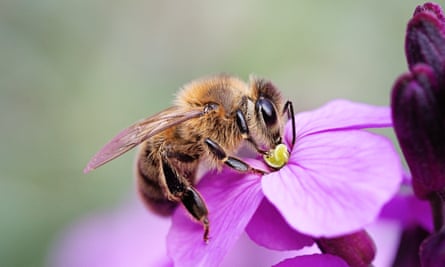
A bee on a flower
Honey fraud can take place at any point in the supply chain, says the federation’s president. Photograph: Jackie Bale/Getty Images

He said: “We are continuing to fight for improvements to the testing. We want the public to know that local honey is much less likely to be adulterated. The beekeepers get their name on it and can stand behind it.”

He said there was widespread adulteration in cheaper commercial honeys. The fraud can occur at any point of the supply chain, with many importers and retailers unwittingly trading in fake honey.

An EU investigation published last year found 46% of imported sampled products were suspected to be fraudulent, including all 10 from the UK. Samples used in October by the UK branch of the Honey Authenticity Network for a novel form of DNA testing found that 24 out of 25 jars from big UK retailers were suspicious.

China is the world’s biggest producer of honey, but experts say it can be fraudulently blended with cheaper sugar syrup. The UK is the world’s biggest importer of Chinese honey, with more than 39,000 tons imported last year.

Bernhard Heuvel, president of the European Professional Beekeepers Association, said there was overwhelming evidence of fraud in the supply chain. “It’s just unbelievable if the world organisation for all beekeepers cannot guarantee the authenticity of honey. The scale of this fraud is huge.”

Dale Gibson, co-founder of Bermondsey Street Bees, which has hives in and around London, said the UK should require importers to label the country of origin on all honey, including blends. He said: “We have to give consumers information at the point of sale that they can act on.”

Importers in the UK have rejected as unreliable the hundreds of tests commissioned by campaigners and investigators on British-sold honey that suggested adulteration. Regulators in the UK have not published detailed results of official tests, but rejected claims of significant fraud.

An assessment of food crime published by the Food Standards Agency (FSA) in September said it was “unlikely that adulterated honey is broadly present on the UK market”, but recognised the “complexities” in making the judgment.

Enid Brown, director of the World Beekeeping Awards, said: “The UK government needs to wake up to this problem of adulteration of imported honey. Until the government starts official tests on honey and publishing the results, we are never going to win.”

A spokesperson for the Department for Environment, Food and Rural Affairs (Defra) said: “We take any type of food fraud very seriously. There is no place for adulterated honey which undermines consumer confidence and disadvantages responsible businesses acting within the law.

“We work closely with enforcement authorities to ensure that honey sold in the UK is not subject to adulteration, meets our high standards, and maintains a level playing field between honey producers.”

Andrew Quinn, head of the FSA’s National Food Crime Unit, said: “We are working closely with Defra and other government colleagues to develop conclusive testing that will be able to establish the authenticity of honey on sale.”


Read the original article

Comments

  • By Etheryte 2024-12-0718:3121 reply

    Here's a very straightforward guide to buying honey. If you see honey at a supermarket, no you don't, that's sugar syrup. If you see honey online, no you don't, that's sugar syrup. If you find an old dude with a small stand and a bunch of (most likely unlabelled) jars who only accepts cash, that's where you get real honey.

    • By jart 2024-12-0720:287 reply

      But all the honey labels say the only ingredient is honey. We've always been able to assume that with things like jams, or any other food, when manufacturers adulterate it with things like corn syrup, or even mild poisons, they proudly say so on the label. To not do so is fraud. How can people just claim that an entire industry is committing fraud??? Even this article doesn't mention anything about proof, just suspicions. Why can't they prove it? To make these kind of claims without proof is arguably worse than fraud. This would all be outrageous if it's true, since it becomes impossible to make any rational choices as consumers if the food system has gone fraudulent.

        • By dreamcompiler 2024-12-0723:471 reply

          To a first approximation it's accurate to assume any imported olive oil on a grocery store shelf in the US is fraudulent. The only kind I buy now is 100% grown in California and certified by the California Olive Oil Council. And it is very expensive.

          • By ugh123 2024-12-085:22

            Absolutely. Avoid any blends outside the U.S.

        • By throwaway2037 2024-12-088:562 reply

          Honestly, I don't care about "olive oil fraud" from/within the EU. As long as the final country that bottles it is responsible for food safety, then I am OK with it. Seriously, if you told me that tomatoes were mislabelled from Portugal instead of Spain, I would not care. What are the tangible drawbacks for consumers of mislabelled olive oil from EU?

          • By Glawen 2024-12-0810:00

            There was an article about the word enshitification, what you describe the real life example: you are paying a premium price for a product with a lowering quality every year that goes by. Fighting labelling fraud is the correct answer.

            If it is written extra virgin olive oil that means a certain oil quality expected in terms of taste. For me that means I can enjoy a non rancid oil on my tasteful tomatoes with real mozzarella di buffalo, and that is a world of difference with making the same salad with tasteless but "tested on rats safe" products

          • By solumunus 2024-12-0813:501 reply

            You’re overpaying for poor quality products. Quite simple.

            • By throwaway2037 2024-12-0914:182 reply

              So, if olive oil from Portugal is imported to Italy and bottled and mislabelled as from Italy, this makes it automatically lower quality? This is the kind of virtue signalling bullshit that I reject on HN.

              • By solumunus 2024-12-115:01

                If something like this is done it’s done to save cost, which almost always correlates with quality.

              • By collingreen 2024-12-0916:351 reply

                It sounds like you're trying to be angry. I don't see any virtue signaling here except some "holier than thou" from the tone in your comment.

                Nobody is claiming that a label magically changes the quality. The comments above are claiming that olive oil from some regions fetch a higher price in the market, ostensibly for good reasons, and that taking something else and claiming it is from that region is fraud. I'm surprised that feels controversial.

                • By throwaway2037 2024-12-1013:221 reply

                      > ostensibly for good reasons
                  
                  Can you name some of these reasons?

                  • By collingreen 2024-12-1022:13

                    I have no expertise in regional honey or olive oil or any of the other often-counterfeited things but I assume it is something like wine where the region implies terroir, relevant policies/regulations, and long histories of expertise/techniques. For example, I have heard honey is majorly impacted by the regional flowers around where it is produced.

                    I personally wouldn't know Italian olive oil from Greek from rancid American garbage but if people think they do and they are trying to buy something in particular then ideally they aren't mislead about that.

      • By araneae 2024-12-0720:52

        I'm sorry you're just hearing this only right now, but unfortunately it's been happening for a while, and we've also known it for a while.

        I.e. https://food.ec.europa.eu/food-safety/eu-agri-food-fraud-net... found widespread fraud and put measures in place to prevent it, but it continues to be challenging.

      • By NelsonMinar 2024-12-080:45

        The phrasing in the article about "suspected to be fraudulent" is over-cautious, probably because of Britain's very generous libel laws covering newspapers.

      • By Etheryte 2024-12-0722:433 reply

        If you find this hard to believe, I recommend reading this Forbes article [0] which gives some pretty stark numbers. I've included a few select quotes below:

        > According to the sampling and monitoring work carried out by the Brussels-based body, almost 50% of the honey from non-European countries is cut with sugar syrups made from rice, wheat or sugar beet.

        > All the 10 honeys entered via the United Kingdom were marked “non-compliant” and mixed with imports from Mexico, Ukraine and Brazil.

        > Apart from the main fraudulent addition of sugar syrups, the report also alerts of the presence of additives and colorings and the falsification of traceable information.

        So yeah, a considerable part of honey contains more than what's on the label and often isn't of the origin written on the label. As for outrageous, it is — beekeepers have been sounding the alarm on this issue for years — but nothing has been done to stop this on the policy side.

        [0] https://www.forbes.com/sites/ceciliarodriguez/2023/03/24/hal...

        • By alright2565 2024-12-0723:351 reply

          fyi, "forbes.com/sites" is just some blogging platform.

          In this case, it's mostly right, but the original source is https://food.ec.europa.eu/food-safety/eu-agri-food-fraud-net...

          • By gmerc 2024-12-084:25

            You’re too generous.It runs paid influence campaigns.

        • By pradn 2024-12-0722:48

          It makes total sense for European farmers to cry foul if cheaper imports get to masquerade as the real thing. This has been a big sticking point for the EU-Mercosur deal that recently concluded.

        • By throwaway2037 2024-12-089:011 reply

          Why do consumers think honey is a special food deserving to spend so much money upon it? I never understand it. Also, I am no doubting this specific Forbes-hosted blog (as I call them), but reader beware. I don't think there is any editorial guidance from the main publishing house. You see all kinds of dubious crap posted on that platform! In the last year or so, HN front page now specifically distinguished blog posts from these subsites, versus the main publisher's website.

          • By portaouflop 2024-12-0811:111 reply

            Honey is a special food and one of the key ingredients for modern civilisation

            • By throwaway2037 2024-12-0914:161 reply

                 > one of the key ingredients for modern civilisation
              
              I tried to Google about this but I could not find anything scientific. Lots of of pseudo-science, however. Can you explain more? Essentially, honey is sugar, an inessential part of the human diet. What am I missing?

              • By portaouflop 2024-12-118:31

                Without bees agriculture is not possible. Without agriculture modern civilisation would not exist.

      • By hofo 2024-12-1114:53

        I assume that the notion of adulterated honey is new to you and that you’re not in the industry. This has been an issue for decades, it’s nothing new. There are commercial honey producers and packers that are clean but the easiest and surest way to avoid fake honey is to buy local.

      • By 0xEF 2024-12-082:301 reply

        Wait til you hear about maple syrup...

        That aside, yeah, this is a real problem with honey (and maple syrup) in the US. Food manufacturers will go to insane lengths to get around any laws that protect product purity and honest labeling because the profits are far greater than the fine for breaking the rules.

        As we all know, if the punishment is a fine, it's only illegal for companies that cannot afford to pay...like the guy at the farmer's market with the mason jars.

        • By Aloisius 2024-12-086:071 reply

          I have never heard of maple syrup fraud in the US nor can I find any articles on it.

          Unless one is talking about imitation maple syrups, but those are labeled properly.

            • By Aloisius 2024-12-091:13

              That "article" appears to be a promotion for a test to detect maple syrup fraud in Canada.

              It doesn't say maple syrup fraud is common in the US. It does cite an article about someone who bought fake syrup from a random "trucker" on the internet, but that article explicitly says it's not a big issue.

      • By _3u10 2024-12-0720:402 reply

        That’s because honey is sugar syrup with a liberal sprinkling of marketing. The sugar syrup they are blending it with doesn’t have the right marketing and is therefore not honey.

        • By jart 2024-12-0720:552 reply

          No, it's not. Honey is defined by the USDA as being flower nectar that's been processed by bees[1]. Artificial honey can not be called honey[2]. If they're mixing it with high fructose corn syrup, then there should be a way to scientifically determine that.

          [1] https://www.ams.usda.gov/sites/default/files/media/Extracted...

          [2] https://www.ams.usda.gov/sites/default/files/media/Extracted...

          • By ryandrake 2024-12-0721:371 reply

            Oh, the USDA publishes a rule! Surely everyone will follow that and the problem is solved.

            Unfortunately we get the behavior that we let people get away with. Regulators are asleep, courts let companies weasel their way around everything, and reality doesn't care about published rules and standards.

            • By warkdarrior 2024-12-0721:531 reply

              Regulations like these are onerous. Have you ever watched a bee filling out a Dept of Ag or FDA form? Dept of Govt Efficiency will fix it.

          • By colechristensen 2024-12-0722:0710 reply

            A 90s percent of honey is fructose, glucose, and water. A very high 90s percent of corn syrup is fructose, glucose, and water. Getting the ratios the same is trivial. There is nothing magical about fructose or glucose from different sources, they’re exactly the same simple molecule.

            If you had very clean corn syrup, you could undetectably dilute honey and it would be quite the same. Lab tests being what they are these days, someone could probably make a part per billion analysis that would be very hard to evade, but the difference is emotional not practical.

            People have wrong ideas that honey is so much healthier than corn syrup when it is indeed very similar. Not that i support selling corn syrup as honey, but it wouldn’t make any actual difference other than diluted flavor.

            • By dghlsakjg 2024-12-081:061 reply

              Orange juice is more than 90% water, but you would need to get your sense of taste checked if you confused it with sugar water.

              By the same token if you can’t taste the difference between sugar syrup and honey, then you need to get your taste checked, or perhaps you’ve never had real honey.

              The flavors in honey are also deeply affected by what the bees eat. Buckwheat honey is a totally different thing than Tupelo honey, and neither are anything like clover honey.

              Even if you ignore all of the health claims, saying honey is just sugars and water, you are ignoring the fact that humans want more than nutrient paste.

              • By dredmorbius 2024-12-087:03

                Hoboy, don't get started on orange juice. The commercially-prepared stuff is also rather distantly-related to fresh-squeezed:

                Once the juice is squeezed and stored in gigantic vats, they start removing oxygen. Why? Because removing oxygen from the juice allows the liquid to keep for up to a year without spoiling. But! Removing that oxygen also removes the natural flavors of oranges. Yeah, it’s all backwards. So in order to have OJ actually taste like oranges, drink companies hire flavor and fragrance companies, the same ones that make perfumes for Dior, to create these “flavor packs” to make juice taste like, well, juice again.

                <https://gizmodo.com/dirty-little-secret-orange-juice-is-arti...>

                And that's for product actually marketed as orange juice, rather than, say, a sweetened citrus-flavoured beverage, for which the first ingredient often is sugar and/or corn syrup, e.g., "True Orange Mango Orangeade":

                Ingredients: Cane sugar, crystallized orange (ctiric acid, orange juice, orange oil), natural flavor, stevia leaf extract, beet juice and beta-carotene.

                (Beet juice and stevia are both sweeteners, the first is effectively liquid sugar, the second is a non-caloric / low-caloric non-sugar sweetener.)

                <https://www.truecitrus.com/products/true-orange-mango-orange>

                The fact that you're better off either squeezing your own or better yet eating whole fruit is a whole 'nother matter.

                A more detailed production process:

                "How products are made: Orange juice":

                <https://www.madehow.com/Volume-4/Orange-Juice.html>

            • By sitharus 2024-12-086:431 reply

              Take a holiday to New Zealand and try honey here. It’s definitely not adulterated because we don’t allow any honey imports. Try clover, Rewarewa, Manuka, and multiflora, you can taste a clear difference between each.

              Of course they’ll likely be creamed honey rather than pourable, but that’s just a preference.

              • By tharkun__ 2024-12-104:06

                Oh absolutely, real honey has flavor differences en masse!

                The worst we ever tried was pure Buckwheat honey. Very distinct. Sorta "refreshingly different" the first time you try it. For us personally, after that: toss.

            • By nativeit 2024-12-080:492 reply

              We share more than 90% of our DNA with rats. I can’t speak for anyone else, but I’d like to suggest there are some qualitative differences between myself and a literal rat.

            • By maltyr 2024-12-0722:571 reply

              https://pmc.ncbi.nlm.nih.gov/articles/PMC10346535/

              Numerous studies have concluded that honey does have a better effect on health than the same amount of simple syrup, at least.

              > It has been demonstrated that honey consumption can influence plasma lipid, glucose, and insulin levels through different biochemical mechanisms. The decrease in blood glucose may be due to the fact that honey has a stimulatory effect on insulin secretion and improves insulin sensitivity

              • By carbocation 2024-12-080:081 reply

                An uncited statement in a review article!

                If I'm rich in time and money enough to routinely take the time to wander down to my friendly beekeeper and buy their small-batch artisanal honey, for so many reasons I will live longer than someone who isn't.

                Someone should randomize people to honey vs fake-honey-sugar-mix and settle the issue.

                • By nativeit 2024-12-080:482 reply

                  You mean, something like this?

                  > Forty-eight articles published in 42 different journals were analyzed, with a total of 3655 subjects with 29.51 ± 21.51 years of age, of whom 1990 consumed or were treated with honey. Of the 3655 subjects, at least 1803 were women (two studies did not specify). The studies included different population groups (healthy subjects, overweight or obese subjects, diabetic subjects, subjects with cancer, children, etc.) and included more than 30 different types of honey. Although it is not a systematic review, the results of the PEDro scale regarding the quality of the articles were in the range of 6–10, with articles scoring 6 or higher being considered of good methodological quality.

                  • By tucosan 2024-12-080:551 reply

                    How do they know the study participants consumed honey and not corn syrup?

                  • By carbocation 2024-12-086:30

                    There is no assertion that those individuals were randomized, simply "treated".

            • By oasisbob 2024-12-080:43

              Honey and sugar syrups have other various constituents, and it's trivially possible to tell them apart via GC/MS at far higher levels than ppb.

              https://zenodo.org/records/438103

            • By jfengel 2024-12-0722:18

              The remaining 10 percent is very significant to flavor. You can definitely detect it with your tongue and nose.

              But as you say it is utterly irrelevant to nutrition or health. Even the antibacterial elements are real but negligible.

            • By portaouflop 2024-12-0811:14

              That’s like saying humans are the same as chimps because they are both 60% water - the difference is not emotional

            • By fooker 2024-12-085:19

              We share 98.8% of our DNA with chimpanzees, doesn’t make us chimpanzees.

            • By Der_Einzige 2024-12-084:36

              This is the truth about most types of oil too. All oil is bad and it’s all almost the same.

        • By result2vino 2024-12-081:421 reply

          This particularly americanised brand of nihilism is so bloody tiring.

    • By liontwist 2024-12-0723:134 reply

      The "down to earth local grower" is a form of marketing that appeals to you. It's not a guarantee of quality, and probably more variable. Many vendors at farmer's markets just buy and relabel stuff, because producing goods efficiently enough to make a profit is actually hard.

      • By weitendorf 2024-12-0723:43

        This is true but there are varying degrees of “buying and relabeling” stuff. At its worst yes they could be going to a wholesaler or supermarket or restaurant supply store and just reselling those goods.

        What I suspect is more common and isn’t as bad is that someone operates as a consumer brand/storefront for several small scale local farms. Given the variety of produce sold at so many of the farmers’ markets stalls in CA, and that most of it does indeed seem artisanal (ie not the kind you’d see in a grocery store), locally growable, and in-season I’m pretty sure this is commonplace.

        There’s just no way a “down to earth local grower” could farm 15+ different kinds of crops at the scale required to operate one or more farmer’s market stalls multiple days a week, and operate the stalls. You’d need a big operation for that to not be a logistical nightmare. That said, if a vendor is just selling one or two things that keep well (like honey) it seems totally feasible that they’re truly a “down to earth local grower” although that also means they’re “possibly a complete amateur/fraud”

      • By Etheryte 2024-12-0723:271 reply

        I'm pretty sure my own father is not masquerading as a beekeeper to market his honey to me. You're right though that it alone doesn't pay the bills, but it does definitely help.

        • By dingnuts 2024-12-085:32

          same experience. Bee keeping is a fairly accessible hobby, actually, and the honey is very good, although you wind up with far too much of it

          I do prefer my dad's to buying "local" stuff at the supermarket but I'm not sure I believe all the uncited claims in this thread about everything on the shelf there being fake

      • By esperent 2024-12-085:04

        Not to say there aren't some frauds out there. But the well known "honey stall dude" in my area happens to be my friend's father and I've been lucky enough to be able to go around with him to see the many many beehives he has stashed around the local countryside. For most of these people, it's a passion, and their honey is legit.

      • By slt2021 2024-12-080:202 reply

        agree, a lot of honey growers feed sugar syrup to the bees to maximize honey production.

        it is sort of cheating

        • By esperent 2024-12-085:08

          In some climates if there's been a bad year, or an inexperienced beekeeper harvested too much honey, it is sometimes necessary and normal to feed bees with sugar in autumn/winter to prevent starvation. This shouldn't make it into the honey harvested on spring and summer.

          https://www.honeybeesuite.com/winter-feed-q-a-liquid-vs-soli...

        • By dmckeon 2024-12-081:18

          Or to keep hives alive when nectar is scarce but colonies have not started to hibernate. Adulteration of produced honey with syrup would be 10x easier than feeding bee with syrup and then doing extraction from comb.

    • By umanwizard 2024-12-0718:474 reply

      How do you know this? Is there actual reporting on what percentage of honey in supermarkets is adulterated, rather than just anecdotal reports that at least some is?

      • By Etheryte 2024-12-0719:103 reply

        There are many studies into this, but this Forbes article [0] is a good example:

        > Of 123 honey exporters to Europe, 70 are suspected of having adulterated their products, and out of 95 European importers checked, two-thirds are affected by at least one suspect batch.

        This is only one example, similar stings elsewhere have likewise found bleak results.

        As the son of a beekeeper I can attest to this, the honey you find at a grocery store and what actually comes out of a hive are very different things. Even if you boil natural honey you still don't get the texture and consistency they have at the store.

        [0] https://www.forbes.com/sites/ceciliarodriguez/2023/03/24/hal...

        • By RHSeeger 2024-12-0719:211 reply

          > Of 123 honey exporters to Europe, 70 are suspected of having adulterated their products

          That sounds better than the rates I saw of good/bad extra virgin olive oil, and you can most certainly find good EVOO at a grocery store; you just need to know what brands to look for. Is there any reason to believe it isn't the same with honey? If not, then that's a pretty far cry from "If you see honey at a supermarket, no you don't, that's sugar syrup".

          • By WhiteDawn 2024-12-0721:11

            And similar to olive oil. Once you taste the real deal, it's very easy to identify the fake/watered down stuff by taste alone.

        • By mft_ 2024-12-0719:30

          > similar stings

          :)

        • By sholladay 2024-12-0720:40

          Agreed that fresh honey and store honey are very different. You would think that, given how different they are, it would be easy to detect the fake honey. But apparent lyrics not.

      • By tharkun__ 2024-12-0720:361 reply

        And he is definitely globally wrong anyway.

        Our local supermarket sells honey from a local beekeeper that we've also bought honey from directly before. Only that one local supermarket has their honey and it's closer to us than driving to the beekeeper. And yes it has a nice looking but plain label on the jar.

        He is probably mostly right about large quantity, imported honey tho.

        • By vinnymac 2024-12-0722:25

          I think as a guide for buying honey his advice is valuable, although a bit dramatic, and it won’t apply to every country or region.

          As someone who is a beekeeper and owns a farm, you can be much more certain what you’re getting is honey where I am from when it’s being purchased from the back of a van from some random person with some glass jars, than you can at any supermarket. Hi it’s me I am the random person with the glass jars :)

      • By pbronez 2024-12-0718:543 reply

        From the article:

        An EU investigation published last year found 46% of imported sampled products were suspected to be fraudulent, including all 10 from the UK. Samples used in October by the UK branch of the Honey Authenticity Network for a novel form of DNA testing found that 24 out of 25 jars from big UK retailers were suspicious.

        • By buran77 2024-12-0719:19

          Also:

          > Regulators in the UK have not published detailed results of official tests, but rejected claims of significant fraud.

          If I remember correctly this was already the situation in Germany already decades ago. At least half of the honey on the German market was (to use the term from the present article) adulterated as EU investigations at the time showed. The investigators was even hidden camera footage with importers admitting they knew this was the case. Then a lot of lobbying money moved around between importers, distributors, and local authorities, and the honey kept flowing.

          The labs that did the testing were good for far more delicate work so it wasn't a matter of precision and accuracy, more a matter of Germans loving their honey. Stopping the flow of cheap, even if adulterated honey from China and at the time I think also Ukraine would be a big hit to the industry's wallet. I bet all those involved just told themselves "sweet is sweet" and went about their profit making business.

        • By trimethylpurine 2024-12-0719:19

          Some part of the verbiage here is unscientific. We're in need of a percentage of suspicion that applies to a percentage of jars and whether that percentage of suspicion is based on the presence or absence of certain adulterants.

          Otherwise these percentages give more ambiguity than insight about the products.

        • By secondcoming 2024-12-0720:421 reply

          It's extremely common for honey sold in the UK to be labelled as a 'blend of EU and non-EU honey', or similar. There's no doubt in my mind that what this really means is that they've no real idea where the honey comes from.

          On the rare occasion I do buy honey it's usually Scottish Heather Honey, which is as delicious as it is expensive.

          • By Marazan 2024-12-0722:57

            Yeah as soon as I see 'blend of EU and non-EU honey' then I'm noping out of there as it just means disguised sugar syrup.

            Actual location authenticated honey costs actual real money.

      • By skylurk 2024-12-0719:012 reply

        Honey supply chains are opaque and global, plus the incentives to cheat are clearly there and it's hard to definitively prove a batch was not adulterated. I'd say it's fair to be suspicious.

        That said, this old article seems to think its not as common a problem as you would expect: https://www.npr.org/sections/thesalt/2011/11/25/142659547/re...

        • By throwup238 2024-12-0719:142 reply

          > "Consumers don't tend to like crystallized honey," says Jill Clark, vice president for sales and marketing at Dutch Gold. "It's very funny. In Canada, there's a lot of creamed honey sold, and people are very accustomed to honey crystallizing. Same in Europe. But the U.S. consumer is very used to a liquid product, and as soon as they see those first granules of crystallization, we get the phone calls: 'Something's wrong with my honey!'"

          Anecdotal but everything in that NPR article rings true to me. American consumers are used to the bear shaped bottles with purified honey that’s barely distinguishable from sugar syrup and could easily be adulterated but the raw honey I usually buy is so obviously honey from the taste and texture that I have a hard time believing any of it is adulterated. If honey producers were really that good at artificially replicating flavor profiles, they’d be far ahead of the rest of the food science industry.

          • By highcountess 2024-12-0719:232 reply

            Are you sure what you believe is unadulterated honey because you are familiar with the taste, is not just adulterated and you are just so accustomed to fake honey that you confuse the two?

            I say that because basically all the honey I’ve ever bought in a store has always tasted flat and lacked flavor depth that has long made me wonder about its authority compared to known hive honey.

            • By throwup238 2024-12-0719:412 reply

              I’ve had raw honey straight from both domesticated and wild hives as it was collected so unless the bees themselves are adulterating it, I think I’ve got an accurate baseline for how honey is supposed to taste.

              Go out and buy a good manuka or wild Himalayan honey and you’ll quickly learn how to spot the real stuff. The honey I buy isn’t meant to look like filtered golden sugar syrup so adulterating it is practically impossible. That said I buy it from ethnic grocery stores so unless you’re getting the good stuff at Trader Joes YMMV (I like their manuka)

              • By michaelbuckbee 2024-12-0720:291 reply

                I remember an episode of Dirty Jobs where there was an old candy plant or something that bees had gotten into, and they made blue honey from the syrup that was left over in the plant.

                Rare, but possibly the bees were doing a swindle.

                • By throwup238 2024-12-0721:031 reply

                  From my limited understanding almost all beekeepers give their bees sugar syrup to help them overwinter anyway so nothing stops them from supplementing their diets in the spring. It’s obviously not ideal since a lot of the other aromatics from pollen will be missing but it’s still a step up from mixing the end product with sugar syrup.

                  Blue honey sounds cool though.

            • By nuodag 2024-12-083:20

              My Grandpa is a beekeeper, i help him take care of his hives. The honey i get out of that crystallises quickly to a relatively rough texture, and has a deep taste. It is a completely different thing than what you get in the store.

              I don’t know if that one is adulterated, or just processed so much that it is all flat and smooth.

          • By pfannkuchen 2024-12-086:28

            I’m so confused by people not liking crystallized honey. It’s so much more convenient to use, it doesn’t drip anywhere it’s practically like thick peanut butter consistency. Great for yogurt, toast or tea. Why would anyone want it to be runny?

        • By yumraj 2024-12-0719:423 reply

          We buy from Costco and most/all of it crystallizes after some time.

          Not sure if that makes it good honey, but there’s that.

          • By acomjean 2024-12-0720:353 reply

            You can heat it in a microwave to reverse the crystallization.

            Do not do this ifs the honey is in a squeezable bear container. The honey will boil, make a hole in the bear and spray honey all over the inside of your microwave (the turntable helps this). This will make a huge mess and will make opening the microwave more challenging.

            • By yumraj 2024-12-0720:48

              I think the general recommendation is to put the bottle in warm/hot water. I don’t believe microwaving is a good idea, unless done at low power for longer.

            • By avidiax 2024-12-0720:53

              Sous-vide at 110F. It will take hours, but it won't affect the flavor.

            • By dredmorbius 2024-12-087:06

              Warm water is sufficient, though with recent cautions about heating plastics and leaching of chemicals, I'd prefer transferring the honey to a glass jar if it's not packaged in such already.

              You can double-boil if you want, where the jar sits in a shallow water bath which you boil for 10--20 minutes or so to decrystalise the honey.

          • By 7thpower 2024-12-0720:032 reply

            The first thing that popped into my head after reading this was the large container of Kirkland honey I have.

            I thought: “Costco wouldn’t lie to me? Would they?”

            Now I must go and find out.

            • By hollerith 2024-12-0720:05

              Just because they're not lying doesn't mean they've done the work of finding out whether the honey is pure.

            • By scheme271 2024-12-081:52

              Costco apparently sells one of the few olive oils that aren't adulterated. So their honey might also be real.

          • By dghlsakjg 2024-12-081:191 reply

            Crystallization isn’t an indicator of fake or low quality honey.

            We have had wildflower honey crystallize in the honeycomb when we left it in the garage over winter.

            It can be decrystallized easily with gentle heat. I put our jars in a water bath in a pot and leave it over a low setting for about an hour until it is good. The water never gets over 125 or so, which should be fine.

            • By yumraj 2024-12-0823:421 reply

              I had meant the other way, that it crystallizes so if it means that it’s a good honey.

              • By dghlsakjg 2024-12-0916:14

                There are a number of things that can affect crystallization; Storage conditions, filtering, what the bees foraged, etc.

                There are some genuine honeys which rarely crystalize.

                Afaik (as an amateur beekeeper), it is not a good indicator of anything in particular, there are even reports of adulterated honey crystallizing. This make sense, since honey and fake honey are both a supersaturated solution of sugars that will gladly crystalize if given an opportunity.

    • By EA-3167 2024-12-0720:191 reply

      The place I buy honey is run by an older woman in Vermont who owns a lovely apiary. I've visited and seen the process, she's fantastic, her product is delicious, and it's as real as it gets. They're 4th gen family owned, so they really know what they're doing and it's all about the bees, the honey and their reputation.

      Plus the honey is so delicious. When I visited she gave me this little container of the foam that collects on top of the raw honey. It was delicious, I ate a little spoonful of it every day until it ran out.

      I don't work for them, I don't get money from them, I'm just an enthusiastic long-term customer.

      Champlain Valley Apiaries: https://www.champlainvalleyhoney.com/

      I cannot recommend them enough.

      • By Mtinie 2024-12-0721:421 reply

        My mom discovered Champlain Valley about 10 years ago, so now every time she visits (we’re in VA, she’s from CA), she sends an order with a two pound jar ahead so she has a honey she likes in our pantry. I don’t complain at all, because it means we have excellent honey to consume once she leaves :)

        • By EA-3167 2024-12-0721:47

          Your mother sounds great; it's funny too because I was also introduced to this by my mother! She's an avid tea drinker, and loves honey in her tea. Meanwhile I have Greek yogurt most mornings, and with addition of really good honey it becomes unbeatable.

          I guess the point my mother would claim is, "Listen to your mother, she knows best." Heh

    • By greatgib 2024-12-0812:09

      I would easily say that the old dude with a small stand in the market is the most suspicious. Most of them are frauds tricking tourists and co by the "local artisanal" aspect. In the same way that it is now very hard to find a Christmas market selling authentic artisanal products.

      And in 2024, if he does not accept cash, it might probably because he is happy to not declare all his incomes. That is a bad sign if you expect such a guy to be honest to not mess with his honey!

    • By reaperducer 2024-12-0722:061 reply

      If you see honey at a supermarket, no you don't, that's sugar syrup.

      I get my honey from a local beekeeper who delivers to my door. He welcomes people to tour his farm to see how it's produced.

      He also sells his honey in the local chain supermarkets. Your broad generalization is false.

      • By dghlsakjg 2024-12-081:31

        His point is that there is no reliable way to differentiate between real honey and adulterated product for the average consumer in store.

        If 1/3 of the honey in the store is fake, but you don’t know which 1/3 is fake, then what is the point of buying any honey at that store? If you need advice about where to buy pure honey because you don’t personally know the farmer then, “treat everything at the grocery store as suspect” is fine advice.

        If you have personally toured an apiary, know the keeper, and happen to know that he sells at a few grocery stores as well, you don’t need the advice, and your addition isn’t helpful since the end result is the same: the average person can’t trust the honey at their large grocery store, and they should find a local beekeeper.

    • By yumraj 2024-12-0719:381 reply

      Now old dudes will buy supermarket honey and unlabeled jars.

      Unverifiable provenance in both cases..

      • By araneae 2024-12-0720:562 reply

        If you /really/ want to be sure, buy comb honey. Impossible to fake.

        • By bagels 2024-12-0722:212 reply

          Can't fake honeycomb be made and placed in to jars of fake honey?

          • By pfannkuchen 2024-12-086:32

            I think the market is probably too small to put the money into figuring out how to fake it convincingly. Also the market leans towards enthusiasts who detect fakes more readily than the average honey normie.

            If it ever becomes mainstream this will definitely happen.

          • By dredmorbius 2024-12-087:08

            Cost/reward is likely sufficient disincentive.]

            This is shades of "if you can fake sincerity you can fake anything":

            <https://quoteinvestigator.com/2011/12/05/fake-honesty/>

            (Uncertain origin, though often attributed to Groucho Marx, George Burns, Jean Giraudoux, Celeste Holm, Ed Nelson, Samuel Goldwyn, Daniel Schorr, Joe Franklin, and/or Anonymous.)

        • By yumraj 2024-12-0722:362 reply

          I've seen it but never dared to buy. What do you do with the honey comb, eat it? Does it taste waxy?

          • By tdeck 2024-12-084:15

            Yes you can eat it and you spit out the wax. The wax is a bit flaky so I didn't find it that pleasant to chew on. Some people apparently spread it in toast like jam and eat it wax and all. It's not great for stirring into drinks.

          • By Anon_troll 2024-12-080:50

            The comb walls are basically like chewing gum. It does not have much taste.

    • By Aurornis 2024-12-0719:482 reply

      This isn’t true at all in the United States at least.

      Sugar syrup or even honey adulterated with sugar syrup behaves differently. I’ve had some cheap generic brand bottles that flowed too easily, dissolved too quickly, and never crystallized. Probably sugar syrup.

      But I haven’t seen this once since over a decade ago in my college days when I shopped at some questionable neighborhood supermarkets.

      Everything I’ve bought from local supermarkets and chains like Costco has felt, looked, flowed, tasted, and crystallized like real honey.

      You should probably be more suspicious about those roadside shops, too. With the rise of “farmers’ markets” as a side hustle you can no longer tell what’s what just by the fact that they’re operating out of a stand and taking cash. Around here, a lot of the “farmers’ market” and even roadside stand operators are reselling products they get from other entrepreneurs who sell them the produce, honey, and other goods. There’s a group of people here who have roadside stands with signs spray painted by hand to look like mom and pop DIY operations, which tricks people until they realize those exact signs are in 100s of locations across the state. It’s just another business preying on people’s lack of trust in institutions but implicit trust in anything that feels mom and pop, just like your comment implies.

      • By bowsamic 2024-12-0723:151 reply

        My brother in law owns bees and gifts us honey. One is strong, thick, crystallised easily. One is thin and flows very easily, very see through. These things aren’t good indicators of adulteration at all

        • By pfannkuchen 2024-12-086:313 reply

          Is it like a bloom filter? Crystallizes easily means real? Doesn’t crystallize easily means unknown?

          • By sitharus 2024-12-086:47

            Unfortunately not. The rate of crystallisation depends on the source of nectar for the honey, I know from experience that clover honey seems to crystallise a lot sooner than Manuka honey.

            It also depends on the sort of processing done. Commercial honey is pasturised, but local suppliers might not.

          • By bowsamic 2024-12-087:08

            No you can buy cheap “mix of non EU” honey in both styles from the supermarket for about the same price

          • By Filligree 2024-12-086:54

            Different blooms cause different types of honey, yeah.

      • By gitremote 2024-12-086:31

        [dead]

    • By pfortuny 2024-12-0718:521 reply

      Are you talking about a specific country or anywhere (in the West, I assume)?

      • By phatfish 2024-12-0720:112 reply

        What I had heard was that anything that isn't "single source" likely has sugar syrup added. this includes all major brands. I wouldn't even trust the expensive "organic" versions of big brands. Apparently exported Chinese "honey" is the main offender which gets mixed with other sources.

        Two of the supermarkets in the UK I shop in have their own brand "Spanish Forest Honey", that claims to be single source from Spain. I have no reason to not trust that it is yet. It is about x2-3 more expensive than the big mainstream brands, darker and tastes stronger.

        The Spanish producers could be adding sugar syrup as well I suppose, but aside from hunting down honey from farmers markets it's the best option I have.

        • By secondcoming 2024-12-0720:45

          Sainburys has Scottish Heather Honey. According to the label it's 100% Scottish honey.

        • By Marazan 2024-12-0723:00

          Interesting you appear to be getting downvoted for presumably accurately stating that China is the majority source of fake honey.

          It was such a known problem that China had to start laundering its honey, I believe at one point Singapore suddenly became one of the world's latest exporters or "honey"

    • By c2h5oh 2024-12-0719:022 reply

      Better yet befriend a beekeeper. You gain a friend and honey.

      • By codetrotter 2024-12-0719:071 reply

        Cut out the middleman. Become friend with the bees. You gain a hive mind as friend, and honey! :D

        • By ponector 2024-12-0719:431 reply

          Bit to get honey would mean to rob your hive friend.

          • By Snacklive 2024-12-0720:081 reply

            Na dude, they are chill. They produce more under your friendship so you can keep a little. If they think the relationship is going toxic they just leave. It's awesome

            • By spookie 2024-12-0722:121 reply

              Yeah, it's basically this. Most wouldn't survive winter.

              • By notyourwork 2024-12-080:501 reply

                How do they survive winter? Do they hibernate, go south or stay?

                • By dghlsakjg 2024-12-081:23

                  They mostly enter a low activity state and cluster in the hive to stay warm and save energy/honey. If it gets warm enough outside on occasion you will see them leaving the hive to poop and push the dead bees out.

      • By cgh 2024-12-0719:20

        Yeah, one of my best friends is a beekeeper and we get our honey from him. This led to an uptick in honey consumption around here and perhaps not unrelatedly, I got my first ever cavity about six months ago.

    • By deadbabe 2024-12-0721:452 reply

      So I’ve never had real honey? Why doesn’t someone just sell the stuff the small dude sells in a store?

      • By bluGill 2024-12-0722:49

        They do sell it in stores, but there is no clear way you can know if you are getting the real stuff or fake - the labels look the same.

      • By bongodongobob 2024-12-0721:541 reply

        They do, parent is full of shit. Too much Instagram probably.

        • By deadbabe 2024-12-089:32

          There seems to be a lot of gatekeeping where if people buy something too easily it’s made clear they are not getting the “real” thing. Why?

    • By UniverseHacker 2024-12-0721:01

      All of the honey I buy at grocery stores crystalizes almost immediately… sugar syrup won’t do that. I usually buy something that appears to be directly from a local farm with a name and address I recognize, and is in a regular mason jar with no fancy branding.

    • By Spivak 2024-12-082:10

      On the complete opposite end, if you go to a supermassive grocery store and buy their store brand then you'll be getting real honey simply because they have deep pockets and a massive target on their backs if they're committing fraud.

    • By randomcarbloke 2024-12-099:29

      in america yes that is a good rule of thumb

      >said the UK should require importers to label the country of origin on all honey, including blends

      It actually does require that, it must specify country of origin and whether it is a blend, if it's a blend then it contains syrup and possibly antibiotics.

      Buy single origin which in europe is certainly available, in the UK avoid anything that has the line "a blend of EU and non-EU honey", you should be buying UK honey anyway if you're UK-based, it is better and not blended (except where fraud has been committed as in the article).

    • By bud_davis 2024-12-089:01

      I buy my honey from an old man, who parks off of Beach street, off of I-30, most saturdays. He drives a 30 year old van, falling apart, and places his goods on a plywood table.

      Most of the honey is in canning jars, with a home printed label. The claim is it is sourced locally, and there are significant variations in color and taste over the year.

      Is he scamming me and buying fake honey on Amazon and re-packaging it to look artisinal? Maybe. But I am convinced it is the real deal.

    • By bpodgursky 2024-12-085:22

      The supermarkets around here sell local honey. Same product as at the farmers' market, but more convenient.

    • By elorant 2024-12-0720:21

      I regularly buy honey from the supermarket from a long established Greek brand and it’s as good as any honey I get from local markets, if not better.

    • By bena 2024-12-0719:13

      Nope, he just bought from the store, repackaged, then resold with a markup as it is cheaper to do so

    • By doctorpangloss 2024-12-086:46

      I have a Flow Hive in an urban environment, and to me, my honey - it’s harvested by a clever cell, and it isn’t harvested by scraping comb, so it is very clean and homogenous - is indistinguishable from most industrially distributed honey. So I feel like your criteria would mean I’d be accused of adulteration.

      Can people see and taste the differences between (a) sugar syrup and (b) dehydrated flower nectar and liquid sugars? Certainly in the case of small scale harvesting in a traditional hive: it will be have ground up comb, dead bee parts and gas that, in my opinion, adds little.

      Sometimes bees get into stuff like a cherry syrup factory and they barf out blue food coloring into the cells which dehydrate and become blue honey, which you can also see.

      Do people physiologically interact with something in the honey other than its sugar? Like is there something missing from sugar syrup? One clinically proven difference is that honey is an effective antibiotic on wounds whereas sugar syrup is not. Of course besides antibiotics in the honey, the bee barfs out other stuff that gets in there that can affect the development of bees, and trace amounts of pollen and bee poop get in it too, but I don’t think any of that interacts with us.

      It’s a complex problem. You can easily read more about it, bees are well studied animals. For most culinary purposes you don’t want weird solids, moisture, gas and contaminants like that, so industrial honey suits people better anyway. But if you are applying it to a wound you want bee produced honey without comb, which readily exists in the medical supply chain. It is not accurate to say that the small town seller is the only source, or even the best source, of “real honey.”

    • By lttlrck 2024-12-0719:24

      Buy from a bee keeper if you care that much. The "cash only old dude with a stand" filter will fail.

  • By zug_zug 2024-12-0719:114 reply

    I think the FDA should build towards mass food analysis. To sell something en masse you should have to put down a deposit, and the FDA should do an annual analysis of your food (via mass spectometry) from samples from the food store. They should mix dozens of samples from different states to get good coverage.

    Should you fail (illegal pesticides, ingredients differ than label, too much lead, whatever) then you lose your deposit, all profits made that year on that product, and go through a process of re-earning the right to sell that product.

    For small local brands I'd exempt them until the economics became viable.

    • By foolfoolz 2024-12-0719:432 reply

      we already have this in the FDA. it’s just isolated to nutrient labels for most foods. the deposit is your business. failing a random annual FDA inspection is already extremely financially impactful

      what you’re looking for is deeper analysis than nutrition labels. this is actually something small local brands start with. they pay for private “certifications” like organic, non gmo, etc.

      • By akira2501 2024-12-0720:29

        > failing a random annual FDA inspection

        What is involved in that inspection and what does it take to actually fully fail it? Is it like most government tests where the first failure means you just have to fix the problems and schedule your retest?

        > they pay for private “certifications” like organic, non gmo, etc.

        As a consumer these have the _least_ value out of anything on the label to me.

      • By zug_zug 2024-12-0722:23

        If we had what I described then we wouldn't have fake honey on shelves.

    • By akira2501 2024-12-0720:27

      > For small local brands I'd exempt them until the economics became viable.

      Why would they suddenly become viable? The only way that would happen is if the price of the product is increased to cover the costs of what you're proposing. This will destroy small suppliers and increase the cost of everything to cover a set of risks that you haven't even fully characterized yet.

    • By JumpCrisscross 2024-12-0719:32

      > To sell something en masse you should have to put down a deposit, and the FDA should do an annual analysis of your food (via mass spectometry) from samples from the food store

      Why don't we see more private enforcement? Class action lawsuits against fraudulent producers and distributors?

    • By move-on-by 2024-12-0719:40

      According to the article, the switch is occurring somewhere in the supply chain. So in your proposal, what part of the supply chain would bee on the hook for this deposit and profit reaping?

  • By Michelangelo11 2024-12-0718:298 reply

    Feels like wherever you turn, you see a high-trust society disintegrating into a low-trust one.

    • By Aurornis 2024-12-0719:534 reply

      Actually I think the opposite is true in many cases. Food quality and safety standards are higher than ever.

      This stuff sticks out because it’s getting caught and called out. There was a time when information spread slowly, tracking supply chains was basically impossible, and many businesses would do shady things because they knew they were unlikely to get caught.

      Now we can sample things like honey with lab equipment that is basically magic compared to technology 50 years ago, so these things are getting caught. We also have the internet to share stories, so they’re getting seen.

      So while people are becoming more aware, I think these things are actually better than in the past.

      • By Retric 2024-12-0723:281 reply

        It’s high trust in very specific ways. Walk into a supermarket and a box of X name brand whatever and it’s 99.99% guaranteed to be manufactured by the company it says on the box and be safe to consume no need for holographic stickers or whatnot.

        However, pick up a high value product and it’s likely to be some effectively identical fake while still being sold by the company it says on the box. An expensive restaurant is quite likely to be selling you fish when it says it’s fish but it may not be the correct species of fish etc etc.

        Eating at a random food truck is safe because we care a lot about safety, but let the buyer beware around just about anything else.

        • By Aurornis 2024-12-082:312 reply

          > However, pick up a high value product and it’s likely to be some effectively identical fake while still being sold by the company it says on the box.

          What is this supposed to mean? Every high value product I purchase is definitely unique to the company that makes it. My laptop, GPU, car, and phone are definitely not some rebranded items.

          • By Retric 2024-12-082:521 reply

            It’s hard to sell a counterfeit car or GPU without someone noticing a difference.

            Clothes, chargers, cables, etc are counterfeit because it isn’t nearly as obvious.

            Name brand foods often come with significant markups and would be fairly easy to counterfeit premium bottled water etc. Except as the article mentions food substitutes generally happen earlier in the supply chain not at the grocery store.

            • By Izkata 2024-12-086:12

              The reverse also happens, knock-offs being as high quality as the name-brand because it's cheaper on the production side to use existing factories/machinery.

          • By Retric 2024-12-0814:00

            I just realized it wasn’t clear, but I meant high value for a grocery store.

      • By reaperducer 2024-12-0722:15

        Actually I think the opposite is true in many cases. Food quality and safety standards are higher than ever.

        You are correct. At least in the United States.

        There was a university agronomist on the radio a couple of weeks ago talking about how people get all worked up about food recalls. They act like there are more of them than ever before.

        She said the amazing thing is that there aren't more recalls, since we produce and consume so much food than ever with so much involved in the process.

        She says the system isn't perfect (no system ever is), but it's far better than what we've had in the past and the results are remarkable.

      • By refurb 2024-12-082:191 reply

        Very true.

        I lived in a developing country in Asia and the number of food safety concerns that popped up was far, far lower than what you see in the West.

        When another foreigner mentioned how "safe" the food was, I said "yeah, concerns don't pop up because nobody is looking for them".

        • By Aurornis 2024-12-082:371 reply

          It’s fascinating how the 24/7 news cycle and social media have convinced so many people that everything is awful.

          I still hear younger coworkers snidely remark that the US is an “third world country with cellphones” while they live a lifestyle with safety, comfort, and luxury that puts them in the top 1% of people in the world. It’s wild.

      • By user3939382 2024-12-080:37

        To your point I’m reminded of the meat packing factories in The Jungle which were based on real conditions at that time and place.

    • By Rygian 2024-12-0718:334 reply

      To my untrained eye, this is a natural consequence of focusing on profit above all. So a natural consequence in cultures where such focus exists.

      • By RHSeeger 2024-12-0719:27

        My thought would be that it's as much the fact that society is growing. It used to be we'd buy our food from the producers of it. If it was bad, word would get around and the 10-50 people that were buying from them would stop; and they'd be out of business. Then society grew and we got local stores. And, while the same _idea_ was true, there was a lot more people and word didn't get around as much; so the impact was smaller. Then big stores, major chains, and you and your 100 friends that know something is bad... don't matter to them very much. Then online retailers and now nobody matters to them. If word they they're cheating people gets out, they change the name of their business and they're fine again.

        So sure, the pursuit of profits is impactful; but the lack of repercussions (when making choices that hurt others) is a pretty major player, too.

      • By aithrowawaycomm 2024-12-0719:221 reply

        I'm increasingly convinced this switches cause and effect. Focusing on profit above all is a capitalist manifestation of an authoritarian zero-sum society; in state socialism it manifests as top-down anti-worker state focused on metrics and productivity. (In both cases a major problem is an absence of labor unions and formally independent oversight. People forget that Lenin killed workers who went on strike.)

        I get annoyed at "capitalism is bad for the environment" because it ignores the Soviets' environmental devastation, which was done in the name of improving society. The truth is that environmentalism is a distinct ideology from purely economic concerns, and it wasn't until the 60s that environmentalism became a left-liberal agenda item. I think it is similar with authoritarianism versus democracy. Democratic capitalists work for their workers; authoritarian capitalists work for their investors.

        • By bluGill 2024-12-0722:52

          Just beware that plenty of people are pretending to be "Democratic capitalists" and saying they work for you and even do things that look very good - but the end result is not good for you. Even in the case someone is honestly trying to work for you uintended consequences of their actions can be worse for you.

      • By Michelangelo11 2024-12-0718:37

        Yeah, and maybe also a focus on grabbing all you can now, without regard for the future.

      • By tenpies 2024-12-0718:442 reply

        And yet, this has happened since we've been around.

        One of the most ancient examples of the written words we have is from a copper merchant complaining about the quality of the ingots he received[1]. The tablet could just as easily have been a complaint about the quality of honey purchased.

        This is a reversion to the mean.

        [1] https://en.wikipedia.org/wiki/Complaint_tablet_to_Ea-nāṣir

        • By aucisson_masque 2024-12-0719:03

          I'd argue there is much more fraud with product coming from china than what is locally produced. Fraud always existed but now it's more prevalent than before, simply because some countries don't really try to enforce simple rules.

          For instance, Chinese mother refuse to buy powder milk in china since there has been so much fraud. Manufacturer put melamine (a plastic chemical) in powder milk for years to make them appear with more protein than reality, inducing kidney damage to newborn.

          That kind of thing doesn't happen in civilized society, this require a complete lack of morality and wide corruption.

        • By diggan 2024-12-0719:04

          Maybe Ea-nāṣir was also too focused on profits, thinking more about shareholder value than the customer.

    • By akira2501 2024-12-0720:301 reply

      We used to sell _literal_ "snake oil" as a curative.

      What you may actually be witnessing is a low awareness society turn into a high awareness one. What is being highlighted is you never should have had that trust in the first place.

      • By dredmorbius 2024-12-087:31

        And the funny thing is that the actual (or of you prefer, literal) snake oil, from Chinese water snakes, likely had at least some therapeutic properties. But much of what was sold as snake oil was itself adulterated (other animal oils, vegetable oils, or quite often, petroleum-based oil).

        Actual snake oil in the 1800s came from Chinese water snakes, and Chinese laborers who immigrated to the U.S. shared it with fellow workers as they helped build the transcontinental railroad. This type of snake oil, Pedersen says, was indeed an effective anti-inflammatory.... Enter the mysterious Clark Stanley in 1893.... Standing on stage in front of a growing crowd, Stanley pulled a rattlesnake out of a sack resting near his feet. In dramatic fashion, he slit the rattlesnake open with a knife, placed the snake in a vat of boiling water, and watched as its fat rose to the surface. Stanley sold his product, dubbed “Clark Stanley’s Snake Oil Liniment,” in liniment jars, boasting about its healing powers. Of course, Stanley’s snake oil was a marketing gimmick from the very start.

        Stanley's oil's actual ingredients: "mineral oil, beef fat, red pepper and turpentine". (Above article).

        His and others' deceptive practices lead to the passage of the Pure Food and Drug Act in 1906.

        <https://www.smithsonianmag.com/innovation/how-snake-oil-beca...>

        Wikpedia has more: <https://en.wikipedia.org/wiki/Snake_oil>

    • By thwarted 2024-12-0718:513 reply

      Rose colored glasses looking at the past. Nostalgia for something that never was.

      • By SoftTalker 2024-12-0719:012 reply

        Exactly. Food purity and safety has probably never been higher. 100 years ago there was widespread adulteration and contamination of food, in addition to pure snake oil sold as beneficial medication.

        • By rocqua 2024-12-089:01

          I could imagine more adulteration happening as globalization goes up, because traceability gets so much more difficult. Food safety has probably gone up over the past 30 years. But I suspect adulteration has too.

        • By foolfoolz 2024-12-0719:41

          i don’t buy the low trust society model. i see improved awareness

      • By mmooss 2024-12-0720:122 reply

        Do you have evidence of that? Things do change, and sometimes for the worse.

        PE squeezing hospitals, nursing homes, and rent is a new thing. Look at rents - the inflation of them is not something that happened in the past.

        • By bluGill 2024-12-0722:551 reply

          The exact thing in question might be slightly different, but nothing is new.

          In the case of rents, the evil landlord raising rents and kicking people out is a trope you see in 1910s fiction. (probably before that, but I haven't personally read much fiction older than about 1910)

          • By mmooss 2024-12-0723:49

            > The exact thing in question might be slightly different, but nothing is new.

            I just don't see a reason to believe that. I've seen things change dramatically in my lifetime.

        • By thwarted 2024-12-084:231 reply

          The original claim that Michelangelo11 made is that society in the past was higher trust. That's the claim that needs evidence. The person who disagrees with the initial claim is not the one who needs to initially provide evidence.

          • By mmooss 2024-12-085:48

            I generally agree, but someone making another claim in response also needs evidence. If the response was, 'what is the evidence?', that would be different.

      • By liontwist 2024-12-0723:121 reply

        How do you reconcile this with the narrative that life was unlivable 100 years ago and everyone was miserable and died of disease young?

        • By thwarted 2024-12-084:191 reply

          How do I reconcile my claim that Michelangelo11 is looking at the past with rose colored glasses against your observation that things were much worse 100 years ago? These views are the same. There is nothing for me to reconcile.

          • By liontwist 2024-12-084:32

            I did not express my idea clearly. The narrative is that the past was awful, and to a degree that it sounds cartoonish. I personally think it's smelling like propaganda: "You think it's bad now? Well you should be grateful. Before we came around life was unlivable, etc."

            So I'm asking why you think nostalgia is more powerful than: 1. the dominant narrative 2. The possibility of that narrative being true and living it.

            Old people are not easily scammed because they are inherently stupid. It's because they grew up in a time when fewer people were trying to scam them, and are not on guard. I don't think seniors from the Soviet Union have this problem.

    • By cortesoft 2024-12-0720:59

      How would you distinguish that from a society that is slowly discovering long lasting frauds that have been going on for decades?

    • By dannyobrien 2024-12-0718:58

      or better examinations revealing the ongoing challenges of societal co-operation to a wider audience

    • By lijok 2024-12-080:40

      > Feels like wherever you turn, you’re presented with negative narratives designed to maximize engagement

      Fixed that for you.

    • By readthenotes1 2024-12-0718:48

      The phrase "a sucker born every minute" is not near as old as "caveat emptor" or "cui bono", but the constancy of viewpoint should have told you something

HackerNews