
Wisconsin communities signed secrecy deals for billion-dollar data centers

2026-01-3013:23336362www.wpr.org

Massive data center proposals are often developed in secret. Wisconsin has now joined several states with legislative proposals to make the process more transparent.

This story was produced and originally published by Wisconsin Watch, a nonprofit, nonpartisan newsroom. It was made possible by donors like you.

How did a $1 billion, 520-acre data center proposed by one of the world’s richest companies go unnoticed in tiny Beaver Dam, Wisconsin?

A key reason: In a city that lists “communication matters” atop its core values, officials took steps to keep the project hidden for more than a year.

Now Meta, the trillion-dollar company that owns Facebook and Instagram, is building a complex as big as 12 football fields in a city with a population of 16,000, enough to fill only a fifth of Lambeau Field.

It’s one of seven major data center projects pending in Wisconsin that combined are worth more than $57 billion.

In four of them, including Beaver Dam, local government officials kept the massive projects under wraps through confidential nondisclosure agreements, a Wisconsin Watch investigation has found.

Secrecy also occurred in the three communities without NDAs.

In one, the Madison suburb of DeForest, officials worked behind the scenes for months before publicly announcing a proposed $12 billion data center, which residents are fighting.

The lack of public disclosure, while relatively common for typical development proposals in the planning stages, raises questions about how much time the public should have to digest projects that dramatically affect the economy, land use, energy, taxes, the environment and more.

“As soon as community leadership is contemplating, even entertaining it, I think they need to make the public aware,” said retired tech executive Prescott Balch, who is advising residents around Wisconsin where data centers are proposed. “Even if it makes it harder, that’s the right way to do it. And nobody is doing it that way.”

Blowback from residents who have been kept in the dark has spurred a new legislative proposal that would ban data center NDAs statewide.

Wisconsin has some 40 data centers, stretching from Kenosha to Eau Claire. But most are tiny compared with the big seven: three under construction in Beaver Dam, Mount Pleasant and Port Washington; and four proposed in DeForest, Janesville, Kenosha and Menomonie.

Besides storing and processing data, data centers are vital to advancing the use of artificial intelligence.

A case study in how projects each worth $1 billion or more are kept quiet is Beaver Dam, the Dodge County burg an hour northeast of Madison, where Meta’s data center is expected to open in 2027.
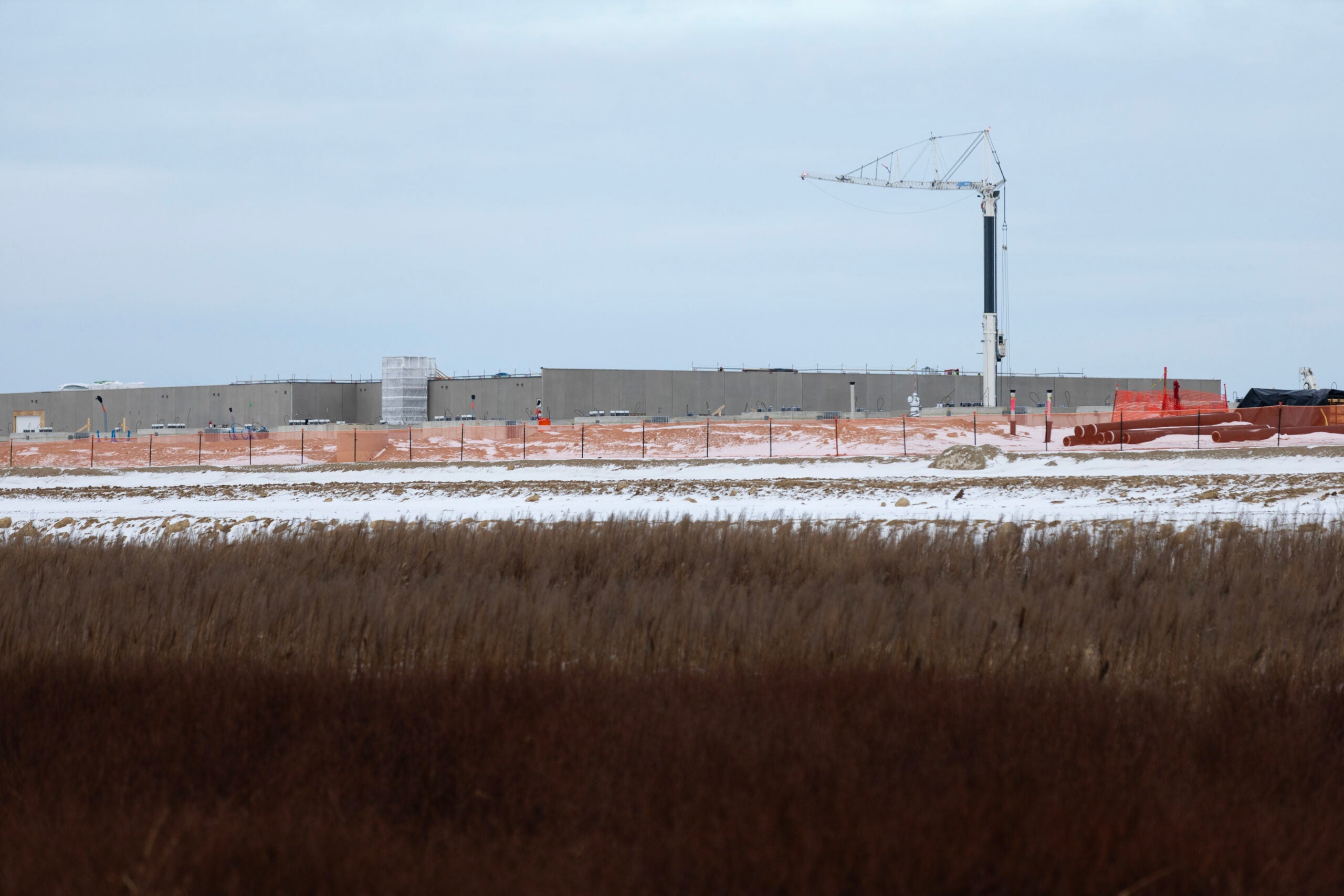
Construction is ongoing at the 350-plus-acre Beaver Dam Commerce Park where a new Meta data center is being built, photographed on Jan. 20, 2026, in Beaver Dam, Wis. Joe Timmerman / Wisconsin Watch

The Beaver Dam Area Development Corp., a quasi-government nonprofit that functions as the city’s economic development arm, signed an NDA on Dec. 1, 2023, not with Meta, but with a shell company no one had ever heard of, Balloonist LLC.

The agreement referred only to a “project,” making no mention of a data center or Meta.

The NDA was signed “very early, almost in the introductory period of that project,” the development corporation’s leader, Trent Campbell, told Wisconsin Watch. All major development projects have “different levels of confidentiality for different purposes. And this entity believed it to be necessary at the onset of the conversations.”

The NDA meant that the Beaver Dam Area Development Corp. could not reveal its discussions with Balloonist, or even disclose “the existence of the project.”

The NDA also put the wheels in motion.

For more than a year, the city quietly took official actions to make the data center a reality, including:

  • July 2024: The city council voted 12-0 to approve a predevelopment agreement with another shell company, Degas LLC, that only later was identified with the data center. The agenda and the minutes of the meeting don’t mention a data center.
  • November 2024: The city council created a tax incremental finance, or TIF, district for the data center to help fund development. The agenda and the minutes for that meeting do not mention a data center, though the agreement itself does.
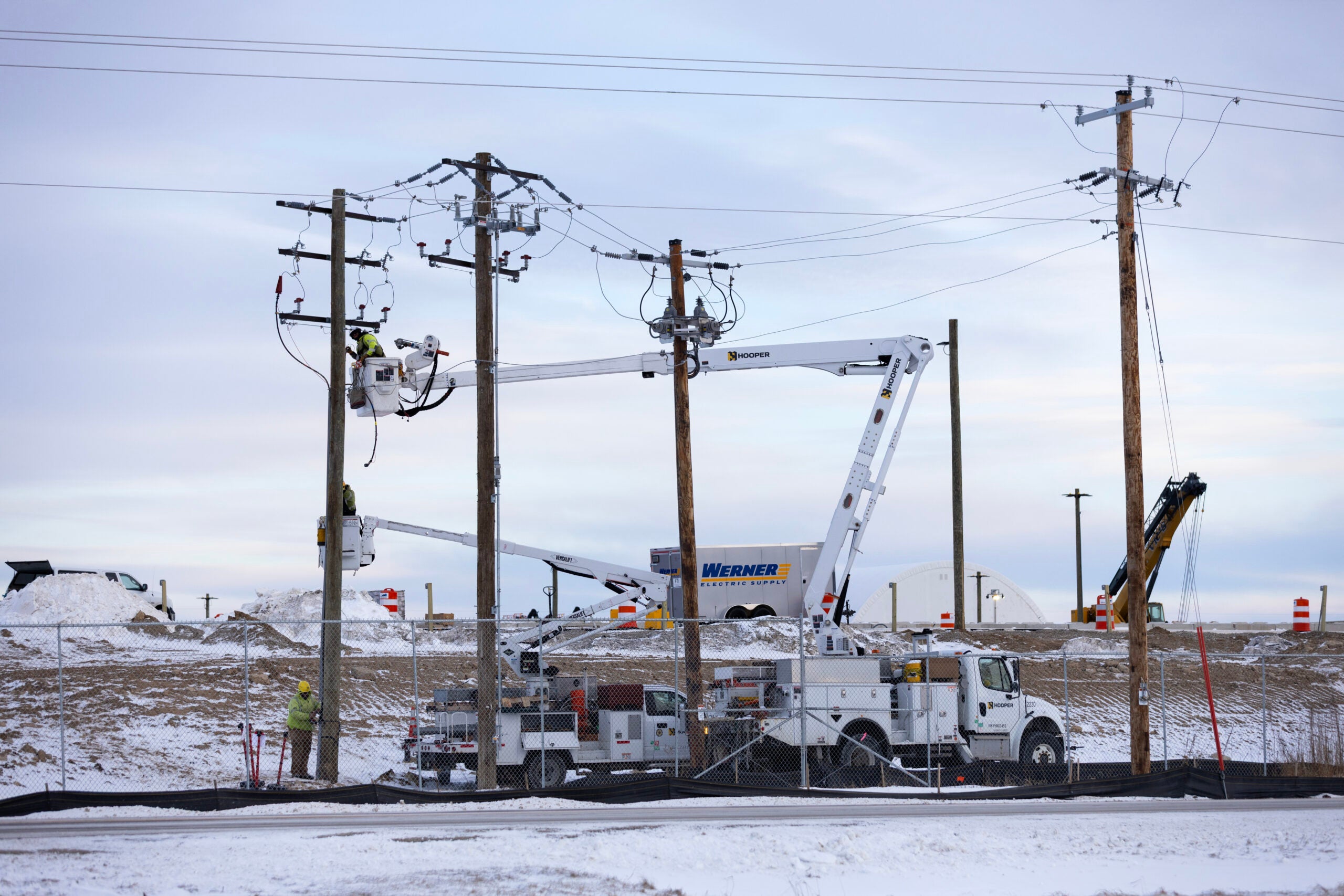
Beaver Dam city and economic development officials worked with two shell companies as they developed a $1 billion, 520-acre data center. Meta announced its involvement in December 2025. Joe Timmerman / Wisconsin Watch

Not until February 2025 — 14 months after the NDA was signed — did the Beaver Dam Area Development Corp. announce that it and the city were working with a company — then still unidentified — on a “potential data center project.”

Campbell noted to Wisconsin Watch that Gov. Tony Evers and other officials had identified the site for a major development as far back as 2019. For months after the NDA was signed, it wasn’t known whether the data center would come to fruition, he added.

“I know the opponents currently disagree, but I think the city acted in as transparent a way as they could,” Campbell said.

Eventually, a news report in April 2025 identified Meta, which declined comment for this story, as the company likely behind the data center.

Meta confirmed its involvement eight months later, saying on Facebook: “We’re proud to call Beaver Dam home. We are honored to have joined such an incredible community in 2025.”

The first reply to that post was from a Beaver Dam resident, who wrote: “We would have been honored to have the opportunity to decline this.”

NDAs also helped keep the public in the dark about data centers under consideration in the three other cities that used them.

  • Menomonie signed its NDA with Balloonist LLC in February 2024 — more than a year before the city in northwest Wisconsin announced a $1.6 billion data center proposal in July 2025. Two months after the NDA, the city council unanimously helped pave the way for a data center by changing a land use ordinance. The change gave, for the first time, a definition of the ordinance’s reference to “warehousing,” saying warehousing includes data centers. The city’s mayor put the proposed data center on hold in September 2025. In January 2026, the city council adopted a zoning ordinance for data centers that reversed the warehousing definition. “Based upon feedback from the community and elected officials, it is clear that additional discussion should occur regarding the appropriate level of regulation of data centers,” the city’s public works director told the council and the mayor.
  • Kenosha signed its NDA, with Microsoft, in May 2024, six months before news reports surfaced saying the NDA kept the proposed data center operator’s name confidential. It was later announced that Microsoft had purchased 240 acres in the neighboring town of Paris, which the city annexed in December 2024. No dollar amount for the proposal has been announced.
  • Janesville announced in July 2025 it was approached by developers about a data center and put out a request for proposal. The city signed its NDA two months later and is now in negotiations with Viridian Acquisitions, a Colorado developer, for an $8 billion data center.
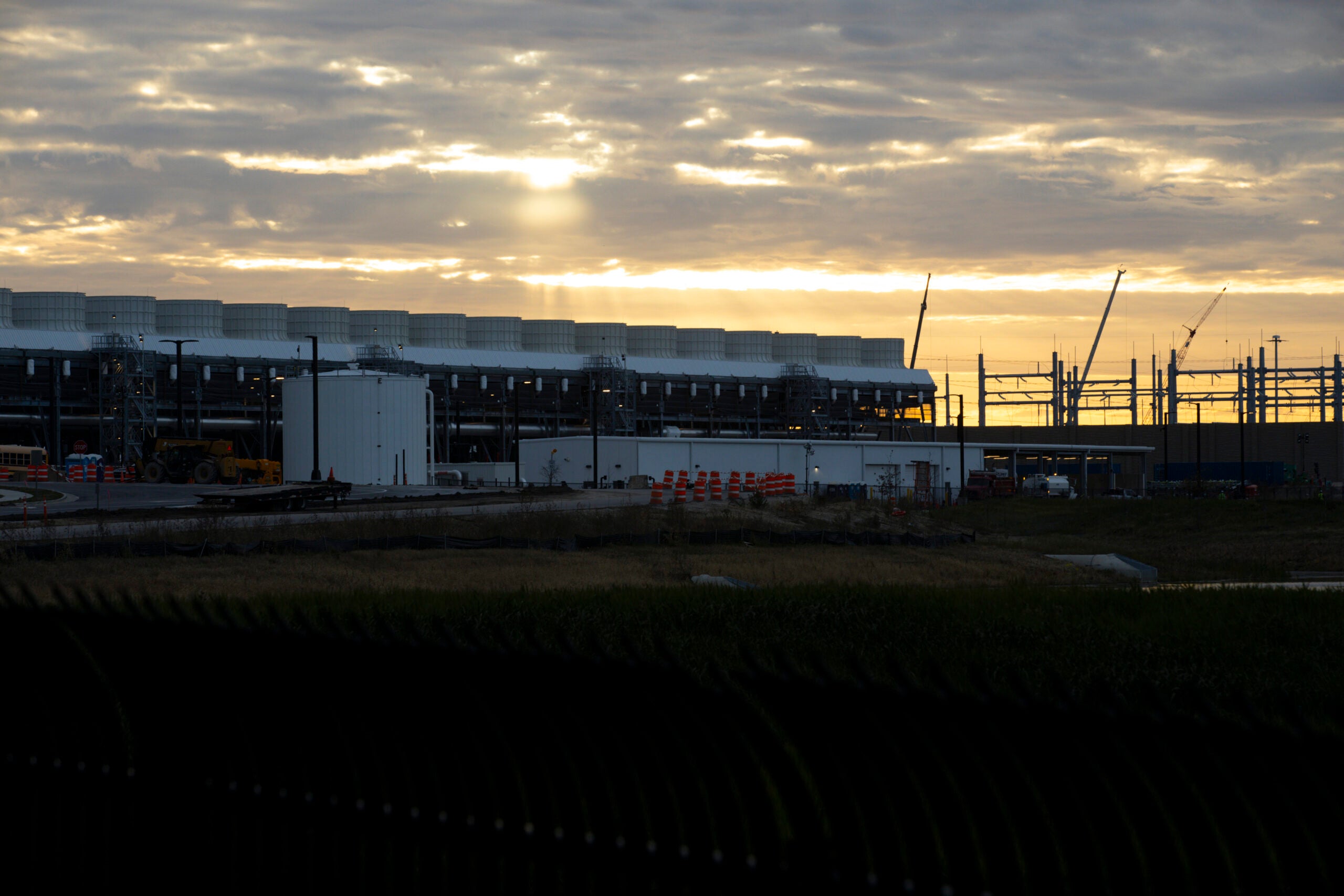
Large industrial building under construction at sunset, with cranes and construction equipment visible, and clouds covering part of the sky.
The sun sets as construction continues at Microsoft’s data center project Nov. 13, 2025, in Mount Pleasant, Wis. Joe Timmerman / Wisconsin Watch

Port Washington in Ozaukee County and Mount Pleasant in Racine County responded to records requests from Wisconsin Watch saying they had not signed NDAs for their data centers.

In Port Washington, where three people were arrested during a city council meeting on the data center in December, residents are trying to recall Mayor Ted Neitzke, saying he has been secretive about the $15 billion data center from OpenAI, Oracle and Vantage Data Centers.

In Mount Pleasant, Microsoft this month announced plans to add 15 data centers, worth $13 billion, to the $7 billion complex under construction there.

NDAs are described by economic development officials as necessary and criticized by data center opponents as against the public interest.

NDAs and other steps to protect confidentiality are crucial at the early stages of a development proposal, said Tricia Braun, executive director of the Wisconsin Data Center Coalition.

“If I’m a company considering making strategic investments, regardless of industry, I don’t want my competition to know where I’m going, what I’m doing, what pace I’m doing it at,” said Braun, a former executive at the Wisconsin Economic Development Corp. “You want to make sure everything is buttoned up and bow tied before that type of information is put into the public realm.”

Questions have swirled around transparency even in communities where local government officials did not sign NDAs.

That includes DeForest, which lists “communicate clearly” among its core values.

The DeForest data center, proposed by Virginia-based QTS Data Centers, is controversial, in part, because the village board would have to annex 1,600 acres in the neighboring town of Vienna.
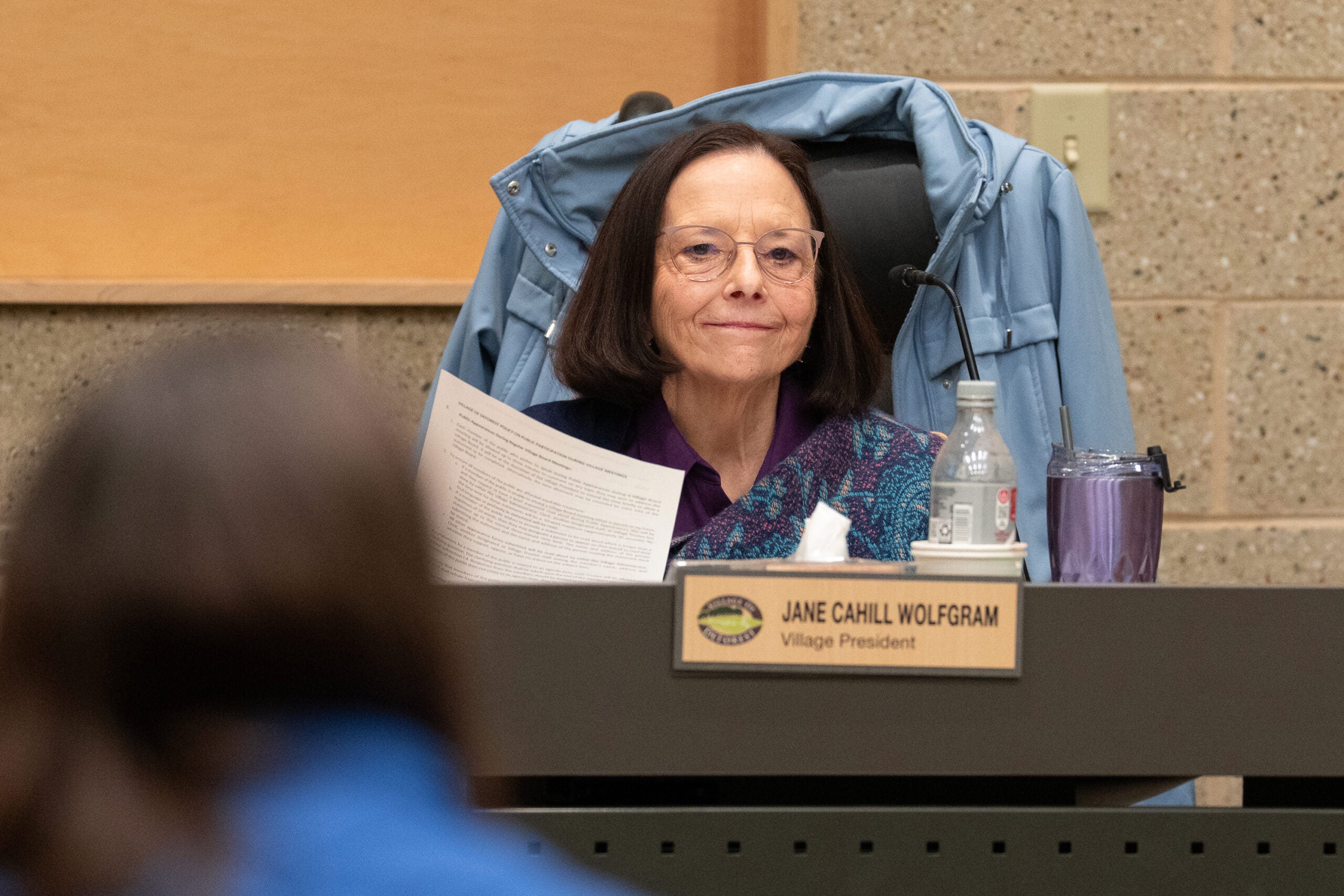
A woman sits at a desk with papers, a water bottle, and a purple cup. A nameplate reads Jane Cahill Wolfgram, Village President. A coat hangs on the back of her chair.
DeForest Village President Jane Cahill Wolfgram looks on during a village board meeting at DeForest Village Hall in DeForest, Wis., on Jan. 20, 2026. As negotiations between QTS and the village of DeForest continue, members of the public attended a village board meeting to speak in support and opposition to the proposed development. Kayla Wolf for Wisconsin Watch

At one DeForest Village Board meeting about the project, Village President Jane Cahill Wolfgram said that based on emails she had been receiving from residents, there was “just one thing I think we need to clear up.”

“And you can ask any one of these board members. They will tell you, they just learned about this project in the last couple of weeks.”

That was Nov. 18, 2025.

But Village Board trustees had been offered one-on-one meetings with the developer some 10 weeks earlier, trustee Jan Steffenhagen-Hahn said in an email to Vienna resident Shawn Haney.

“Because of the scale of this project,” that’s when residents should have been notified, said Haney, a leader of a group that opposes the data center.

Other emails obtained by the group show that DeForest staff were strategizing with QTS representatives and Alliant Energy as early as March 2025 — seven months before announcing the proposal last October.
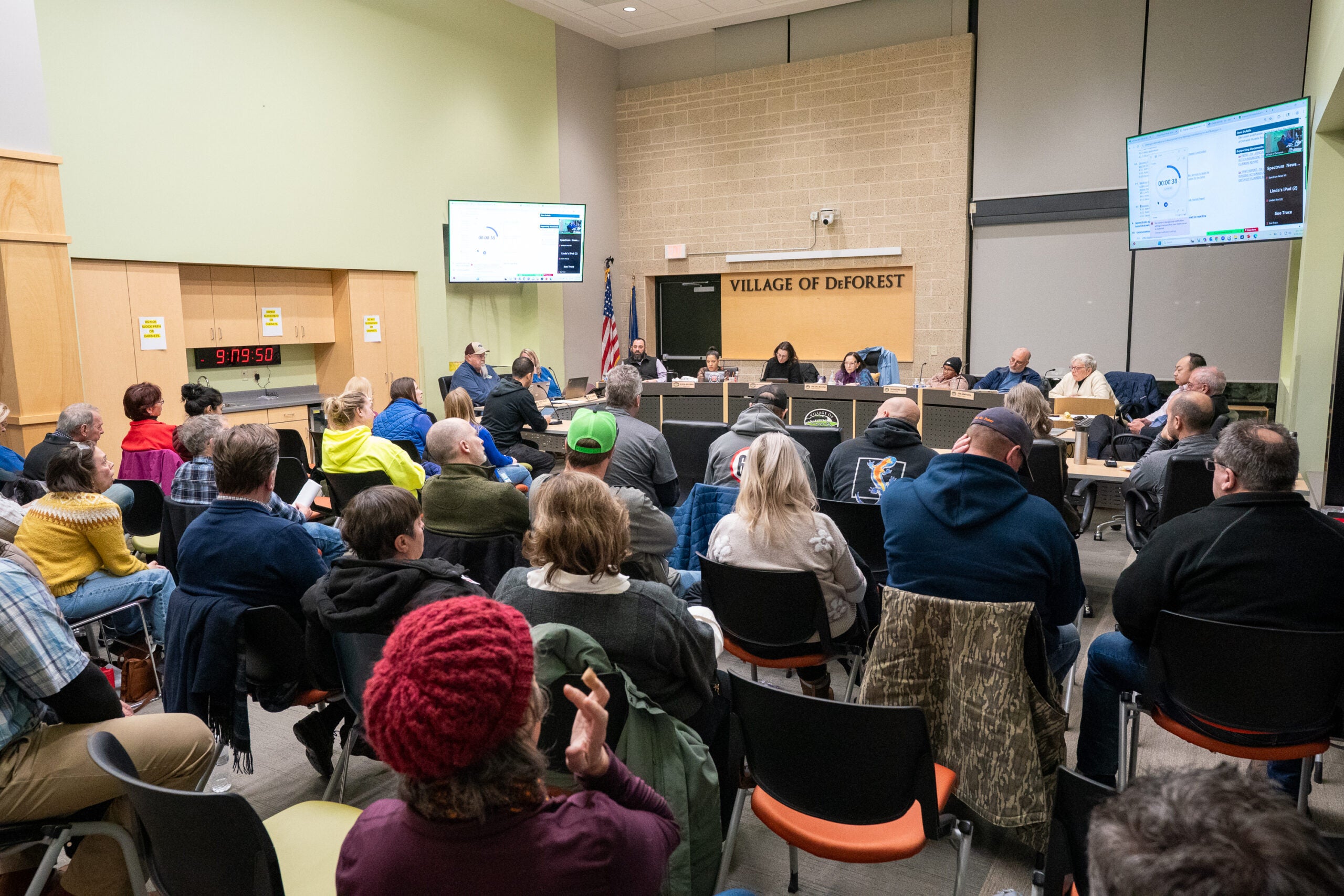
A group of people attend a public meeting in a government building, seated in rows facing a panel at the front beneath a sign reading Village of DeForest.
Members of the public attend a village board meeting at DeForest Village Hall in DeForest, Wis., on Jan. 20, 2026. Kayla Wolf for Wisconsin Watch

In one email, the village planner discussed with QTS representatives when to seek various village approvals, including annexation, while acknowledging that doing so without disclosing “any details of the project or operations will be difficult.”

Cahill Wolfgram told Wisconsin Watch she in fact had met with QTS on Oct. 1, three weeks before the public announcement. She expressed frustration that many residents are urging trustees to stop the data center.

“They’ve been brought in from the very early moments of this discussion and they have continued to be front and center of everything we’ve done,” Cahill Wolfgram said. “As village president, I know of nothing that has been done behind the scenes.”

A public hearing on the annexation is scheduled for Feb. 9.

A person holds a stack of stickers with the words DATA CENTER crossed out by a red prohibition symbol.
Sheri Stach hands out stickers in opposition to the QTS data center development prior to a village board meeting at DeForest Village Hall in DeForest, Wis., on Jan. 20, 2026. Kayla Wolf for Wisconsin Watch

The state Department of Administration, which reviews annexation proposals and issues advisory opinions, concluded the DeForest annexation is not in the public interest because of concerns over how the village would provide water and sewer services for the annexed area.

The Clean Economy Coalition of Wisconsin has called for state leaders to pause consideration of any data centers until a comprehensive strategy on them is adopted. In part, the coalition said comprehensive planning is needed to avoid more “stranded assets.”

Wisconsin Watch reported in December that Wisconsin utility ratepayers owe nearly $1 billion for stranded assets — coal power plants that have been or soon will be shut down. A push to provide new energy capacity for data centers poses the risk of creating more stranded assets.

Microsoft on Jan. 13 announced new standards aimed at being a “good neighbor in the communities where we build, own and operate our data centers.” It mentioned transparency five times.

But University of Wisconsin-Milwaukee researchers called Microsoft’s initial Mount Pleasant data center a “microcosm of a larger problem with secrecy and lack of transparency about water and electricity demands” of data centers throughout the country. That, they wrote, “harms the public’s ability to determine whether hosting a data center is in their best interest.”
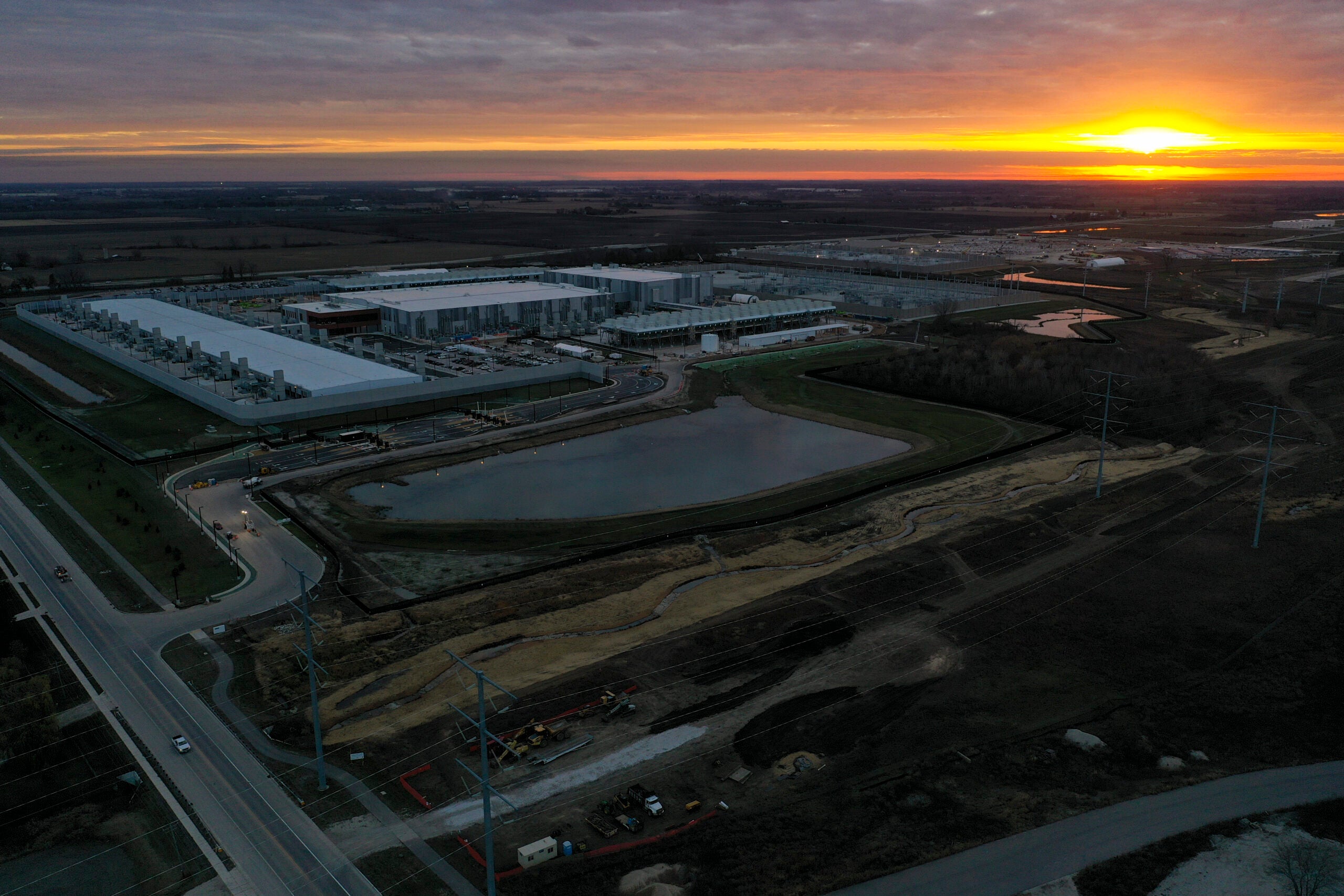
Aerial view of an industrial facility with large buildings, parking lots, a pond, roads, and surrounding fields at sunset.
The sun sets as construction continues at Microsoft’s data center project on Nov. 13, 2025, in Mount Pleasant, Wis. Joe Timmerman / Wisconsin Watch

Mount Pleasant has wanted a major development where the data center is now under construction because a massive development signed with Foxconn in 2017 largely fell through.

Local government use of NDAs and other methods to keep data center development secret is widespread across the U.S.

In Minnesota, local elected officials were aware of data center proposals for months or even years before disclosing them. In Virginia, 25 out of 31 data center projects had NDAs. In one New Mexico county, county staff negotiated for a $165 billion data center with an NDA that kept elected officials in the dark.

Several states are targeting NDAs.

At least three — Florida, Michigan and New Jersey — are considering legislation to prohibit governments from signing data center NDAs. A Georgia bill would prohibit NDAs that hide information about data center electricity or water usage. New York is considering a bill to limit NDAs for economic development proposals generally.

Now, similar legislation is pending in Wisconsin.

Last week, state Rep. Clint Moses, R-Menomonie, citing questions about transparency over the Menomonie proposal, introduced a bill to prohibit NDAs for data center proposals in Wisconsin.

“I’ve never seen such overwhelming opposition from all sides of the aisle,” he told Wisconsin Watch, describing constituents’ feelings about data centers and secrecy surrounding them.

Moses said he understands the need for confidentiality in economic development generally, but that because data centers have such widespread impact, public notice is paramount.

“The earlier the better,” he said.

Braun, the data centers coalition leader, said the public should be notified when a data center proposal is ready to be considered for approvals by elected officials — after municipal staff do due diligence to determine whether things such as zoning, utility capacity, water and sewer would make a proposal potentially viable.

Balch, who helped defeat a proposed data center in the Racine County village of Caledonia, where he lives, said the public should be alerted well before local elected officials consider such votes.

“You have to use your judgment,” he said. “But at some point, you need to realize this is not a normal thing and we need to look out for the residents.”


Read the original article

Comments

  • By dguest 2026-01-3014:2018 reply

    I'd like to hear the argument for why this is needed.

    I can imagine a number of reasons, but this is all I found in the article:

    > If I’m a company considering making strategic investments... I don’t want my competition to know where I’m going, what I’m doing, what pace I’m doing it at... You want to make sure everything is buttoned up and bow tied before that type of information is put into the public realm.

    I'm having trouble with this. Is the worry that Amazon will outbid or outmaneuver Meta? How does this work in practice?

    Whereas everyone here seems to assume it's to avoid NIMBY. I can see how a Meta spokesperson won't say "if we told you we're trashing your land you'd object" but I'd hope they could come up with a better argument than "your community is a pawn in a 5d chess game, better that you don't know".

    • By upboundspiral 2026-01-3017:337 reply

      What I've come to realize is that the rust belt states have been in huge trouble for decades.

      They were living in "benevolent feudalism" when GM, Ford, etc all had factories there. The problem is that these companies effectively owned the cities in which they operated. And then they left.

      Since the Reagan years we decided to export everything that built our economy so the landlords in power could have even more profitable quarters in the short term. What this did however is destroy the economies of the non-software states.

      The rust belt states are currently being subsidized by the rich states. This has been going on for decades. This vacuum of power has allowed the new landlords in power to swoop in and play city governments against each other with impunity.

      The negotiating power of these states is so poor that they present an opportunity for the Metas of the world to make them even worse while becoming the new "benevolent" landlords. There doesn't need to be an NDA and secrecy, and in theory the city could get a good deal out of it, but realistically their utilities will just be abused because the words "civil rights" and "justice" have exited the lexicon.

      • By scoofy 2026-01-3019:511 reply

        I want to step in here and point to Strong Towns. It’s easy to say THAT the cities have owners, but not why. The why is the American development pattern that creates suburbia that can’t generate enough taxes to pay to maintain the town.

        That’s the problem. Suburban infrastructure is wildly expensive. A return to dense walkable villages would, in large part, fix the problem.

        https://www.strongtowns.org/

        • By pseudohadamard 2026-01-313:371 reply

          However the conspiracy-theory nutters have done a really good job convincing people in the US that 15-minute cities, or as they're known in Europe, "cities", are some plot by George Soros to... actually I have no idea what sort of crazy is being invoked this time, but it seems to have worked, generating enough opposition to liveable cities to make it a real uphill battle to implement them.

          • By antonvs 2026-01-316:402 reply

            A big part of the problem here is that this conspiracy theory plays right into what its followers want to believe anyway: their idea of an ideal city is one where you can easily get anywhere by car, and there are lots of highways, strips, other roads, and plenty of parking.

            It's what they're familiar with, and any suggestion that it could be improved by catering less strongly to individual vehicles and with a stronger emphasis on public transport, bicycles, walking etc. is automatically resisted. The conspiracy theory fits this bias perfectly.

            It's not so much that they have "opposition to livable cities," it's that they have different beliefs about what's livable.

            • By scoofy 2026-01-3117:201 reply

              The point Strong Towns is making is that whatever you believe, you can’t live outside your means forever. The bill for all that infrastructure will come due, taxes will go up, people who still can will move away, and the town will start falling apart.

              • By antonvs 2026-02-0210:56

                I pointed out why it was easy for that conspiracy theory to take hold.

                Whether the people who believe it are going to experience consequences in future isn't relevant to that.

            • By pseudohadamard 2026-01-3111:591 reply

              Yeah, good point. I was astounded when I lived in the US that it was impossible to get from my temporary accommodation to the place I worked, about 300m away, without driving. I eventually found a place to rent on the one single bus route that served the area. The rental agent treated me with the same level of patience that you use with slightly crazy people.

              • By antonvs 2026-02-0221:38

                Certainly US walkability is terrible in general, but what you describe is a fairly extreme scenario. Was it that you had to cross an interstate highway or something like that?

                I'm an immigrant to the US - currently looking to emigrate again for obvious reasons! - and I've done a good amount of walking or taking public transit. Walking on the shoulder of strips (i.e. highways with traffic lights and shopping) is not pleasant, but it's doable. Crossing those strips is usually possible at traffic lights.

                The wildest thing is that even in smallish towns where you might expect that walking would be supported, it isn't. Town planners generally seem not to consider it at all, at best you get some sidewalks outside shopping areas and then everything else the best you get is a shoulder, and the worst is nothing at all so you're just in the road with the cars.

                The US is literally, collectively insane, and what it's going through now is just a natural consequence of that.

      • By reactordev 2026-01-3017:53

        Sadly this is true. Already, resources have been sucked up by data centers and local towns have to use bottled water and pay 4x electric bill rates.

        https://www.pecva.org/work/energy-work/data-centers-industry...

        https://www.forbes.com/sites/kensilverstein/2026/01/11/ameri...

        https://archive.ph/9rY9Z

      • By OGEnthusiast 2026-01-3020:341 reply

        IMO it's just regression to the mean. The Rust Belt cities benefitted from being in the right place at the right time (post-WWII US during industrialization) for a few decades, but post-globalization they are just one of infinity undifferentiated land masses competing on cost of land and power (vs e.g. SF or NYC which compete largely on access to social networks and institutions).

      • By kjkjadksj 2026-01-3018:223 reply

        What is surprising is that to me where you see datacenter build out hand over fist isn’t really in the midwest where one might assume due to low land costs. Surprisingly, the heart of the datacenter buildout seems to be northern virginia. Not exactly a cheap land sort of former one horse town.

        • By michaelt 2026-01-3020:521 reply

          Cheap land is nice, but it's not the only concern. Data centres make a lot more money per square foot than things like farming, after all.

          You also want cheap, reliable power. Ideally eco-friendly. And you want backbone connectivity, of course. Local suppliers who know the construction and maintenance needs of a data centre. No earthquakes, hurricanes, wildfires, flooding, or tornadoes. A local government that won't tax you too much, and that won't get upset when you employ very few people.

          • By ben_w 2026-01-3110:201 reply

            I know why I, personally, consider eco-friendly power to be ideal; but why would the builder of a DC care?

            • By michaelt 2026-01-3114:041 reply

              So they can put it on a page like [1] and [2]

              Most large companies impose certain costs on society, and have to manage their reputation. Often it's cheaper to improve public opinion in a peripheral area than to address deep-seated problems.

              Putting a data centre close to a hydroelectric dam helps offset your product's impact on users' mental health, your disregard for competition law, etc.

              [1] https://datacenters.google/operating-sustainably/ [2] https://sustainability.atmeta.com/data-centers/

              • By ben_w 2026-01-3115:09

                I don't buy that reasoning, even with that desire to manage their reputation:

                Those lists are the companies marking their own homework and congratulating themselves as PR, AKA "greenwashing". They can do that just fine by spinning a single metric of their choice where they do less-badly than their pick of mean, median, and mode of whoever else they want to compare themselves against, they don't actually need to be genuinely eco-friendly at anything.

        • By expedition32 2026-01-3019:531 reply

          Latency I guess? I'm seeing this in my own country were everyone wants to be close to AMSIX. Which as you may have guessed also happens to be the most expensive and densely populated part of the country...

          • By wat10000 2026-01-3021:001 reply

            Yep, Northern Virginia gets you close to the BosWash megalopolis and pretty close to better than half of the US population. It also gives you access to a highly educated workforce and pretty much no natural disasters of note.

            There's also network (pun intended) effects. Northern Virginia has been a major internet hub for a long time, with the first non-government peering point and a bunch of telecom companies, including AOL.

            The data center land isn't that expensive anyway. Northern Virginia can be tremendously expensive, but the data centers are built out in the relative sticks. I'm sure the land would be cheaper in Wyoming, but it's cheap enough.

            • By pseudohadamard 2026-01-313:40

              I was thinking of a slightly different incentiviser, you're right next to the county's largest collection of bought-and-paid-for politicians, if you need the rules bent a little, or a lot, you can point to your data centre off in the distance and remind them what you're paying them for.

        • By ahi 2026-01-3020:48

          Considering the capital costs in fitting out these datacenters, the land being 10x more expensive doesn't move the needle much on total cost.

      • By expedition32 2026-01-3019:48

        Unfortunately for the rust belt states data centers don't bring in a lot of jobs.

        No well educated highly paid person wants to live in the middle of nowhere. Wisconsin will never be Seattle, Boston or NYC.

      • By rvba 2026-01-3019:35

        They dont have any negotiating power -> it is a race to the bottom

      • By jadbox 2026-01-3019:04

        Absolutely this. It's no wonder why these states are also culturally grounded in terms of "command and hierarchy". If GM fires you, it's end of the line for you.. good luck serving hot meals at Cracker Barrel.

    • By eigencoder 2026-01-3015:505 reply

      Let me give you an anecdote that illustrates why it was needed in Eagle Mountain, Utah. One of my friends works for the city there and he told me about how the development went down.

      When the city council first heard that Facebook wanted to build a data center, they shot it down solely because of Facebook's reputation. A year or two later, Facebook proposed the exact same project to the city council, while keeping their name secret under an NDA. Then, when the city council was only considering the economics of it, they jumped at the chance for the tax revenue and infrastructure investment. With essentially the same exact plan as before, one of the council members who rejected it before the NDA said "this is exactly the kind of deal a city should take."

      I think in many ways, these companies are fighting their own reputations.

      • By horsawlarway 2026-01-3016:232 reply

        I'm not sure how I feel about this.

        I think "reputation" is absolutely critical to functional societies, and this feels a lot like putting a mask on and hiding critical information.

        If Facebook got rejected because people hate Facebook, even when the economics are good... that's valuable to society as a feedback mechanism to force Facebook to be, well - not so hated.

        Letting them put a legal mask on and continue business as usual just feels a bit like loading gunpowder into the keg - You make a conditions ripe for a much larger and forceful explosion because they ignored all the feedback.

        ---

        Basically - the companies are fighting their reputations for good reason. People HATE them. In my opinion, somewhat reasonably. Why are we letting them off the hook instead of forcing them to the sidelines to open up space for less hated alternatives?

        If I know "Mike" skimps on paying good contractors, or abuses his employees, or does shitty work... me choosing not to engage with Mike's business, even though the price is good, is a perfectly reasonable choice. Likely even a GOOD choice.

        • By lotsofpulp 2026-01-3017:182 reply

          > I think "reputation" is absolutely critical to functional societies,

          See the popular vote results of Nov 2024 US presidential election. Reputations were on full display.

          • By nativeit 2026-01-3019:311 reply

            Doesn’t that further defeat the argument for secrecy here?

            • By lotsofpulp 2026-01-3115:04

              The argument was that people's collective judgment, given transparency, will result in good decisions.

              But we see from the Nov 2024 elections (and others, but most glaringly that one), that that is, sadly, not true.

              So the people rejecting Facebook because of Facebook's reputation tells you nothing about whether Facebook is bad, because the people could have just as easily been bad.

          • By antonvs 2026-01-316:431 reply

            > Reputations were on full display.

            The problem is that many people liked what they saw. Reputation was still important, but there were different beliefs about what reputations were desirable.

      • By grayhatter 2026-01-3023:39

        > Then, when the city council was only considering the economics of it, they jumped at the chance for the tax revenue and infrastructure investment. With essentially the same exact plan as before, one of the council members who rejected it before the NDA said "this is exactly the kind of deal a city should take."

        Just think at how much extra money would start coming into the state, if they just allowed $company to build an orphan grinding machine!

        > why it was needed in ...

        "Needed"

        I willingly pay more to participate in the economies that behave ethically. If you have to hide who you are, and by proxy, how you behave, to get what you want... It's exhausting listen to people advocate for, or be apologists for people who are intentionally ignoring consent.

      • By b00ty4breakfast 2026-01-3016:131 reply

        it's worrying that they would consider something without knowing who they were dealing with, economics be damned.

        • By buttercraft 2026-01-3018:322 reply

          I'm not sure. Cities are supposed to approve or deny applications based on whether they comply with zoning, codes, parking, water availability etc. They can't deny based on who or what the business is alone. A city near me is dealing with a lawsuit for exactly that.

          It probably varies from state to state, I don't know.

          • By mbreese 2026-01-3020:561 reply

            Cities can largely do what they want. They can deny applications for whatever reason they want. Citizen concerns are very important here (they need to keep voters happy to keep their jobs). But their main mandate is to protect the public good. If a project isn’t in the interest of their community, they ca deny it.

            Whether or not it’s legal is another question. And NIMBY and… and… there are lots of potential concerns. But this article is about Wisconsin, where the question is really what are we going to do with this land and how are going to power it.

            Your post mentions a lawsuit near you. This is a feature, not a bug. Even if the city is unlawfully denying an application, the denial still has the desired effect — a de facto denial for the length of time it takes to resolve in the courts. By dragging out the time for a lawsuit to be resolved, the city hopes that the developer will just go away and find someplace else.

            • By buttercraft 2026-01-3023:411 reply

              This is in the context of not knowing the entity behind the application, and evaluating it on its merits alone. I'm not convinced that's a bad thing. Kindof like evaluating a resume without knowing the name or gender of the applicant.

              Cities are bound by laws, and not complying opens them up to lawsuits which the taxpayers pay for. Sure, maybe that's in the best interest of the community in some cases. However, I think it usually happens because people have feelings and biases rather than as a calculated move.

              • By lucketone 2026-01-318:34

                > evaluating it on its merits alone

                It’s evaluating proposal by the words of the applicant alone.

                In addition to exaggeration on resumes, people tend to not include inconvenient stuff. Reputation is definitely part of the merit.

          • By dylan604 2026-01-3019:322 reply

            > They can't deny based on who or what the business is alone

            They absolutely can and do this. Ask to put an adult entertainment store next to a school/church. Ask to put a liquor store next to a school/church. The city will say no.

            • By buttercraft 2026-01-3020:08

              Right, because zoning and state laws forbid those things.

            • By hn_acc1 2026-01-3020:33

              That's probably a zoning issue, though..

      • By josefresco 2026-01-3016:301 reply

        I was curious so I looked it up. Your description of the events isn't quite accurate IMHO. There was an objection to a Meta datacenter, but then state lawmakers passed new laws after losing the business to NM. It doesn't look like anyone was "fooled" by the anonymous bid but rather they simply changed their minds/laws.

        https://www.sltrib.com/news/politics/2018/05/22/utah-county-...

        > In 2016, West Jordan City sought to land a Facebook data center by offering large tax incentives to the social media giant. That deal ultimately fell through amid opposition by Salt Lake County Mayor Ben McAdams and a vote of conditional support by the Utah Board of Education that sought to cap the company’s tax benefits.

        > That project went to New Mexico, which was offering even richer incentives.

        > Three months after the Utah negotiations ended, state lawmakers voted in a special session to approve a sales tax exemption for data centers. The move was seen by many as another attempt to woo Facebook to the Beehive State.

        So basically they first said "No", lost the bid, had FOMO so they passed new laws to attract this business.

        >Asked about the identity of the company, Foxley said only that it is “a major technology company that wants to bring a data center to Utah.”

        >And that vision could soon be a reality, after members of the Utah County Commission voted Tuesday to approve roughly $150 million in property tax incentives to lure an as-yet-unnamed company — that sounds an awful lot like Facebook — to the southern end of Pony Express Parkway.

        Seems like a pretty open and obvious secret.

        • By eigencoder 2026-01-3016:41

          I admit I may be missing broader context about the state, this was specifically from someone working for Eagle Mountain city planning. But the article you've cited is later in the process than what I'm talking about.

      • By wat10000 2026-01-3016:012 reply

        I wonder if they ever considered improving their reputations instead.

        • By macintux 2026-01-3016:431 reply

          > Now keep in mind that a man's just as good as his word

          > It takes twice as long to build bridges you've burnt

          > And there's hurt you can cause time alone cannot heal

          • By lagniappe 2026-01-3018:01

            They say trust arrives on foot, and leaves on horseback

        • By bell-cot 2026-01-3016:56

          "Doing that would fail to align with the company's current priorities. And by the way - you're fired." -Catbert

    • By a2128 2026-01-3014:325 reply

      This is a scary argument. Should we also ban car emissions/safety testing, because Volvo's competitors might discern something from the results? Should we also stop FCC certification because competitors might glean information out of a device's radio characteristics?

      The local residents, if not the public at large, should have a right to know. If not, then it should go both ways and grocery stores shouldn't be allowed to use tracking because my personal enemies might discern something from the milk brand I'm buying

      • By infecto 2026-01-3014:462 reply

        What is always left unclear in these anti data center articles is how much the public is left in the dark? It’s not out of the normal for large developments to be kept under NDA until hitting a threshold of certainty, usually that does not mean the residents are left out of voicing their opinions before ground breaks.

        • By state_less 2026-01-3015:253 reply

          Obviously data center bidders would prefer their activity to be kept in the dark, but does that make for good outcomes for anyone else except the bidders. First, the community would like to weigh in on whether they want a data center or not, often they don't. Then if they do, they'd rather have a bidding war than some NDA backroom deal with a single entity. All this does is serve Big Tech and Big Capital, and they don't need to run on easy mode, sponging off the small guy at this stage.

          • By jeffbee 2026-01-3016:243 reply

            > the community would like to weigh in on whether they want a data center

            This is the enabler of pure NIMBYism and we have to stop thinking this way. If a place wants this kind of land use and not that kind, then they need to write that down in a statute so everyone knows the rules. Making it all discretionary based on vibes is why Americans can't build anything.

            • By state_less 2026-01-3017:15

              I thought I made it clear, I'm not against data center build outs per se, a community might decide it's worth it to build one. If a community decides to go ahead with it, make it clear and open for the public to bid on it so the residents get the best deal available (e.g. reduced power bills, reduced property taxes, water usage limits, noise/light polution limits, whathaveyou...). These massive data centers are a new kind of business that most communities don't have much experience with, and I doubt they've had time to codify the rules. It sounds like the states are starting to add some more rules about transparency, which seems like a step in the right direction for making better deals for all involved.

            • By 5upplied_demand 2026-01-3018:17

              The subtitle of the article tells us this is happening.

              > Wisconsin has now joined several states with legislative proposals to make the process more transparent.

              But it is a reactive measure. It has taken years for the impacts of these data centers to trickle down enough for citizens to understand what they are losing in the deal. Partially because so many of the deals were done under cover of NDAs. If anything, this gives NIMBYs more assurance that they are right to be skeptical of any development. The way these companies act will only increase NIMBYism.

              > Making it all discretionary based on vibes is why Americans can't build anything.

              Trusting large corporations to provide a full and accurate analysis of downside risks is also damaging.

            • By ajam1507 2026-01-3018:54

              > If a place wants this kind of land use and not that kind, then they need to write that down in a statute so everyone knows the rules.

              Ironically this is a recipe for how you get nothing built. Zoning laws are much more potent than people showing up at city council meetings.

          • By SpicyLemonZest 2026-01-3016:141 reply

            I feel like the term "community" is leading intuitions astray here. The actual decision at question here is whether the local government provides the necessary approvals for a company to build what they want on their private property.

            It's good and proper for the government to consider the impacts on a local community before approving a big construction project. That process will need to involve some amount of open community consultation, and reasonable minds can differ on when and how that needs to start. The article describes a concrete proposal at the end, where NDAs would be allowed for the due diligence phase but not once the formal approval process begins; that seems fine.

            It's not good and improper for the government to selectively withhold approval for politically disfavored industries, or to host a "bidding war" where anyone seeking approvals must out-bribe their competitors.

            • By webstrand 2026-01-3016:282 reply

              Its the same argument for high-density hog farming. If the use of private property may impinge on the neighbors, either through invasive noise, or costs to public utility infrastructure (power, water) then the community ought to have some insight and input, same as they have input into whether a high density hog farm can open right on the border of the community.

              Yes some people see the datacenters as part of an ethical issue. I agree its not proper for permits to be withheld on purely ethical grounds, laws should be passed instead. But there are a lot of side-effects to having a datacenter near your property that are entirely concrete issues.

              • By sylos 2026-01-3017:481 reply

                Why shouldn't permits be withheld on ethical grounds? Isn't that just giving permission for companies to be unethical and get away with it?

                • By SpicyLemonZest 2026-01-3018:252 reply

                  If a government wants to penalize companies for unethical behavior, they should pass a neutral and generally applicable law that provides for such penalties. Withholding permission to do random things based on ad hoc judgments of the company involved is a recipe for corruption.

                  • By ajam1507 2026-01-3019:011 reply

                    Clearly there needs to be room for both things to occur. You should absolutely begin with passing laws, but to think that the laws on the books can cover every situation is naive. When companies skirt the law and cause harm, there needs to be a remedy.

                    • By SpicyLemonZest 2026-01-3022:461 reply

                      I don't agree. The benefits of a business environment governed by due process and the rule of law far outweigh the benefits of individual government actors having arbitrary discretion to fill the gaps. As we've seen clearly on the federal level this past year, once you create that discretion, the common way for corporate executives to "prove" that they're nice and generous and deserve favorable treatment is not good behavior but open bribery of public officials.

                      • By ajam1507 2026-01-3118:30

                        Bribery is illegal. What hope do you have for due process and the rule of law when it is being carried out as it is now? You can't use an extraordinary case to justify your belief about the ordinary case.

                        Also, we don't live in a world adjudicated by machines, there will always be discretion and the potential for special favors. No matter how much you tie the hands of regulators there will be some actor who will have the power to extort. Not to mention that regulation is not opposed to due process and the rule of law, but is the most important component of both.

                        Imagining a world without discretion is imagining a world where corporations can do as much irreparable harm as they want as long as there isn't a law against it.

                  • By convolvatron 2026-01-3018:44

                    I agree with you. this should be handled by the legislative process. but we should also agree that secret deals announced as a fiat acompli are pretty fertile ground for corruption also

              • By SpicyLemonZest 2026-01-3016:42

                Right, and as I said I agree with that. But is there any reason to worry that communities aren't getting the input they're entitled to? The article mentions one case in the Madison suburbs, where "officials worked behind the scenes for months" and yet the residents were able to get the project cancelled when the NDA broke and they decided they didn't want it.

          • By infecto 2026-01-3015:511 reply

            You make this sound like a conspiracy. This is normal practice in economic development, check off boxes until announcing to the public. The public rarely has much power in voicing their opinion but data centers are the current evil entity.

            • By antonvs 2026-01-316:501 reply

              > data centers are the current evil entity.

              There's a reason for that: they compete for resources but contribute relatively little back to the local economy. In that sense they're quite different from previous large corporate investments in a local area.

              • By infecto 2026-01-3116:01

                Again, I think it’s a muddy example. I have yet to see compelling data that on average data center are meaningfully raising rates and most of the rate increases are more due to the aging infrastructure in America that was neglected for too long.

                If anything these should be examples on the failure of how these resources are being sold and good opportunity to build a better system.

        • By cmxch 2026-01-3015:121 reply

          What kind of say do the residents have when it’s nearly a done deal?

          Unless the residents have a strong enough chance to veto, they’re just speaking into the void as far as the company is concerned.

          • By infecto 2026-01-3015:49

            Typically constituents don’t have any ability to veto. I imagine there are some cases in CA, thinking of that amusing article about an ice cream shop getting blocked by another ice cream shop.

            It’s usually an indirect vote with your voice. To be frank, people don’t have that much of a role in what business gets built if it aligns with the states economic goals and zoning is not being critically changed.

            I think the bigger discussion is if resources are going to be constrained can we make sure the use is being properly charged for resource buildout. It’s the same problem with building sports arenas or sweetheart tax deals for manufacturing plants, they often don’t pan out.

      • By datsci_est_2015 2026-01-3014:401 reply

        It’s definitely a result of the money at play, which is unprecedented in scale and (imo) speculation.

        But this is, in theory, why we have laws: to fight power imbalances, and money is of course power.

        Tough for me to be optimistic about law and order right now though, especially when it comes to the president’s biggest donors and the vice president’s handlers.

        • By mistrial9 2026-01-3014:481 reply

          the building of the American Railroads were the largest capital endeavor in known history IIR. .. and Stanford was in the center of that, too

          • By datsci_est_2015 2026-01-3015:052 reply

            Ah my bad. But also, if we’re comparing buildout of infrastructure to the construction of the American Railroad system, especially in the context of lawbreaking and general immoral and unethical behavior…

            Point kind of proven, yeah? One more argument for the “return to the gilded age” debates.

            Edit: you’re speaking kind of authoritatively on the subject though. Care to share some figures? The AI bubble is definitely measured in trillions in 2026 USD. Was the railroad buildout trillions of dollars?

            • By hobs 2026-01-3015:111 reply

              Depends on when you stop calculating, and how you exactly value the work

              By 1900 the united states had 215 thousand miles of railroads https://www.loc.gov/classroom-materials/united-states-histor...

              Depend on you value land mileage and work this could easily be north of 1T modern dollars.

              • By datsci_est_2015 2026-01-3015:55

                Land value underneath railroad tracks is an interesting subject. Most land value is reasonably calculated by width * length, and maybe some airspace rights. And that makes sense to our human brains, because we can look at a parcel of land and acknowledge it might be worth $10^x for some x given inflation.

                But railroads kind of fail with this because you might have a landowner who prices the edge of their parcel at $1,000,000,000,000 because they know you need that exact piece of land for your railroad, and if the railroad is super long you might run into 10 of these maniacs.

                Meanwhile the vast majority of your line might be worth less than any adjacent farmland, square foot by square foot, especially if it’s rocky or unstable etc.

                Having a continuous line of land for many miles also has its own intrinsic value, much more than owning any particular segment (especially as it allows you to build a railroad hah).

                Anyway, suffice to say, I don’t think “land value underneath railroads from the 18th century” is something that’s easily estimated.

            • By tmp10423288442 2026-01-3015:19

              As a percentage of GDP investments in the railroad buildout in the US was comparable or slightly higher than AI-related investments. But they are on the same order of magnitude, which says a lot about the scale of AI.

              > AI infrastructure has risen by $400 billion since 2022. A notable chunk of this spending has been focused on information processing equipment, which spiked at a 39% annualized rate in the first half of 2025. Harvard economist Jason Furman commented that investment in information processing equipment & software is equivalent to only 4% of US GDP, but was responsible for 92% of GDP growth in the first half of 2025. If you exclude these categories, the US economy grew at only a 0.1% annual rate in the first half.

              https://www.cadtm.org/The-AI-bubble-and-the-US-economy?utm_s...

      • By tzs 2026-01-3015:00

        > Should we also ban car emissions/safety testing, because Volvo's competitors might discern something from the results? Should we also stop FCC certification because competitors might glean information out of a device's radio characteristics?

        In the US neither of those are generally made public per se. They are made public when the thing actually passes testing or certification.

      • By jjkaczor 2026-01-3014:37

        Naw - corps will just get engineers to fudge the emissions numbers, then they have someone low-level and easy to blame and remove from the organization... VW:

        https://en.wikipedia.org/wiki/Volkswagen_emissions_scandal

      • By bparsons 2026-01-3014:34

        Don't give them any ideas

    • By Supermancho 2026-01-3014:362 reply

      > I don’t want my competition to know where I’m going, what I’m doing, what pace I’m doing it at

      This is likely a misdirection. The "competition" is for the water and power, ie the local communities. This is a NIMBY issue with practical consequences. That's how it has been used in one part of North Dakota. Applied Digital is building in a town (~800 ppl) named Harwood after being unhappy with Fargo tax negotiations. The mayor of Harwood abused an existing agreement with Fargo, which will have to meet the water and power needs of everything in Harwood.

      • By JKCalhoun 2026-01-3014:431 reply

        Is this the tactic of pitting cities against one another in a race-to-the-bottom competition that gives public tax money to corporations?

        • By Supermancho 2026-01-3014:591 reply

          Yes. The company surveyed a number of surrounding locales, looking for a favorable situation. Harwood had the existing Fargo infrastructure and the mayor of Harwood was happy to take a payout. I think the company predation was transparent.

          • By sneak 2026-01-3016:193 reply

            How is that predation if the people in that city democratically elected the mayor who made that choice? Isn’t that representative democracy decisionmaking working as intended?

            • By Supermancho 2026-01-3017:27

              > How is that predation if the people in that city democratically elected the mayor who made that choice?

              Find a small town politician, bribe them. Corruption pure and simple with no chance for accountability. The economically strong predate on the economically weak.

            • By kakacik 2026-01-3016:57

              For such a massive long term impact, people should vote directly. That's ideal, and its pretty realistic ideal especially with 800 votes which are trivial to count.

              If course its not ideal for the company investing. Then the question becomes if rights/wishes of people are above of those of companies. Often, in Europe they are not, and often in US they are, exceptions notwithstanding.

            • By yccs27 2026-01-3019:311 reply

              It‘s preying on the city‘s desperation to get a cash payout, to get space and utilities worth much more. Facebook abuses its market power to pit city governments against each other, while the cities don‘t have many alternatives.

              • By sneak 2026-01-3021:00

                Does the mayor sell land or electricity now? That’s not how one gets space or utilities.

      • By mistrial9 2026-01-3015:52

        Hollywood in its heights also uses this kind of opportunistic abuse in siting movies and TV

    • By miki123211 2026-01-3015:154 reply

      There's more to NIMBY than "thrashing your land."

      The US seems to have a "tragedy of the commons" problem when it comes to NIMBYism. Everybody wants X to exist, but X causes some negative externalities for the people living close to it, so nobody wants X build specifically in their back yard, they want it but built somewhere else. Because the US seems to delegate these decisions to a much more local / granular level than Europe does, nobody has the courage to vote "yes", so X never gets build.

      Who should decide whether E.G. an airport or a datacenter gets build? Should it just be the people living next to it? Should it be everybody in the relative vicinity who would use its services? Should it be everybody in the country (indirectly through the elected representatives)? I think those are the right questions to ask here.

      • By dguest 2026-01-3015:381 reply

        I think what you are talking about is called "tragedy of the anticommons" [1].

        Who gets to decide if an airport or data center gets built is a complicated question. But there are other options to keeping one party in the dark via NDAs. On one extreme we have eminent domain, on the other there's just buying out the local community transparently.

        [1]: https://en.wikipedia.org/wiki/Tragedy_of_the_anticommons

        • By keybored 2026-01-3016:20

          "Tragedy of the commons" is suffering from people overusing it.

      • By e40 2026-01-3015:222 reply

        The idea that data centers have to be built near homes (or anywhere people live or work) is absurd. The US is huge and vast amounts of open spaces.

        • By slfnflctd 2026-01-3015:314 reply

          The people who work in the datacenters don't want a long commute.

          Also, in a remote area, the third parties the owners require for continual maintenance will be fewer, take longer to respond, likely cost more, and may be less qualified than those you can find in a more populated area.

          • By bluedino 2026-01-3016:28

            Very few people work in datacenters

          • By duped 2026-01-3015:39

            Pay them more then

          • By sylos 2026-01-3017:52

            so datacenters should be allowed to come into communities, consume their resources and barely hire the local populace?

          • By e40 2026-01-3018:13

            What? A 5 minute drive is miles, and that's plenty far enough. They are currently being built within 100 meters of homes. It's absolutely insane.

            EDIT: https://youtu.be/t-8TDOFqkQA?si=Qa9ot70MylFp6qkE

            Just watch that and not get hoppin' mad.

        • By sokka_h2otribe 2026-01-3015:42

          Arguably, an 800 person town is likely quite far from most.

      • By fc417fc802 2026-01-3015:57

        An airport that services large passenger jets will absolutely tank property values if you happen to fall within the flight path. Yet I don't believe that owners typically receive any compensation when that happens. I assume other externalities are handled similarly (ie not handled at all). Then it shouldn't be surprising that people don't want to be the one to take the fall for everyone else's benefit.

      • By duped 2026-01-3015:43

        > Everybody wants X to exist

        Hardly "everybody" wants AI to exist.

    • By infecto 2026-01-3014:291 reply

      I wish I had better hard numbers on it but from my experience, it’s not unusual for large buildouts, say for example a manufacturing plant to happen with NDAs until you get at least initial sign offs. Land, county, electric grid, water etc.

      There is a component of not wanting the competition know exactly what your doing but also it’s usually better for most parties including the constituents to not know about it until it’s at least in a plausible state. Thought differently, it’s not even worth talking about with the public until it’s even a viable project.

      • By GorbachevyChase 2026-01-3015:04

        I can’t give you a number, but I work in the space and it is very common. It’s not just industrial sites; it can just be a new bank headquarters.

    • By analog31 2026-01-3015:51

      A palpable fear in Wisconsin is access to water. Another is the potential abuse of eminent domain.

      When Foxconn made a deal with the state to build a factory for large screen TVs, water was a major part of the deal. They were given an exemption on obeying state environmental laws. They also condemned farms and properties in order to buy the land from owners who didn't want to sell it.

      A potential further reason for secrecy is that water use in the Great Lakes watershed is governed by a treaty with Canada, and the people in the Great Lakes region are quite united on being protective of our water even when we disagree on a lot of other political issues.

    • By vasco 2026-01-3014:37

      Well it makes sense for the company to demand it, but for the community / municipality it only makes sense if they believe someone else will sign such a secrecy deal, because if their location is so good, advertising it would generate bidding war and they'd get more money.

      So it depends on the game theory but with coordination on the municipalities doing it in the open should generate higher demand.

    • By kevin_thibedeau 2026-01-3015:553 reply

      The concern is that the sellers can ratchet up their asking price if a deep pocketed buyer is known. Walt Disney used a bunch of shell companies to buy up land in Florida. If property owners knew he was buying, they'd ask for much more.

      • By dguest 2026-01-3016:351 reply

        I think it's equal parts "who" and "how much".

        If Walt Disney wants to buy a bunch of random houses in Florida I think most people would sell them for market price. But if they all know that their specific house is an essential part of a multi-billion dollar plan, you're liable to have holdouts.

        • By kevin_thibedeau 2026-01-3017:03

          > you're liable to have holdouts

          That's what happened after his shell companies were exposed.

      • By tokai 2026-01-3016:10

        But the price should be ratchet up if the demand is there to support it.

      • By salawat 2026-01-3114:48

        Reputation working as designed?

    • By tptacek 2026-01-3019:27

      Secrecy in real estate negotiations is common enough that it's an exemption in many state FOIA laws.

    • By buellerbueller 2026-01-3014:38

      Governments should not be allowed to make deals that are kept secret from the people; the government is an arm of the people.

    • By AndrewKemendo 2026-01-3018:46

      > "your community is a pawn in a 5d chess game, better that you don't know".

      This is literally called arbitrage, were there is a price difference between the the people pricing it and what the benefit is to the people buying it.

      If I have information that you do not have, that indicates that underneath your land there is a gold mine, then I’m going to offer you whatever you think you’re value of your land is worth without telling you that there’s a gold mind underneath it so that I can exploit the difference in information.

      That’s the entire concept behind modern economic theory, specifically trade arbitrage. That’s precisely what it is and that’s exactly the point from Meta.

    • By packetlost 2026-01-3017:00

      This stuff is happening like 10 miles away from where I live and there's absolutely a ton of local pushback, mostly justified, but there's also a lot of propaganda. The pushback in DeForest, in particular, got a ton of attention on local subreddits and facebook groups and had a ton of drama at city counsel meetings. People do not want these datacenters here.

      I'd be willing to bet it's largely driven by NIMBY concerns as this type of stuff can end small-time political careers.

    • By emsign 2026-01-3014:412 reply

      Data centers raise electricity bills and use too much ground water. Due to the AI bubble more data centers need to be built in areas that cannot support these facilities, deregulation, investor and political pressure ensures this, i.e. corruption. The last remaining spots are near residential areas. So people are pissed because of:

      * noise pollution, infrasound from HVAC travelling long distances making people sick

      * power outages priorizing data centers at the expense of residentials

      * rising electricity bills

      * rising water bills

      • By jandrewrogers 2026-01-3014:526 reply

        > use too much ground water

        Data centers use little water. Less than using the same land for anything involving agriculture, for example.

        The idea that a data center uses too much water is recently invented propaganda that is readily verifiable as fiction. Cui bono?

        • By Throaway1982 2026-01-3015:531 reply

          Is it? It's my understanding that cooling an AI data centre takes massive amounts of water. Agriculture may be worse but no one is saying they want that either.

          • By triceratops 2026-01-3015:582 reply

            Agriculture ships water away in the form of crops. It loses water from evaporation. I think data centers use closed-loop cooling. They use water but they don't lose it.

            • By coryrc 2026-01-3017:02

              They use evaporative cooling towers because you need far fewer of them. The evaporating water can be separate from the main cooling loop. https://en.wikipedia.org/wiki/Cooling_tower#Heat_transfer_me...

            • By emsign 2026-01-3017:181 reply

              A few, most don't. If it's cheaper to use an open system then the closed system are only built for show, to soothe the public.

              • By triceratops 2026-01-3017:441 reply

                Charge them more for water and electricity until they're using the amount of water you think is right.

                The fundamental problem here is municipalities getting into cozy, sweetheart deals with corporations.

                • By Throaway1982 2026-01-3116:20

                  Yup, and the abuse of NDA's compounds the issue

        • By gosub100 2026-01-3015:131 reply

          "Less than agriculture " isn't the limit on what is too much. not sure how you decided that. Western states in particular struggle with their water supply and should not be wasting it on cooling transistors for people who are too lazy to think.

          • By coredog64 2026-01-3016:131 reply

            Wisconsin (the state FTA) is bounded by two of the Great Lakes and doesn't generally have water problems.

            • By bargove 2026-01-3018:211 reply

              Ummm, I live in Wisconsin (since 1996), and that isn't how that works at ALL.

              • By gosub100 2026-01-3022:20

                Can you make more substantive comments besides saying "wrong!" ? I don't disagree with your claim but it's extremely low effort and adds nothing to the conversation.

        • By bargove 2026-01-3018:25

          Tell that to the poor people in Mexico, where hundreds of new data centers are sucking the local aquifers dry... (hurting the people directly)

        • By snarky_dog 2026-01-3015:49

          [dead]

        • By emsign 2026-01-3017:19

          I'd rather have something to eat or take a shower at home than talk to an LLM.

        • By zoeysmithe 2026-01-3014:561 reply

          Comparing it to agriculture which has a very large demand for water by its nature is very apples to oranges. We need food, its questionable if we need grok taking people's clothes off.

          These data centers do come at a real environmental cost. I don't think cherry picking water usage is really helpful here.

          • By emsign 2026-01-3017:201 reply

            [flagged]

            • By wizzwizz4 2026-01-3017:431 reply

              If they're shills (= people being paid to behave a certain way), then delusional doesn't come into it. However, such commentary on downvotes isn't productive. From the news guidelines: https://news.ycombinator.com/newsguidelines.html

              > Please don't post insinuations about astroturfing, shilling, brigading, foreign agents, and the like. It degrades discussion and is usually mistaken. If you're worried about abuse, email hn@ycombinator.com and we'll look at the data.

              > Please don't comment about the voting on comments. It never does any good, and it makes boring reading.

              • By bargove 2026-01-3018:201 reply

                I would offer that the downvotes themselves are not productive...

      • By zug_zug 2026-01-3015:161 reply

        Yeah, if you're going to spend 100 million building a datacenter you should be required to add equivalent grid production in the area. It has drastically increased our electricity prices where I live.

        • By phil21 2026-01-3018:13

          Not building energy production and distribution for the past 50 years is what is causing electricity prices to increase. Chickens coming home to roost. Eventually you run out of the previous generation’s infrastructure investments and cheap tricks like efficiency gains to avoid real capital investment.

          Datacenter demand has simply brought demand forward a bit. This was always coming for us.

          So long as they are paying market rates like any other power consumer of their size I see zero problem with it. If they are getting sweetheart deals and exemptions from regulatory rates then there would be a problem.

          The issue is lack of building stuff that needed to happen 20-30 years ago when it began to be an obvious critical need. De-industrialization just masked the problem.

          If we can’t figure out as a society how to come out ahead with a much more robust electric grid after this giant investment bubble we have utterly failed at a generational scale.

    • By Exoristos 2026-01-3023:37

      The reason is normally that cities are providing sweetheart deals that exploit the local taxpayers and benefit the corps and a handful of city cronies. The poorer or more burdened the taxbase, the more secrecy or other tricks. That said, there's probably more than the normal going on in these particular cases.

    • By mkarrmann 2026-01-3015:331 reply

      Idk why it's hard to believe another company would try to outbid.

      Discovering good locations for data centers is genuinely a difficult problem. They're relatively scarce. Bidding wars seem completely plausible.

      • By topaz0 2026-01-3015:522 reply

        In which case doing this in the dark is clearly bad for the community -- if that location is what's scarce then they should be demanding a better deal.

        • By dguest 2026-02-0116:23

          The only way this makes sense for communities is as a kind of "finder's fee", i.e. you might argue that if BigTechOne™ knew that they'd have to bid against BigTechTwo™ they'd never even bother to scope out the location.

          Still, if the prospecting is the bottleneck there could be 3rd parties (or even the tech companies themselves) entering into agreements with towns which allow both a finders fee and open bidding for the lot.

        • By PTOB 2026-01-3016:17

          ^ This right here.

    • By duped 2026-01-3015:382 reply

      > Whereas everyone here seems to assume it's to avoid NIMBY

      Literally every data center project that gets announced near me gets protested at council meetings, petitioned, and multiple series of reddit/bluesky posts about the project.

      It's hard to put into words for HN how deeply locals resent tech companies and AI. You could call it NIMBY, but the hatred is deeper than that.

      The sentiment is "you have enough money, go away. Your business is fundamentally bad."

      • By wat10000 2026-01-3016:081 reply

        It's pretty wild. People around me are complaining that their electric bill tripled and blaming data centers for it. No, your rates didn't triple in the last year. Your bill went up because you used way more electricity, probably because it's been ass-freezingly cold.

        • By duped 2026-01-3018:411 reply

          My rate has been consistently 40-60% higher over the last year independent of weather

          • By wat10000 2026-01-3019:18

            Your rate, or your bill? I'm seeing people complain about their bills. None of them ever come back and discuss how much of the change was due to changes in their rate versus changes in their usage.

      • By bluedino 2026-01-3016:30

        They all blindly chant "no datacenters" across all forms of social media.

        Ironic.

    • By GorbachevyChase 2026-01-3015:011 reply

      The elected representation agreed to this, and a with a bit of imagination, you can list a few reasons for exercising an NDA before a vote:

      - Avoid the large and well-funded network of professional activists in the US from sabotaging the property and injuring locals - Avoid local political actors from spreading fear and misinformation just for the sake of grandstanding. - Avoid activist attorneys and judges from across the country, some paid by competitors, to create endless frivolous legal obstacles

      We need an acronym like NIMBY but when it’s obnoxious progressive hedge fund managers and tech-rich psychopaths who live in some toxic coastal city who don’t want it in your own back yard a thousand miles away.

      • By convolvatron 2026-01-3017:211 reply

        I wish I didn't feel so compelled to wade into this comment. After reading it several times I just can't make sense of it. Surely its the tech-rich psychopaths and hedge fund managers (I dont think of them as being particularly progressive) that are asking city councils to sign NDAs and are funding these data centers in the first place? it really seems like you're blaming them for stirring up antipathy for the project?

        • By GorbachevyChase 2026-01-3019:50

          Larry Fink is personally responsible for more insane progressive policies and pogroms in publicly traded companies than any other single individual. Historically, maybe Lenin was worse. Brendan Eich, father of JavaScript, was excommunicated from Mozilla for having private opinions not in line with the progressive ersatz religion. You’re not being serious here.

          There is nothing grass roots about “AI will cause drought and famine” nonsense coming from the infotainment content mills. I don’t blame anyone for keeping their work out of the hostile press.

  • By xborns 2026-01-3015:302 reply

    I live near one of these projects by chance. It seemed like back door deals for land which some happened to be sold by a former Oracle exec then magically the tax district approved unanimously by < 10 council people to put a tiny city of ~11,000 people on the hook for $500 million dollars in tax financing for their infrastructure?

    For extra fun today the WI Realtors Association and other groups are suing the city to stop an upcoming vote from an accepted petition that forced approving projects over tax financed projects $10 million dollars get voter approval.

    https://biztimes.com/mmac-sues-city-of-port-washington-over-...

    • By anigbrowl 2026-01-3019:09

      WI Realtors Association and other groups are suing the city to stop an upcoming vote

      Everyone likes to complain about politicians, with good reason) but we don't talk enough about the people who are trying to buy them as a means to cut out the voters.

    • By tart-lemonade 2026-01-3017:09

      A $500m TIF district for a city that takes in $10m annually and holds <$100m in assets? I've seen some really dumb uses for TIFs before but this might just take the cake.

  • By EvanAnderson 2026-01-3015:502 reply

    I live near one of these in Ohio. The municipality entered into an NDA with the buyer and the local community is having a hell of a time getting answers to questions.

    The buyer bought all the farms and homesteads in an 160 acre parcel (a quarter section, in surveying terms) and paid well above market rate for a lot of it. This year is a re-valuation for property tax in my county and we've seen massive valuation increases. There is speculation that the valuation algorithm is using these "motivated buyer" sales to inflate other property values even though the likelihood of similar sales occurring in the future is very slim.

    • By cyanydeez 2026-01-3015:571 reply

      They primary concern is these centers will force water and energy expansions and those will be equally split.

      Like, you go with friends to a bar, do you want your check equally split or based on drinks had?

      The infrastructure when exponentially above the norm should be paid by the heavy user. Currently, most utilities dont do that.

      • By phil21 2026-01-3018:242 reply

        Power is metered.

        If a facility is somehow getting subsidized by the rest of the ratepayers then it’s a pricing problem that needs fixing.

        The issue is that we collectively decided to stop investing in energy infrastructure for 50 years or so, and now all that capital investment needs to happen at once. You can’t even build a transmission line in a reasonable timeframe due to the insane NIMBY veto we have given everyone.

        Typically industrial consumers of electricity with predictable 24x7 demand are a good thing for an electric grid. They actually subsidize the rest, and that’s reflected in the lower cost per watt they tend to pay the utility.

        If the entire interconnection is simply out of generation capacity that’s a much larger failure further upstream by regulators and voters who wanted their cake and to eat it too for many years. It’s coming for us either way if we want to remain a viable competitive economy on the world stage. You can only maximize financialization for so long until you need to start actually making stuff again.

        • By manIliketea 2026-01-3020:36

          > Power is metered.

          Yes, a portion of power is metered costs. Often times (though I am not certain about this case), there are fixed costs that everyone pays a chunk of. If these sorts of projects aren't handled well, the fixed cost that a massive data-center pays may be disproportionate to he cost they incur on the system.

        • By cyanydeez 2026-01-310:19

          Bootstraping is the point. Theres also bulk cost being cheaper, but the analogy is how most utilities work.

          To install thd infrastducture everyones bill goes up.

    • By kiddico 2026-01-312:281 reply

      Just curious where you are in ohio and want to do more research. I'm in the Mansfield area.

      • By EvanAnderson 2026-01-318:461 reply

        Miami County. There are datacenter projects outside Piqua and in Shelby County near Sidney.

HackerNews