
At Meta, we’re focused on building personal superintelligence for everyone, and delivering the app experiences and computing devices that will improve the lives of billions of people around the world.…
At Meta, we’re focused on building personal superintelligence for everyone, and delivering the app experiences and computing devices that will improve the lives of billions of people around the world. Our industry-leading data centers are the backbone of these breakthroughs — they provide the infrastructure that drives innovation and brings transformative technologies to life. Innovation at this scale requires more electricity, and that’s where nuclear energy comes in. It provides clean, reliable, and firm electricity that helps power America’s economy and communities.
That’s why today, we’re proud to announce agreements with three companies — following our nuclear RFP process — that will help add clean, reliable energy to electric grids, preserve continued investment in operating nuclear power plants, and support the nuclear fuel supply chain, American jobs, and AI innovation.
Our commitments to Oklo and TerraPower support the next generation of American developers creating safer, advanced nuclear reactors and accelerating the development of nuclear technologies. Through our partnership with Vistra, we’re providing financial support for operating nuclear power plants, extending the operational lifespan, and increasing energy production at the Perry and Davis-Besse plants in Ohio and the Beaver Valley plant in Pennsylvania. The projects we’re announcing today will deliver power to the grids that support our operations, including our Prometheus supercluster in New Albany, Ohio.
These projects are expected to provide thousands of construction jobs and hundreds of long-term operational jobs, supporting up to 6.6 GW of new and existing clean energy by 2035. Importantly, these projects add reliable and firm power to the grid, reinforce America’s nuclear supply chain, and support new and existing jobs to build and operate American power plants.
This work builds on our ongoing collaboration with electric utility companies and power providers to plan for and meet our energy needs years in advance of our data centers becoming operational. We pay the full costs for energy used by our data centers so consumers don’t bear these expenses, and we support the broader grid through our energy agreements.
“Our agreements with Vistra, TerraPower, Oklo, and Constellation make Meta one of the most significant corporate purchasers of nuclear energy in American history. State-of-the-art data centers and AI infrastructure are essential to securing America’s position as a global leader in AI. Nuclear energy will help power our AI future, strengthen our country’s energy infrastructure, and provide clean, reliable electricity for everyone. These projects are going to create thousands of skilled jobs in Ohio and Pennsylvania, add new energy to the grid, extend the life of three existing nuclear plants, and accelerate new reactor technologies.”
– Joel Kaplan, Chief Global Affairs Officer, Meta
Supporting New Nuclear Energy With Advanced Technology
As the demand for reliable, scalable, and clean energy continues to rise, advanced nuclear technology has the potential to become a key part of the solution. The latest generation of advanced nuclear reactors are designed to be safer — delivering reliable baseload power that can be efficiently added to existing grids, which makes them ideal for supporting America’s evolving power needs. Our agreements with Oklo and TerraPower will help advance this next generation of energy technology.
These agreements also mean that Oklo and TerraPower have greater business certainty, can raise capital to move forward with these projects, and ultimately add more energy capacity to the grid. Over time, this will be an important tool in ensuring that grids maintain reliability for all customers and ensure stable wholesale electricity prices.
TerraPower: Investing in Advanced Nuclear Technology
Our agreement with TerraPower will provide funding that supports the development of two new Natrium® units capable of generating up to 690 MW of firm power with delivery as early as 2032. The agreement also provides Meta with rights for energy from up to six other Natrium units capable of producing 2.1 GW and targeted for delivery by 2035. At a total of eight potential units, with 2.8 GW of baseload energy generation capacity and an additional 1.2 GW of built-in storage, this agreement is Meta’s largest support of advanced nuclear technologies to date.
“To successfully address growing energy demand, we must deploy gigawatts of advanced nuclear energy in the 2030s. This agreement with Meta is designed to support the rapid deployment of our Natrium technology that provides the reliable, flexible, and carbon-free power our country needs,” said Chris Levesque, TerraPower president and CEO. “With our first Natrium plant under development, we have completed our design, established our supply chain, and cleared key regulatory milestones. These successes mean our TerraPower team is well positioned to deliver on this historic multi-unit delivery agreement.”
Oklo: Adding New Nuclear Energy in Ohio
Our partnership with Oklo helps advance the development of entirely new nuclear energy in Pike County, Ohio. This advanced nuclear technology campus — which may come online as early as 2030 — is poised to add up to 1.2 GW of clean baseload power directly into the PJM market and support our operations in the region.
This agreement lays the foundation for constructing multiple Oklo Aurora Powerhouse reactors, which is expected to create thousands of construction and long-term operations jobs and generate new local and state tax revenue through major investments in energy infrastructure. Oklo Aurora powerhouses are based on proven fast-reactor designs with inherently safe systems capable of using both fresh and repurposed fuel.
“Meta’s funding commitment in support of early procurement and development activity is a major step in moving advanced nuclear forward,” said Jacob DeWitte, Oklo’s co-founder and CEO. “Two years ago, Oklo shared its vision to build a new generation of advanced nuclear powerhouses in Ohio. Today, that vision is becoming a reality through the support of a multi-year effort with Meta; to deliver clean energy and create long-term, high-quality jobs in Ohio.”
Vistra: Extending and Expanding Operational Nuclear Energy
Many American nuclear power plants need long-term support and require ongoing investment to maintain best-in-class safety and reliability in operations. For example, our first nuclear energy agreement helped extend the life of a nuclear energy plant in Clinton, Illinois for 20 more years.
Through additional 20-year nuclear energy agreements, we will purchase more than 2.1 GW of energy from two operating Vistra nuclear power plants in Ohio (Perry and Davis-Besse), in addition to the energy from expansions (uprates) at these two Ohio plants and a third Vistra nuclear plant in Pennsylvania (Beaver Valley). All three plants are located in and will continue to deliver power into the PJM grid region, and these expansions will be the largest nuclear uprates supported by a corporate customer in the US.
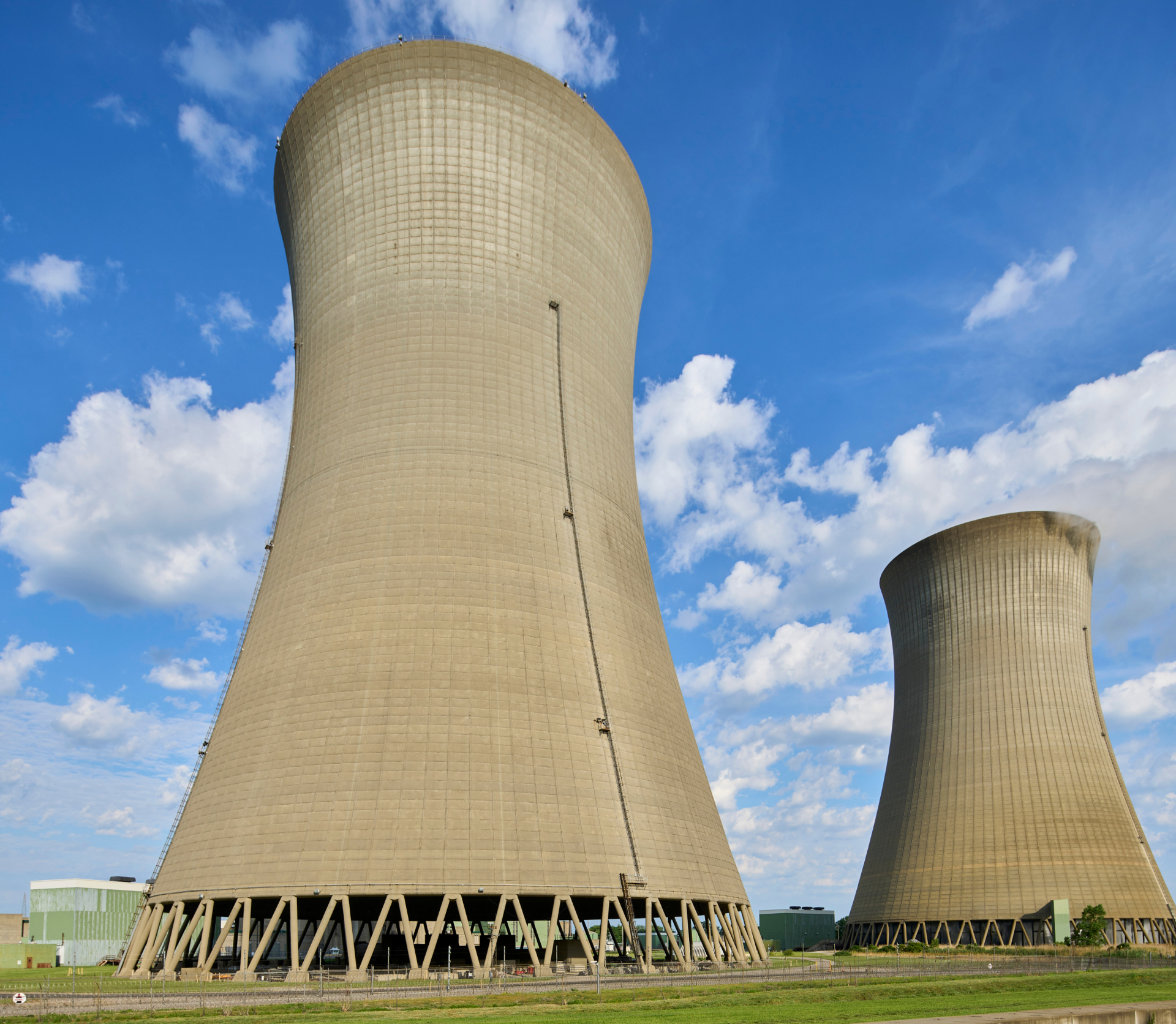
Meta’s commitments ensure that these facilities can continue providing reliable power to the regional electricity grid. The new additional uprate capacity at each of them, totaling 433 MW, is expected to come online in the early 2030s — supporting the growing needs in the PJM grid region in the future. This means consumers will benefit from a larger supply of reliable, always-ready power through Meta-supported uprates to the Vistra facilities.
“This is an exciting collaboration for us at Vistra. We are focused on meeting customer needs, and providing reliable, carbon-free nuclear power is something we’re proud to offer Meta,” said Jim Burke, president and CEO of Vistra. “This agreement is beneficial in many ways — it powers American innovation and AI technology, while allowing us to extend the operational life of these plants, boost the capacity of the nuclear reactors to support the grid, protect existing jobs while creating new ones, and continue investing in the communities where our plants are located. Partnerships like ours are key in moving America forward in both AI and energy leadership.”
Supporting Our Energy Future
Today’s announcements are the result of a thorough nuclear RFP process where we learned how we could improve our support of nuclear projects’ development lifecycles and identify specific partner companies to help scale and accelerate the buildout of new nuclear energy production. For more than a decade, we’ve worked with innovative partners to back clean energy projects that support the grid — adding nearly 28 GW of new energy to grids across 27 states. We’re proud to include Oklo, TerraPower, and Vistra on that list and support their work to boost America’s energy leadership.
Read the original article

Comments
How big are the commitments here? I’m having trouble finding actual dollar amounts. Does this actually represent an infusion of money into these SMR efforts, or are these “commitments” tied to so many missable targets that it’s actually meaningless?
Oklo in particular seems to be total vaporware, I can’t find a single technical picture anywhere of anything this company’s reactor is seeking to do. They seem to raise money based on a rendering of a ski lodge.
A huge, concrete investment in TerraPower would be more interesting, but as a molten salt SMR which has never been built, this also looks extremely non-committal.
SMRs in general seem like a dead end, we’ve heard about them for decades and they don’t seem to be any closer to making nuclear power buildouts less expensive.
Everything that makes proven nuclear power plant design expensive seems to revolve around the same drivers of expense for all long-term construction: large up front capital requirements, changing regulations, failure to predict setbacks, and pervasive lawsuits. SMRs purport to tackle a couple of these (shorter-term builds, fewer setbacks), at the cost of considerable efficiency, but so far this seems like an inferior alternative to “just get better at building proven nuclear plant designs”.
By colechristensen 2026-01-1121:173 reply The thing which can make nuclear cheap is building a large number of the same plant design.
Nuclear is never getting cheap [1]. Nuclear reactors need to be large to scale [2]. As for why SMR persists? Because someone makes money selling the idea. That's it.
And SMRs get sold is the very idea you state because it sounds compelling: the more you build, the cheaper it gets.
Nuclear seems like it should work. But there are massive unsolved problems like the waste from fuel processing, processing the spent fuel, who can be relied upon to run these things, who can be trusted to regulate them and the failure modes of accidents. Despite there being <700 nuclear reactors built we've had multiple catastrophic failures. Chernobyl still has a 1000 square mile absolute exclusion zone. Fukushima will likely take a century to clean up and cost upwards of $1 trillion if not more.
Yet this all gets hand-waved away. Renewable is the future.
[1]: https://www.climatecouncil.org.au/resources/csiro-confirms-n...
[2]: https://spitfireresearch.com/scaling-example-1-small-modular...
By credit_guy 2026-01-121:38 > who can be relied upon to run these things, who can be trusted to regulate them and the failure modes of accidents.
I personally trust the Nuclear Regulatory Commission. I also trust the Canadian Nuclear Safety Commission, and the regulatory bodies in the UK and the EU.
Why?
The failure modes are not binary. A reactor is not just operating fine or going boom. There are multiple small failures that can happen, and you can get an idea if a country's nuclear fleet is run with safety in mind or not.
Chernobyl happened during a safety exercise, an exercise that was attempted 3 times before and failed 3 times before. In principle the plant should not even have been allowed to operate until the exercise had been completed. The exercise was supposed to demonstrate if in case of reactor emergency shut-down the cooling water can be kept circulating in the core for one minute, the amount of time it took for the Diesel generators to ramp up power; it was an essential exercise to perform before starting full power operations. The fact that the plant was allowed to operate for 3 years without completing this exercise - no, actually, while failing this exercise multiple times, tells you a lot about the safety mentality of the nuclear industry in the Soviet Union.
In the US, the NRC performs a lot of monitoring, and the results are published. For example, here's [1] a dashboard of performance indicators. There are 17, such as: Unplanned Scrams per 7000 Critical Hours, Unplanned Power Changes, Residual Heat Removal System, Reactor Coolant System Leak, etc. Out of about 100 reactors, you can see only green, with the exception of one yellow; that yellow is for the Palisades plant that is not currently operating, it is in the process of restarting operations, and I am sure it will not be allowed to restart until all the performance indicators are green.
[1]https://www.nrc.gov/reactors/operating/oversight/pi-summary
I more or less agree with your comment but feel it should be pointed out the CSIRO economic feasibility study is specific to Australia.
The arguments made there; why Australia is better to pursue renewables now rather than hope for nuclear eventually have no bearing on, say, China's use of nuclear for 20% of Chinese baseload.
A large part of the CSIRO argument is the greenfield standing start no prior expertise massive upfront costs and long lead time to any possible return.
China, by contrast, has an existing small army of nuclear technologists, multiple already running reactors, and many reactors of varying designs already in the design and construction pipeline.
Even China who committed to significant nuclear capacity and wanted to ramp up their nuclear percentage to 20% (IIRC) is slowly moving away. The percentage of nuclear has in fact reduced over the last 5 years and initial commitments/projections of nuclear capacity are likely not going to be med. The whole reason being that solar (and to a lesser degree wind) have become so cheap that nuclear just doesn't make economical sense even for China.
By defrost 2026-01-121:38 You say that and yet China is still building new reactors and have staged plans for more.
China is a special case. In fact, it's the one country on Earth I'd actually trust to build, maintain and regulate nuclear power.
I don't believe China is convinced (yet) of the long-term viability of nuclear power (fission or fusion) but, like with many things, they're hedging their bets. In the US? It's just another opportunity to transfer wealth from the government coffers to private hands through a series of cost overruns, massive delays and under-deliveries.
China's advantages here are extreme. They have the manufacturing base, would likely use the same plant designs in multiple places (rather than a separate procurement process in every city or province) and they have a bunch of existing infrastructure that gives them options, like they're pioneers in UHVDC transmission lines that might make it more viable to build a nuclear reactor away from populated centers. Even UHVDC development was to solve a largely China-only problem: the power generation is mostly in the west part of the country whereas the people are in the east.
And yes the CSIRO report is Australia-specific but the timeframes for building nuclear power in the US are similar: 10-15 years. Starting today it's unclear if such a plant would be online by 2040. Yet we can build solar in months.
That's the other part of this: if we're just looking at data centers, theyh can be placed anywhere. You can ignore where fiber runs. You just build more fiber if you have to. DCs need power and water, basically. The Southwest is very efficient for solar [1] but light on for water. There's the Colorado River but that's been tapped beyond its limits already.
Along the Mississippi is another option. Not as efficient as the Southwest for solar but water is plentiful. Inclement weather is an issue though, both tornadoes and the winters.
[1]: https://www.reddit.com/r/MapPorn/comments/7fk7eu/solar_power...
By defrost 2026-01-121:43 > And yes the CSIRO report is Australia-specific but the timeframes for building nuclear power in the US are similar
* The US has existing commercial scale nuclear power stations. Australia does not.
* The US has an existing nuclear weapons industry. Australia does not.
* The US has existing advanced courses on nuclear technology for workforce scale populations. Australia has extremely limited coursework.
* The US actively builds and maintains SMRs for submarine use. Australia does not.
These are fairly critical differences in terms of additional costs to Australia above and beyond build times.
By throwaway2037 2026-01-1211:17
You don't trust Finland, Sweden, Belgium, Switzerland, United Kingdom, France, Canada, Korea, or Taiwan? They all seem to do it pretty well.> [I]t's the one country on Earth I'd actually trust to build, maintain and regulate nuclear power.
- Spent fuel is a solved problem, we just store it securely
- Who can be relied upon: who do you rely upon to run your drinking water?
- Failure modes of accidents: have been extensively studied and essentially designed out
- Multiple catastrophic failures: sounds bad until you realize that you can name only two:
1. Chernobyl: old flawed reactor design, basically impossible today, a few unfortunate deaths among first responders in the cleanup, that's it
2. Fukushima: no radiation deaths. You would get a higher dose of radiation flying to Japan to visit Fukushima than from drinking the irradiated leaked water there.
> upwards of $1 trillion if not more.
Where are you getting this number? According to https://cnic.jp/english/?p=6193 it was estimated at JPY 21.5 trillion (roughly USD 150 to 190 billion).
> Spent fuel is a solved problem, we just store it securely
This is simply untrue. Depending on the type and enrichment of the fuel it will need to be actively cooled for some period, possibly decades. After that you can bury it. You need facilities for all of this. You need personnel (done by the NRC currently) to transport and install new fuel, remove old fuel and transport it to suitable sites as well as manage those sites. Before they even make it to storage sites they'll typically be stored onsite or in the reactor for years.
> Who can be relied upon: who do you rely upon to run your drinking water?
Given the current administration, almost nobody. The state of drinking water in places like Flint, MI is a national disagrace. The continued existence of lead pipes that leech lead into drinking water in many places is a national disgrace. The current administration gutting the EPA and engineering the Supreme Court to overturn things like the Clean Air Act and the Clean Water Act are just the cherry on top.
A significant ramp up of nuclear power would necessitate a commensurate ramp up of the NRC in all these capacities.
> Failure modes of accidents: have been extensively studied and essentially designed out
Like I said, hand waved away.
> Where are you getting this number?
Multiple sources [1][2]. Fukushima requires constantly pumping water to cool the core. That water needs to be stored (in thousands of tanks onsite) then processed and ultimately released back into the ocean, which itself is controversial. Removing the core requires inventing a bunch of technologies that don't exist yet. The decomissioning process itself is something most of us won't live to see the end of [3].
The $1 trillion and a century for 1 nuclear plant. Pro-nuclear people will point to the death figure because it suits their argument. It's economically devastated that region however.
And as for Chernobyl, billions of euros was spent building a sarcophagus for the plant, only to have the integrity of that shield destroyed by a Russian drone.
[2]: https://cleantechnica.com/2019/04/16/fukushimas-final-costs-...
By fc417fc802 2026-01-122:49 The issue with spent fuel has to do with the long term (essentially permanent) storage part and is purely political. It's a solved problem except for getting approval for the solution.
The other fuel issues you mention are already dealt with today as a matter of course. It's just the final part that remains up in the air.
You are the one hand waving about failure modes. As with aircraft, as failures have happened we've learned from them. New designs aren't vulnerable to the same things old ones were. All the mishaps have happened with old designs.
Personally I think the anti-nuclear FUD that the climate activists push is unfortunate. We would likely have been close to carbon neutral by now if we'd started building it out in the late 90s.
That said, I'm inclined to agree that solar might be a better option at this point in environments that are suited to it. The batteries still aren't entirely solved but seem to be getting close. In particular, the research into seasonal storage using iron ore looks quite promising to me.
By yawaramin 2026-01-1218:45 > for 1 nuclear plant
Yes, because others were mostly not affected by the Fukushima disaster despite being in the impact area. Why? Because they took safety precautions. Onagawa was closer to the epicentre, but they built on a high embankment and did not flood and lose power.
Anti-nuclear people conveniently ignore, because it suits their argument, that Japan is restarting their nuclear energy program. They finally understood that there's no other viable option for energy security, price, and achieving decarbonization goals.
By yawaramin 2026-01-1219:00 > Multiple sources [1][2].
Where does [1] say USD 1 trillion?
[2] says:
> The combination has had a toll on Japanese automotive (and other) exports. Barring Fukushima’s impacts, one would assume a return to pre-2008 fiscal meltdown exports by now. But basically they’re static. That’s in the range of $200 billion in lost exports just for the automotive industry. > > It’s likely fair to attribute $20 to $50 billion of that to irrational fear of radiation.
Like, are you serious? This is the most bizarro accounting I've ever seen.
> ...that’s about $100 billion in extra fuel costs.
And now it's counting as part of the cost of Fukushima the fossil fuels needed to replace it. Even more wacky accounting.
> another $22 billion for unexpected health costs due to burning extra fossil fuels.
It continues to get even more wacky, if that was possible, by attributing this cost to the Fukushima disaster. These are costs that would be avoided with a strong nuclear electricity generation program! These are arguments in favour of nuclear! It's not cost-effective for Japan to cover their land mass and offshore areas with solar and wind arrays! They have regular earthquakes and typhoons which would knock these vast arrays offline and take massive amounts of time and money to get back online!
You said: 'Fukushima will likely take a century to clean up and cost upwards of $1 trillion if not more.' The sources you provide don't provide the numbers or, if they do, they include bogus numbers that actually make the case for nuclear.
They should focus research on thorium reactors as they are supposedly cleaner than what we have today, and afaik you can actually use the fuel waste again and again, so it drastically reduces the problem of nuclear waste and what to do with it.
By jmyeet 2026-01-122:27 The promise of thorium is that it requires external energy to be added to maintain the reaction. The theory is that it is safer because of this as it's far less likely that you get a runaway or out-of-control reaction.
The reality is more complex [1].
Molten salt reactors are another active area of research but they have been for decades as well.
By Mawr 2026-01-129:39 > But there are massive unsolved problems like the waste from fuel processing, processing the spent fuel, who can be relied upon to run these things, who can be trusted to regulate them and the failure modes of accidents. Despite there being <700 nuclear reactors built we've had multiple catastrophic failures. Chernobyl still has a 1000 square mile absolute exclusion zone. Fukushima will likely take a century to clean up and cost upwards of $1 trillion if not more.
sigh same low-tier non-issues brought up over and over again by people with no idea what they're talking about.
Look up some hard data before you speak.
- A nuclear reactor produces a tiny amount of waste per unit of power generated and it's all solid. Most sites just store it on-site because why not? Containment of small amounts of solid waste is as big of a non-issue as can be, obviously.
You realize our current energy generation revolves around burning up coal and gas and dumping the waste products into the atmosphere right? Right? And that those waste products include radioactive materials that you're so fake worried about?
You're out of your mind, completely gone in terms of what's actually happening right now vs what you're worried about. Detached from reality.
- Who can be trusted? We've had nuclear reactors for 50+ years, so... the same people that are already doing all that? What sort of a question is this? You're asking how to do something we're already doing.
- As for accidents, again, look up any data in existence. Nuclear is the safest energy production method by far, and yes, it's safer than e.g. solar. The fact that all you can point to are two accidents that have barely cost any lives at all proves that.
The very tsunami that caused Fukushima in the first place claimed 20 000 lives and all you can speak in regards to the plant is economic damage. Laughable.
You're displaying insane levels of ignorance. Look up data before you speak. Even consulting an LLM would have been better than just making stuff up.
[1]: https://app.electricitymaps.com/map/live/fifteen_minutes
By testing22321 2026-01-1122:203 reply China are building dozens simultaneously, and even with their questionable workers rights, safety and environmental practices, they cost $7 Billion a pop.
A dozen $7B nuclear plants is $84B, which is incidentally almost exactly the estimated cost of the SF-Gilroy-Palmdale plan for California's high speed rail. If you count all of phase 1, the P50 estimated cost goes up to $106B. That's the equivalent of 15 nuclear plants.
China has over 28 plants in progress, which should provide a total of >32GW of capacity when they're completed. That's 32×24×365= 280TWh of electricity per year. California's total electric grid in 2024 produced 216TWh.
Which is to say, $7B is a huge sum. But as far as infrastructure goes, China is currently building 130% of all of California's generation capacity that'll be complete within a decade or so, for much less than double the estimates for a high speed rail system that'll serve almost nobody by 2038.
$7B is a lot of money. But it's actually a very reasonable amount of money because the projects are actually happening. 28 $7B projects in the US are actually probably closer to a trillion dollars in investment for far less net public good over five times the timeline.
By testing22321 2026-01-123:281 reply I agree, but if a developed country could get the price down to $15 billion a pop in the next two decades it would be a miracle.
Not to mention you wouldn’t generate a single kW for 20+ years from today.
In theory they’re fantastic. In reality not so much (which, incidentally, is the same story for the CA HSr)
In April Reuters reported that China approved ten plants for $27B (total):
https://www.reuters.com/sustainability/boards-policy-regulat...
Whether they run over budget (or whether this is an under inflated figure) is yet to be seen, but it would seem that China is bringing the cost down, and substantially.
I'm not a nuclear expert by any means, but from the reading I've done, they're largely designing and building the reactors themselves these days. And it seems that to help keep the cost low (among other reasons), they're also helping other countries build them.
By ksec 2026-01-1218:03 There was a recent study from Chain where they assess their own 4th generation Nuclear Reactor programme as being at least 10 - 15 years ahead of the west, and specifically said even that number is conservative estimate.
I wouldn't be surprised if they accelerate their time line and building target.
By testing22321 2026-01-124:142 reply Yes, China have a good shot at doing it because they are building 33 simultaneously now and they have questionable workers rights and environmental policies.
As I said, if a developed country can do half what they’re doing (ie twice the price and double the construction time) in the next 20 years it would be a miracle.
By bastawhiz 2026-01-125:13 It's not really a fair comparison though, is it? Is a questionable environmental policy worse than a bad electric grid? America has a dirty grid that has fairly limited capacity. How many fossil fuels will we burn (producing electricity, and powering non-EVs) because we aren't building nuclear? The environmental benefits of having nuclear power probably largely make up the difference (if they don't exceed it), and that's over the time scale of a century or more where we'll need to catch up.
Workers rights I have no real knowledge on. But China isn't known for their track record on any kind of rights, and arguably US blue collar workers have a pretty awful quality of life that the government largely doesn't take the blame for (because we don't have state-run healthcare and minimum wage doesn't keep up with the cost of living). China has forced labor, America has legalized slavery in the prison system. Plenty of American industries rely on the unethical use of migrant labor while the state disappears those same people to "alligator alcatraz" or overseas prisons. I don't know the full extent of how bad things are in China for the kinds of workers who build these plants but I am hesitant to overlook how bad things are in the US.
By touristtam 2026-01-129:01 It's also a country that doesn't seem to care if the project is not cost-effective from the PoV of western companies. This is always a salient point missing from most conversation about the US and by extension the Western world; the advocacy of cheap energy are hiding the argument that nuclear power is both more consistent in power delivery and cleaner (arguable with the nuclear waste ofc) than any alternative currently available.
By ynx0 2026-01-122:52 Very insightful, this helped put things into perspective.
By Manuel_D 2026-01-127:32 Remember those systems are non-intermittent and have lifespans of 50 years or more. Server farms are not amenable to load shifting, they expect round the clock power. Trying to power them with intermittent sources would need very hefty power banks.
If this nuclear plant has 2 GW of power output, were talking about 2.4 billion dollars to store 12 hours worth of the plant's output assuming $100 per KWh of storage.
By boringg 2026-01-1213:09 Your numbers are off. Korea + China ~ 2500 $/kw, USA ~ 6-9000 $/kw. ` GW ~ $2.5B. A large portion of that is dealing with archaic regulations and very long timelines. Important to have regulations that are functional protect the public but also don't inhibit industries growth (which were the design of Nuclear regulations in the 80s).
Cheap-er, not cheap. They’re still fundamentally massive complicated constructions. They will never be as amenable to mass production cost reductions as things like solar and battery
By colechristensen 2026-01-1121:563 reply >Cheap-er, not cheap.
Can we please not have these "slightly improved language" comments? You're arguing against something I didn't say and making a meaningless nitpick on word choice.
By hcknwscommenter 2026-01-1122:36 you literally said "cheap" and the comment said "cheap-er not cheap". I think the comment is correct and you are wrong. China is building the same design again and again and again. And it's still not cheap.
By dalyons 2026-01-123:06 i'm sorry it came across that way. let me rephrase.
"cheap" to me implies it is affordable in a relative sense, compared to other options. It will almost certainly never be cheap - even if we make it cheaper through more production, it is going to remain in the group of the least affordable power generation technologies.
tbh i don't think either the original or improved language post is presenting effectively because they both just give a conclusion without any nuance, explanation or support. "cheap" cheaper who cares? $/kwh matter. transmission costs matter.
Who doesn't say nuclear is more expensive?
The lowest LCOE for nuclear is to the right of the most expensive solar plus storage.
By fc417fc802 2026-01-122:551 reply If you have credible figures then present them with citations. Otherwise you're just hand waving.
I don't think anyone will dispute that the initial build out for solar is far far cheaper. That much is self evident to everyone. The devil is in the rest of the details.
By caminante 2026-01-1217:11 No.
>I don't think anyone will dispute that the initial build out for solar is far far cheaper.
OK.
>The devil is in the rest of the details.
Now, this is "hand wavy" instead of answering my question and pointing to sources who support the up thread claim that nuclear will be "cheap" v. alternatives.
Do you have an LCOE study showing nuclear as "cheap"?
Okla really seems like a meme stock. Their original design was rejected by the NRC, so they are very far from ever breaking ground. I don’t understand why their valuation is so high. Why not just take all this money and build an existing, approved design?
By boringg 2026-01-1120:52 I will be very surprised if Oklo makes it. Insiders have been selling a fair bit over the last couple years because my speculative guess is they know that they cant possible meet the expectations in the market for their product.
They essentially got a ton of traction because Altman was on the board (but since left) but most (not all) tech people don’t understand deep energy problems.
Basically it sounds like what happens in failed countries:
> “It’s not like the NRC asks for an extraordinary amount of information,” said a former nuclear official who was involved in reviewing Oklo’s failed application and spoke on the condition of anonymity to avoid jeopardizing their work in the industry. “The NRC asks three questions: What is the worst that can happen, what are the systems, structures and components in your reactor that prevents that from happening, and how do you know that?”
>“Oklo would only answer them at a very high level,” the person said. “They wanted to say nothing bad can happen to our reactor.”
>DeWitte said Oklo had planned a robust public rebuttal but claims that at the time, NRC officials “threatened us, in a retributional way, not to issue a response letter to correct the record.”
>“Well, they’re gone now,” he added.
https://www.washingtonpost.com/business/2025/11/26/nuclear-e...
> “It’s not like the NRC asks for an extraordinary amount of information,” said a former nuclear official who was involved in reviewing Oklo’s failed application and spoke on the condition of anonymity to avoid jeopardizing their work in the industry. “The NRC asks three questions: What is the worst that can happen, what are the systems, structures and components in your reactor that prevents that from happening, and how do you know that?”
This...does not square with the successful hamstringing of the nuclear energy industry by regulation over the past several decades.
Are you saying that the NRC asks for more than that? That there was a different process in the past? The big complaint I've heard about the NRC are changes required mid-construction, which happened last in the 1980s.
In the 2000s the NRC adopted a new licensing scheme at industry urging. What "hamstringing" are you talking about?
Okla would sound a lot more reliable here if they would have fought back with lawsuits with their accusations, or if the would release the communication now that there's no chance of this supposed retribution. As it is Okla makes all the talk of "hamstringing" seem like people not doing their jobs and trying to blame others.
Without speaking to Okla specifically--I think it's completely reasonable (if not accurate or charitable) to assume they're avoiding as much compliance as possible--the simple fact is that, under the watch of the NRC, there have been a tiny number of licenses issued.
From the horse's mouth in 2012, only 3 (*3!*) such licenses had been granted in 30 years ( https://www.eia.gov/todayinenergy/detail.php?id=5250# ).
If your agency's job is to regulate something and you've done it so successfully that barely anybody has actually gotten a license--all while complaining about compliance costs--maybe you're the problem.
Had the fellow said "Oh, we have a really high bar for safety and compliance, and not everybody's able to handle that", it'd be fine. But, acting like "oh golly gee we're so easy to work with we don't ask for much" is brazen horseshit.
The data doesn't fit for NRC being the problem. Hell look at the Summer reactor that was approved alongside Vogtle in Georgia: construction failure, billions wasted, and none of it to do with the NRC.
Or any the other many many other reactors abandoned at various states of development:
http://www.powermag.com/blog/nuclear-renaissance-recalls-pas...
There's an argument that the NRC could do things better, but placing all the well documented failures in the nuclear construction industry on the NRC doesn't make sense. Who are going to believe, the people who are always late and over budget, or the bystanders in the industry that have watched it all play out?
By MrBuddyCasino 2026-01-125:301 reply It is TWICE as expensive to install a megawatt of nuclear reactor on US soil than it is to put a megawatt of nuclear power into a US Aircraft Carrier.
Why?
The US Navy doesn't have to go through the NRC.
I'd like to see the source of your cost numbers, I've never seen a $/MW from the Navy's subs' and carriers' reactors that was defensible, even Construction Physics didn't want to come up with a $/MW number in their discussion [0]
But remember that with the Seawolf classes the cost was astronomically higher than in the Virginia submarine; high costs are very possible without the NRC and are frequent, and an excellent counterexample to show the underlying fallacy behind the "NRC must be reason costs are high" argument. And remember that the Navy can use highly-enriched fuel that we don't allow in civilian reactors, and that the military nuclear labor force usually gets the best and the brightest and that the civilian nuclear work force gets the leftovers.
The NRC could be the source of high cost, but if so there should be two clear pieces of evidence to show that: 1) clear examples of the NRC doing something to drive up costs, and 2) some example of what to do instead of the NRC, or differences with other regulatory schemes that we could adopt instead. In particular, I never hear the corrective action that people want to the NRC. Having the Navy license civilian power reactors does not seem feasible. The closest we got to suggested regulatory reform culminated with Vogtle and Summer's failure: combined licensing. The biggest benefit of the industry's request merely gave the builders enough rope to hang themselves with bad design and their own delays.
[0] https://www.construction-physics.com/p/why-are-nuclear-power...
By MrBuddyCasino 2026-01-135:581 reply Over the last decade the US Navy has commissioned 1-2 new nuclear reactors per year. They currently operate 100 reactors, more than any other org on the planet.
The US Navy has managed a total of 273 nuclear reactors, 6200 reactor-years, over 177 million miles, averaging 4 new reactors per year over 70 years.
They have done this with a perfect safety record. Zero accidents. Zero injuries, zero deaths, zero environmental pollution.
US Navy Cost: $2 billion for 2 x 400 MW reactors in Ford-class aircraft carrier
NuScale: $10 bn for 500 MW reactor
Westinghouse: ~$8 bn for 1000MW reactor
Military reactors should be more expensive, not less, because they operate under harsher conditions. But they aren't, because the US Navy doesn't have to go through the NRC.
By philipkglass 2026-01-1320:57 Naval reactor power ratings are for thermal output. You can assume that about 1/3 of the thermal output can be converted to electricity when steam from the reactor is used to drive an electrical generator:
https://www.nuclear-power.com/nuclear-engineering/thermodyna...
Assuming that your cited numbers are correct, "$2 billion for 2 x 400 MW reactors in Ford-class aircraft carrier" translates to 267 megawatts of electrical output for $2 billion. Or $7.5 billion for 1000 megawatts of electrical output. This is not much cheaper than "Westinghouse: ~$8 bn for 1000MW reactor."
The expectation is that their close-to-Trump investors will push for the dismantling of the NRC, which is something Republicans wholly support, which will of course make their rejection moot.
By pseudalopex 2026-01-1122:071 reply DOGE told regulator to ‘rubber stamp’ nuclear[1]
[1] https://www.eenews.net/articles/doge-told-regulator-to-rubbe...
By riffraff 2026-01-1123:14 FYI (this was news to me, so it may be to other people), DOGE no longer exists. So in the end they did manage to cut some waste, themselves!
https://www.reuters.com/world/us/doge-doesnt-exist-with-eigh...
Maybe but the underlying tech still needs to perform which, as i understand it from public docs, has not. No amount of clear runway will make up for an airplane not being able to take flight.
By SilverElfin 2026-01-1121:27 The NRC is now mostly composed of Trump appointees. They’ve been quietly doing that. His most recent appointee was just made chair. Expect permits for friends of the Trump family and heavy regulation for competitors.
https://www.washingtonexaminer.com/policy/energy-and-environ...
By rayiner 2026-01-120:56 Getting things I voted for that I didn’t even know about. https://www.eenews.net/articles/trump-replaces-nrc-chair-as-...
Anyone could’ve picked up the mantle of fixing the NRC, which is an obviously broken agency. France transitioned the majority of its grid to nuclear back in the 80s. Clinton, Bush, Obama, Biden, anyone could have picked up this low hanging fruit and fixed the problem. Nobody even tried.
Let's be honest it's one of the smartest and most useful place anyone could be investing - it's literally is whatever happens a way to contribute to mankind - even if it's just so that FB servers are off-grid ; it's still a huge win, I just hope Mark realize he has much more potential than what he is doing rn
By Fazebooking 2026-01-1120:074 reply The progress on 'nuclear' is so slow, that the same investment in Batterie and renewable would actually help a lot more around the globe.
We know how to build nuclear, we don't do it because its too expensive. Other forms are so far away from being useful, that the current Storage + Renewable pricing is so crazy good, that whatever you do with nuclear will just not be able to compete.
And the benefit? Every 3th world country and person can invest in small and big Storage + Renewable but they can't do the same with nuclear.
>We know how to build nuclear, we don't do it because its too expensive.
Refusing to build nuclear for decades makes it more expensive. If we start actually building reactors the cost will come down.
>the current Storage + Renewable pricing is so crazy good, that whatever you do with nuclear will just not be able to compete.
I would find this more persuasive if there were no new investment in carbon sources, but carbon sources have clearly remained competitive with batteries + solar, and global carbon emissions remain at an all time high. There's demand for baseload energy.
By legulere 2026-01-1121:54 Building nuclear power stations includes a lot of labor-intensive hard to automate tasks like construction. Baumol's cost disease means it's getting even more expensive: rising general productivity leads to higher wages and higher costs in fields that cannot increase productivity as much as the general economic growth. That's why it's also still cheaper in countries with access to low-cost labor.
SMRs are a try to get out of it by building more but smaller reactors. The reality is however that nuclear has an issue with scaling down. Output goes down way faster than costs and most SMR designs have outputs far greater than what initially counted as an SMR.
Investment in renewable energy already greatly outpaces investment in fossil energy. The economic decision to keep using a fossil system is a different one than having to choose a new one. There's still problems that have no economically competitive renewable solution yet, but a lot of what you are seeing is inertia.
Base load electricity is simply an economic optimisation: demand is not flat, but the cheapest electricity source might only be able to create a relatively flat output. You'll need more flexible plants to cover everything above the base load. If you have cheap gas, base load does not make any sense economically.
For the last two years more than 90% of new power generation capacity added globally was renewable. Est 95% in 2025. So no, new carbon sources are not competitive.
Highly misleading stat. That's referring to capacity expansion, not new construction.
Prior energy assets go offline and are replaced each year. The report you cite is discounting all of that, looking only at expansion above the baseline, then taking total renewable construction and calcuating renewable total construction's share of expansion. Apples to oranges.
If you look at the chart in your own link you'll see that carbon construction investment exceeds renewables still.
Chart: "Annual energy investment by selected country and region, 2015 and 2025"
I would love for what you say to be true but it just isn't, even by that agency's own stats.
Not sure I understand your point. In the plot you mention what the OP said certainly holds true for China and Europe (less so for the US). Also the Charts plot investments not just new capacity investments, I'm not even sure how you distinguish between the two?
The OP said new carbon sources are not competitive.
ANY investment is by definition creating capacity that would not be there without the investment. If carbon were not competitive it would not get investment.
If you sum up all of the carbon and compare to renewables in the chart there's more new carbon investment annually globally than renewables. (Comparing the dark lines vs the green line)
Also this is ignoring "low emission fuels", which are still carbon sources, natural gas and the like.
If you check the chart "Global electricity generation of zero-carbon sources vs. fossil fuels, 2000-2024" you can see that carbon sources were at an all time high in 2024. Growing slower is still growing.
We ought to be shrinking these to zero. I'm very glad to see solar and wind growing but my point is nuclear is worth supporting as an non-carbon energy source that could replace some of this carbon load because of its baseload characteristics.
By Fazebooking 2026-01-1216:23 "Global investment in clean energy and fossil fuels" shows a decline in fossil.
And there are plenty of good reasons why the investment in fossil fuels is still there because these investments can easily be not because its is still competitive, but its still competitive because base costs have been written off.
Aka the replacment of that coal power plant might have been 'competitve' because the whole infrastructure around it is still there and usable, because they might just replace the main burning chamber. Because for current stability reasons its easier to add gas turbines or keep them alive as backup because the renewable energy build out takes more time.
Nonetheless, the overall statistics says that renewable + batteries are now the cheapest energy source on the planet. Locally it might not be doesn't change the fact.
And no we do not need nuclear for baseload. Wind and solar are capable of baseload.
Alone my 4 year old EV has a batterie of 100kWh which would allow a heat pump to heat a house for 2.5 days.
Also countries in the north like Canada has plenty of waterenergy for baseload and countries closer to the aquator have extreme amount of sun.
Earthenergy can be still used in the most northern countries.
By _aavaa_ 2026-01-120:30 > but carbon sources have clearly remained competitive with batteries + solar
That's because carbon sources are almost never made to pay for their externalities (i.e. pollution during energy generation).
By Fazebooking 2026-01-1216:15 Yes for sure it just doesn't happen because huge projects like this have to be aligned and coordinated on complete different scales.
Thats why the french build a reactor in UK.
Even the CDU/CSU political party in germany, who was in power for 16 years uninterupted wasn't doing it.
So whatever we wish or think would happen doesn't matter if the only ones investing in nuclear are techcompanies and as somone else stated, they do this primiarily for existing nuclear capacity.
But whats happening now is a renewable revolution. Batteries are very cheap now and get cheaper and easier to make and you need the manufactoring capacity for them anyway (cars, storage projects) that they will break up every other area like normal housing.
Especially because now it reached africa as a continent and asia. Its exploding.
And its very easy to just extend this potential. Many normal areas are still vacant.
A LOT of countries probably will either neve be able to afford nuclear or will not be allowed to have it anyway.
Nuclear is expensive even after the reactor is build.
And I wouldn’t call it progress to still rely on steam machines for energy
What's wrong with steam?
It's better than carbon. And solar + battery requires more carbon to produce than nuclear energy as there's a lot of mining and physical construction involved + you must overbuild to supply power or rely on non solar sources.
All for building solar. Do not understand the constant need to denigrate nuclear in favour of carbon sources while doing so.
(If carbon sources were at zero this would be a different conversation)
Nothing inherently wrong with steam, just as there's nothing inherently wrong with spinning rust hard disks or punch cards.
We are at the end of the tech curve for steam, we have pushed it hard and made some super impressive technology, but it's not advancing anymore. Supercritical CO2 might have some advantages, or other fluids.
We have zero-carbon tech that uses non-steam principles, and is currently on a tech curve that's getting cheaper than any thermodynamic cycle. We have storage tech now which is an even bigger revolution for the grid than cheap solar, because a huge limitation of the grid has always been the inability to store and buffer energy.
I still have pinning rust disks, but only because they are cheap. If SSDs were cheaper, then we would see a massive switch.
(BTW denigrating steam also denigrates all fossil fuel electricity sources, because they use the same mechanism, except for some natural gas turbines)
By fc417fc802 2026-01-123:301 reply What is this, the hipster approach to technology evaluation? Steam conversion efficiency doesn't make sense as a metric for nuclear because (AFAIK) fuel consumption per watt isn't the primary driver of cost for that technology. Or am I mistaken?
> I still have pinning rust disks, but only because they are cheap. If SSDs were cheaper, then we would see a massive switch.
I only use this technology because it is more competitive than the alternatives for my usecase ... ?
> denigrating steam also denigrates all fossil fuel electricity sources
I doubt name calling is a sensible basis for policy decisions.
By epistasis 2026-01-124:15 It's actually hipsters that are into steam, you know, the steam punks.
I don't care about steam conversion efficiency as much as I care that steam Rankine cycle engines are a solved problem so there is no more technological advancement. One of the biggest advancements over the past decades is using a Britton cycle in front for natural gas, ie moving away from steam engines.
> I only use this technology because it is more competitive than the alternatives for my usecase ... ?
If I understand you, yes of course use the more competitive technology. Sticking with steam when there are cheaper alternatives is a poor idea. But moreover as we look to what people choose as technology improves, we will find that steam usage will be relegated to things like geothermal, which like nuclear has essentially free fuel, but doesn't have to go down for a month to refuel, has the potential for more variable generation instead of undesirable constant generation, and is far less complicated.
> denigrating steam also denigrates all fossil fuel electricity sources
The critique is not name calling, it's pointing out that the technology is mature and not improving, unlike the technologies that are recolutionizing grid energy right now across the world. The number of applications that use fuel to generate electricity via steam are shrinking. Perhaps hydrogen in the future, if electrolyzers ever come down the cost curve, but it's pretty speculative.
Horse buggies still exist, but mostly as novelties. Steam generation is headed the same direction.
By Fazebooking 2026-01-1216:27 Wind appears to be similiar than nuclear.
Nuclear has a few other major flaws: Uranium aka nuclear weapons risk, Dependency on uranium (yes china finally solved the Thorium issue but that happened this year?), geopolitical/terrorism risks (see ukraine).
And because i'm from germany: do you know that in bavaria, you still have to check certain meat for radioactivity?
By hvb2 2026-01-128:09 > What's wrong with steam?
> It's better than carbon.
Steam isn't occuring naturally (except for geothermal etc) so you first have to put in energy to produce it
> you must overbuild to supply power or rely on non solar sources
True for every source of power because demand isn't flat across day/year
It’s an inefficient way of producing energy. Only 30-35% results in electricity
If you believe that figure, that's still comparable to solar's best ( https://en.wikipedia.org/wiki/Solar-cell_efficiency ).
Optimal steam plants can get do better, exceeding 50% in some configurations ( https://en.wikipedia.org/wiki/Combined-cycle_power_plant#Eff... ). Steam is awesome.
By _aavaa_ 2026-01-1212:19 The difference that makes your statement misleading is that solar doesn’t pay for its fuel, the sun shines for free.
By graeme 2026-01-1121:55 Could you please provide comparable figured of EROI for solar vs Nuclear?
For a useful comparison you have to compare both sides, not give a stat in isolation and assert it is worse without comparing.
By ethmarks 2026-01-1121:34 What alternative do you propose that's more efficient?
By fc417fc802 2026-01-123:32 30-35% of what? What are the inputs here? What is driving the cost? What are the externalities? And what is the end result in price per kWh?
> Nuclear is expensive even after the reactor is build.
Solar panels and wind turbines need maintenance too. And they have much shorter operational lives than nuclear power plants, meaning they'll need to be expensively replaced much more frequently.
> And I wouldn’t call it progress to still rely on steam machines for energy
Could you please explain your objection to steam-based power? Is it purely aesthetic, or is there some inherent downside to steam turbines that I'm not aware of? Also, concentrated solar power systems that concentrate sunlight and use it to boil steam[1] are significantly more efficient than direct photovoltaics.
By hvb2 2026-01-128:13 > Could you please explain your objection to steam-based power?
My guess would be that you're taking energy that you burn, you then boil water, water then goes through a number of turbines, then to a generator and then you might have electricity. Every step in that process is not 100% efficient.
Direct PV is, sunlight, cell that generates current, current gets transformed into whatever the grid needs. So it's fewer steps.
By dzhiurgis 2026-01-1120:33 > If we start actually building reactors the cost will come down.
Why would I invest then if it can't even pay for itself?
Nuclear + Batteries could be nice too because the reactors will be always working at optimal rate without having to start/stop them to adapt to demand and let the storage manage peaks and lows. So investment in one domain can help the other too.
By Fazebooking 2026-01-1216:28 Can but investment in two things with the fundamental same topic can lead to diversation of funds.
Only if the nuclear investors are completly different than renewable than that would be a good idea.
we don't do it because we forgot to do it cheap. At 3bn/unit like GE's ABWR or chinese hualongs/cap's it's a steal. At 20+bn/unit it's not that fun.
There's the "we forgot" hypothesis, but I think a more realistic hypothesis is the "we got too rich" hypothesis.
Construction productivity has stayed stagnant for more than half a century, while manufacturing productivity has sky rocketed and made us all fabulously wealthy compared to when the first nuclear reactors were built half a century ago.
I don't trust China's public cost numbers as much as I trust their actual capital allocation on the grid. And I will trust GE's numbers once they have actually produced something at those numbers, as pre-build cost estimates for nuclear are not believable due to their extensive track record.
By Moldoteck 2026-01-129:21 GE number is from japanese abwr. So chinese deployments are pretty realistic
We didn't forget how to do it cheap. The ALARA (As Expensive As Reasonably Achievable) policy simply made it illegal to do it cheaply.
By epistasis 2026-01-1120:47 Since you say ALARA made things expensive, maybe you can tell me how you foresee cheaper designs without it?
There's a lot of talk and some very shady science about getting rid of ALARA but nobody says what will change on the build that is causing the cost. Meanwhile China has adopted the same designs as in the West, without abandoning ALARA.
Those who advocate for changing ALARA see to be mostly trying to shift the Overton window on the public opinion of radiation rather than trying to pursue engineering and cost goals. I hope I am wrong on that!
The French transitioned the majority of their grid to nuclear back when I was a small child. Their electric prices are lower than Italy, Germany, or the UK. Of the big European countries, only Spain’s is lower.
By ViewTrick1002 2026-01-1210:48 They are also completely unable to build any new nuclear power as evidenced by Flamanville 3 being 13 years late on a 5 years project and 7x over budget.
Their proposed EPR2 fleet requires 11 cents/kWh and interest free loans. Sum freely. With the first reactor coming online in 2038, if everything goes according to plan.
New built nuclear power in 2026 just doesn't square with reality when the costs and timelines are factored in.
By hvb2 2026-01-128:15 Yes, but all of that infra is aging and no one saved for the day when they need to be replaced.
Given where France's national finances are... When that day comes, expect massive hike. They're essentially taking out a loan on the future
By idiotsecant 2026-01-1119:104 reply They're just purchasing power from existing nuke plants. All this is doing is making a formerly publicly available resource private. This will drive up energy prices for everyone else. These datacenters need to build their own generation. When people talk about how important it is that the US lead innovation in AI what they're really saying is how important it is for their quarterly results
> Our agreement with TerraPower will provide funding that supports the development of two new Natrium® units capable of generating up to 690 MW of firm power with delivery as early as 2032.
> Our partnership with Oklo helps advance the development of entirely new nuclear energy in Pike County, Ohio. This advanced nuclear technology campus — which may come online as early as 2030 — is poised to add up to 1.2 GW of clean baseload power directly into the PJM market and support our operations in the region.
It seems like they are definitely building a new plant in Ohio. I'm not sure exactly what is happening with TerraPower but it seems like an expansion rather than "purchasing power from existing nuke plants".
Perhaps I'm misreading it though.
If history repeats itself ... tax payers will be fitting the bill. Ohio has shown to be corrupt when it comes to their Nuclear infrastructure. [0] High confident that politicians are lining up behind the scenes to get their slice of the pie.
[0] https://en.wikipedia.org/wiki/Ohio_nuclear_bribery_scandal
By philipallstar 2026-01-1120:141 reply Well, private investment is a great way to avoid subsidy nonsense.
By intrasight 2026-01-122:081 reply You know that there's no actual private investment in nuclear in the US.
The nuclear industry is indemnified by the taxpayers. Without thar insurance backstop, there would be no nuclear energy industry.
By philipallstar 2026-01-1311:54 Taxpayers are private. They earn money and give some of it to the state.
By idiotsecant 2026-01-1122:41 The weasel wording is strong here. That's like me saying that buying a hamburger will help advance the science of hamburger-making. I'm just trading money for hamburgers. They're trying to put a shiny coat of paint on the ugly fact that they're buying up MWh, reducing the supply of existing power for the rest of us, and burning it to desperately try to convince investors that AGI is right around the corner so that the circular funding musical chairs doesn't stop.
We got hosed when they stole our content to make chatbots. We get hosed when they build datacenters with massive tax handouts and use our cheap power to produce nothing, and we'll get hosed when the house of cards ultimately collapses and the government bails them out. The game is rigged. At least when you go to the casino everyone acknowledges that the house always wins.
Well in a way they are building their own generation by paying elevated prices for nuclear to keep it running, as most nuclear will be shutting off pretty soon due to cheaper alternatives.
Electricity generation is getting cheaper all the time, transmission and generation are staying the same or getting more expensive. Nuclear plants get more expensive the more of them we build, but for already paid-off nuclear reactors there's a sweet spot of cheap operations and no capital costs before maintenance climbs on the very old reactors.
Meta paying for all that very expensive maintenance is not a bad deal for others, unless market structure is such that the price for entire market is set by this high marginal generation from uneconomic aged plants.
> Electricity generation is getting cheaper all the time, transmission and generation are staying the same or getting more expensive
I'm not sure what you're trying to say here, since you claim that generation is getting cheaper, staying flat, and getting more expensive all in a single sentence.
But I can tell you my energy bill hasn't gone down a single time in my entire life. In fact, it goes up every year. Getting more (clean!) supply online seems like a good idea, but then we all end up paying down that new plant's capital debt for decades anyway. Having a company such as Facebook take that hit is probably the best outcome for most.
Oops, that's a typo, should be transmission and *distrbution
Electricity costs have two components: "generation" to put power on the grid, and then the "transmission & distribution" costs which pay for the grid. You can likely see the costs split out on your bill, and the EIA tracks these costs.
Generation costs are falling, because of new technology like solar and wind and newer combined cycles natural gas turbines. However the grid itself is a bigger part of most people's bill than the generation of electricity.
Most utilities have guaranteed rates of profit on transmission and distribution costs, regulated only by PUCs. T&D tech isn't getting cheaper like solar and storage and wind are, either, so that T&D cost is likely to become and ever greater part of electricity bills, even if the PUCs are doing their job.
Generation in many places is disconnected from the grid, and when somebody makes a bad investment in a gas turbine, then the investor pays for that rather than the ratepayers. Look at Texas, for example, where even being at the center of the cheapest natural gas in a country with exceptionally cheap natural gas, solar and battery deployments hugely outpace new natural gas. That's because investors bear the risk of bad decisions rather than rate payers.
In places that let utilties gamble their ratepayers money, and where the utilities only answer to a PUC that gets effectively zero media coverage, there is a massive amount of corruption and grift and fleecing of rate payers.
By idiotsecant 2026-01-1122:341 reply A MW of nuke capacity is not replaced by a MW of solar or wind. New generation is much cheaper, but only because we are neglecting the parts of it that are hard and expensive - storage and transmission. Renewables without those things are worse than nuke - they are undispatchable like nuke and they are uncontrollably variable. We should build more renewables, but it is essential that we either tolerate intermittent system outages or massively improve transmission and storage, the generation is the least important part right now .
> New generation is much cheaper, but only because we are neglecting the parts of it that are hard and expensive - storage and transmission.
That's not correct, including storage with solar is still cheaper than nuclear. That's not measuring the cost by MW or GW, it's by measuring the cost of kWh, or the levelized avoided cost of energy, or the whatever metric you want.
And solar has the benefit of being able to avoid a good chunk of transmission by placing it at the site of use, so including transmission costs can only be to the benefit of solar.
By idiotsecant 2026-01-1419:00 haha, talk about cherry picking data. you essentially picked the most expensive method of generation and then compared solar with storage to it.
By fuzzfactor 2026-01-1119:271 reply >Unlocking Up to 6.6 GW
You could just as accurately sum it up by saying they would like to tie up nearly 6.6 GW, otherwise they wouldn't be making quite as large a deal. They wouldn't be doing it if they didn't have a financial technique to afford it, and it's still taken a while to make the commitment.
What about less-well-heeled consumers who would be better served if the effect of increased demand were not in position to put upward pressure on overall rates?
To the extent that new debt comes into the mix, that's just an additional burden that wasn't there before and this is a very sizable investment at this scale. So the compounding cost will have to be borne for longer than average if nothing else.
Naturally some can afford it easily and others not at all.
By halJordan 2026-01-1119:46 I don't really get the antagonism with these ersatz concerns. when FB builds its own datacenters, or it's own chips & racks, or it's own algorithms absolutely no one is saying "well there's no profit motive to build a completely custom server chassis" or "oh no, theyre taking publicly available math and making it private"
By loeg 2026-01-1120:14 It's a purchase commitment, which enables the generators to secure loans to build out additional capacity.
Thank you for stating things so plainly, it's sorely needed on this site. The idea that success for big tech means a better society for workers or citizens is laughable and should soundly be rejected. They need to be broken apart yesterday.
Alternatively a more optimistic and high potential future is more plentiful and cheaper more reliable power and transmission is a huge win for society. So Id say its a perspective issue.
By paulryanrogers 2026-01-1120:05 We in Ohio don't need more nuclear. The costs for maintaining what we have is already falling behind solar and wind (including batteries). Then there is the ecological costs that rarely get factored in.
And all these new datacenters are pushing up our electric bills. Maybe this deal could be competitive long term with newer reactor designs and if they are competently executed, but I'm very skeptical.
Maybe PA situation is different
By tootie 2026-01-1122:59 The promise of small nuclear reactors, modular reactors, thorium or whatever else has really failed to materialize at the same time that solar and battery has just leapfrogged the entire field. Nuclear has some big advantages, but it's still mired in humongous upfront costs and the intractable issue of nuclear waste. And I think we're also about to see an explosion in enhanced geothermal. The good kind of explosion.
By penguin_booze 2026-01-1121:19 Are there targeted investment vehicles for the general public, like an ETF?
By mihaaly 2026-01-1120:37 Mark is doing much more than should already, and not the good kind, no at all!
This have a slight potential of becomeing a good one, if we only dream good things. Very limited details here, pure corporate self paise dominantly, can become anything. Another bad for example.
By SquareWheel 2026-01-1120:561 reply Well, because it means that other energy generation sources like oil, gas, and coal aren't being used there instead. Since they cause far, far more harm than nuclear waste does, it's a net win.
By croes 2026-01-1121:15 The same is true for solar and wind energy but without nuclear water. She cause far less harm than nuclear waste, even bigger win.
Our main problem isn’t energy production it‘s storage and quick reaction to consumption spikes. Nuclear energy doesn’t help with that.
the waste isn't a win, of course, but is a downside of a tradeoff that is massively weighted to the upsides for society -- that is (otherwise) completely clean always-on high capacity energy production.
We understand very well how to safely handle nuclear waste and make it a very (very) low risk downside.
Completely clean? Where does the nuclear fuel come from? How do we get it?
Does the handling of nuclear waste consider foul play by terrorists and such?
I didn’t he many worries about russian rockets hutting wind turbines in the war in Ukraine.
By davnicwil 2026-01-1121:32 looking backwards in the supply chain for other externalities is a good point, but I'm not sure any energy production method is exempt from this?
Also, by the way, my perspective isn't about nuclear Vs X (wind turbines etc) - I like all the ones that are net clean and useful in different circumstances as part of a mix.
I'm just addressing the narrower point about whether nuclear per se is a net benefit for society, which I believe it is, massively.
